 Skip the calls
Is a heat pump cheaper to run than gas heat in Colorado
Skip collecting and comparing quotes for the new heat pump.
You've got a heat pump in a state where most of your neighbors still heat with gas. That alone makes the math different for you than for them, and it's worth sorting out before you assume either way about your own bill.
Power here isn't cheap or expensive by national standards, it's about average. That matters, because a heat pump's running cost comes down to how much electricity it pulls against how much gas would have cost to do the same job. Colorado winters put a heat pump to real work, and how well yours holds up on the coldest days depends on the equipment itself and how it was sized and installed for your house.
That's the part worth getting right. A heat pump installed to match your home, your ductwork, and your winters runs differently than one sized off a generic chart. Get it wrong and you're paying more than you should, no matter how the electric rate compares to gas.
Finding someone to install it the right way is its own chore. You'd be calling around, explaining your situation to one contractor after another, waiting on quotes that are hard to compare because no two companies price or spec the job the same way. Most homeowners don't have time to vet half a dozen installers before picking one.
This page connects you with one licensed, local contractor instead, someone who installs and services heat pumps in Colorado homes through all of it, the dry summers and the hard winters, and knows how to size a system for what your house actually needs. No flood of calls from competing companies, no repeating your story five times over.
Below, the real numbers on running a heat pump against gas heat where you live, and what decides which one costs less in your home.
Is a heat pump cheaper to run than gas heat in Colorado?
You've got a heat pump, and you're trying to figure out if it's actually saving you money compared to the gas furnace your neighbors are probably running. It's not a simple yes or no, because the answer depends on how cold it gets outside on any given day, not just what you're paying per unit of energy.
It depends on the temperature outside, not just the price of power
A heat pump moves heat instead of burning gas to make it, so on most days it uses less energy to deliver the same warmth. In Colorado, where winter nights regularly drop well below freezing, that advantage shrinks. Every heat pump loses efficiency as the outdoor temperature falls, and below a certain point it has to lean on backup electric resistance heat to keep up, which costs more to run than the compressor alone. Power here runs at a typical rate, so on the coldest stretches of winter, a gas furnace sized correctly for your home may actually cost less per hour than a heat pump leaning on its backup heat. On mild days, the heat pump wins. The balance between the two depends on how your specific system was sized and installed.




How a heat pump handles cold
- Below about 25 to 35 degrees, a heat pump's output drops and it leans harder on backup heat strips to keep up.
- Those backup strips are plain electric resistance heat, the same cost per unit as a space heater, not the efficient compressor cycle.
- A heat pump moves heat from outside air into your house rather than burning fuel to create it, which is why it uses less energy per degree of warmth down to a point.
- Balance point is the outdoor temperature where your heat pump stops keeping up on its own and the backup heat kicks in more and more.
- A unit sized and set up correctly for Colorado winters leans on backup heat less often than one installed without accounting for how cold it gets at your address.
- The thermostat's setting for backup heat, sometimes called emergency heat or aux heat, controls how often that expensive stage turns on.
A heat pump doesn't make heat the way a furnace does. It pulls heat out of the outside air, even cold air, and moves it inside through the same refrigerant cycle that cools your house in summer. That's why it can use less energy per degree of warmth than burning gas, down to a point. Below roughly 25 to 35 degrees outside, the unit can't pull enough heat from the air fast enough to keep up with your thermostat, so it calls on backup heat strips to fill the gap. Those strips just run electricity through resistance wire, like a space heater, and cost more per degree than the compressor does on its own. The outdoor temperature where this handoff starts is called the balance point, and it's specific to each system and each house. Below that point, the compressor keeps running but leans on the strips more and more as it gets colder. Your thermostat has a setting for this backup stage, sometimes labeled emergency heat or aux heat, and how it's configured affects how often that expensive stage fires. A system sized for your house and set up with Colorado's winter lows in mind will sit at a lower balance point and lean on the strips less than one installed without that math. That's the difference between a heat pump that mostly pays off and one that quietly runs up your power bill every time it gets cold.


On a cold January night here, your heat pump is doing one of two things, and the difference shows up on your bill. If it's set up right, the compressor is still carrying most of the load even at 20 degrees, and you're paying a fraction of what a space heater would cost to do the same job. If it's not, the backup strips are kicking on more than they should, and you're burning electricity at resistance-heat rates while your gas-heating neighbors pay their usual winter bill. You won't necessarily hear it happen. The air coming out still feels warm either way. The only sign is the number on your statement, and by the time you notice it's higher than it should be, you've already paid for a month or two of it. A heat pump sized and installed for Colorado's cold snaps keeps leaning on the cheap cycle longer before it needs the strips at all. One that wasn't reaches for them sooner, every cold night, all winter.
Power costs 15.69 cents per kilowatt-hour statewide
At 15.69 cents per kilowatt-hour, every unit of backup strip heat your system leans on adds up fast, since strips run on straight resistance heat with none of the compressor's efficiency. Get the sizing and setup right and that rate works in your favor instead of against you.
EIA-861 2025 statewide residential average


No quotes to chase
One installer gets your project, so there's no bidding war over it.
Skip the round of in-home estimates for a new heat pump.
Sending the form costs nothing.
What would tell you your heat pump isn't keeping up
You'd notice it running almost constantly on the coldest nights, and the air coming out of the vents feels lukewarm instead of warm. The thermostat might show a few degrees of lag between what you set and what the house actually holds. Some systems show a flame or emergency heat symbol on the display when backup strips kick in, worth checking if yours has one. Your utility bill is the clearest sign: a spike in a cold month, well above what you paid when temperatures were milder, usually means the strips carried more of the load than they should have. None of that means the equipment is broken. It usually means the setup isn't matched to what a Colorado winter asks of it.
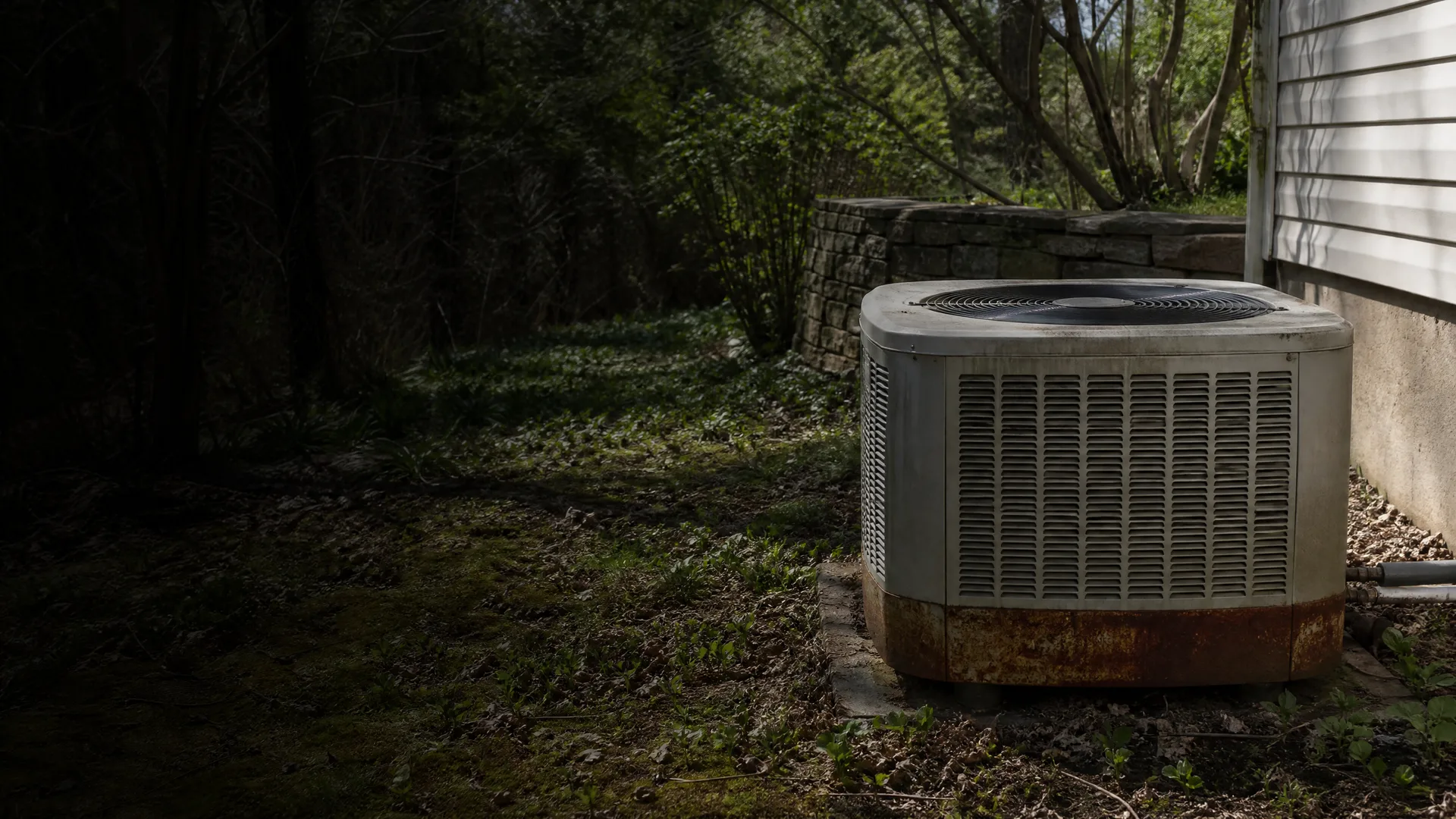
You walk out to the side yard in March to check on the unit before the next cold snap rolls through. The sun's out, there's still a little snow holding on in the shade of the fence, and the heat pump is sitting there running, doing its job. Then you notice the rust along the base, flaking at the seams where the cabinet meets the pad. It's been through enough Colorado winters that the metal's started to go. You crouch down and look closer, wondering how much of that is just surface and how much has gotten into the parts that matter, the ones that decide whether it keeps up when it's 15 degrees out and not 55.
Heat Pump or Gas Furnace in Colorado
Heat pump
- The compressor moves heat instead of burning fuel, so above freezing it can cost less per month to run than a gas furnace in the same house.
- Install it sized right and the compressor should carry most of the load down into the 20s before backup strips kick in.
- A dirty coil or low charge makes the compressor work harder to hit the same setpoint, which shows up as higher draw on your meter.
- Once outdoor temperatures drop into the teens or below, the backup strips run on straight electric resistance, priced the same as a space heater.
- A unit that leans on those strips too often in a Colorado winter can end up costing more some months than the gas furnace next door.
- Getting the install right the first time, with proper sizing and a technician who checks charge and airflow, keeps the compressor doing the work instead of the strips.
Gas furnace
- A gas furnace burns fuel to make heat directly, so its output doesn't drop when the temperature outside does.
- On the coldest nights of the year, a furnace keeps putting out the same heat it does in October, no backup system needed.
- Gas furnaces are what most homes around you already run, so the bill you'd compare against is one your neighbors are already paying.
- A furnace doesn't have a compressor cycle to fall back from, so there's no efficiency cliff the way there is with a heat pump's backup strips.
- Running cost depends on gas prices where you live, which move independently of the electric rate that drives a heat pump's bill.
- A furnace still needs the burner, igniter and heat exchanger checked each year, or it can run less efficiently without you noticing on the thermostat.


That cold-weather math is only half of it. Summers here run hot and dry, with a dew point that averages 42°F across June, July and August. That's low. Dry air gives a heat pump an easier job moving heat out of your house, since it doesn't have to wring much moisture out along the way. You'll notice it in how the system runs: shorter cycles, and the compressor isn't straining the way it would in a muggy climate to hit the same indoor temperature. It's one more reason the summer side of your bill tends to look better than the winter side, where the compressor is working against the cold instead of with dry air.
NASA POWER T2MDEW county cells weighted by homes

Where that leaves you
A heat pump sized and installed right will beat gas on most days here, and lean on backup strips on the coldest ones. Whether yours lands on the good side of that depends on the install, not the weather. That's the part worth getting right the first time.
Finding someone to check your setup usually means calling around, explaining the same thing to three different companies, and sorting through quotes that don't quite match up. A local contractor who works on heat pumps all winter in this climate already knows what tends to go wrong with the sizing and the backup strips in Colorado installs, and you're only dealing with the one company, not a string of callbacks.


Skip calling around