A local installer who puts in heat pumps gets your project.
A heat pump in Colorado works most of the year. It cools your house through the hot, dry summers, and plenty of homes here lean on it for mild-weather heating too, even with gas backing up the cold stretches. That split duty is exactly why how long it lasts is worth asking about before something fails in July or January.
Most heat pumps last somewhere between twelve and fifteen years, sometimes longer with the right care, but the number for your unit depends on how it was sized, how it was installed, and what's been done for it since. A heat pump that was installed wrong from the start will wear out faster no matter how new it looks.
If yours is getting old, or you're just planning ahead, the part that takes the real time isn't deciding you need a new one. It's finding someone who installs them correctly for a Colorado home, checking they're licensed, getting a few quotes, and explaining your setup to each one before you can even compare what they say.
This page connects you with a contractor who installs heat pumps and knows what that means at this elevation and in this climate, dry summer heat, gas-heated homes, the works. You tell us once what you're dealing with, and the contractor who serves your area reaches out to you directly. No calling around, no repeating yourself to five different companies, no guessing which quote actually covers the same work.
What happens after that, the sizing, the setup, the timeline, is between you and the contractor. What this page does is get you to that conversation without the legwork it usually takes to start it.
How long does a heat pump last in Colorado?
Your heat pump in Colorado is carrying more of the load than one in most states, cooling the house all summer and often handling the mild shoulder months too, with the gas furnace only stepping in for the coldest stretches. That kind of year-round use makes you wonder if it's wearing out faster than a straightforward AC would, and whether you should be planning for a replacement sooner than you'd think.
A heat pump in Colorado typically lasts 15 years
That's in line with a heat pump anywhere, because the wear comes from the compressor cycling on and off, not from which season it's running in. The dry summers here are easier on the outdoor unit than humid climates are, since there's less moisture working on the coil and cabinet over time. Where it matters more is the double duty. A heat pump that's also covering mild-weather heating alongside summer cooling is simply running more hours per year than a straight AC paired with a gas furnace. More run hours mean the compressor and other parts get there sooner rather than later. If yours came with the house, it's worth finding out its age and how much of the heating load it's actually been carrying.
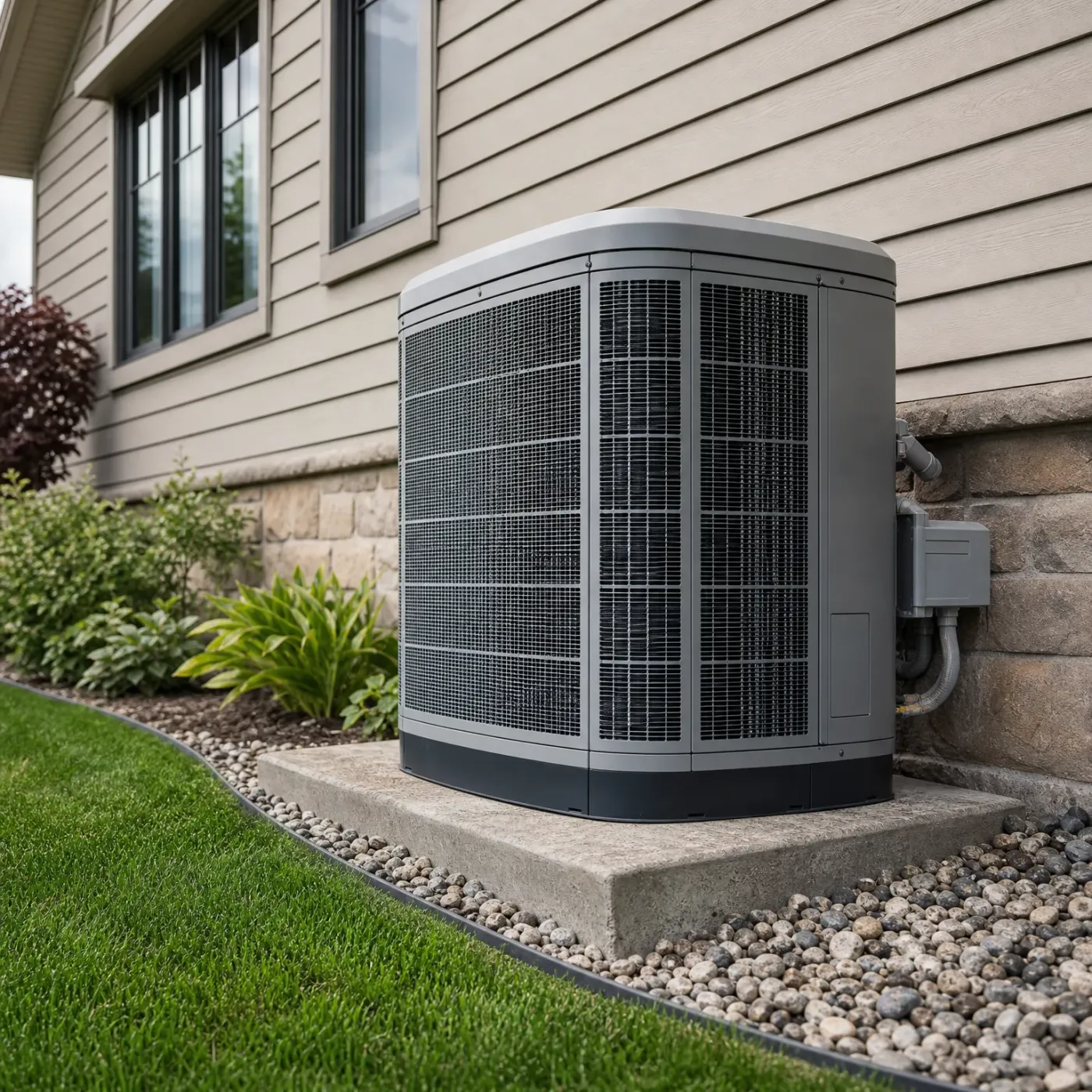
Running as it should
This is a heat pump doing its job. The fan grille turns, the lines stay cold, and the unit keeps the house even through a dry Colorado summer. A properly working system cycles on and off without strain and doesn't call attention to itself out by the pad.
Signs of trouble
Watch for a unit that runs long without cooling the house, short-cycles on and off, or trips the disconnect box repeatedly. Ice on the lines, a burning smell, or a sharp jump in your power bill all mean something inside is wearing out, not just working hard.
Dry air, less strain
Colorado's dry summer heat is easier on a heat pump's coils and compressor than humid heat, which can help the unit hold up over its years of service.
With a gas furnace covering the coldest stretches, your heat pump isn't pushed hard in freezing weather, which spares it the wear that runs a system down faster.
Look at what it's doing this summer compared to a few years back. It might run longer to hit the same temperature, or cycle on and off more than it used to. You may notice the air coming out doesn't feel as cold, or the outdoor unit sounds louder, a rattle or a hum that wasn't there before. Some owners see the first sign on the power bill, which creeps up even though nothing else changed. If the coils look coated with dust or the fan grille looks rough, that's wear too. None of this means it's done, but a unit that's struggling to keep up in August is one worth having looked at before it quits on you when you need it most.
The coils are clean and the base is clear
The condenser sits on its pad with the fins open and the ground around it clear. Air moves through the coil the way it should, so the system doesn't have to work past what the compressor was built for.
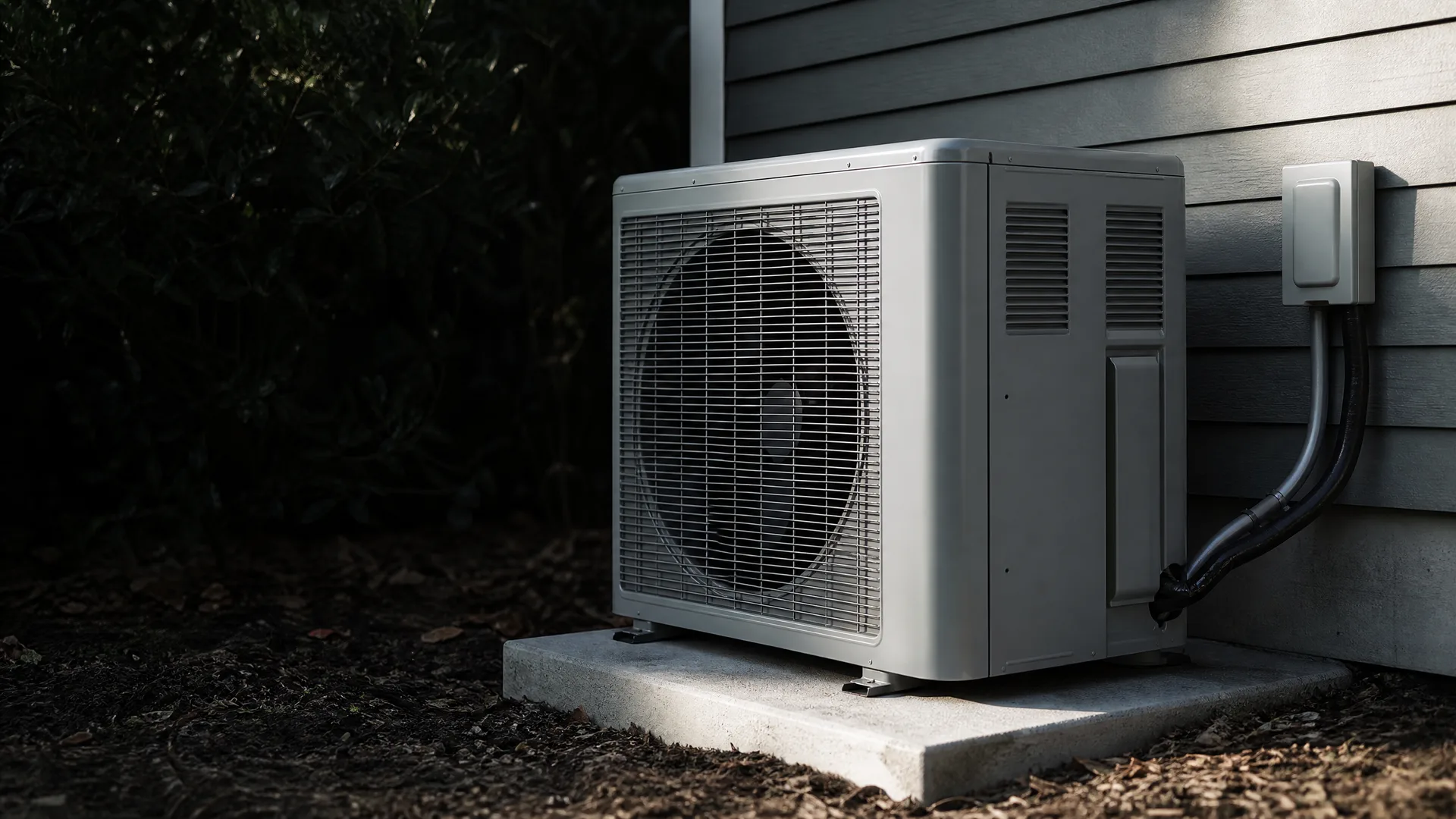
Grime and leaves are doing their damage
Dirty coil fins and a season of dead leaves piled against the cabinet block airflow the unit depends on. Left like this through another Colorado summer, the compressor runs hotter and harder than it should, and that kind of strain adds up over the unit's life.
A heat pump pro near you
Describe the project once instead of to every installer.
Say what's going on with your heat pump, and a pro who works on them reaches out.
No charge to send it. You decide if you hire them.
A newer unit on a clean pad, lines and conduit running neat up the wall, nothing blocking the airflow.
An older unit showing weather and wear on the cabinet, the kind of age that shows up well before a system quits for good.
Summer air here averages a 42°F dew point across June, July and August, according to NOAA climate data. That's dry air, the kind that doesn't cling to your skin. For your heat pump, dry air means the coil sheds heat easily and the compressor doesn't have to fight moisture to cool the house. You'll notice it as steady, even cooling, the kind that doesn't leave the house feeling damp or clammy. It's also part of why a heat pump can hold up well in Colorado over its years of service, since the strain that humid climates put on a compressor just isn't part of the picture here.
NASA POWER T2MDEW county cells weighted by homes
Keep It or Replace It
Keep running it
If it's still holding your set temperature on a 95-degree day without running nonstop, the compressor isn't struggling yet.
A heat pump that cycles on and off at normal intervals, rather than running long stretches, still has margin left in it.
Keeping up with coil cleaning and clear airflow around the outdoor unit lets a system in year ten or eleven keep going without strain.
If your gas furnace is still taking the coldest weeks off its hands, the heat pump isn't carrying the full load year round.
A unit with no refrigerant leaks and a compressor that starts without hesitation can keep earning its keep past the point you'd expect.
Plan the swap
If the air coming out doesn't feel as cold as it used to on a hot afternoon, the compressor is losing capacity even if it still turns on.
Longer run times to hit the same temperature than a few summers back is the system working harder for the same result.
A refrigerant leak found once is often a sign of a coil or line set wearing through, not a one-time fix.
If repair calls are becoming a yearly thing, the cost of keeping it alive starts to outweigh what it's got left in it.
Once a system is old enough that parts are back-ordered or hard to find, planning the replacement beats waiting for it to fail outright.
Before you get your heat pump installationAfter you get your heat pump installation
Replace it yourself
You can start calling HVAC contractors on your own, one at a time, and ask each to come look at the unit. That means describing the same symptoms to every contractor who picks up, waiting for each one to find time on their schedule, and then sitting with a stack of quotes trying to work out why one bid is half another's. Some won't call back. Some will quote a system that doesn't match your house. By the time you've got three real numbers to compare, a few days may have passed and you're still not sure who's actually right for the job. It's doable, but it's work on top of the work of deciding what to replace.
Get matched instead
Answer a few questions about your house and your heat pump, and a contractor who handles installations in your area gets in touch with you. No calling around, no repeating the same details to a half dozen different people, no guessing at which quote is fair. The contractor reaches out, and you take it from there. It doesn't change what the job costs or how long it takes once it starts. What it changes is the part before any of that, the searching and comparing you'd otherwise be doing on your own.
Power costs 15.69 cents per kilowatt-hour statewide
At 15.69 cents per kilowatt-hour, every hour your heat pump runs this summer shows up on the bill. A unit that's lost some efficiency as it ages draws more power to hold the same temperature, so an aging heat pump costs you more here than it did a few summers ago.
EIA-861 2025 statewide residential average
A heat pump sized right
The right size for your house pulls the humidity down fast and still holds a steady temperature on a 95-degree afternoon without short cycling. It matches the load your house actually has, so the compressor runs within what it was built for. That's the kind of install that gets you a full run of years out of the unit instead of a short one.
A heat pump sized wrong
Too big and it blasts cold air in short bursts, shutting off before it's run long enough to dry the air out, so the house feels clammy even at the set temperature. Too small and it runs flat out on the hottest days and still can't keep up. Either way, the compressor takes on more wear than it should, and that shortens how long it lasts.
A heat pump in Colorado earns its keep by running most of the year, and that steady use is what decides how long it lasts, more than the number of years on the nameplate. The dry summers here are kind to the coil and the compressor, and letting the gas furnace take the coldest months spares the unit the hardest strain. What wears a system out early is grime on the coil, a unit sized wrong for the house, or years of running past strain nobody caught in time. If yours is showing its age, the choice isn't whether to deal with it, it's how. You could call around to different contractors, describe the same symptoms over and over, and sort through quotes that are hard to compare. Or you could skip that work entirely and get matched with a contractor who knows this equipment and this climate, and let them reach out to you.