Gas furnace as backup only
The furnace sits idle most of the year, waking up for the coldest nights. Less gas burned, less wear on the furnace, and the heat pump handles the rest on its own.

Finding a pro stops being your job
Cold-climate heat pumps are built to keep working when temperatures drop well below freezing, which matters in Colorado winters. The real question is whether one makes sense next to gas heat and dry summer heat here, and what that means for a system already in your home. Below, what to check and what it comes down to. When you're ready, a local contractor who installs these year-round can take it from here.
Hand off my installationA cold-climate heat pump is worth it in Colorado for most of the year, with a gas backup carrying the coldest stretches of winter. These units are built to keep pulling heat from outside air even when it drops well below freezing, so they do the job on their own through fall and spring and into most of winter. On the hardest nights, when outdoor air has little heat left to give, the system leans on the furnace instead of forcing the compressor to work past its limit. That pairing is why so many Colorado homes keep their gas furnace rather than replace it. In summer, the same unit runs as your air conditioner, and in a dry climate like this one it does that efficiently. The system you have is likely already set up to split the work this way. Whether it is actually running that way, and running it well, comes down to how it was installed and set up.




A cold-climate heat pump doesn't work like the one your neighbor had ten years ago. The compressor runs on a variable speed, so on a mild afternoon it barely works, and on a cold morning it ramps up to keep pace. That's different from older units that just click on and off at full power. Outside, it keeps pulling heat from the air down to around 5 degrees or lower, which covers most of a Colorado winter day. When it finally gets colder than the unit can handle, your gas furnace takes over on its own. You won't be flipping a switch or adjusting a thermostat schedule for it. The outdoor coil will frost up in cold, humid conditions, so the system briefly reverses itself to run a defrost cycle, then goes right back to heating. Come summer, that same outdoor unit runs your air conditioning, so there's one system doing both jobs instead of two. How much of the winter it carries before handing off to gas comes down to how the unit is sized against your home's actual heat loss, not just its square footage.


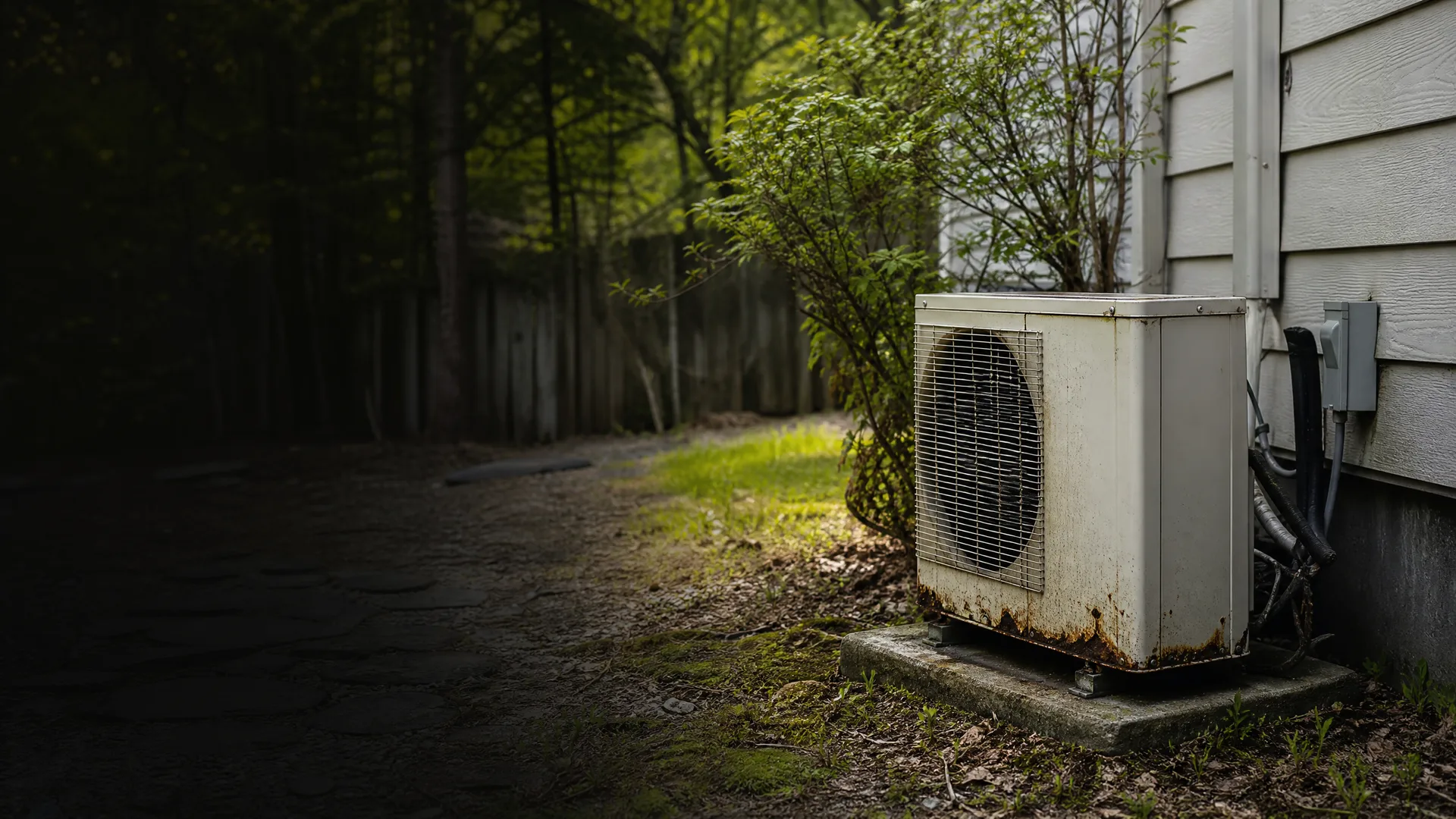
You go out to check the unit on a mild spring afternoon, the kind that finally feels like the cold snaps are done. The sun's out, the yard's still a little muddy near the fence line. You crouch down and see it: rust creeping along the base of the outdoor unit, flaking where the metal meets the ground. It's been running hard all winter, picking up the load whenever the gas furnace needed help. You put a hand on the casing and wonder how many more cold snaps it has left in it before something underneath gives out instead of just the paint.
One installer gets your project, so there's no bidding war over it.
You only hire the pro if you want to.
A cold-climate heat pump still runs on electricity to move that heat, and in Colorado the cost of running it sits next to the cost of running a gas furnace.
Power here runs typical, so the real savings come from the hours the heat pump covers on its own, not from one fuel being cheaper than the other.


The furnace sits idle most of the year, waking up for the coldest nights. Less gas burned, less wear on the furnace, and the heat pump handles the rest on its own.
The furnace carries every cold morning and night all winter. Reliable, but it burns gas the whole season and the heat pump sits unused once summer ends.
At 15.69 cents a kilowatt-hour, running your heat pump through the mild months costs about what you'd expect, nothing steep. It's the hours your gas furnace stays off that make the difference on your bill, not a cheap electric rate.
EIA-861 2025 statewide residential average
Outdoor unit pulls heat from the air into refrigerant
Compressor raises the refrigerant's temperature under pressure
Indoor coil releases that heat into your home's air
Below about 5 degrees, the gas furnace takes over


A cold-climate heat pump holds up its end in Colorado. It covers the mild stretches on its own and hands off to your gas furnace once temperatures drop around 5 degrees, so the people at home stay comfortable without you managing the switch. Your gas furnace stops carrying the whole winter and starts carrying just the coldest part of it. Your power bill stays close to what you already pay, and the savings show up in the gas you are not burning.
What it means for your house depends on the furnace and heat pump already sitting in it, which is why this is worth a real look rather than a guess. A contractor who installs and services these systems in Colorado winters knows what tends to go first on a unit like yours, because they have seen it fail that way before, locally, on equipment just like it. That is different from a national call center reading off a script.
Send one request and one local, licensed contractor gets back to you. Not three or four companies working the same lead, not a round of competing bids crowding your phone. Just the person who will actually look at your system, working from what they already know about installs like yours in this state. From there, whether a cold-climate heat pump is worth installing next to what you have stops being something you have to figure out alone.

Done looking for a heat pump pro