AC won't turn on in Aurora, CO

Get an air conditioner pro

A dead AC on a hot Aurora afternoon isn't something to sit with for long. Before it gets worse, or before you spend a weekend guessing at the thermostat, it helps to have someone look at it who works on these systems all over Arapahoe County. Whatever's keeping your unit from starting, a tripped breaker, a bad capacitor, a control board that's failed, it's the kind of thing a local contractor sees often enough to recognize fast. Answer a few questions about your system and your home, and you'll be matched with one licensed contractor who takes on jobs like yours, not a list of companies competing for your callback. That contractor reaches out to you directly. No juggling quotes, no repeating yourself to five different voices. Just one person who knows Aurora summers and what they do to an AC that's been asked to run hard for months, getting in touch to figure out what's going on with yours.

If your AC won't turn on, start with the thermostat. Set it below room temperature and check that it's on cool, not just on. If the screen is blank, the breaker may have tripped, which happens more often on the hottest Aurora afternoons when the system runs longest. Flip it back and see if it holds. If the breaker trips again, or the thermostat is fine and the unit still won't respond, the problem is usually the capacitor that starts the compressor and fan, a tripped safety switch, or a wiring issue at the outdoor unit. None of these get better on their own, and running the system repeatedly against a bad capacitor can burn out the compressor, which costs far more to replace than to protect. A local contractor who works on these systems around Arapahoe County can usually tell what's wrong within minutes of looking at it.

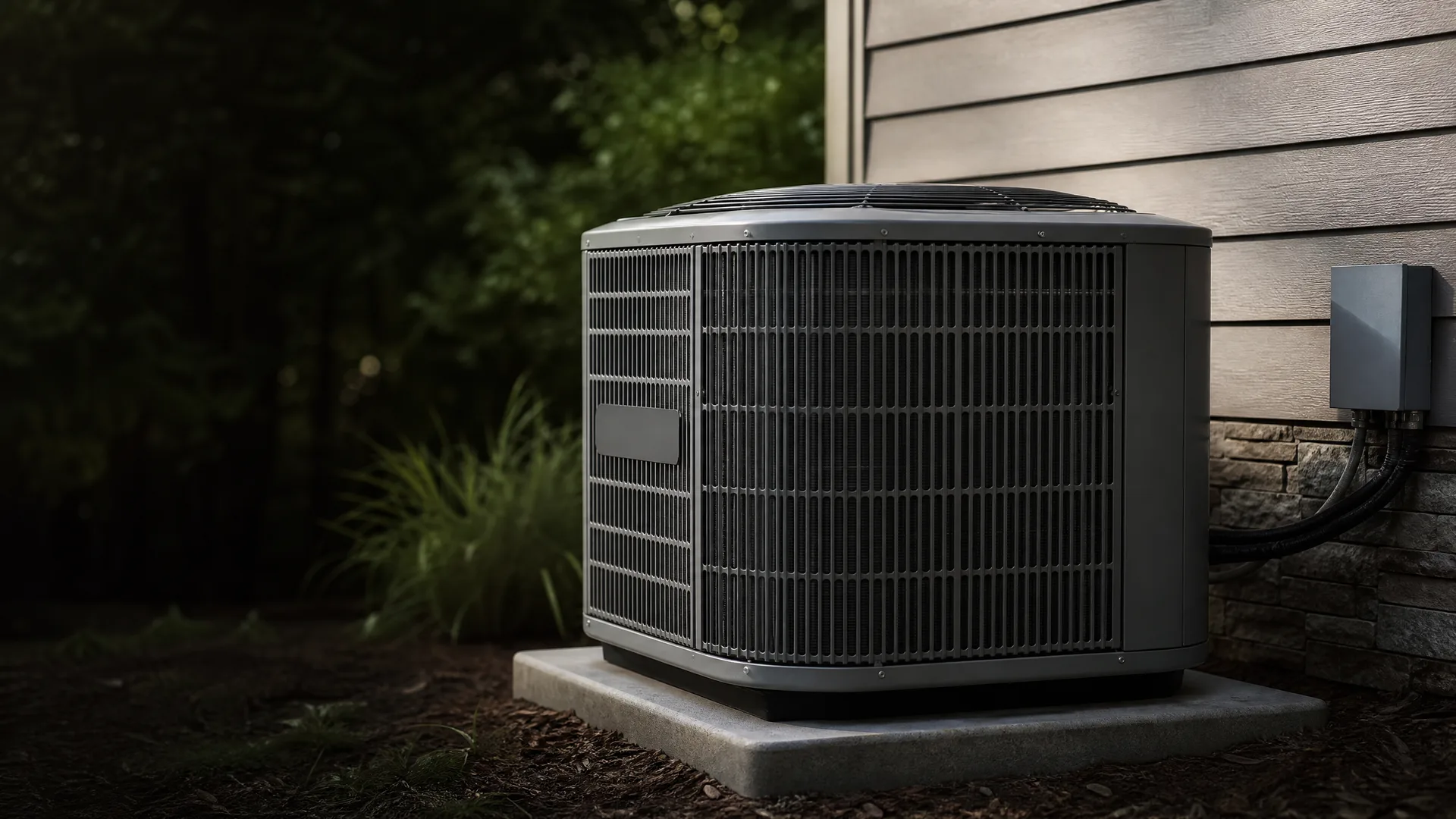
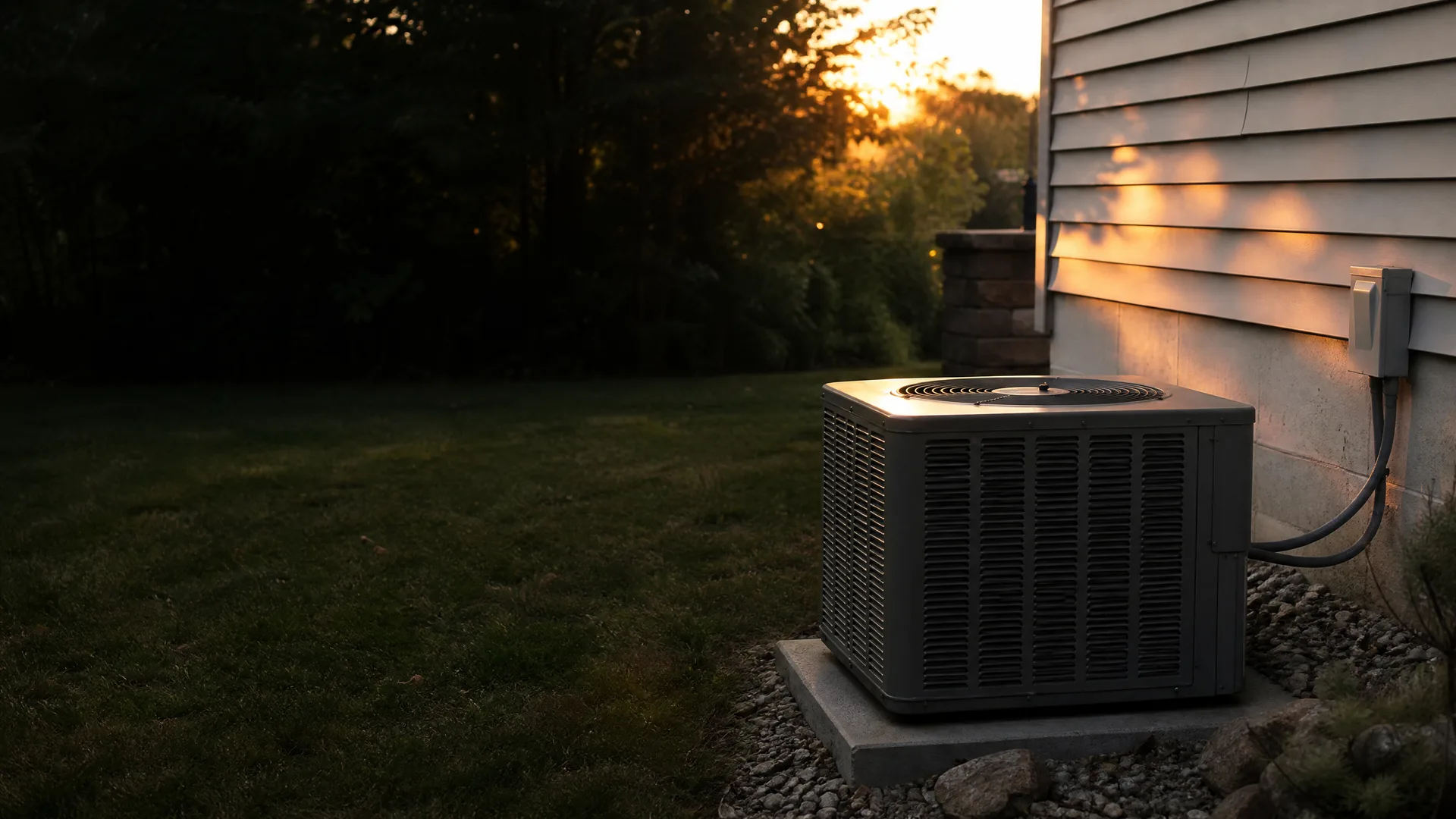
An outdoor air conditioning condenser unit on a concrete pad beside a house with horizontal lap siding, with a gravel bed, refrigerant lines and an exterior electrical disconnect box on the wall, and a lawn and trees at sunset in the background.

You're out back around seven, the sun still high enough to bake the patio stones, and you notice it before you can name it. No hum. No air moving past the fence line where the condenser sits. You walk over and crouch by the unit and the fan blades are still, dead still, catching the gold light instead of spinning through it. Inside, you know the house is already starting to climb past where you left the thermostat this morning. You press a hand against the top grille out of habit, like that would tell you something. It's quiet in a way an AC unit in Aurora in August just isn't supposed to be.
Nothing's changed inside, but the house is heating up

You set the thermostat lower and nothing answers. No click from the unit outside, no air moving at the vents, no change in the number on the screen. Maybe the display itself is dark. Maybe it's lit but the house keeps climbing anyway, degree by degree, while the system outside sits quiet. If anyone in the house is older, very young, or dealing with a health condition, a few hours of this in Aurora in July is more than an inconvenience. Rooms that face west will heat up fastest. Left alone through the hottest part of the day, the house can hold that heat well into the evening, long after the sun's off the patio.

An outdoor air conditioning condenser unit on a concrete pad beside a house with horizontal lap siding, with a gray electrical disconnect box and conduit on the wall, mulch bed and shrub to the right, and mown grass in the foreground.

Running clean

This is a condenser that's getting what it needs. The coil guards are clear, air moves through them, and the disconnect box beside it hasn't had to trip. Nothing's blocking the airflow, so the unit isn't working harder than it has to on a hot Aurora afternoon.

An outdoor air conditioning condenser unit on a concrete pad beside a house with light blue horizontal siding, with a shrub to the left and a conduit and disconnect box on the wall to the right.

Coil choked with debris

Dust has packed into the coil guards here, thick enough to block airflow through the unit. A condenser working behind that buildup struggles to shed heat, and in August that can be the difference between a system that keeps up and one that trips off or won't start at all.

A woman with long brown hair in a cream knit sweater sits on a light sofa in a living room, looking toward a window with sunlight on her face.
A woman with long dark hair leans back against a gray sofa with her eyes closed, in a living room with a curtained window, a potted plant, and a dark screen in the background.
A woman with wavy blonde hair wearing a grey knit cardigan over a green top sits on a sofa in a living room, looking off to the side.
A woman in a gray sweater sits in a chair in a living room with a dark sofa, wooden coffee table with a potted plant, and a staircase behind her, looking toward a window.

The right pro for this job

A system that won't start is usually one of a short list of things: a tripped breaker, a bad capacitor, a failed contactor, or a thermostat that's lost its signal to the unit. Telling those apart means testing power at the disconnect and checking the capacitor's reading against its rating, not just looking at the condenser from a few feet away. That's work for someone who does it on Aurora systems regularly, in houses that sit on the same grid and go through the same July heat yours does. A contractor who works this area knows which of those failures shows up most on the hottest afternoons, when a compressor that was already struggling finally won't start at all. Getting matched with one means someone local looks at your unit specifically, not a general case. With the house already warming up and no air moving at the vents, that's worth doing before the afternoon gets hotter and the house holds onto more of it.

Why the breaker trips here

A condenser pulls the most power the moment it starts, when the compressor and fan motor both draw in at once. That surge is normal, and a breaker sized right for the unit handles it. But on a 95 degree Aurora afternoon, with the system cycling on and off for hours trying to keep up, that repeated surge adds up, and a breaker that's aging or slightly undersized will trip where it wouldn't in May. If yours trips once and holds after you reset it, that's worth mentioning to whoever looks at it. If it trips again right away, stop resetting it and let a contractor find out why.

What the capacitor actually does

The capacitor stores a charge and releases it in one push to get the compressor and fan motor spinning. It only has to do that job for a fraction of a second, but it does it every single cycle, all summer. Heat is what wears it out faster, and Arapahoe County gives it plenty of that between May and September. A capacitor that's weakening doesn't always fail all at once. Sometimes the unit hums for a second and then quits, which is the motor trying to start without the push it needs. That hum, if you heard it, is worth telling the contractor.

Cooling runs June through August

Three months is all your AC has to work with here, and June through August is when Aurora sees its hottest stretches. When it quits on one of those afternoons, there's no mild week ahead to wait it out. It needs to run now, so it's worth getting looked at before the heat sets in for good.

NOAA nClimDiv 1991-2020

You reset the breaker and it holds. The unit starts, runs a few minutes, then quits again. That pattern points to something drawing too much current once it's under load, not a simple trip.

You reset the breaker and it trips again right away, before the unit ever starts. That points to a short somewhere in the circuit itself, and it's not safe to keep resetting it until someone finds where.

An outdoor air conditioner condenser unit on a concrete pad beside a house with light gray horizontal siding, with mulch and green shrubs on either side and a concrete walkway in the foreground.
Before you get your air conditioner repair
A gray outdoor air conditioning condenser unit on a concrete pad beside a house with horizontal siding and a stone veneer base, with refrigerant line and electrical disconnect box on the wall and flowering shrubs to the left.
After you get your air conditioner repair
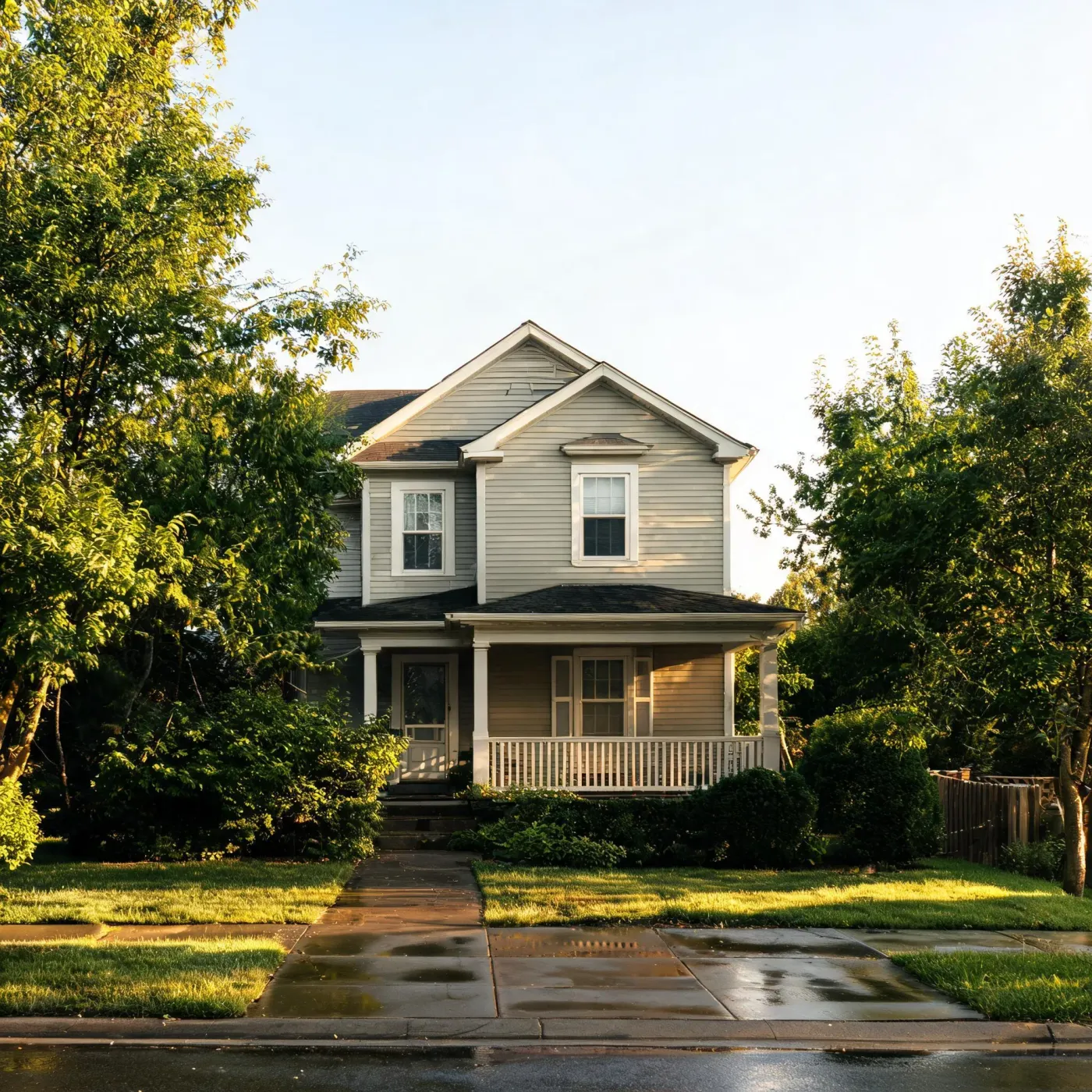
A two-story light-colored house with horizontal siding, a covered front porch with white railings and columns, flanked by green trees and shrubs, with a concrete walkway leading to a wet sidewalk and street.

The air here doesn't just get hot, it holds onto moisture that has nowhere to go. Across June, July and August, Arapahoe County's dew point averages 42°F, according to NOAA climate data, which is low enough that a working AC can pull the house down fast. That's also why a dead unit feels worse here than the humidity alone would suggest. Dry air cools quickly once the system runs, so when it doesn't turn on, the house heats up with none of the relief a little evening moisture might otherwise bring. You're left waiting on the system itself to get the house back down, not the weather to help you along.

NASA POWER T2MDEW

A gray outdoor air conditioner condenser unit on a concrete pad beside a house with horizontal vinyl siding, surrounded by mulch, flowering shrubs, and lawn.
The coil fins are clear and the cage is clean, so air moves through the condenser the way it's built to.
A weathered outdoor air conditioning condenser unit on a concrete pad beside a house with light horizontal siding, an electrical disconnect box and conduit on the wall, and mulched soil on either side.
Dirt packed into the fins makes the unit work harder to move the same air, and that strain is often what trips it off.
An older woman with short blonde hair in a cream knit sweater smiles while looking to the side in a kitchen, with a round loaf of bread on a wooden board in the foreground and a snow-covered window behind her.
A woman with her hair in a bun holds a sleeping child against her chest, both wrapped in a grey knit blanket on a sofa in a dimly lit room with a lamp and houseplant behind them.
A smiling man in a denim shirt and white t-shirt stands in an open dark doorway of a stucco house, facing a woman with long brown hair and a green jacket seen from behind in the foreground.

An AC that won't start has a reason, and it's findable

A tripped breaker, a bad capacitor, a failed contactor, a thermostat that's lost its signal. One of those is why your unit is quiet right now, and none of them get better on their own in an Aurora summer. The fan blades sitting still, the blank disconnect, the breaker that won't hold, all of it points somewhere specific once someone checks power and the capacitor in order.

That's the kind of call a local contractor takes often this time of year, the condensers along Arapahoe County fences going quiet on the hottest afternoons. Getting matched with one means a single licensed contractor reaching out to you directly, someone who works on this equipment all season and knows which of that short list it usually is. You're not left guessing at the thermostat, and you're not fielding calls from five different companies. Just the one, looking at the one problem you actually have.

A dark ceramic vase holding a leafy green branch sits on a round wooden table, with a blurred cushioned wooden armchair, woven basket, window and shelving with pottery in the background.
A gray outdoor air conditioner condenser unit on a concrete pad beside a house with horizontal siding and a stone base, with an electrical disconnect box and conduit on the wall and dark foliage in the background.

Matched to your air conditioner job

RepairCentral ACArapahoe County, CO
Step 1 of 2

What ZIP code is the job in?