

AC not cooling in Denver, CO

RepairCentral ACDenver County, CO
Step 1 of 2

What ZIP code is the job in?

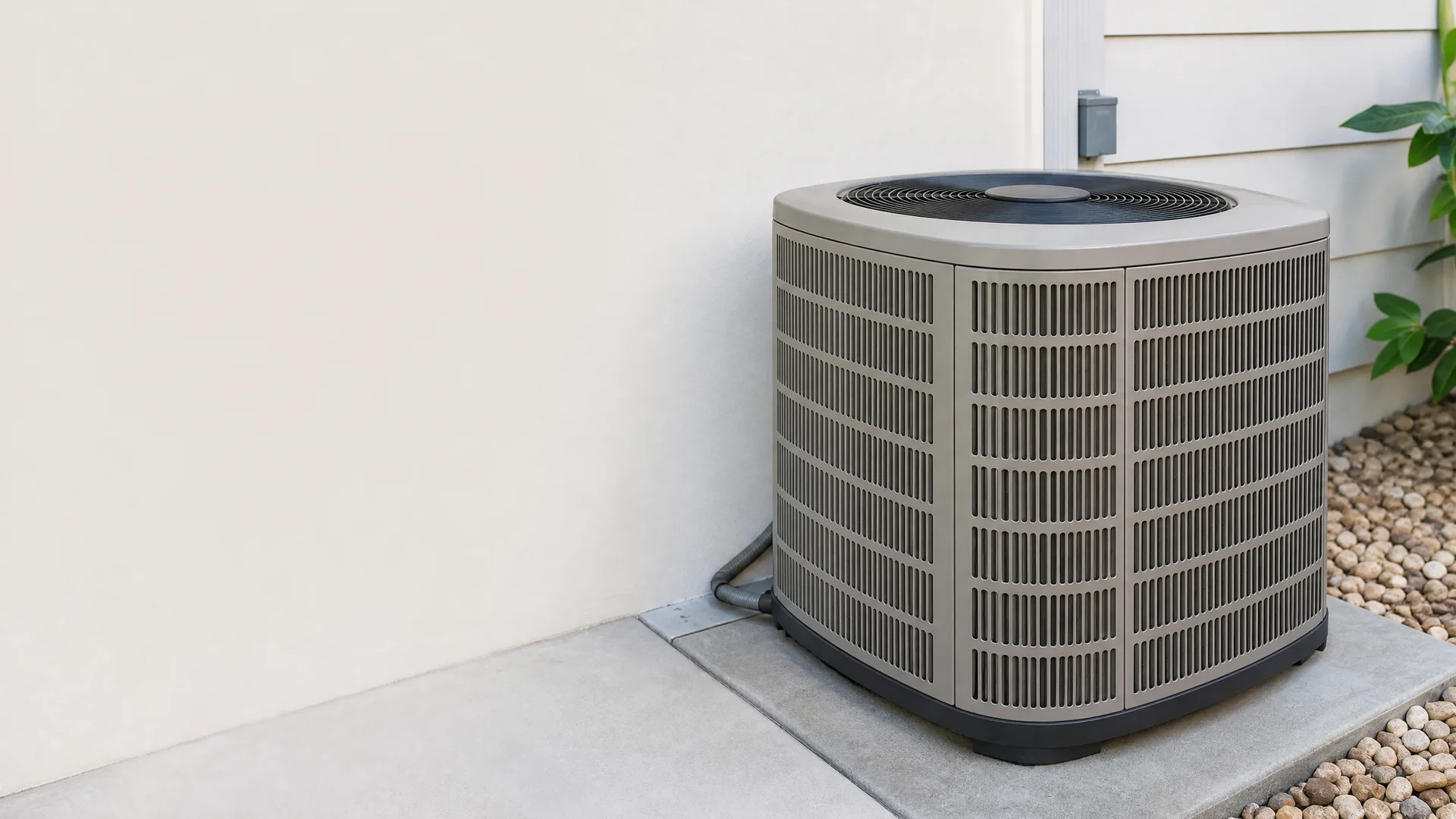
If your AC is running but the air coming out isn't cold, the most common cause is a dirty filter or a frozen evaporator coil choking off airflow. Denver's dry heat means AC units here run hard through the summer, and dust and pollen clog filters faster than in wetter climates, so a filter that's overdue cuts airflow enough to freeze the coil behind it. Once that coil ices up, the system keeps running but stops cooling until the ice melts. Low refrigerant from a slow leak does the same thing, and so does a failing capacitor that can't keep the compressor running steady. If the thermostat is set right and the breaker hasn't tripped, the problem is almost always inside the unit itself, not how you're running it. A technician can tell which of these it is within minutes of opening the cabinet. Until then, running the system less gives the coil a chance to thaw and keeps the compressor from working against a problem it can't fix on its own.

A gray outdoor air conditioning condenser unit sits on a concrete pad beside a house with light siding, a stone-veneer base, a shrub at left, and a lawn in the foreground.

Why airflow matters most here

Denver's dry air carries fine dust and pollen that build up on a filter faster than they would in a humid climate. Once that filter clogs, the evaporator coil behind it gets less warm air moving across it. The coil can drop below freezing even on a hot afternoon, and ice forms along the coil and the line running outside. That ice blocks airflow further, so the air coming out of your vents turns weak and warm instead of cold.

An outdoor air conditioning condenser unit sits on a concrete pad beside a stucco wall and lap siding, with a gravel bed and green shrub at right.

What a frozen coil costs you

Running the system with a frozen coil doesn't just mean warm air. The compressor is built to handle refrigerant as a gas, and a long freeze can let liquid refrigerant reach it instead. That's hard on the compressor, which is the most expensive part of the outdoor unit. Shutting the system off and letting the coil thaw fully, which can take several hours, protects the compressor while a contractor checks the filter, the airflow, and the refrigerant charge.

Warm Air or No Power at All

Still blowing warm

  • If the thermostat is set below room temperature and the system still won't cool, check the breaker before anything else, since a tripped breaker from a hard-starting compressor is a quick thing to rule out.
  • A refrigerant leak will often show up as the air getting steadily less cold over several days rather than failing all at once.
  • Ice on the copper line outside usually means airflow is restricted somewhere between the filter and the coil, not a refrigerant problem.
  • An outdoor unit that's running but silent on the fan side may have a failed capacitor, which keeps the compressor from pulling in enough air to shed heat.
  • If the air coming from the vents smells faintly chemical, that points to a refrigerant issue a contractor needs to handle directly.

Not running at all

  • Check the thermostat display first. If it's blank, the problem may be as simple as a dead battery or a tripped breaker on the furnace circuit, since many AC systems share control power with the furnace.
  • An outdoor condenser that won't start even when the indoor fan runs suggests the issue is isolated to that unit, often the capacitor or the contactor.
  • If the system was working fine until a recent storm, a power surge can trip a safety switch at the outdoor disconnect box without damaging anything else.
  • A clogged condensate drain line can shut the whole system down on purpose, since most units have a float switch that cuts power to prevent an overflow.
  • When nothing in the house responds at all, including the thermostat screen, the issue is more likely electrical than mechanical and worth checking at the panel first.
A gray outdoor air conditioner condenser unit on a concrete pad beside a house with horizontal lap siding, with a wall-mounted disconnect box and conduit to its right and shrubs to the left.

Running clean

This is what a healthy condenser looks like: coil guard clear, pad level, nothing blocking the airflow around it. Air moves through it the way it was designed to, and the system can shed the heat it's pulling out of the house. Denver summers put this unit to work every day from June through September.


An outdoor air conditioning condenser unit on a concrete pad beside a house with horizontal lap siding, with a conduit and electrical disconnect box on the wall at right.

Clogged and struggling

Dirt built up on the coil guard like this blocks the airflow the unit needs to dump heat outside. The compressor runs longer to do the same job, and on a hot, dry Denver afternoon it may not keep up at all. A contractor can clean the coil and check whether the compressor took any damage running this way.

A woman in a cream sweater and jeans stands in the open doorway of a white stucco house, holding the dark door, while a man in a dark quilted jacket seen from behind walks toward the entry past potted plants.

What a warm house tells you

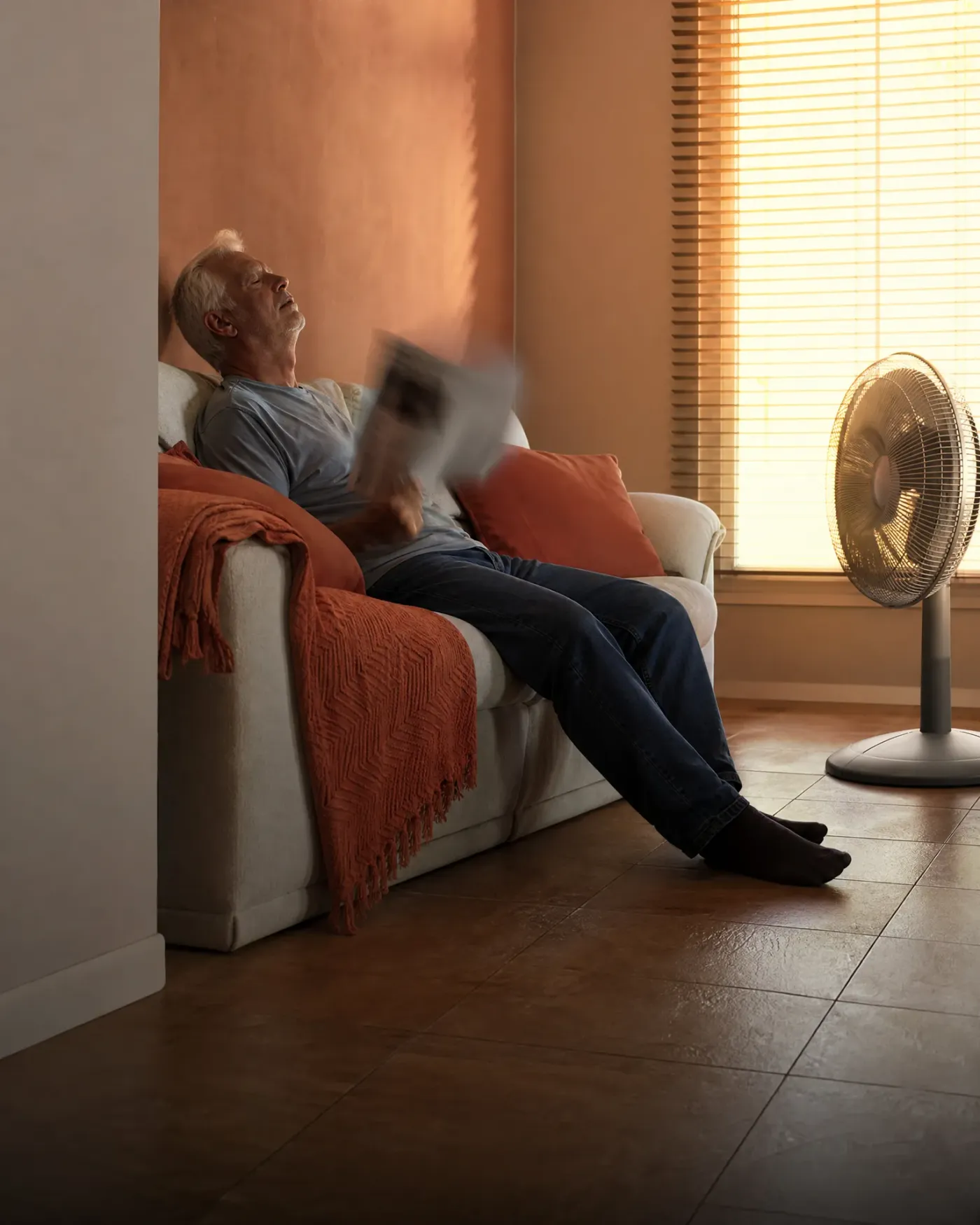
A house that won't cool down in July shows up fast. The upstairs bedrooms hold heat worse than the main floor, so that's usually where it's noticed first, especially once the sun's been on the roof all afternoon. If anyone in the house is older, very young, or has trouble with heat, a system that's lost its cooling matters more than discomfort. It's a real condition to fix, not just something to wait out until evening cools things off outside.

A system that's struggling also tends to run longer to chase a setpoint it can't reach, and a compressor working that hard for hours at a stretch is more likely to trip a breaker or fail outright before the week is out. Once you've ruled out the easy things, the next step is getting a contractor out who can actually look at the coil and the charge. Send in what you're seeing and you'll be matched with someone who handles Denver systems, and they'll follow up directly, so you're not the one making calls trying to find help.

A gray upholstered sofa with a textured cushion sits beside a dark round side table holding a vase of green foliage, with a table lamp and sheer-curtained window behind.
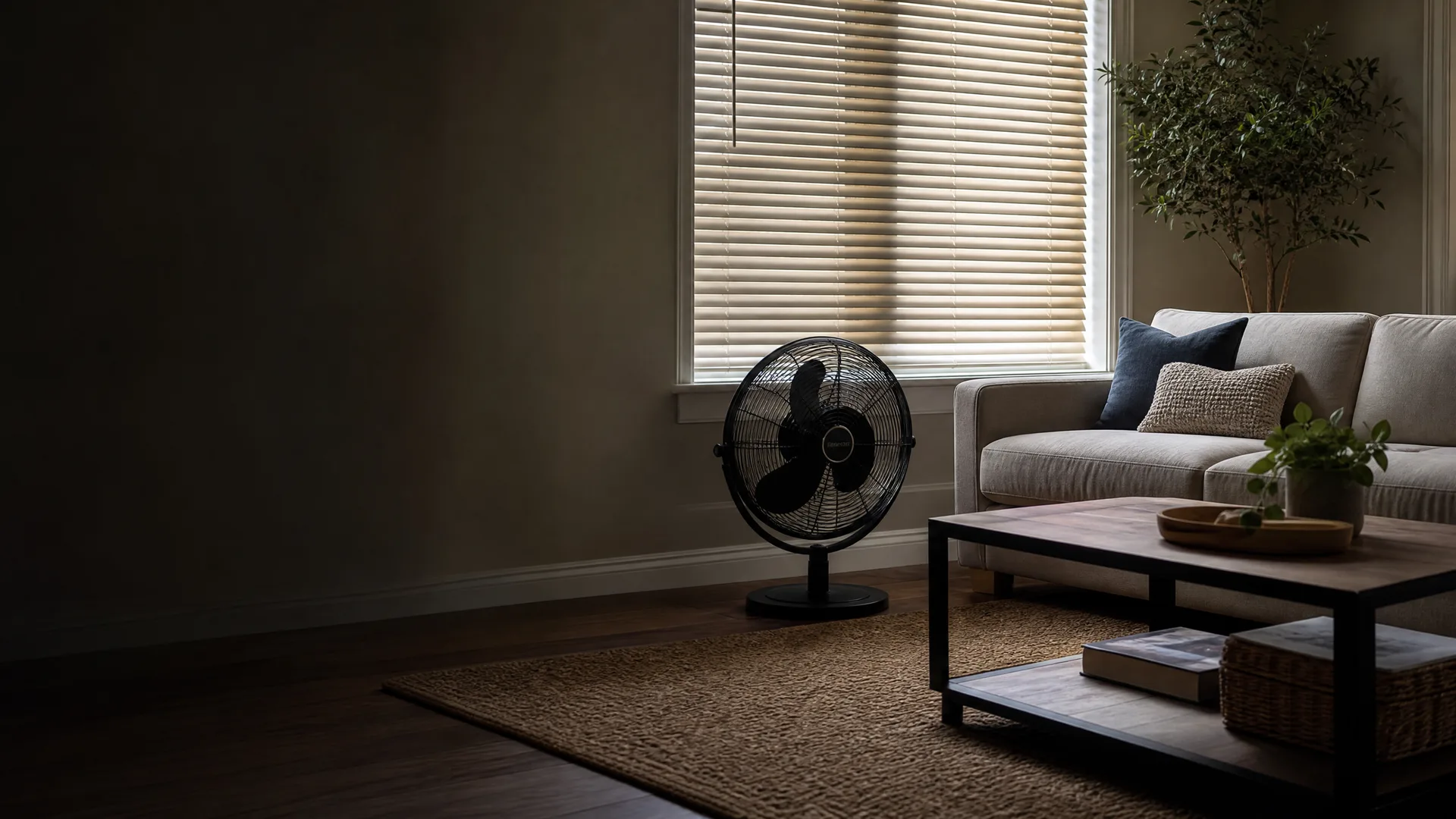
A dimly lit living room with a black table fan on the wood floor near a window with closed blinds, beside a light-colored sofa with cushions, a wooden coffee table, a woven rug, and a potted tree.

By two in the afternoon the blinds are already shut tight against the sun. The floor fan runs next to the couch, pointed at nobody in particular, just moving the same warm air around the room. The thermostat says it's working, the vents are open, and it still doesn't feel like anything is happening. Outside, the heat sits on the driveway and the front window in a way that makes the living room feel smaller. You've stopped checking the thermostat every few minutes. It's not going to change until something about the unit outside does.

A gray outdoor air conditioning condenser unit on a concrete pad beside a house with horizontal siding and a stone veneer base, with a wall-mounted disconnect box and conduit, next to a shrub bed and a concrete patio.
A unit like this one is set up on a level pad with clear space on every side, so it can pull air through the coil without working against anything.
An outdoor air conditioner condenser unit on a concrete pad beside a house with light gray vinyl siding, with a gray electrical disconnect box and conduit on the wall, gravel beds and dried plants nearby, and a concrete sidewalk in the foreground.
A unit left like this, crowded by weeds and sitting low in loose gravel, loses airflow around the coil before anything inside it even fails.
A woman with long brown hair in a cream knit turtleneck sweater sits on a light sofa indoors, looking off to the side, with a shelf of plants and pottery blurred behind her.
A smiling woman with dark hair in an updo, wearing a gray ribbed turtleneck sweater, sits on a light sofa in a living room and looks off to the side.
A woman in a mustard knit sweater sits on a light-colored sofa indoors, looking toward a bright window, with a potted fiddle-leaf fig plant behind her.
A woman with long brown hair in a dark red knit sweater sits on a gray couch with cushions, smiling and looking off to the side, with a window and indoor plant behind her.

A pro who works on air conditioners

After this form, you can stop searching for an air conditioner pro.

Sending the form costs nothing.

A unit that cools until the heat peaks. Some AC systems keep up fine through a mild afternoon but fall behind once the temperature climbs past 95 and stays there for hours, which is when the compressor is working hardest and has the least room for error.

A unit that's already lost ground before the heat peaks. If the house was warm at ten in the morning, the problem isn't the afternoon sun. Something was already keeping the system from keeping pace, and the hottest part of the day just made it obvious.

A smiling older woman with short gray hair in a light knit sweater sits in a dimly lit kitchen behind a round loaf of bread on a wooden board, with a frost-covered dark window to her side.
A woman and a child wrapped together in a cream knit blanket on a couch in a dimly lit room, with a lit lamp, framed picture and potted plant in the background.
A gray outdoor air conditioning condenser unit on a concrete pad beside a house with horizontal lap siding, with a conduit and electrical disconnect box on the wall and a green shrub in mulch to the right.

Clear coil, clean pad

This condenser has open space on every side and a clean grille, so it can pull air through the coil the way it was built to. A unit kept like this holds its charge and runs the way the manufacturer intended, even on the hottest days in Denver.

A weathered outdoor air conditioner condenser unit on a concrete pad beside a house with horizontal vinyl siding, with a conduit and disconnect box on the wall to the right.

Dirt doing its damage

Dead leaves and grime have built up around the base and across the grille here. That buildup blocks airflow through the coil, and the compressor has to work harder to move the same heat out of the house. Left alone, it wears the unit down faster.

Why does the house feel worse by evening?

You'll notice it in the rooms upstairs first, since heat collects there through the afternoon. The thermostat might read 74 and the room still feels warmer than that. Vents are blowing but the air doesn't feel cold against your hand. Sometimes there's a musty smell from a coil that's iced over and started to drip as it thaws. If the outdoor unit is running constantly without shutting off, that's the compressor working past where it should, and a system left to run that way for days can end up with a bigger repair than the one you'd have caught early. None of this fixes itself by waiting out a cooler night, since Denver's dry heat keeps pushing the system the same way again the next afternoon.

A two-story gray clapboard house with white-trimmed windows and a white front door, framed by large green trees, with a wet concrete walkway and sidewalk crossing a lawn in the foreground.

Denver summers don't feel muggy, and the air backs that up: the dew point averages 42°F across June, July and August, according to NOAA climate data. That's dry air, and dry air pulls moisture out of anything wet, including the condensate running off your evaporator coil and the ground around your condenser. It's one more reason the coil runs cleaner here than in a humid city, but it does nothing to help a dirty filter or a low refrigerant charge. If the air coming out still isn't cold, dry air isn't the cause.

NASA POWER T2MDEW

An outdoor air conditioner condenser unit on a concrete pad beside a house with horizontal lap siding, with a conduit running to a gray electrical disconnect box on the wall.
Before you get your air conditioner repair
A gray outdoor air conditioner condenser unit on a concrete pad beside a house with horizontal lap siding, with a wall-mounted disconnect box and conduit at left and a green shrub and mulch bed at right.
After you get your air conditioner repair
  1. Warm air passes through the filter and picks up dust

  2. A clogged filter starves the coil of warm airflow

  3. The coil runs too cold and ice starts forming on it

  4. Ice builds until the coil blocks airflow completely

Cooling runs June through August

Three months is the whole season your AC has to carry you, so when it quits in July there's no slack month left to make up for it. A system that's been neglected tends to show it right in the middle of that stretch, not before.

NOAA nClimDiv 1991-2020

Where this leaves you

  • A dirty filter or a frozen coil explains most warm-air calls in Denver, and both are things a contractor checks first.
  • A tripped breaker, a weak capacitor or a low refrigerant charge each stop cooling in a different way, but all are repairable.
  • A condenser crowded by weeds or sitting low in gravel loses airflow long before the compressor itself fails.
  • Systems that keep up fine most afternoons can fall behind once the temperature climbs past 95 and stays there.
  • Denver's short summer leaves no slack month to make up for a system that sat neglected until it quit.
  • Once you send the form, finding a contractor is off your plate, and getting the house cool again is the only thing left to happen.

A warm house in Denver almost always comes down to one of a few things. Airflow gets choked off by a dirty filter or a coil that's iced over. The compressor loses power to a tripped breaker, can't start on a weak capacitor, or runs low on refrigerant. Sometimes the problem isn't inside the system at all. A condenser boxed in by weeds or sunk low in gravel can't move enough air across the coil to do its job, no matter how sound the compressor is. None of this shows up the same way twice, which is why the fix depends on what a contractor finds once they're looking at your unit and not someone else's.

What ties all of it together is timing. A system that's been running on a clogged filter or a low charge for weeks can usually get through a cool stretch without anyone noticing. It's the hard afternoons, the ones past 95 that don't let up until evening, that find the weak point and stop the system cold. With three months to carry the whole season, there isn't a slack week later on to make up for one lost now.

None of that is something to work out on your own. Once you send the form, the job of finding the right contractor stops being yours. Someone who handles this kind of repair will reach out, and from there the only thing left is getting your house back to cool.

The gabled roof peak of a dark-clad house with a timber-framed window in the foreground, backed by conifer trees, rolling grassy hills, and a snow-streaked mountain range under a pale sky.

Get your air conditioner to the right pro

Find an air conditioner pro

You're not committing to anything by asking.

A system that's been blowing warm for days isn't resting, it's working against whatever's wrong with it. The longer a compressor runs under strain, the more likely it costs you a bigger repair instead of a small one. Getting a contractor out while it's still just warm air is easier on the system than waiting until it quits outright.