AC keeps tripping the breaker in Castle Rock, CO

Send the request today and stop worrying about who to call.

Let a pro reach out

Why does my AC keep tripping the breaker?

It's hot outside and you've reset the breaker more than once today, but it won't stay on. You just want to know if this is something simple or if the unit is on its way out, and whether it's safe to keep resetting it yourself in the meantime.

Usually a failing compressor, a bad capacitor, or a short in the wiring

Most of the time the outdoor unit is pulling more current than the breaker allows, and the breaker is doing its job by shutting off before something gets damaged. A weak start capacitor makes the compressor draw too hard when it kicks on. A compressor nearing the end of its life does the same thing, worse, as it ages. Frayed wiring or a short in the unit can trip the breaker just as fast. With summers running hot and dry through Douglas County, your AC is probably cycling on and off for hours every day, and that repeated strain is exactly when a weak part finally gives out. Resetting the breaker again and again without finding the cause risks damage to the compressor itself.

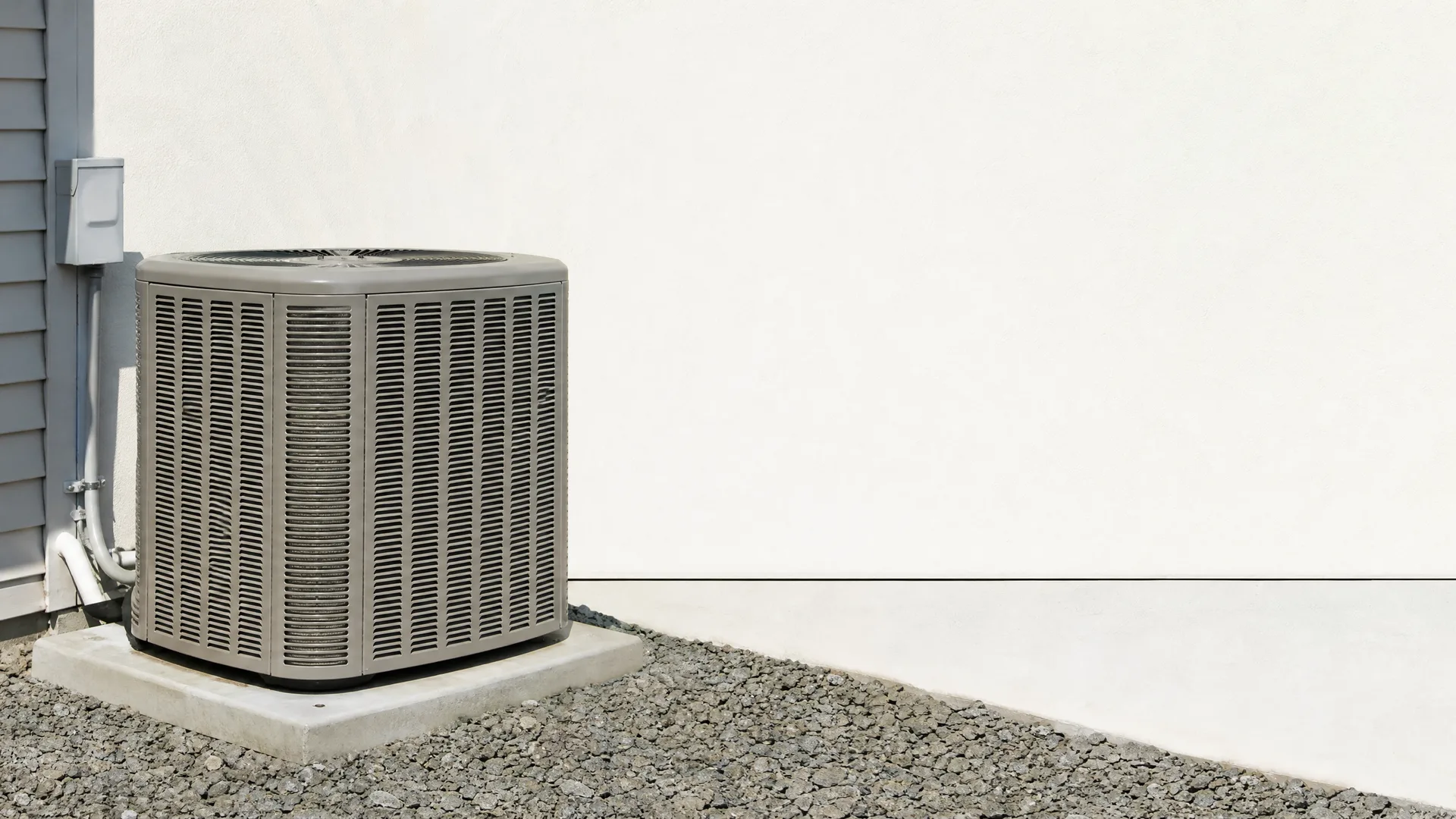
A gray outdoor air conditioner condenser unit on a concrete pad beside a house with horizontal siding and a stucco foundation, with a disconnect box and conduit on the wall, decorative gravel, mulch, and a shrub nearby.

Running the way it should

A condenser that's pulling normal power starts up, runs steady, and keeps the breaker closed. Air moves through clean coils and the compressor doesn't have to work past what the circuit is rated for. Nothing here forces the panel to trip.

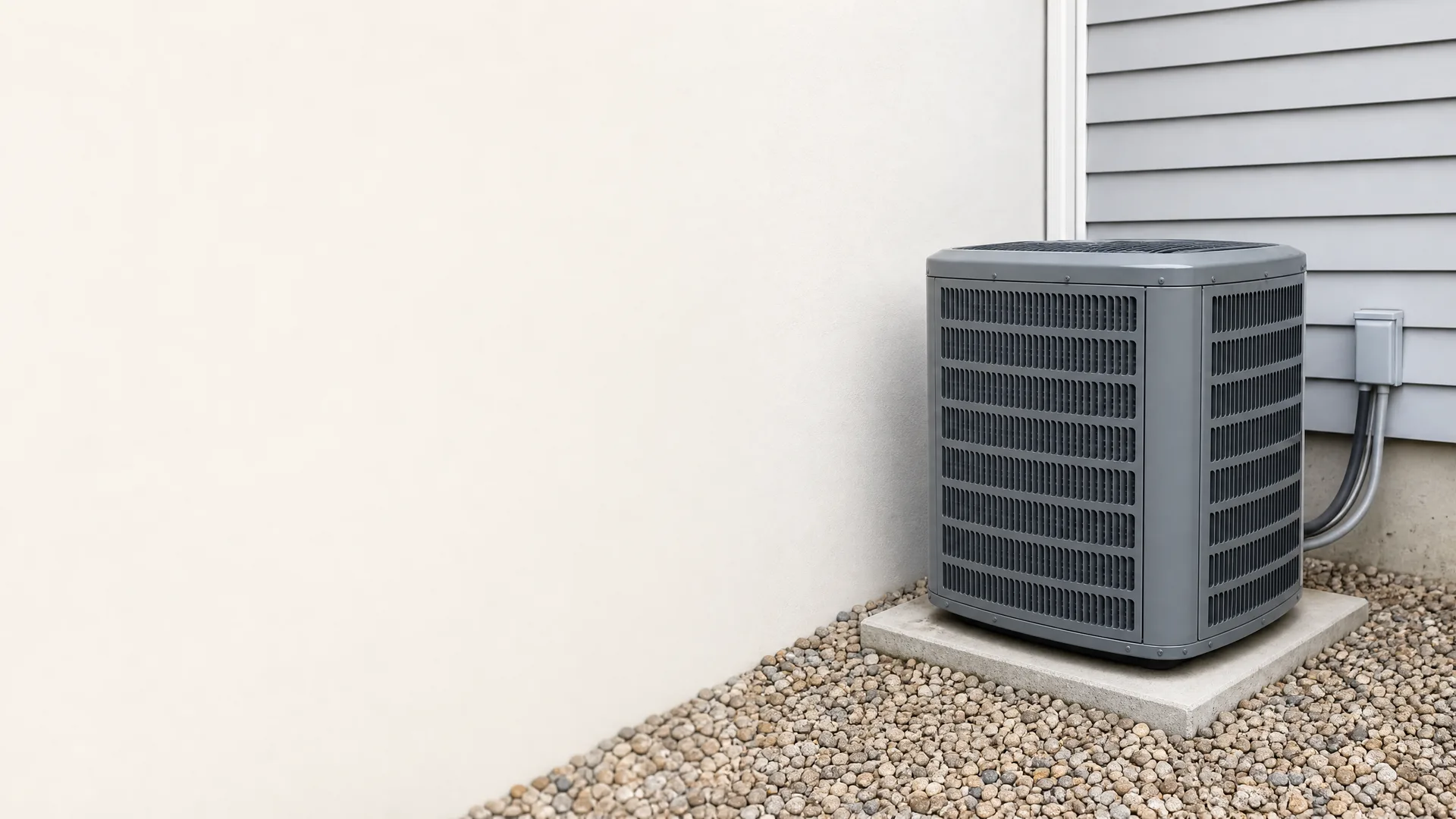
An outdoor air conditioning condenser unit on a concrete pad beside a house with horizontal lap siding, with an electrical disconnect box and conduit on the wall, mulch and a green shrub to the right, and a concrete walkway in the foreground.

What's forcing the trip

Dirt packed into the coil grilles blocks airflow, so the compressor draws more current trying to move heat it can't shed fast enough. That extra draw is what pushes a breaker past its limit. A unit that looks like this will usually keep tripping until the coils are clean and whatever's pulling the extra amps gets checked.

Reset Again, or Get It Checked

Keep resetting it

  • Each trip can mean the compressor is pulling more current than the breaker allows, and it won't stop on its own.
  • Resetting it lets the unit try to start again, and a hard start is what stresses a weak capacitor or worn contactor further.
  • If the breaker trips within a minute or two of starting, that's the compressor drawing a surge the circuit can't carry.
  • A breaker that trips repeatedly in one afternoon is telling you the same thing each time, and resetting it doesn't change the answer.
  • Running the system on a breaker that keeps tripping during a hot stretch risks losing cooling for good at the worst time.
  • A hot attic or a hot afternoon doesn't cause a trip by itself. Something in the circuit or the unit is already failing.

Call someone now

  • A licensed contractor can check the capacitor, the contactor and the wiring to the disconnect before anything else gets tested.
  • Someone local who works on these condensers every summer knows which parts tend to fail first in this kind of heat.
  • A locked rotor or a shorted compressor winding will trip a breaker every time, and only a meter will tell you which it is.
  • Finding the actual cause means you stop losing cooling on the hottest days of the year to repeated trips.
  • One contractor takes the call, not several, so you're not fielding competing estimates while the house is warm.
  • A proper diagnosis now can catch a failing part before it takes the compressor down with it.
An outdoor air conditioning condenser unit sits on a concrete pad beside a plain light-colored wall, surrounded by gravel, with vinyl siding and an electrical box at the left edge.

What a hard start does to the breaker

A compressor draws the most current in the first second it runs, before it gets up to speed. That jump is normal and the breaker is sized to handle it. A weak capacitor or a dragging compressor stretches that moment out, and the circuit sees high current for longer than it should. The breaker doesn't know why the draw is high. It only knows the number, and it trips to protect the wire behind it.

A gray outdoor air conditioning condenser unit sits on a concrete pad surrounded by gravel, beside a stucco wall and vinyl siding with an electrical disconnect box and conduit.

Why afternoon heat makes it worse

Castle Rock summers push the outdoor unit hardest in the late afternoon, when the air around the condenser is hottest and the coil has to work harder to dump heat. A compressor already pulling borderline current has less room to spare once the outside air climbs. That's often why the breaker holds in the morning and trips by 4 or 5 o'clock, even though nothing about the wiring or the panel has changed.

Cooling runs July through July

Your AC only has to get through one month of real heat here. That short, hard stretch is exactly when a weak capacitor or a tired compressor shows itself by pulling too much current and tripping the breaker. A unit that's been limping along can usually make it through milder weather, but July is when it gets found out.

NOAA nClimDiv 1991-2020

Every time it trips, your house loses cooling in the middle of a hot stretch, and the breaker itself takes wear it wasn't built for.

A breaker that trips once from a bad start can usually be reset. One that keeps tripping is telling you the compressor or capacitor behind it is already failing.

A woman with shoulder-length graying brown hair, wearing a beige cardigan over a white top, sits in a light upholstered armchair and looks off to the side, with a curtained window, bookshelf, and lamp shade behind her.
A woman with hair in a bun sits on a couch holding a sleeping child, both wrapped in a chunky knit blanket, in a dimly lit room with a lamp and bookshelves behind.
  1. The compressor draws a hard surge of current to start spinning.

  2. A weak capacitor forces the motor to strain longer than it should.

  3. Current climbs past what the breaker is rated to carry.

  4. The breaker senses the overload and opens the circuit.

A gray outdoor air conditioner condenser unit on a concrete pad beside a house with horizontal lap siding, with a flowering shrub at left and a disconnect box with conduit on the wall at right.
Starts on the first try and the breaker stays closed, no matter how hot it gets outside.
An outdoor air conditioner condenser unit on a concrete pad beside a house with light horizontal vinyl siding, surrounded by bare dirt, gravel and dry leaves, with refrigerant lines and conduit running along the wall.
Leaves grow dirt at the base and lines run exposed along the wall, a unit nobody's checked on in a while.
A gray-haired man in a dark knit sweater sits on a light gray sofa in a living room, looking toward a sunlit window, with houseplants, a lamp, and framed art in the background.
A bearded man with graying hair in a dark green sweater sits on a sofa in a living room, looking off to the side, with a sliding glass door and a dim kitchen doorway behind him.
A gray-haired man in a dark green sweatshirt sits on a sofa in a living room, looking toward a bright window, with a houseplant, lamp, fireplace and framed art behind him.
A gray-haired man in a dark long-sleeve shirt sits on a gray sofa in a living room, looking toward a sunlit window with sheer curtains.

Hand off the air conditioner problem

A breaker that keeps tripping on a hundred-degree afternoon in Castle Rock isn't going to fix itself before the heat breaks. Every reset is another hard start, and another chance the capacitor or contactor that's already struggling gives out for good. Figuring out which part is failing means pulling the panel off and testing it, not guessing from the living room. A contractor who works on these condensers all summer has seen this exact pattern plenty of times and knows where to look first. Your request goes to one licensed contractor local to the area, someone who already knows what Douglas County summers do to a weak capacitor or a tired compressor. You don't have to figure out if it's serious or figure out who to call about it. Send the request and let it get looked at properly while you've still got power running to everything else in the house.

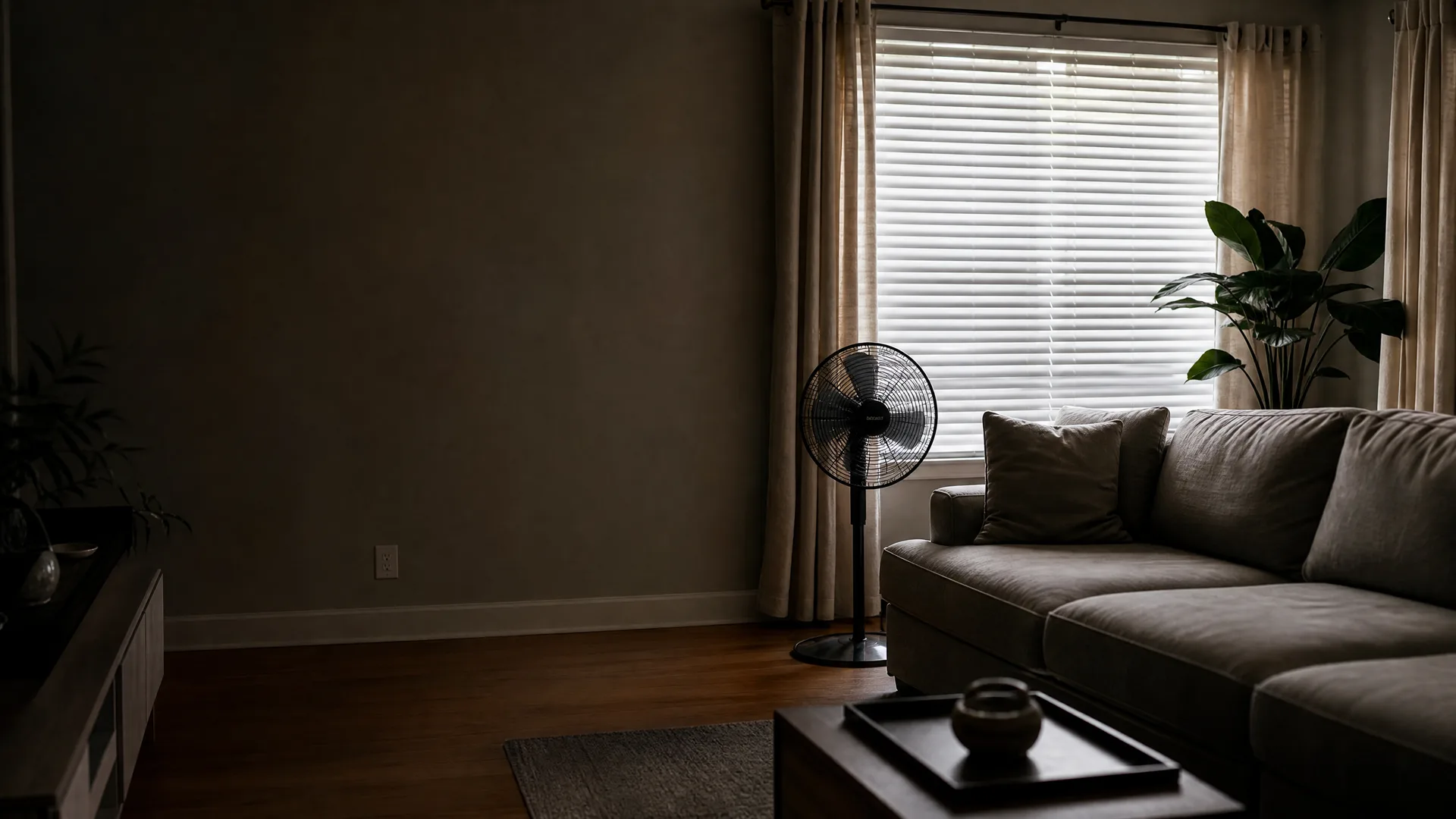
A dimly lit living room with a gray sectional sofa, a standing pedestal fan, a curtained window with blinds, a potted broad-leaved plant, a wooden coffee table with a tray and lidded jar, and a rug on dark wood flooring.

Three thirty in the afternoon and the blinds are shut against the sun. The floor fan next to the couch is doing most of the work now. You've been in and out to the breaker panel twice already, and the house has that still, warm feel it gets when the air isn't actually moving through the vents. Outside, Castle Rock is sitting in the kind of July heat that only lasts a few weeks a year, which is almost worse, because the unit never gets a break to show you it's struggling until a day like this. You reset the breaker again and listen for the compressor to catch. It does, for now.


Why does it keep happening in the afternoon?

You've probably noticed it's never first thing in the morning. It's mid-afternoon, the house has had hours to warm up, and the compressor has been running close to nonstop trying to keep up. The breaker trips, the air stops, and within twenty minutes or so you can feel the difference in every room. You flip it back on and it might run fine for an hour, or it might trip again before you've sat back down. If this has started happening more than once in the same week, the part causing it isn't getting better on its own, and running the unit on a breaker that keeps opening is hard on the compressor itself.

A two-story light-colored house with horizontal siding, two front gables and a small porch, seen from the street across a green lawn with a straight concrete walkway and leafy trees on both sides in low sunlight.

The air here doesn't just get hot, it holds moisture, with dew points averaging 42°F across June, July and August in Douglas County. That's enough to put real load on the compressor, since it has to work longer to pull that moisture out along with the heat. A unit that's already starting hard on a weak capacitor or worn contactor doesn't get a break from dry air to recover on. Every run stretches a little longer, and every trip of the breaker happens on a day when the air outside isn't doing the unit any favors.

NASA POWER T2MDEW

An outdoor air conditioner condenser unit sits on a concrete pad beside a stucco wall, with refrigerant lines and conduit running to the wall and a shrub to the left.
Before you get your air conditioner repair
A gray outdoor air conditioner condenser unit on a concrete pad beside a house with dark horizontal siding and a stone base, surrounded by gravel, with a flowering shrub at left and a concrete walkway in front.
After you get your air conditioner repair

Call it in now

A licensed local contractor looks at the capacitor, the contactor and the compressor's draw, and tells you which one is causing the trip before it fails for good.

Find a local pro

Keep resetting it

Each hard start pulls more current through a part that's already weak. The breaker will keep opening until something underneath it gives out.

Find a local pro

A breaker that keeps tripping is the compressor telling you it's drawing more than it should, and resetting it again won't change that. The fix is whoever opens the condenser and checks the capacitor, the contactor and the compressor's draw against what the breaker is rated for. That's a job for someone who works on these units all summer in Douglas County and knows which part usually gives out first when the heat sits in the high nineties for days. You'll be matched with one licensed local contractor, not a handful of companies competing for the call, so the person who shows up is the one who takes it from there. They'll test the parts, find which one is pulling the system past its limit, and tell you straight whether it's a repair or something closer to the end of its life. Until then, treat each reset as borrowed time, not a fix.

A white clapboard house at dusk with a lit pedimented portico, wooden front door, potted ferns, stone walkway, lawn, and illuminated hydrangea shrubs.

Air Conditioner Repair

Finding a pro stops being your job

RepairCentral ACDouglas County, CO
Step 1 of 2

What ZIP code is the job in?

  • A beige upholstered armchair with an olive cushion sits in a sunlit corner beside a wooden side table holding a ceramic vase with leafy branches, under a framed abstract artwork, on a woven rug over a wood floor.
    • A Douglas County pro who repairs air conditioners gets your request.
    • Your request goes to a Douglas County pro who takes air conditioner jobs.
  • A gray outdoor condenser unit on a concrete pad surrounded by dark gravel, beside a dark wood-sided wall with an electrical disconnect box and a stone veneer wall with a small evergreen shrub.
    • Send it once and finding someone is no longer on you.
    • Send the request today and let an air conditioner pro reach out to you.
  • A beige upholstered oversized armchair with a matching cushion and a knit throw draped over one arm, beside a round wooden side table holding a vase of greenery near a curtained window, with a framed landscape print on the wall and a woven rug on a wood floor.
    • Explain the air conditioner problem once instead of to every shop in Douglas County.
    • Skip calling shops to ask who repairs air conditioners in Douglas County.
  • Sunlit living room corner with a beige upholstered sofa, cushion and knitted throw, a round wooden side table holding a white ceramic vase of leafy branches and a small wooden bowl, a framed landscape painting on the wall, and a window at right.
    • Only one pro gets your request, so you hear from one company.
    • Your request stays with one local pro.