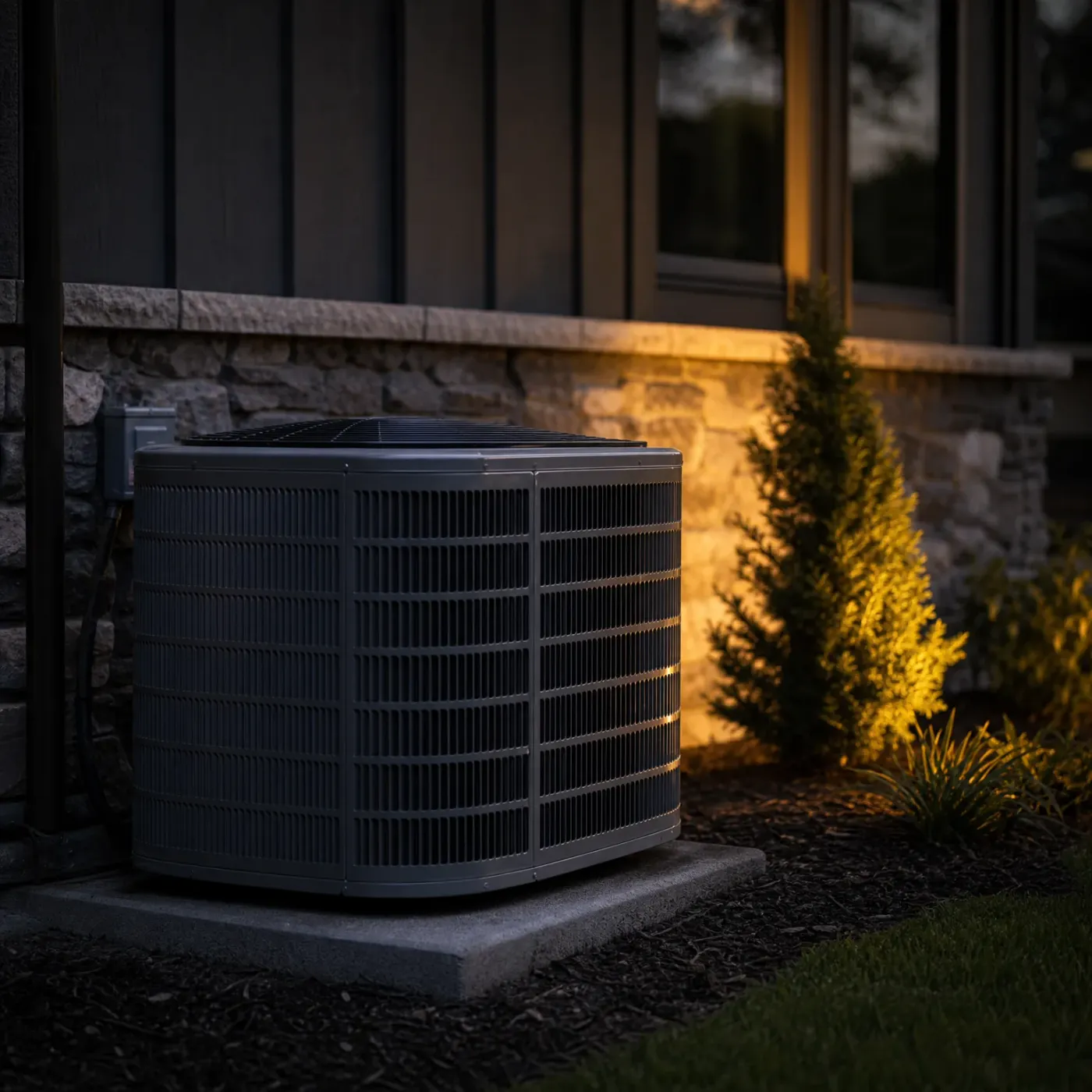




An outdoor air conditioning condenser unit on a concrete pad beside a house with stone veneer and vertical board siding, with a small shrub and mulch bed lit by a ground light at dusk.

No phone calls to make

Why your AC keeps tripping the breaker in Colorado

A breaker that trips every time your AC kicks on points to something specific, not bad luck. It could be the compressor pulling too much current, a capacitor on its way out, or a short in the wiring. This page walks through what usually causes it and what it means for your system. Past that, instead of calling around Colorado and explaining the same problem to every company that picks up, you get matched to one licensed local contractor who works on this equipment all summer and knows what to check first.

Start one form

A breaker that trips when your AC starts usually means the compressor is drawing more current than the circuit allows. That happens when a capacitor is weak and can't give the compressor the jolt it needs to start, so the motor strains and pulls extra amps. It also happens when the condenser coil outside is caked with dust or grass clippings, because the compressor has to work harder to push heat into air that can't move through it. In Colorado, the dry summer air means less humidity load on the system, but dust and grit off dry ground settle on that outdoor coil just as easily. Wiring that has loosened or burned at a connection can trip the breaker too, and that one needs attention quickly. A breaker doing its job and tripping is better than one that doesn't. Left alone, a compressor pulling too much current will wear out trying to start, and a short in the wiring is a fire risk, not just an inconvenience.

A smiling woman with long dark hair in a gray sweater sits behind a white countertop holding a glass of red wine, with a dimly lit living room and dark kitchen island in the background.
A woman in a beige knit sweater with her hair up laughs while looking to the side, seated in a dimly lit living area with a sofa, windows and a kitchen counter behind her, a glass of red wine in the lower right foreground.
A woman in a black sweater laughs while seated at a light stone counter with a glass of red wine, in a dimly lit living and dining room with bookshelves, a table lamp and framed artwork behind her.
A smiling woman with long dark hair in a beige sweater sits at a granite counter with a glass of red wine, with a living room, fireplace and dining area behind her.

The starting draw versus the running draw

Every compressor pulls more current the instant it starts than it does once it's running. A capacitor handles that jump by giving the motor a short, strong push. When the capacitor weakens, the motor has to fight through that first second on its own, and the current spike runs higher and longer than the breaker is sized for. That's why the trip happens right as the unit kicks on, not ten minutes into the cycle. A breaker holding steady once the compressor is running, then tripping again next start, points straight at the capacitor.


What a dry Colorado summer adds

A compressor already working against a weak capacitor has less margin on a hot, dry afternoon, when it's running longer and harder to keep up. The extra load doesn't cause the short, but it will push a marginal capacitor or a loose wire connection past the point where it still holds. That's why these trips often show up on the hottest stretch of the day rather than first thing in the morning, when the compressor has an easier time of it. The underlying fault was there before the heat found it.

A smiling middle-aged man in a dark green sweater sits at a candlelit table with wine glasses and a plate of greens in a dimly lit interior.
A woman in a dark knit turtleneck sweater reclines on a couch under a cream knit blanket, looking down at an open book, with a lit table lamp and framed pictures behind her.

The breaker isn't guessing. It's sized to a number stamped right on the compressor's data plate, a rated load amperage for normal running and a locked rotor amperage for that first second of startup. Both are supposed to pass through without tripping anything. The trouble starts when the compressor can't get up to speed cleanly. Instead of a quick jump past the locked rotor number and down to its running draw, it hangs there, straining, and the breaker sees current it wasn't built to carry that long. The contactor plays into this too. Its points open and close every time the outdoor unit cycles, and after enough cycles they pit and burn. A pitted contactor can arc or stick just as the compressor tries to start, adding current on top of what the motor already needs. If a winding inside the compressor has shorted, there's no ramp up at all. The breaker trips almost the instant the unit calls for cooling. And if the trip comes later, after the system has been running a while, the wiring or a loose connection heating up is a more likely cause than the startup itself.

What the breaker is reacting to

  • A breaker trips because current rises past the amperage stamped on the breaker itself, not because the breaker wears out.
  • The compressor's data plate lists a rated load amperage and a locked rotor amperage, and the breaker is sized to handle both for a moment.
  • A hard start, where the compressor struggles to spin up, draws closer to that locked rotor number for longer than it should.
  • Contactor points that have pitted or burned can stick or arc, pulling extra current right as the outdoor unit kicks on.
  • A failing compressor winding can short internally, which pulls current high enough to trip the breaker almost immediately.
  • A breaker that trips after the unit has run for a while points more toward heat buildup in the wiring or connections than a startup problem.
A gray outdoor air conditioning condenser unit on a concrete pad beside a house with horizontal siding and a stone veneer base, with a wall-mounted disconnect box and conduit, next to a shrub bed and a concrete patio.
Pull up to a unit that's running fine and the fan spins steady, the breaker holds, and the air coming off the coil is cold.
An outdoor air conditioner condenser unit on a concrete pad beside a house with light gray vinyl siding, with a gray electrical disconnect box and conduit on the wall, gravel beds and dried plants nearby, and a concrete sidewalk in the foreground.
Weeds against the housing and a weathered cabinet are where a failing capacitor or a dragging compressor finally trips the breaker for good.

Occasional Trip or Every Time

Resets and Runs

  • The breaker trips once, maybe during the hottest part of the afternoon, and stays off the rest of the day once you flip it back.
  • Outdoor temperatures above 95 push every AC harder, and a unit with a capacitor that's just starting to weaken may only struggle during that peak heat.
  • The compressor starts and runs without the fan hesitating or the breaker warming up to the touch.
  • Nothing visibly wrong at the condenser: no burnt smell, no humming without a start, no buzzing relay.
  • A contractor who checks the capacitor's rating against its stamped value can often confirm the margin is still there.

Trips Every Time

  • The breaker drops the moment the compressor kicks on, every time, no matter the hour or the outdoor temperature.
  • You hear the compressor hum or strain for a second before the breaker cuts power, which points to the motor fighting to start.
  • The breaker itself feels warm or hot after tripping, which means it's carrying more current than it's rated for on a regular basis.
  • Flipping it back on trips it again within seconds, before the compressor ever gets up to speed.
  • A contractor testing the capacitor and the compressor's amp draw against its rated load can find which one is pulling the circuit past its limit.
An outdoor air conditioner condenser unit sits on a concrete pad beside a shingled house wall, surrounded by mulch, broad-leaved shrubs and a lawn in low evening light.

You're out back around seven, watering the beds while the heat finally lets up. The condenser should be humming, fan spinning, that low rush of air off the coil. Instead there's a click from inside the unit, then nothing. The fan sits still. You crouch down and feel the housing, still warm, and somewhere inside the house the breaker panel has already tripped again. Third time this week. You've got a number saved from when a neighbor dealt with this last summer, but you're tired of calling around and describing the same click, the same stuck fan, to whoever picks up.

One form, no calling around

Your request stays with one local pro.

There's no charge for the request.

You reset the breaker yourself, it holds for a day or two, and you figure the problem sorted itself out. Most of the time it didn't. A capacitor that's starting to go doesn't fail once, it fails more each time the compressor has to fight through a weak start.

A local contractor who services AC units all over Colorado every summer can look at the compressor's amp draw and the capacitor's output in one visit and tell you which one is pulling the breaker past its rating. One call, one visit, instead of guessing from the breaker box each time it trips.

A weathered outdoor air conditioner condenser unit on a concrete pad beside a house with horizontal vinyl siding, with a conduit and disconnect box on the wall to the right.
Before you get your air conditioner repair
A gray outdoor air conditioning condenser unit on a concrete pad beside a house with horizontal lap siding, with a conduit and electrical disconnect box on the wall and a green shrub in mulch to the right.
After you get your air conditioner repair

Power costs 15.69 cents per kilowatt-hour statewide

At that rate, a compressor straining against a weak capacitor doesn't just risk a breaker trip, it runs up your bill every time it pulls extra amps trying to start. A unit that starts clean on the first try costs less to run than one that fights for it.

EIA-861 2025 statewide residential average

  1. Thermostat calls for cooling and energizes the contactor coil.

  2. The contactor closes and sends power to the compressor and fan.

  3. The capacitor delivers a jolt of current to start the compressor motor.

  4. A weak capacitor forces the motor to draw extra current from the start.

Does the heat in Colorado make this worse?

You've noticed the breaker trips more often on the hot afternoons than it does on milder days. With Colorado summers running hot and dry, you're wondering if the heat itself is part of what's pushing the system to this point, or if it's just a coincidence tied to whatever is already wrong with the unit.

Heat doesn't cause the problem, but it exposes it

A capacitor that's starting to weaken can still get the compressor started on a cool morning. On a hot afternoon, the compressor has to work against higher head pressure just to start, and that's when a weak capacitor runs out of what it has left to give. The motor strains longer, pulls more current, and the breaker trips. That's why the trips cluster during the hottest stretch of the day rather than happening evenly. The heat isn't the cause. It's the condition that finally pushes a part already failing past the point where it can still do its job.

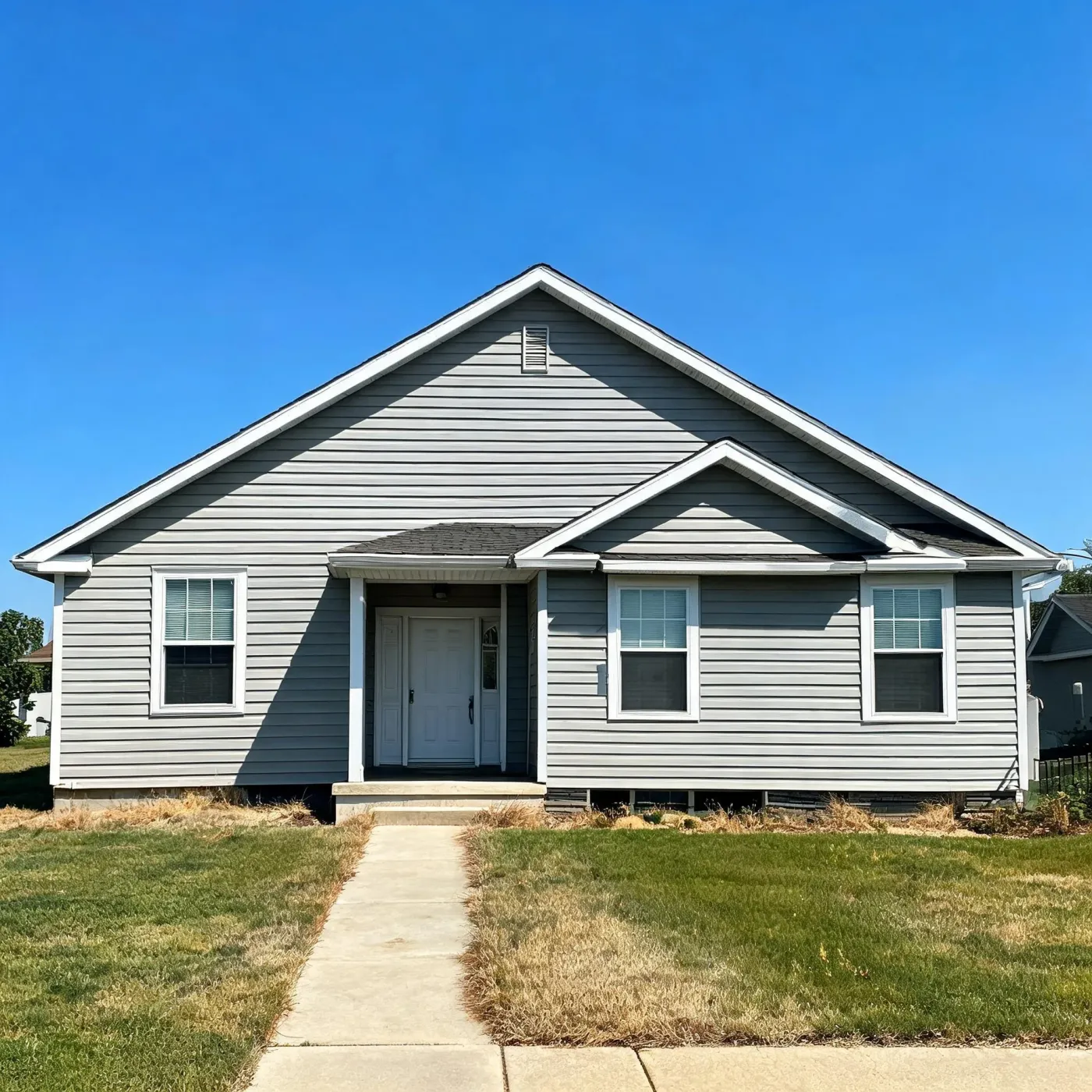
Single-story gray horizontal-siding house with white trim, gabled roof, white front door, and two windows, fronted by a concrete walkway through a patchy lawn under a clear blue sky.

Colorado summers run hot, but the air itself stays light. Averaged across the places people live here, the summer dew point sits at 42°F, according to NOAA climate data, which is dry enough that sweat off your skin evaporates fast and the heat feels manageable even in the afternoon. Your AC gets the easy end of that deal on humidity, since it isn't fighting to wring moisture out of the air the way a unit in a muggier state would. That means the extra strain on a hot day comes from temperature alone, from the compressor working harder to push heat out as the mercury climbs. A capacitor that's already weak has nothing else to hide behind.

NASA POWER T2MDEW county cells weighted by homes

A closed laptop and a ceramic mug of coffee on a wooden table, with a blurred kitchen counter, cutting board, utensil jar and plant in the background.

A breaker that trips is the system telling you something specific

A capacitor weak enough to make the compressor strain will keep doing it until it's replaced. The breaker isn't the problem. It's doing its job, cutting power before the wiring or the compressor takes real damage. Each reset buys you a little more time, not a fix.

Finding someone who works on these systems usually means calling a few companies, explaining the same trip-and-reset pattern to each one, then waiting on quotes to compare. A local contractor who handles AC repair all summer in this heat has likely already seen this exact capacitor fail this exact way, on a unit like yours, more than once this season.

A light-colored ceramic vase holding green leafy branches sits on a round wooden table, with a wooden-framed armchair draped in a cream throw, a tripod floor lamp, and sheer curtains blurred in the background.
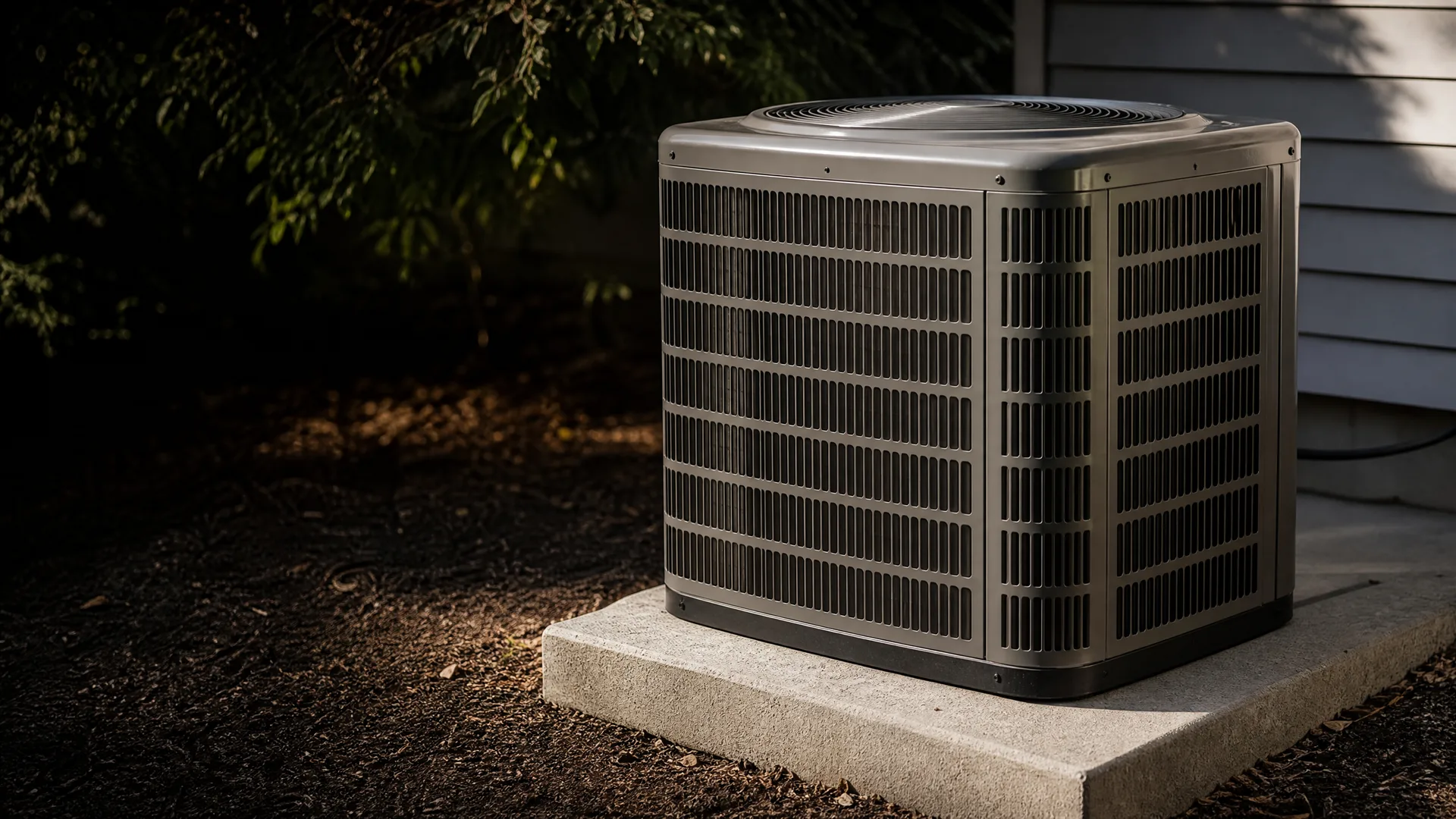
A gray outdoor air conditioner condenser unit sits on a concrete pad beside a house with horizontal lap siding, with shrubs and bare soil to the left.

Skip the search

RepairCentral ACColorado
Step 1 of 2

What ZIP code is the job in?