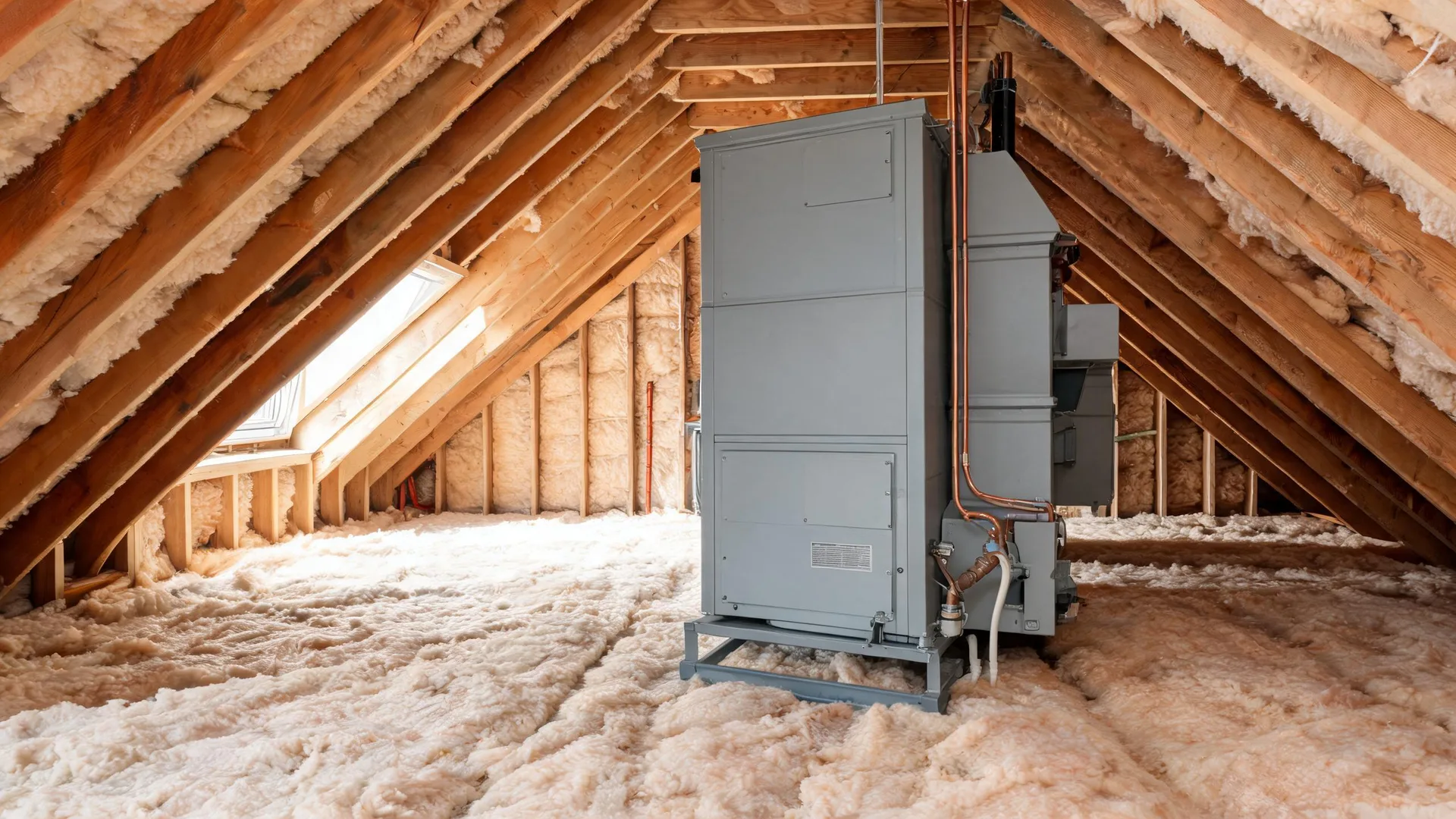
Gas heat is the norm here
Utility gas heats 56.9 percent of homes in Teller County, with another 18.8 percent on bottled or LP gas. Most houses already have a furnace handling the winter side, and the AC question is really about what pairs with it.
Takes about a minute. No obligation.
Utility gas heats 56.9 percent of homes in Teller County, with another 18.8 percent on bottled or LP gas. Most houses already have a furnace handling the winter side, and the AC question is really about what pairs with it.
A new AC unit has to match the furnace it sits next to, since the two often share a blower and ductwork. If your home runs on gas heat, tell the installer what furnace you have before they size and quote the system.

NOAA nClimDiv, 1991–2020 normals
Winter storms hit Teller County 121 times between 2015 and 2024.
A standard AC unit holds up fine through that. There's no case here for oversizing or upgrading past what the home needs.



At 14.92 cents a kilowatthour, Colorado power sits below the national average. That changes what's worth paying for upfront. A high-SEER2 unit costs more to install, and the monthly savings it earns back take longer to cover that gap here than in a state with pricier power. That doesn't make the higher-efficiency unit a bad choice, it just means efficiency shouldn't be the only thing deciding it. Ask the installer what size and model actually fit your home and your existing furnace, and let payback be one factor instead of the headline.
Summer afternoons here average 73 degrees, and no month of the year really calls for air conditioning. A system installed here isn't working against the kind of heat that wears a unit down elsewhere. That makes a reliable, properly sized system the right call over the highest-efficiency model on the lot.
Find a contractor
The SEER2 number on the label is a seasonal average, not a fixed speed the unit runs at. It gets measured over a full range of conditions, so a unit never actually performs at its rated number on any single afternoon. What it tells you is how much cooling you get for the electricity you put in, averaged out. A higher number usually means a more efficient compressor, sometimes a variable-speed one that ramps up and down instead of just switching on and off. That can mean steadier temperatures and less noise, but it also means more parts that can fail and more specialized parts to replace them. The rating says nothing about how long the unit lasts or how well it was installed, and a correctly sized, correctly charged system with an average rating will outperform a high-rated one that was installed wrong.
A working AC installation includes disconnecting the old condenser and air handler or coil, and the installer takes it with them. The refrigerant has to come out first. A licensed installer recovers it into a tank rather than venting it, which is standard practice and keeps it out of the air.
The concrete pad under the old condenser almost always gets reused. The copper line set running between the condenser and the coil sometimes stays too, if it's in good shape and sized right for the new system. An installer checks this rather than assuming either way, since reusing what still works keeps the job simpler.
Estimates for a typical Teller County home, from EIA household energy data, Colorado fuel prices and NOAA climate normals. Your home will differ.
Installation day starts with the old system coming out, then the new condenser goes on the pad and the coil goes in next to the furnace. The line set gets connected. If it's new copper, the installer pulls a vacuum on it first to clear out air and moisture before any refrigerant goes in. That step matters because trapped moisture in the lines causes problems months later, not on day one. Once the system is charged, the installer checks the refrigerant level against the manufacturer's spec rather than guessing by feel. Then comes the test run. The installer checks the temperature drop across the coil, listens for anything that shouldn't be running, and confirms the thermostat is actually talking to the system. A straightforward swap, same footprint and same ductwork, is a different job than one that needs a new line set or duct changes, so ask the installer what your situation calls for.