Condenser running clean
When the outdoor unit looks like this, air moves through the coil the way it should and pressures stay where they belong. Nothing here backs water up inside. The drain line problem starts indoors, not at this pad.

Water showing up around your indoor unit or dripping from the ceiling below an upstairs closet is alarming, especially when the AC has run fine all summer. It usually isn't the compressor or anything outside. The water is coming from somewhere inside the system, and once you know where to look, the cause is easy to spot before it stains a ceiling or warps a floor.
Your air conditioner pulls moisture out of the air as it cools your home, and that water is supposed to run down a drain line and out of the house. Algae and dust build up inside that line over a summer of steady use, and once it clogs, the water backs up into the drain pan and overflows. A full or cracked drain pan causes the same thing, and so does a dirty air filter, since a clogged filter can freeze the evaporator coil and send water everywhere once it thaws. With Aurora summers running hot and dry, the AC runs long hours most days, so a clogged line has plenty of time to back up before anyone notices the drip.


The indoor half of your AC does more than cool the air. As air passes over the evaporator coil, humidity in it condenses on the cold metal, the same way a cold glass sweats on a summer afternoon. That water drips into a drain pan below the coil, then leaves through a PVC line that runs outside or ties into a floor drain. When all of it works, you never see or think about any of it. Problems start in the drain line. Algae and dust build up along the inside of that pipe over a season of steady use, and the line narrows until it blocks. With nowhere to go, the pan fills and spills over the side. Newer systems have a float switch sitting in the pan meant to catch this, shutting the unit off before it overflows, but the switch can stick or get installed wrong and miss the moment it's needed. A dirty filter causes a different version of the same problem. Restricted airflow lets the coil get too cold and ice over, and when the system cycles off or the ice melts, it melts faster than the pan and line can carry the water away. On older units, the pan itself can rust through or crack, and then water bypasses the drain line entirely, showing up wherever the pan sits above your ceiling or floor.
Three months of steady running gives algae and sludge plenty of time to build up in that drain line. By August, a system that drained fine in June can back up and start leaking. That's why the dripping often shows up later in summer rather than right when you first turn the AC on.
NOAA nClimDiv 1991-2020
The drain line runs downhill from the pan to the outside, usually with a small drop over its whole length. There's no pump pushing that water along. Algae only needs a narrow spot to grab onto, and once it does, more sludge builds up behind it the same way hair backs up a bathroom sink. The line doesn't have to be fully blocked to overflow the pan. A partial clog slows the water enough that it backs up faster than it can drain, especially on a hot day when the coil is pulling moisture out of the air for hours without a break.
A drain pan is usually plastic or lightweight metal, and years of condensation sitting in it can corrode a metal pan or crack a plastic one at the seams. Once that happens, water finds the lowest point of the cabinet instead of the drain hole, and it leaks from wherever that is, not necessarily right under the coil. If your system is old enough that it came with the house, the pan has had a long time to wear out. A cracked pan leaks even with a completely clear drain line, which is why clearing the line doesn't always stop the water.


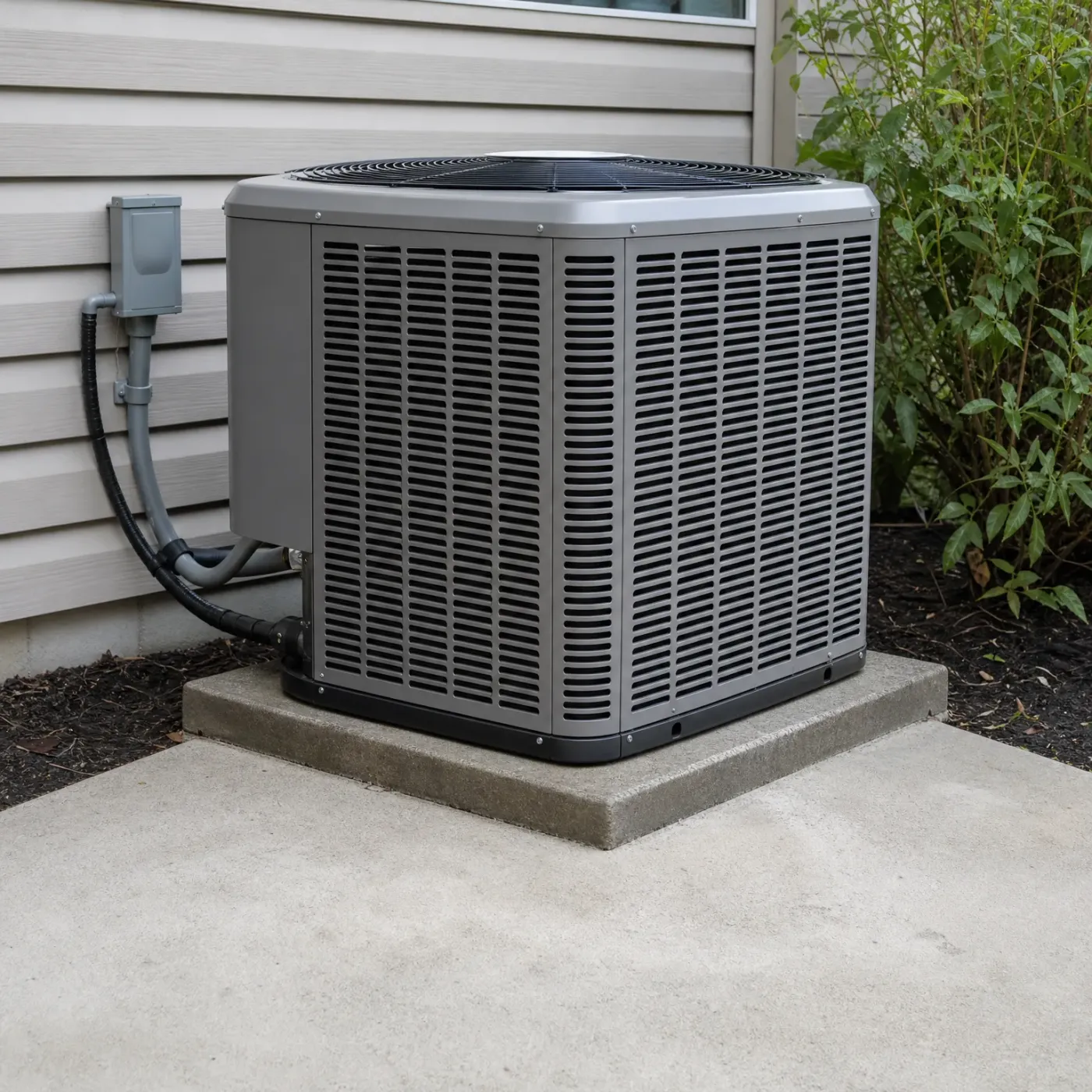
When the outdoor unit looks like this, air moves through the coil the way it should and pressures stay where they belong. Nothing here backs water up inside. The drain line problem starts indoors, not at this pad.
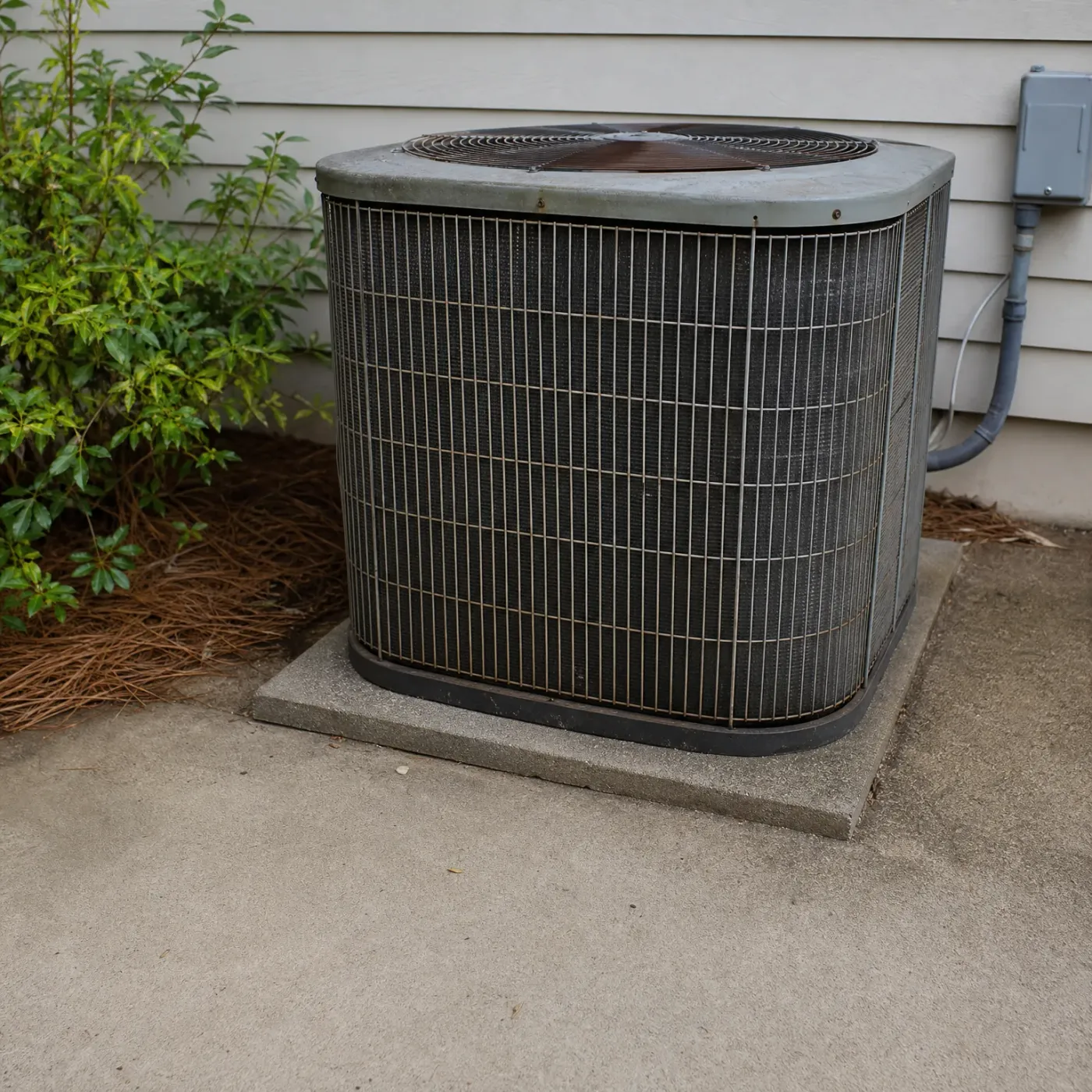
Pine mulch and debris packed into the grille choke airflow through the coil. That strain shows up as pressure swings that push condensate production higher than the drain line was built to carry, right when the pan and line are already working hardest.
A stain spreading across the ceiling under an upstairs closet. A puddle on the floor near the indoor unit that shows up again a day after you wipe it. A musty smell coming from the vents or from that closet itself. Sometimes it's just the pan itself, full to the brim, with water starting to run over the side. Left alone, that water soaks into drywall and subfloor, and standing water sitting in a pan or under a coil gives mold something to grow on. The longer it sits, the more it spreads past where you first saw it.


A clogged drain line doesn't fix itself. Once algae has narrowed that pipe enough to back water up into the pan, every hour the AC runs adds more water with nowhere to go, and Aurora's heat means this thing is running most of the day. That stain on the ceiling or puddle by the closet gets bigger, not smaller, and left alone it can mean soaked drywall or a warped floor on top of the AC problem you already have. A local contractor who works on these systems all summer has seen this exact drain line clog more times than almost anything else that brings an AC down, and knows where to check first. Getting someone out to clear that line and find out why it backed up now, rather than waiting to see if it stops, is what keeps a wet ceiling from turning into a bigger repair.

Arapahoe County's summer air holds a dew point around 42°F, according to NOAA averages for June, July and August. That's dry air. It makes evenings tolerable without the AC straining, but it also means your evaporator coil is pulling a steady stream of moisture out of the house every time the system runs. Over a long dry summer, that adds up to a lot of condensate passing through the same drain line, day after day, with nothing to interrupt the flow. The dryness outside doesn't slow the moisture coming off the coil inside. It just means the water you're seeing on the floor or ceiling isn't coming from humidity in the air around you. It's coming from the system itself.
NASA POWER T2MDEW




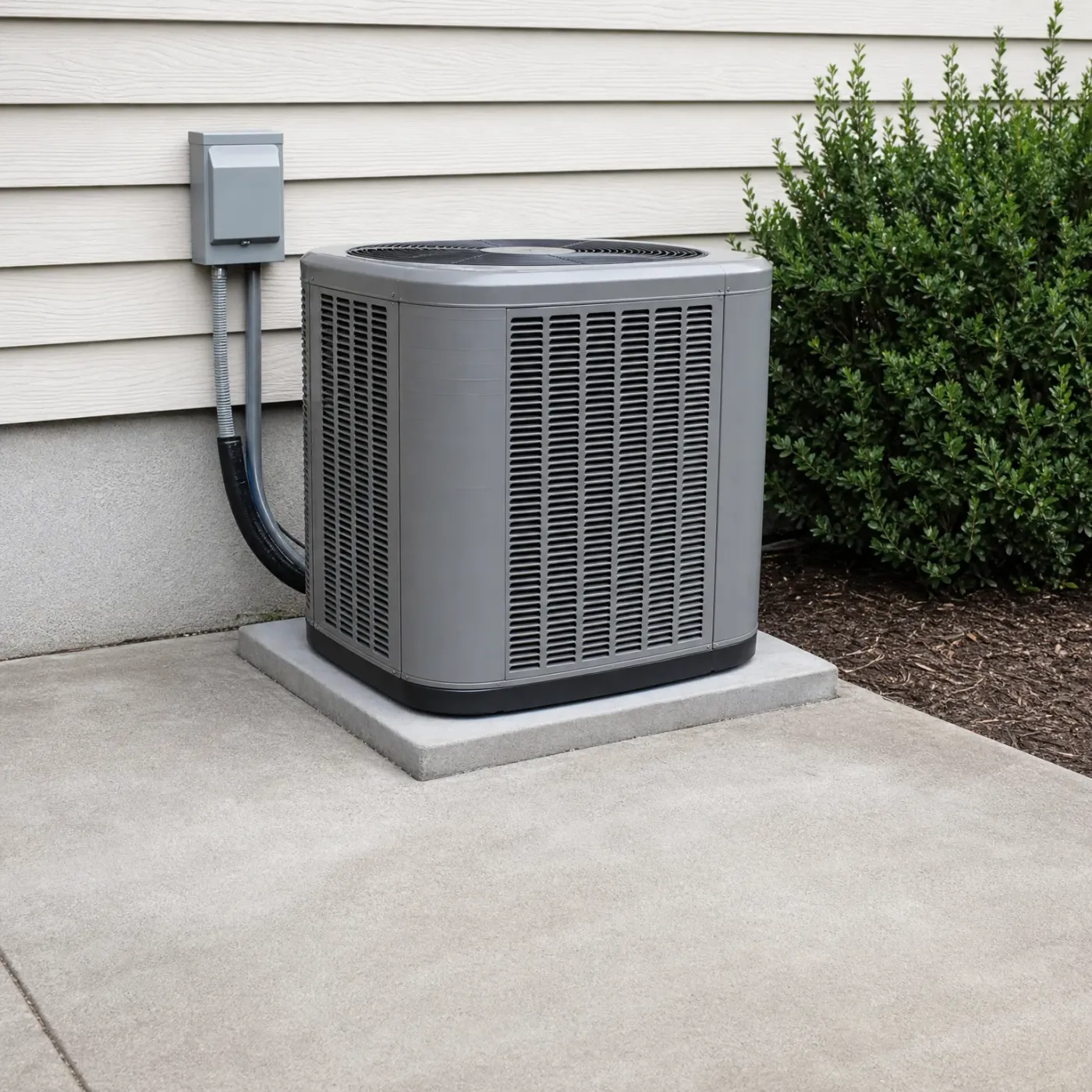
This outdoor unit has open fins and a clear cage, so air pulls through it the way the system was built to use it. Pressures hold steady and the compressor cycles normally. None of that affects the drain line inside. That clog forms at the evaporator coil, not out here.
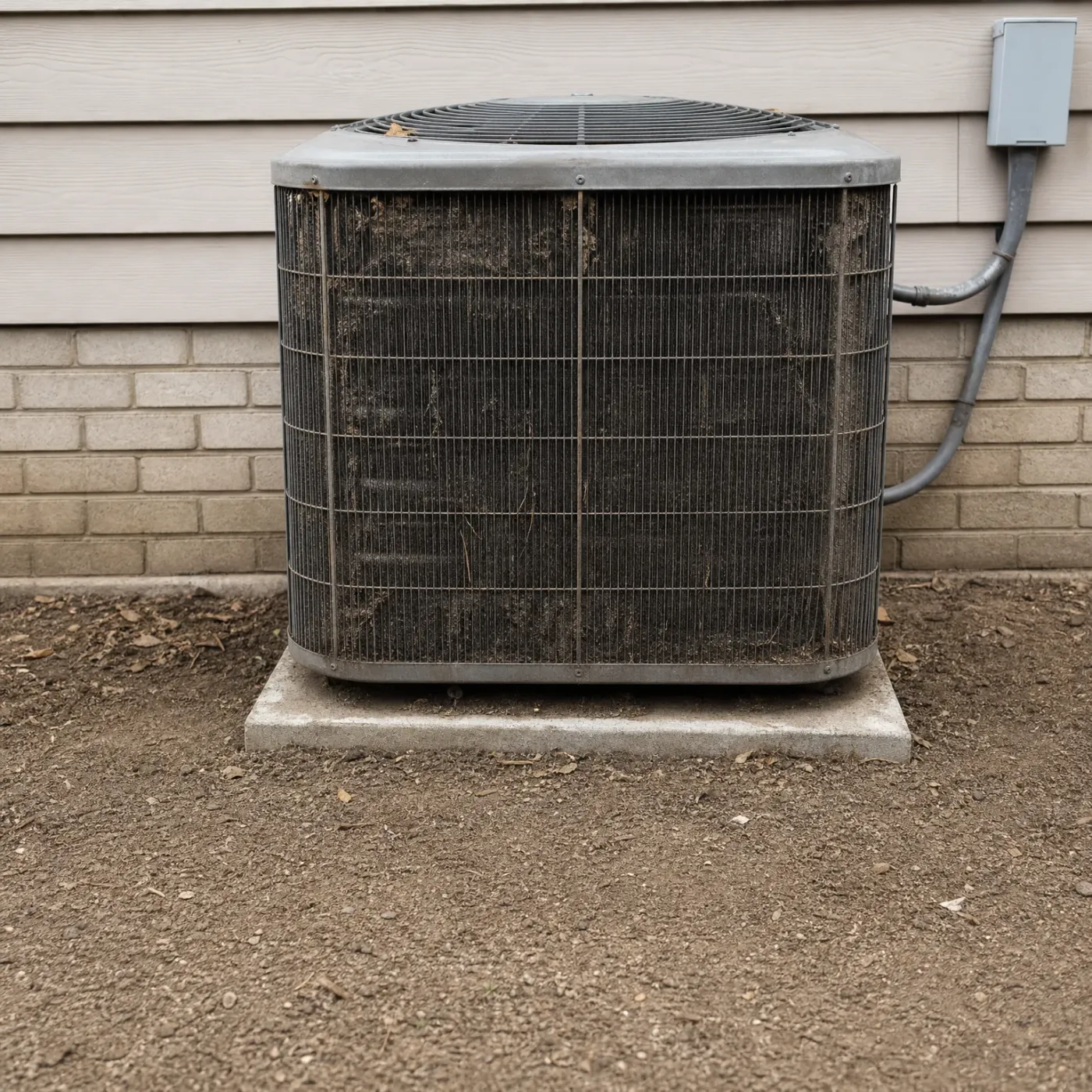
Dirt packed into these fins forces the system to work against itself, and pressures can drift from where they belong. That's a separate problem from the water on your floor. It's worth a look regardless, but hosing this coil off won't clear an algae clog sitting in the drain line indoors.
A clogged condensate line is the reason water shows up where it shouldn't, and clearing that line or replacing a cracked pan is what stops it. Shutting the AC off keeps the puddle from growing while you sort out next steps, but the clog stays until someone deals with it directly. A local contractor who works on drain lines and coils all summer has seen this exact problem many times over, usually the same week the heat pushes every AC in Aurora to run long hours. You'll get matched with one licensed contractor, not a handful of companies competing for your callback, so there's no juggling quotes or wondering who's showing up. The ceiling stain won't spread further once the line is clear and draining the way it was built to. That's the whole problem: moisture with nowhere to go, backing up until something gives it a path again.





The pro who gets in touch is licensed in Colorado and works in Arapahoe County.
No fee to send it, and nothing to sign.