Gas is the common fuel here
Utility gas heats 45.6% of homes in Routt County, more than any other fuel. Electricity comes in second at 30.8%, and propane heats another 16.2%.
Takes about a minute. No obligation.
Utility gas heats 45.6% of homes in Routt County, more than any other fuel. Electricity comes in second at 30.8%, and propane heats another 16.2%.
If your furnace runs on gas, adding central air usually means pairing a new AC unit with your existing furnace and ductwork rather than replacing the whole heating system. The installer will check whether your ducts and electrical panel can handle the new unit.

NOAA nClimDiv, 1991–2020 normals
Colorado electricity ran 14.92 cents per kilowatt-hour in 2024, cheaper than most states.
A high-efficiency AC unit here takes longer to pay back in savings, so pick the system that fits your house, not just the one with the best rating.



Since the payback math favors a plain system over a premium one, put the weight on sizing instead. An AC unit that's too big for the house cools the room fast and shuts off before it pulls the moisture out of the air, so the house feels clammy even at the right temperature. One that's too small runs long stretches without ever catching up. The installer should size the unit to your square footage, your windows, and your insulation, not just swap in whatever tonnage matched the old system. Ask what load calculation they used before they quote a number.
Routt County falls under climate zone 7, the coldest tier in the energy code. Any split-system AC installed here has to meet a federal minimum of 13.4 SEER2. That sets the floor on what an installer can put in, and a federal tax credit is available on qualifying equipment, worth asking about when you compare quotes.
Find a contractor
No month here averages warm enough to call for cooling, and summer afternoons sit around 74°F. An AC unit in Routt County spends most of the year shut off. That's light duty for the compressor and the coil, so a well-installed system holds up fine without the top tier of equipment. Wind is the bigger stress this area sees, with dozens of damaging storms over the past decade, so what matters more than cooling capacity is a unit and an install that can take a hard gust without the cabinet or the line set getting knocked loose.
An AC install isn't just setting a cabinet outside. The refrigerant lines running between the outdoor unit and the indoor coil have to be the right length and properly insulated, and if the existing ductwork wasn't built for cooling, it may need a return added or a plenum reworked. The further apart the units sit and the more the ducts need modifying, the more labor goes into the job before the system ever runs.
Pairing new AC with an existing furnace means matching an indoor coil to that furnace and to the outdoor unit, and an old or mismatched coil usually gets swapped at the same time. The outdoor unit also needs its own electrical circuit and disconnect box. If the panel has room and a circuit already nearby, that part goes fast. If not, running new wiring and adding a breaker is its own piece of the job.
Estimates for a typical Routt County home, from EIA household energy data, Colorado fuel prices and NOAA climate normals. Your home will differ.
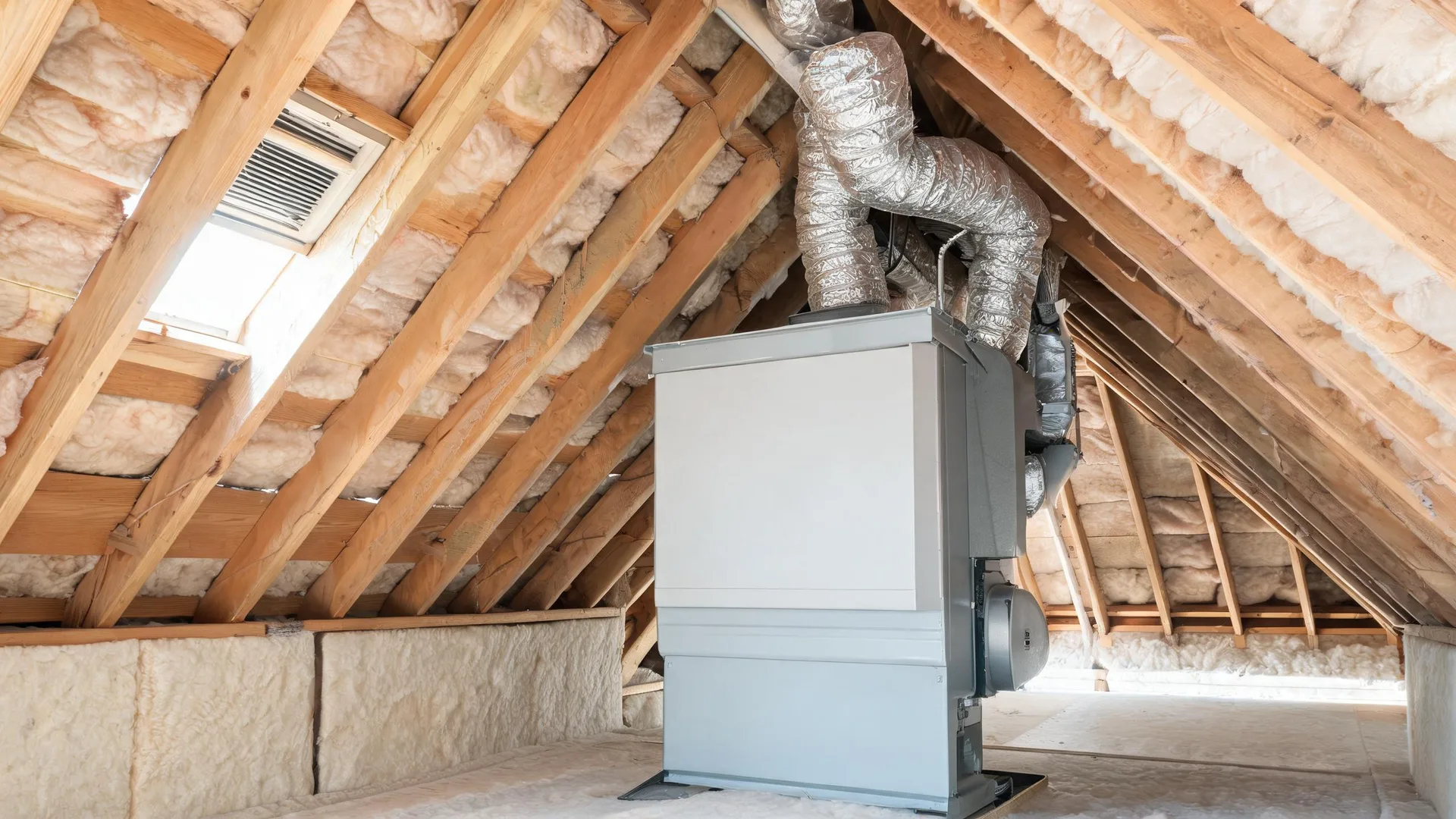
Install day starts outside with the condenser set on its pad and the line set run to the house. From there the crew brings those lines in to the indoor coil, usually working out of a furnace closet or attic to get to it. Before any refrigerant goes in, the system gets evacuated to pull out air and moisture, since either one left in the lines causes problems later. Electrical is its own piece of the job. A circuit gets run to the outdoor disconnect, and the breaker has to match what the unit draws. Once it's all connected, the installer charges the system, checks the refrigerant level against the manufacturer's spec, and runs it to watch it cool and cycle before calling it done.