Illuminated stone-and-timber mountain homes line a quiet street at dusk, with evergreen trees and a mountain range in the background.

AC Installation in Silverthorne, CO

Tell us about the job

Takes about a minute. No obligation.

New system or replacementCentral ACSummit County, CO
Step 1 of 2

What ZIP code is the job in?

Most homes here run on gas

Gas heats close to 6 in 10 homes in Summit County, electricity heats most of the rest. If the furnace runs on gas, adding or replacing central air usually means pairing a new AC unit with the existing furnace and ductwork rather than rethinking how the house is heated.

The ducts are already in place

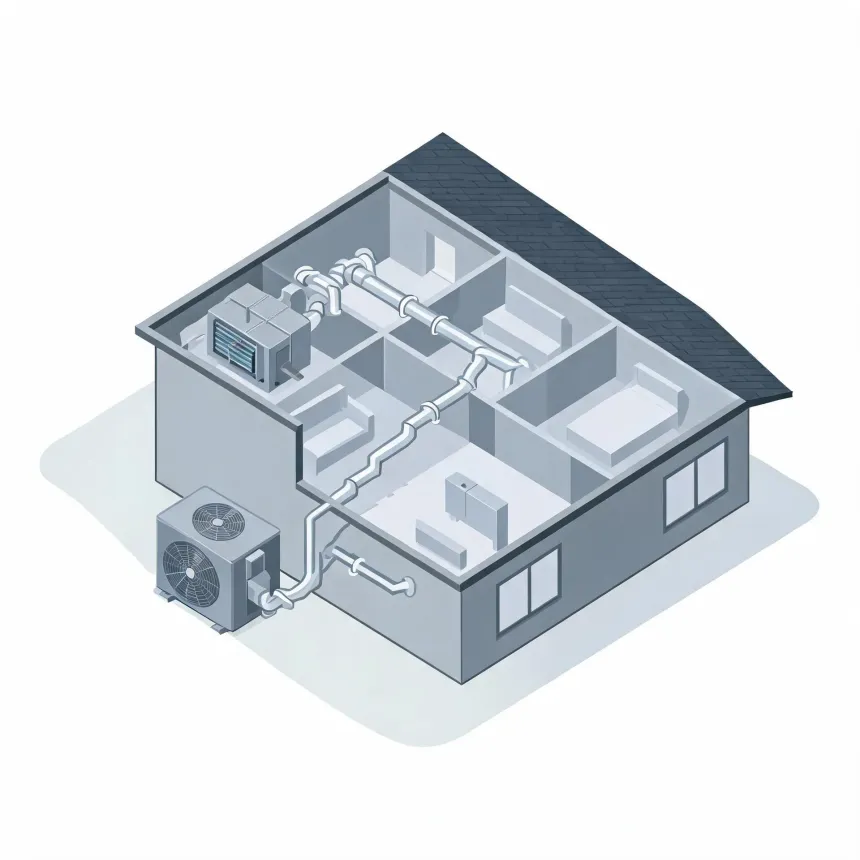
A gas furnace moves heat through ductwork, and that same ductwork can carry cool air from an AC unit. For a home already set up this way, installation is a matter of matching the right outdoor unit and coil to the furnace in place, not building a duct system from scratch.

68°F
the average summer afternoon it cools against
1 hail events
in ten years, and hail bends the fins on outdoor coils
13.4 SEER2
the federal minimum any new unit must meet
Isometric grey illustration of a cutaway single-story house showing interior rooms, ceiling ductwork connected to an indoor air handler, and an outdoor condenser unit linked by lines outside the wall.

Colorado electricity runs about 14.92 cents per kilowatt-hour, below the national average.

A high-efficiency AC costs more up front and takes longer to earn that back here, so pick the unit that fits your ductwork and will hold up, not just the one with the highest SEER2 number.

68 degrees outside, a few weeks a year. This AC will not have much to do.

Summer afternoons average 68°F
42 damaging wind events from 2015 to 2024
1 hail event from 2015 to 2024

So weigh the install against what the system has to match, not the SEER2 sticker. The coil has to pair correctly with the furnace already in the house, and the outdoor unit has to suit the ductwork that's there. A contractor sizing the job right, for the house and the duct run, is worth more here than chasing the highest efficiency number on the shelf. That unit will hold up over the years it sits mostly idle, which in Silverthorne is most of them.

Pick the system built to last, not the one built to work hard

A straightforward AC, matched right to the furnace and ducts already in the house, will handle what little this job asks of it. That's what's worth paying for here.

Find a contractor
A man in a cap, dark shirt and brown work pants walks up porch steps toward a red door, carrying a worn canvas tool bag, with a potted shrub in a red planter beside him.
An outdoor air conditioning condenser unit mounted on a concrete pad surrounded by gravel, photographed against a partly cloudy blue sky.

The sticker tells you how it was tested, not how it will run here

The SEER2 number on the label is a ratio, cooling output over the power it takes to produce it, measured under one set of lab conditions. It tells you how the unit performs at that test point, not how it will run on a mild afternoon or a hot one. A higher number usually means a more efficient compressor, a larger coil, sometimes a variable-speed blower instead of a single-speed one, and those parts add cost and in some cases more to service later. The rating also says nothing about whether the unit is sized right for the ductwork it's tied to. An oversized unit with a high SEER2 number will still short-cycle, cool the air without pulling down humidity, and wear its parts faster from switching on and off. A correctly sized unit with a modest rating, running long steady cycles, often does the job better and lasts longer doing it. The label is one data point. It's worth less than a contractor's measurement of the duct run and the furnace it has to pair with.

The old refrigerant doesn't just vent out

Refrigerant in the old system gets pulled into tanks with a recovery machine before any line gets cut. Venting it to the air is illegal and has been for years, so any contractor doing this job has the recovery equipment on the truck as a matter of course.

The old unit and coil leave, the pad usually stays

The outdoor unit gets disconnected and hauled off, and the old coil comes out of the plenum above the furnace. The concrete pad underneath often stays put and holds the new unit, unless it's cracked or sized wrong for the new equipment's footprint.

Aerial view of a gray central air conditioning condenser unit on a concrete pad next to a house with vinyl siding.

Going above the federal minimum saves little here, about $0 a year.

  • A new unit at the federal minimum, 13.4 SEER2$0 a year
  • A higher-efficiency unit$0 a year

Estimates for a typical Summit County home, from EIA household energy data, Colorado fuel prices and NOAA climate normals. Your home will differ.

Installation day starts with the old equipment coming out, not the new unit going in. Refrigerant in the existing system has to be recovered properly before anything gets disconnected. Once the outdoor unit and coil are out, the contractor checks the line set, the copper tubing running between them, to decide whether it can be reused or needs replacing. The new coil goes in above or beside the furnace, the new outdoor unit gets set on its pad, and the line set joins them. The system gets pressure tested before it's charged with refrigerant. Only after that does the contractor run it through a cycle, checking airflow at the vents and the temperature split between the air going in and the air coming out. A system that's wired up but never checked this way is a system nobody actually knows works yet.