Illuminated timber-and-stone houses line a residential street at dusk, with evergreen trees in the foreground and a silhouetted mountain range behind them.

AC Installation in Salida, CO

Tell us about the job

Takes about a minute. No obligation.

New system or replacementCentral ACChaffee County, CO
Step 1 of 2

What ZIP code is the job in?

Gas is the common setup here

Utility gas heats 44.8% of homes in Chaffee County, more than any other fuel. Bottled or LP gas covers another 26.4%. An AC installation in Salida most often means adding cooling to a home that already has a gas furnace moving the air.

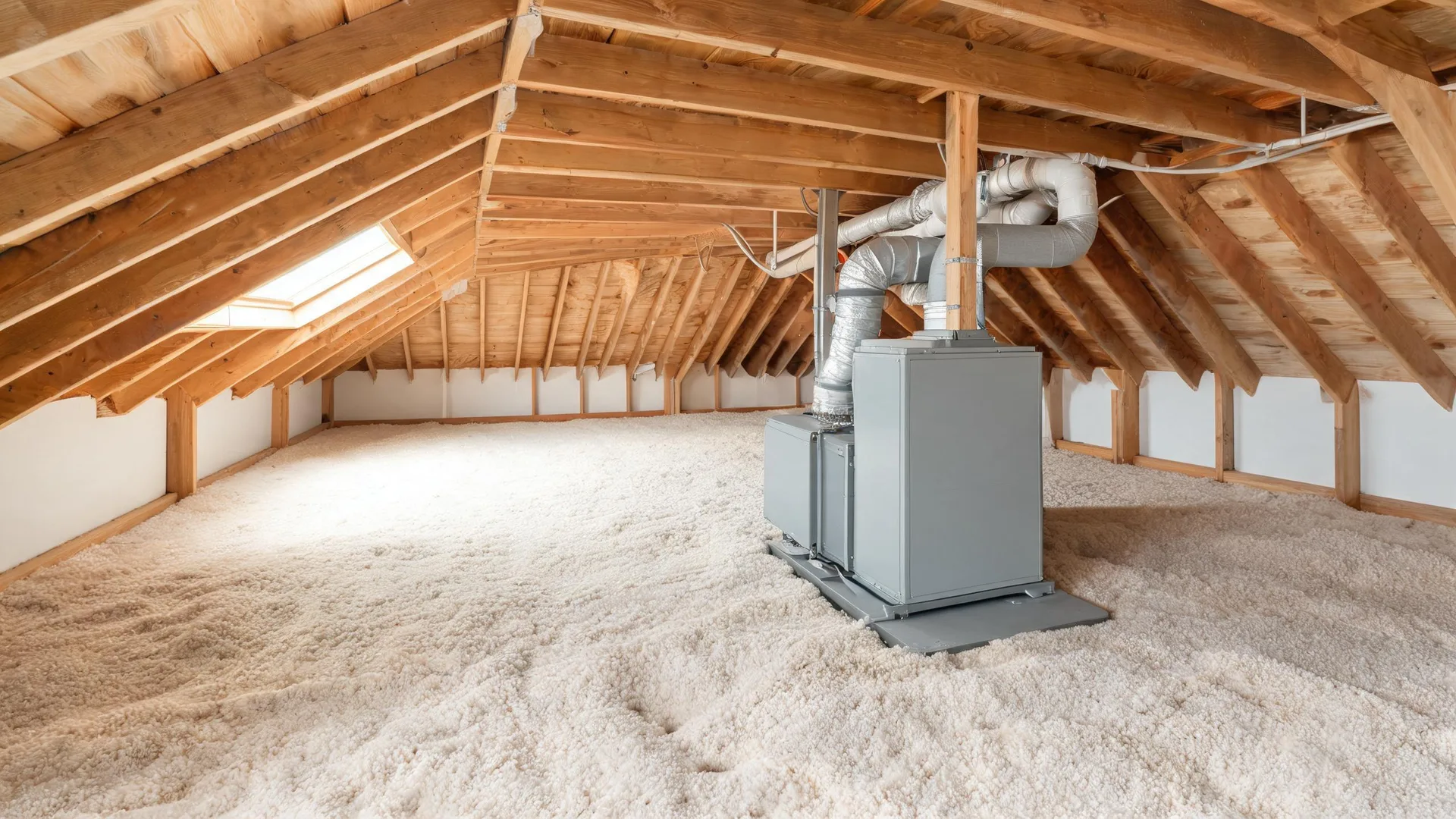
The ductwork is usually already there

If your home heats with a gas furnace, it likely has a duct system in place. That means AC installation here is often about matching a new coil and condenser to what already moves air through the house, rather than building a duct system from nothing.

71°F
the average summer afternoon it cools against
3 hail events
in ten years, and hail bends the fins on outdoor coils
13.4 SEER2
the federal minimum any new unit must meet
Isometric cutaway illustration of a house interior showing ducted HVAC piping, an indoor air handler unit, and an outdoor condenser with fan connected by a line, rendered in grey tones on a white background.
Your air conditioner works hardest from July through July.

NOAA nClimDiv, 1991–2020 normals

Summer afternoons in Salida average 71 degrees, and some months don't call for cooling at all.

A system here is not fighting heat most of the year, so a well-built, reliable unit is more important than the highest efficiency rating.

Cheap power here means efficiency isn't what pays you back

Power costs 14.92 cents a kWh statewide
Summer afternoons average 71°F
72 damaging wind events from 2015 to 2024

Chaffee County sees plenty of weather, just not the kind that bears on AC equipment. Winter storms and damaging wind account for most of it, with hail barely registering here. None of that calls for a bigger condenser or a sturdier cabinet than standard. The case for oversizing or upgrading equipment usually comes from heat load or storm damage, and this county has neither in any real measure. A standard-sized system, matched to the home's existing ductwork, is what the climate here calls for.

Any new system here starts at 13.4 SEER2

Chaffee County falls in climate zone 6B, and any split-system air conditioner installed here has to meet a federal minimum of 13.4 SEER2. That floor is already built into new equipment, so the question for your install isn't whether it qualifies. It's which unit at or above that mark fits your home and your ductwork.

Find a contractor
A gray cylindrical air conditioning condenser unit mounted on a concrete pad next to a light-colored vinyl-sided house exterior.

A light load, year after year

A condenser installed here is barely going to work for a living. Most years give it a handful of warm afternoons to answer, not a summer of them. The wind and hail this county sees aren't aimed at outdoor equipment the way a heat load would be, so none of that argues for anything beefed up either. What wears out a system here is more likely time and whether it got serviced, not the number of hours it ran. That's the case for picking equipment on how well it's built rather than chasing a higher efficiency rating. A light workload makes a dependable, correctly sized unit the one worth paying for.

Sizing comes from a load calculation, not the square footage

A contractor works out the right size by looking at window area, insulation, ceiling height and how the rooms are laid out, not just how many square feet the home has. Homes of the same size can call for different sized condensers once that math is done.

An oversized unit cools the air without pulling the moisture out

A condenser that's too big for the home shuts off again as soon as it hits the thermostat setting. That short run time means it never runs long enough to pull humidity out of the air, so the house can feel damp even once it's cool. The right size runs longer, steadier cycles and does both jobs at once.

An outdoor air conditioning condenser unit installed beside the exterior wall of a blue vinyl-sided house at sunset.

Going above the federal minimum saves little here, about $0 a year.

  • A new unit at the federal minimum, 13.4 SEER2$0 a year
  • A higher-efficiency unit$0 a year

Estimates for a typical Chaffee County home, from EIA household energy data, Colorado fuel prices and NOAA climate normals. Your home will differ.

The SEER2 number on the label tells you how much cooling a unit produces for the power it draws, measured over a whole season rather than at one moment. A higher number means lower power draw for the same cooling output, nothing more. It doesn't tell you how long the system lasts or how well it was installed, and a high-efficiency condenser hooked up to leaky ductwork or set with the wrong refrigerant charge won't deliver the number on its sticker. That rating also gets tested under conditions meant to represent an average climate, so what you see on a power bill depends on how much the system actually has to run. Pair it with a unit that's sized right for the house and installed with a proper charge, or the rating on the label stops meaning much.