






A twilight street scene featuring illuminated timber-frame and stone houses with a mountain range visible in the background.

AC Installation in Pueblo, CO

Tell us about the job

Takes about a minute. No obligation.

New system or replacementCentral ACPueblo County, CO
Step 1 of 2

What ZIP code is the job in?

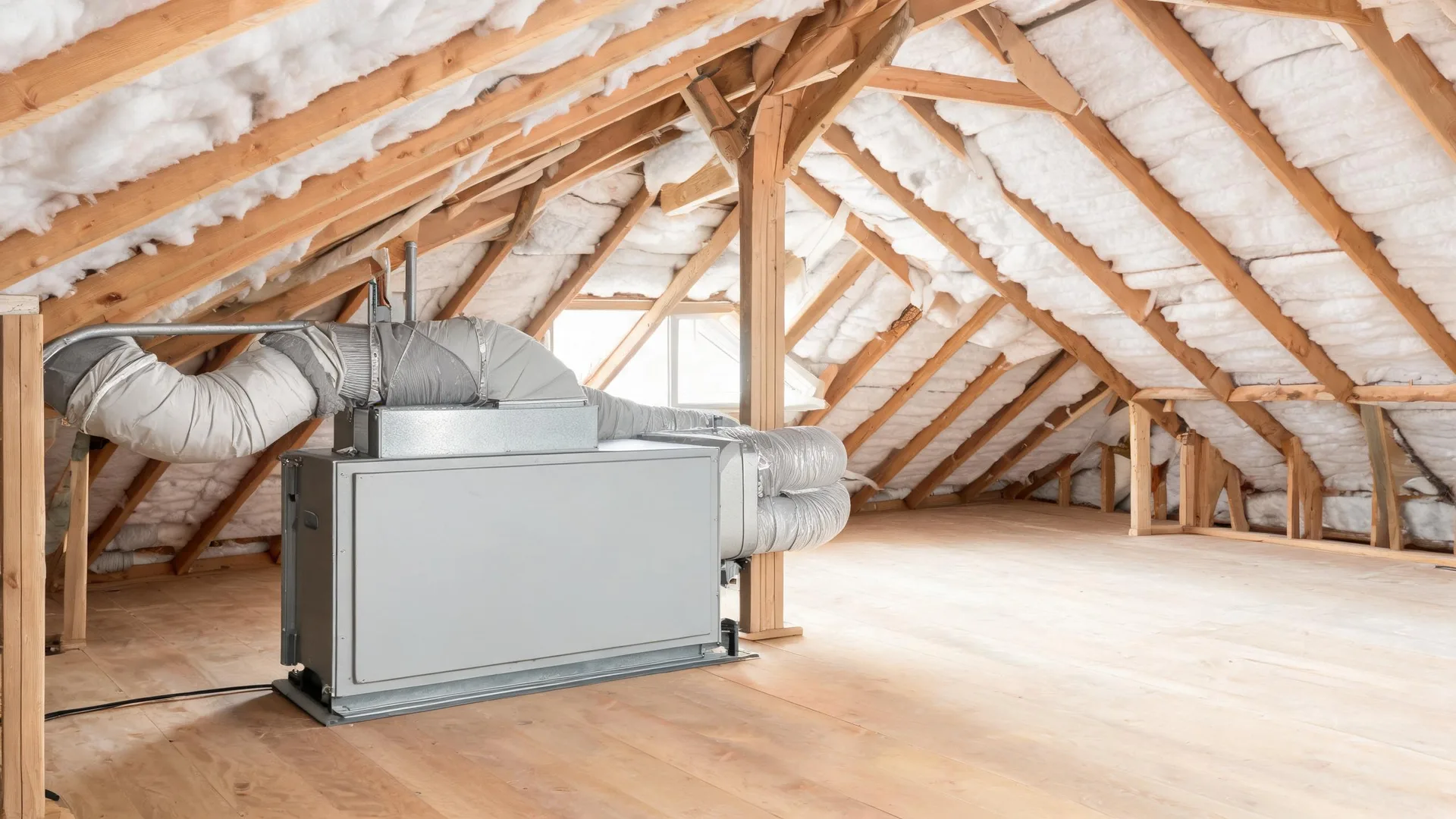
Most homes in Pueblo County heat with gas, 76.3% of them. Electricity comes in a distant second at 15.8%, with LP or bottled gas making up another 5.1%. That matters for an AC installation because most of these gas-furnace homes already have central ductwork in place. A new air conditioner can often pair with that existing furnace and ductwork, using the blower that's already there to move cool air through the house. If your home is one of the electric-heat minority, a contractor still needs to check what kind of system you have before assuming the same setup will work.

3 months
June through August, your air conditioner is on duty
88°F
the average summer afternoon it cools against
157 hail events
in ten years, and hail bends the fins on outdoor coils
13.4 SEER2
the federal minimum any new unit must meet
Isometric line illustration of a cutaway single-story building showing interior rooms, ceiling ductwork, an indoor air handler, and an outdoor condenser unit connected by a line set.
Your air conditioner works hardest from June through August.

NOAA nClimDiv, 1991–2020 normals

Matching tonnage doesn't mean matching performance.

Ask what indoor coil pairs with that condenser, since the wrong match costs you efficiency you already paid for.

Pueblo gets hail, wind and winter storms. None of that changes what size AC your house needs.

552 severe weather events from 2015 to 2024
13% of homes statewide lost power a day or more in 2024
209 damaging wind events from 2015 to 2024

June is when cooling starts here, so May is the month to get a new system in. Homes in Pueblo County run AC from June through August, about three months a year. Get the install done in May and it's tested and running before that first hot day instead of during it. Wait until June and you're one of many homeowners calling at once, on a schedule that isn't yours. A spring install also gives a contractor room to size the system properly and check the ductwork without the pressure of a house already overheating.

Any new system here has to clear 13.4 SEER2

Pueblo County falls in zone 5B, and any new split-system air conditioner under 45,000 Btu/h has to meet 13.4 SEER2 at minimum. That's the floor a contractor has to design around, not a suggestion. A federal tax credit is available on qualifying equipment, so it's worth asking which systems on your list meet it.

Find a contractor
A man in a dark beanie, navy long-sleeve shirt and tan work pants climbs porch steps toward a red front door, carrying a waxed canvas tool bag in his right hand.
A gray metal air conditioning condenser unit mounted on a concrete pad in a flat grassy field under a partly cloudy sky.

The house's age isn't the question that matters here

Pueblo County splits down the middle, half the homes built in 1974 or earlier and half after. A new system running day after day across a summer doesn't know which kind of house it's in. A standard size, correctly matched to the house it's cooling, holds up the same either way. The house's age doesn't tell a contractor what the ductwork can handle or what the room-by-room load looks like. That takes someone measuring the actual house, not a guess based on when it was built.

The rating is an average, not a guarantee

SEER2 tells you how efficiently that system performs across a whole summer, averaged over mild days and brutal ones. It isn't what you get on any single afternoon. Run the unit on the hottest day and it works harder and pulls more power than the label implies, because the rating was never a promise about that one day.

A high rating on paper still needs the right match

The SEER2 number belongs to the whole system, condenser and indoor coil tested together as a pair. Swap in a different coil, or run the condenser against ductwork it wasn't sized for, and the system won't deliver the number on its label. That rating is only real if what gets installed matches what was tested.

Overhead view of a gray outdoor AC condenser unit on a concrete pad beside a mulched garden bed and a house with vinyl siding.

A higher-efficiency unit would save about $40 a year to run in Pueblo County compared with a new unit at the federal minimum.

  • A higher-efficiency unit$300 a year
  • A new unit at the federal minimum, 13.4 SEER2$340 a year

Estimates for a typical Pueblo County home, from EIA household energy data, Colorado fuel prices and NOAA climate normals. Your home will differ.

Installation day starts with the old equipment coming out, condenser, indoor coil, and the line set running between them. A contractor will check the ductwork at this point too, since a new system is only as good as what carries the air. Setting the new condenser is more than dropping it on a pad level and clear of the wall, with enough room around it for air to pull through. Inside, the coil gets matched to the furnace or air handler already there, and the line set gets flushed or replaced so old refrigerant and debris don't contaminate the new system. Once everything's connected, the system gets charged with refrigerant to the exact weight the manufacturer specifies, not just until it feels cold. Before anyone leaves, it should run through a full cycle while someone checks airflow at the vents, the temperature split between return and supply air, and that the thermostat is actually talking to the new equipment.