





An outdoor central air conditioning unit mounted on a concrete pad beside a blue-sided house at sunset.

AC Installation in Lamar, CO

Tell us about the job

Takes about a minute. No obligation.

New system or replacementCentral ACProwers County, CO
Step 1 of 2

What ZIP code is the job in?

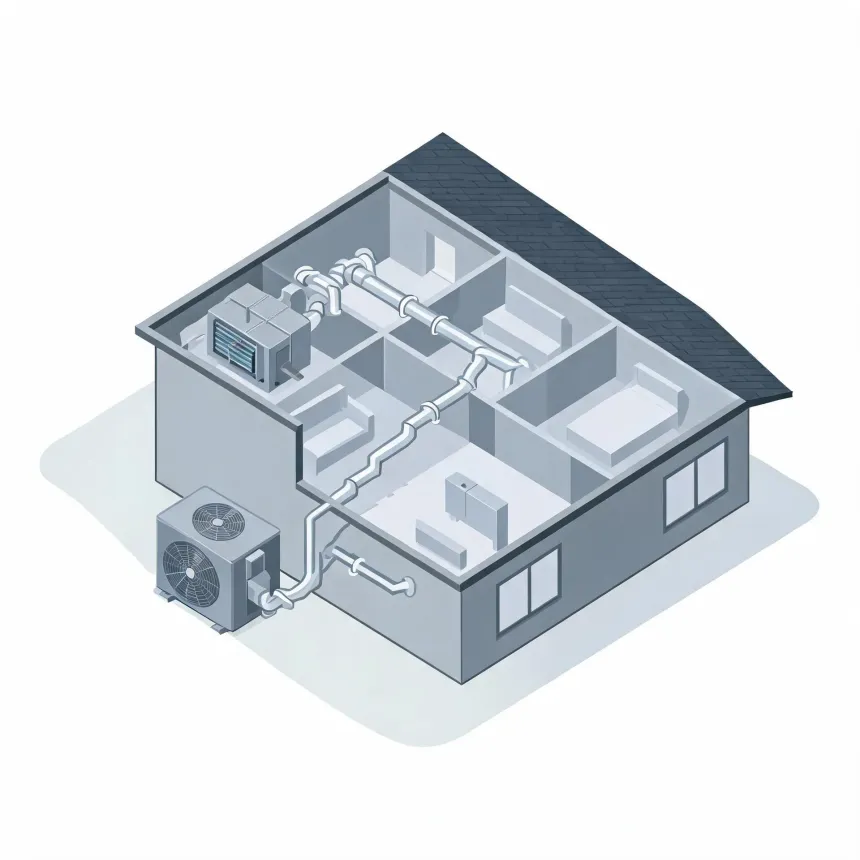
Half the homes in Prowers County were built in 1971 or earlier. A house that age was not built with central air in mind, and whatever ductwork is in there now was likely added later or sized for a different system than the one you're replacing. The new unit has to match the ducts you actually have, not just the square footage of the house. If your system came with the house, it's worth having a contractor check duct size and layout before picking a replacement, rather than swapping in the same tonnage and assuming it will cool the place evenly.

4 months
June through September, your air conditioner is on duty
91°F
the average summer afternoon it cools against
115 hail events
in ten years, and hail bends the fins on outdoor coils
13.4 SEER2
the federal minimum any new unit must meet
Isometric grey illustration of a cutaway single-story house showing interior rooms, ceiling ductwork connected to an indoor air handler, and an outdoor condenser unit linked by lines outside the wall.
Your air conditioner works hardest from June through August.

NOAA nClimDiv, 1991–2020 normals

The wrong size unit will short cycle no matter how good the brand is.

Ask what load calculation the contractor ran on your house, not what tonnage the old unit happened to be.

May is the month to get it done, before four months of 91 degree afternoons start asking a new unit to prove itself

Cooling runs June through September
Summer afternoons average 91°F
132 damaging wind events from 2015 to 2024

Electricity in Colorado ran 14.92 cents per kilowatthour in 2024, higher than a lot of states. An AC pulls more power than almost anything else in the house, so that rate shows up on the bill all summer long, not just on the hottest days. A unit sized wrong for your ducts runs longer than it should to hit the thermostat, and every extra minute costs at that rate. Efficiency matters more here than in a mild climate for the same reason. Ask what SEER2 rating the contractor is quoting and what it's based on, not just the price of the unit.

Your new AC has to meet zone 4B's efficiency minimum. Make sure the quote does.

Zone 4B means real heat and real cold, and any new split system going in has to meet 13.4 SEER2 at minimum. That's a floor, not a suggestion, and it narrows the field before you even start comparing units. There's also a federal tax credit on qualifying high-efficiency equipment, worth asking about while you're pricing this out.

Find a contractor
A man seen from behind in a dark shirt and tan pants carries a canvas duffel bag up concrete steps toward a red front door, with a potted shrub to the right.
A gray residential air conditioner condenser unit mounted on a concrete pad in an open grass field.

Running all day doesn't mean it's working right

A unit that's too big cools the room fast and shuts off before it pulls the moisture out of the air. The space ends up cold and damp, and the compressor starts and stops far more than it should. That cycling is harder on the compressor than running a longer, steady stretch would be. A unit that's too small runs almost constantly during the hottest stretch of the day and still can't hold the temperature you set. Either way the thermostat is only telling you the setpoint, not whether the system is working harder than it has to. Getting the size right starts with a load calculation, a room by room look at window area, insulation, ceiling height and duct layout, not a guess based on the square footage or whatever tonnage was in there before.

The old unit gets hauled away

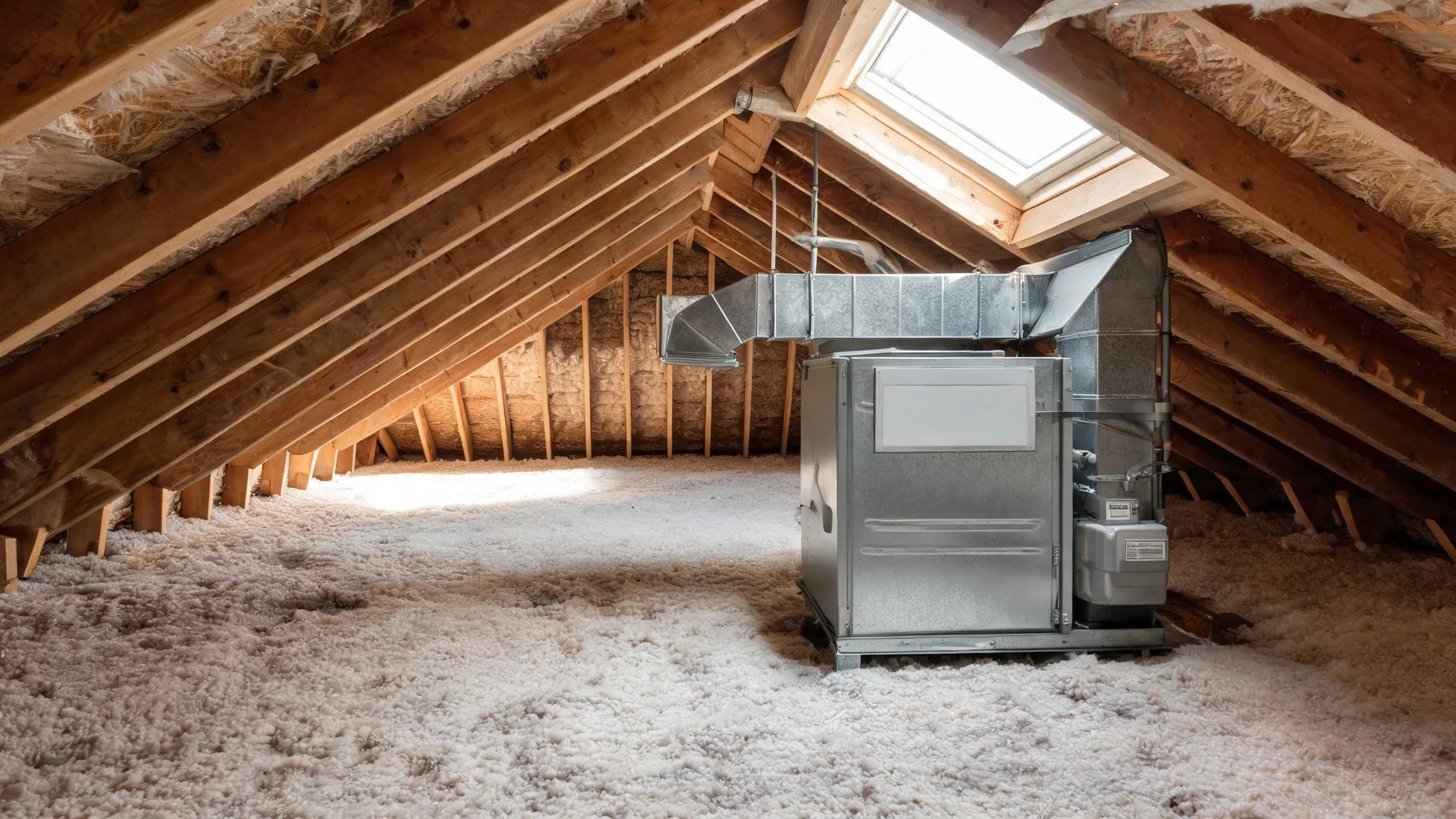
Once the new system is in, the installer disconnects the old condenser and air handler and takes them off site. Refrigerant has to be recovered from the old lines before anything is cut loose, not vented, so ask whether that's part of the job.

The line set and pad usually stay

Most installs reuse the existing refrigerant lines if they're in good shape, and the old concrete pad often holds the new condenser too. If the new unit needs a different line size or the pad is cracked, that's extra work the quote should spell out rather than something that shows up as a surprise on install day.

An outdoor air conditioning condenser unit installed beside the exterior wall of a blue vinyl-sided house at sunset.

A higher-efficiency unit would save about $50 a year to run in Prowers County compared with a new unit at the federal minimum.

  • A higher-efficiency unit$430 a year
  • A new unit at the federal minimum, 13.4 SEER2$480 a year

Estimates for a typical Prowers County home, from EIA household energy data, Colorado fuel prices and NOAA climate normals. Your home will differ.

Install day usually starts with the old system still running. The crew shuts it down, recovers the refrigerant, and disconnects the lines before anything gets cut apart or hauled out. Setting the new condenser and air handler takes longer than people expect, since everything has to get leveled, wired, and connected to the ductwork already in place. Once it's in, the technician checks refrigerant charge and airflow rather than just flipping it on and walking away. A system can look installed and still be set up wrong, so that part of the day matters as much as the lifting and bolting. Expect the crew to run the thermostat through its paces before they call it done, checking that the system cycles the way it should rather than just that cold air comes out.