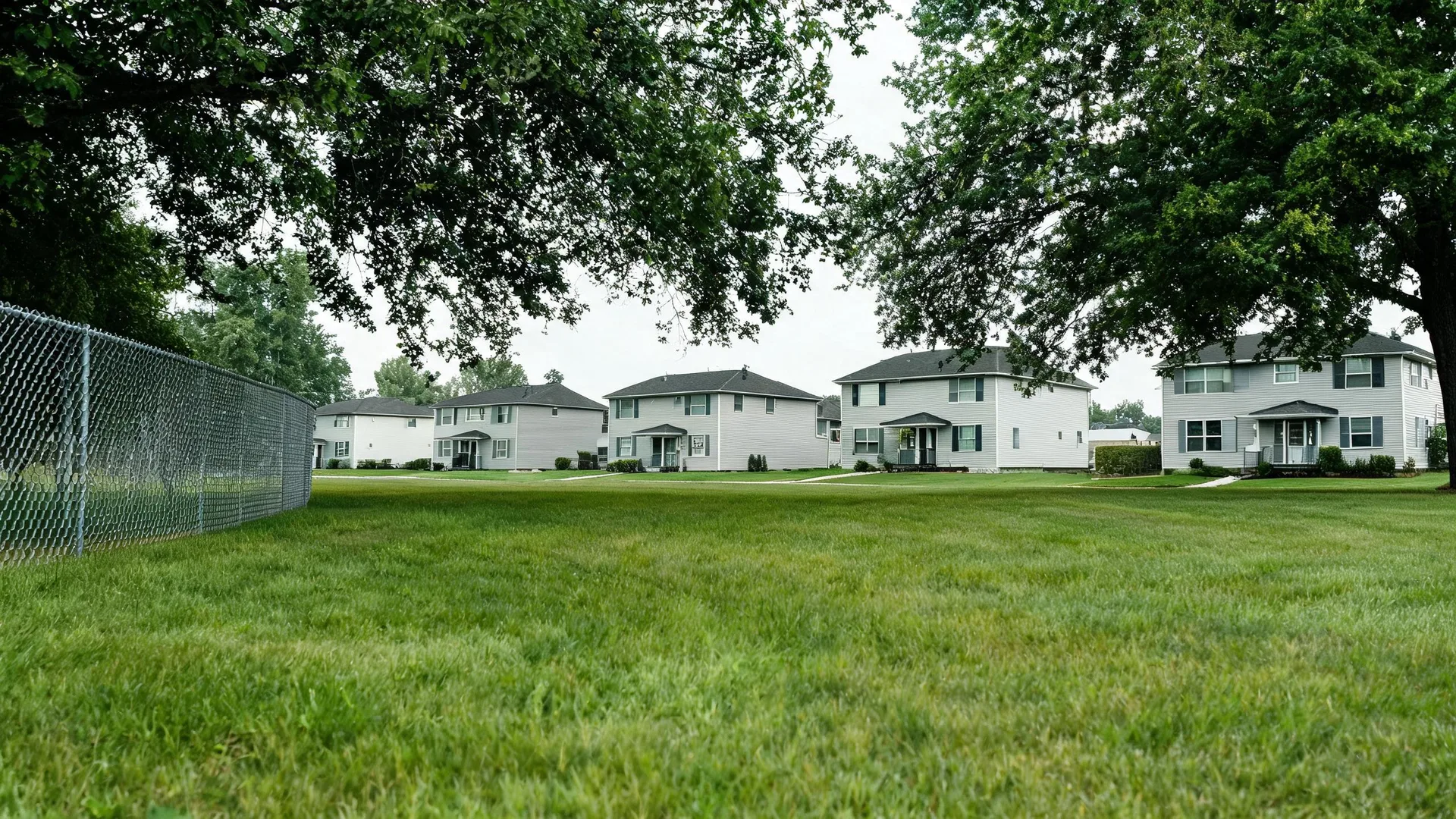







A wide mowed lawn with a chain-link fence at left leads to a row of two-story light-colored houses under overcast sky, framed by overhanging tree branches.

AC Installation in Fort Morgan, CO

Tell us about the job

Takes about a minute. No obligation.

New system or replacementCentral ACMorgan County, CO
Step 1 of 2

What ZIP code is the job in?

Most homes in Morgan County heat with utility gas, at 51.6 percent. That usually means a gas furnace already in place, paired with a separate AC unit or a dedicated air handler for cooling. When it's time for new AC, a matching coil and condenser sized to your furnace's blower is the straightforward route, not a full system overhaul. Electricity heats about 3 in 10 homes here, often through a heat pump or electric furnace, where AC installation may mean looking at the whole system together. Either way, what you have already heating your home decides what makes sense to cool it.

3 months
June through August, your air conditioner is on duty
88°F
the average summer afternoon it cools against
103 hail events
in ten years, and hail bends the fins on outdoor coils
13.4 SEER2
the federal minimum any new unit must meet
Isometric grayscale illustration of a cutaway house showing interior rooms, ductwork, an indoor air handler, and an outdoor condenser unit on a pad connected by lines.
Your air conditioner works hardest from June through August.

NOAA nClimDiv, 1991–2020 normals

A standard-efficiency AC paired with the right size for your home does the job here.

Fort Morgan doesn't push cooling loads or electric rates high enough to justify paying more for less.

Three months of cooling, starting in June. Get it in before then.

Cooling runs June through August
Summer afternoons average 88°F
55 damaging wind events from 2015 to 2024
Three months of summerJune through August, with afternoons averaging 88°F

Morgan County falls under zone 5B, a cool, dry climate where heating carries most of the year's work and cooling is the shorter season. Any new split-system AC under 45,000 Btu/h installed here has to meet 13.4 SEER2 at minimum, the federal baseline for units built from 2023 on. That floor applies whether the system pairs with your existing furnace or gets installed alongside a heat pump. It rules out anything older or under-rated, but it doesn't push you toward paying for more efficiency than this climate calls for. A contractor sizing your new AC will start from that minimum and work up only if your situation asks for it.

A standard AC, sized right, is what Fort Morgan homes need

Half the homes in Morgan County were built in 1975 or earlier, half in 1975 or later. Older home or newer, neither one asks for a bigger system or a higher-efficiency unit than the next. A standard size, matched to your home, is what this county calls for.

Find a contractor
A man in a cap, dark shirt and tan pants walks up porch steps toward a red front door, carrying a brown canvas tool bag, with a potted shrub beside the entry.
An outdoor air conditioning condenser unit mounted on a concrete pad beside a house, with electrical conduit running to a wall-mounted disconnect box.

The old unit doesn't get patched in alongside the new one

When a new AC goes in, the old condenser comes out, along with the coil that sat in the plenum above your furnace. If the refrigerant inside the old system is a kind that isn't made anymore, a licensed contractor has to recover it rather than vent it, that's the law. The copper lines running between the coil and the condenser usually get swapped too, since reusing old line sets can trap contaminants that damage a new compressor. None of this depends on how old the system actually is. It's just what comes with pulling one unit and setting another in its place.

Sizing comes from a load calculation, not the old unit's label

A contractor works out the right size by looking at your square footage, your windows, your insulation and which way your home faces, not by matching whatever number is stamped on the unit coming out. If that old unit was never sized right to begin with, copying it just repeats the mistake.

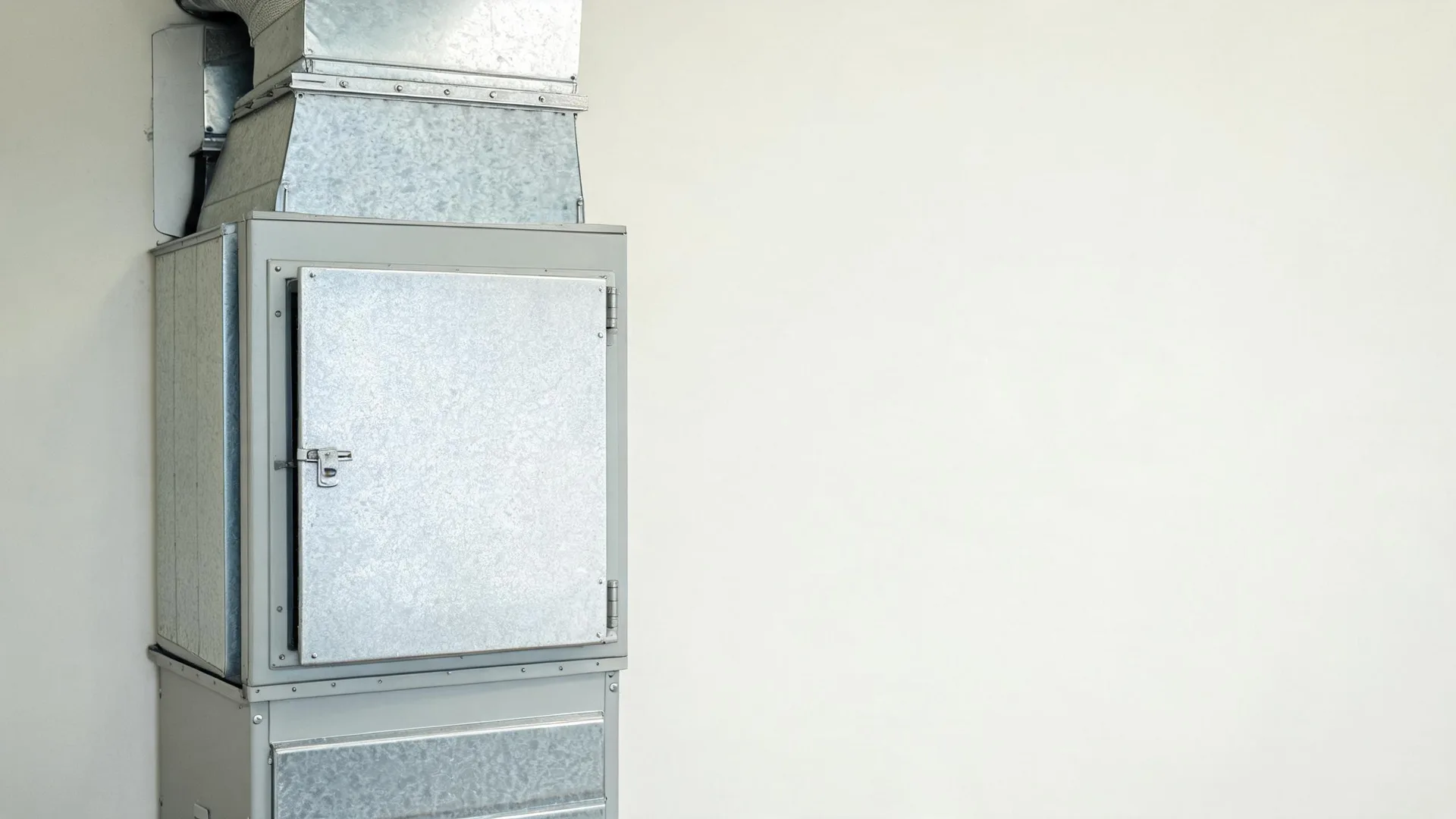
Bigger isn't a safety margin, it's a different problem

An oversized AC cools the air fast, shuts off, and runs again soon after, cycling on and off instead of running steady. Short cycles like that don't run long enough to pull moisture out of the air, so the house ends up cold and clammy at the same time. The right-sized unit runs longer, steadier stretches and actually dries the air while it cools it.

An outdoor air conditioning condenser unit on a concrete pad next to the gray vinyl siding of a residential home.

A higher-efficiency unit would save about $30 a year to run in Morgan County compared with a new unit at the federal minimum.

  • A higher-efficiency unit$280 a year
  • A new unit at the federal minimum, 13.4 SEER2$310 a year

Estimates for a typical Morgan County home, from EIA household energy data, Colorado fuel prices and NOAA climate normals. Your home will differ.

Installation usually runs a full day, sometimes less for a straightforward swap. The old condenser and coil come out first, then the lines get run, the new coil sets into the plenum, and the condenser gets set on its pad outside. Once the lines are connected, the system gets pulled down into a vacuum to clear out any air and moisture before refrigerant goes in. That vacuum step matters more than people expect, since trapped moisture in the lines turns to acid once the system runs and starts eating away at the compressor. After charging, a contractor checks the refrigerant level against the manufacturer's spec, not just by feel, and runs the system through a full cycle to make sure it's cooling and the airflow across the coil is right. The old equipment leaves with the contractor, and by the end of the day the new system is the one doing the work.