






An overhead view of a residential air conditioning condenser unit mounted on a concrete pad next to a house with vinyl siding.

AC Installation in Fort Collins, CO

Tell us about the job

Takes about a minute. No obligation.

New system or replacementCentral ACLarimer County, CO
Step 1 of 2

What ZIP code is the job in?

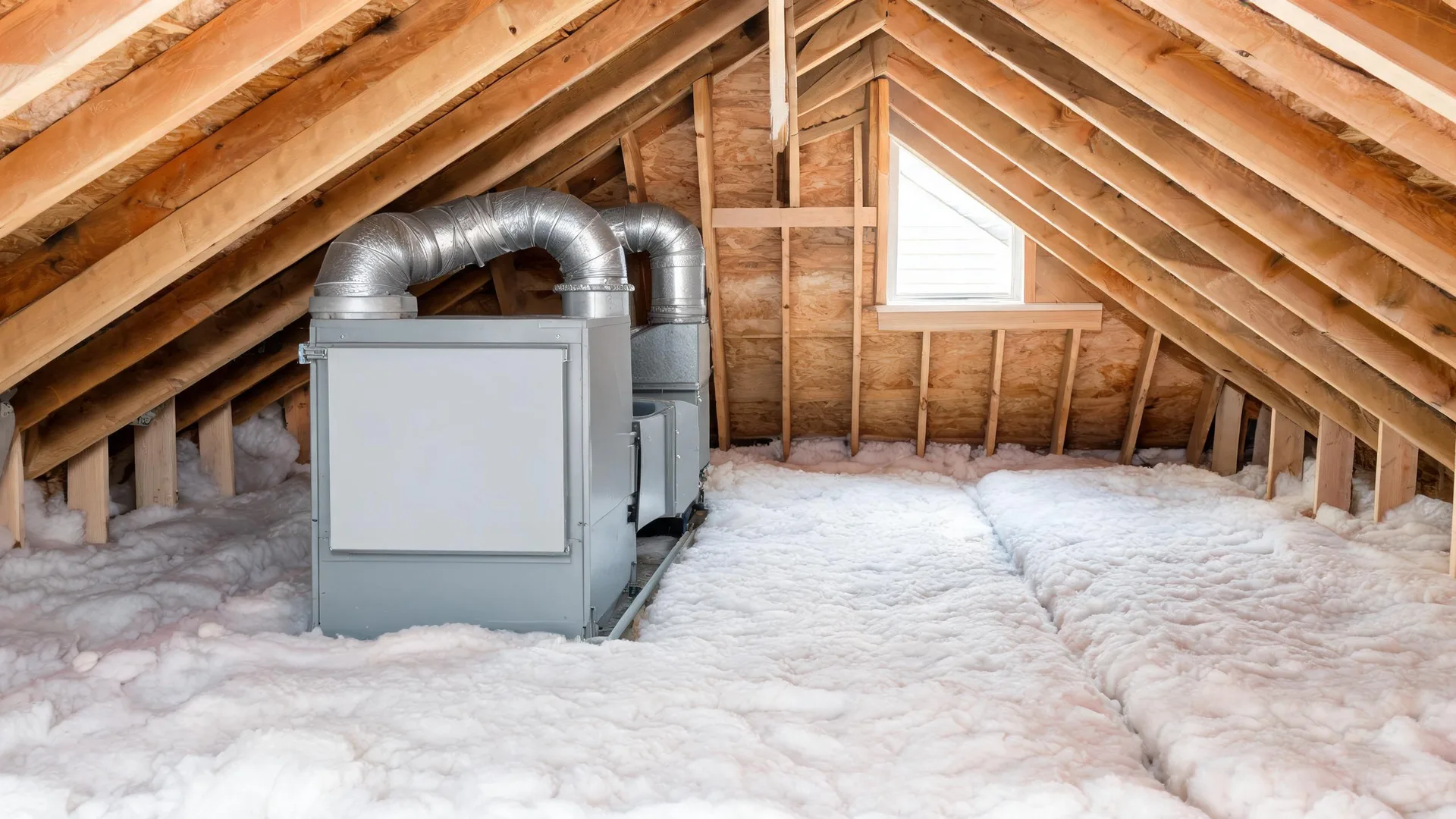
Gas heats close to seven in ten homes in Larimer County, and most of those furnaces share a blower and a duct system with the air conditioner. That matters when you're adding AC or replacing it, because the install usually means matching a new coil and condenser to the ductwork already moving air through your house. Electricity heats about a quarter of homes here, and those setups vary more, sometimes a heat pump, sometimes electric resistance with its own duct layout. If your home runs on gas heat, ask your contractor whether the existing ducts and blower can handle the new system's airflow before anything gets swapped out.

76°F
the average summer afternoon it cools against
155 hail events
in ten years, and hail bends the fins on outdoor coils
13.4 SEER2
the federal minimum any new unit must meet
Isometric cutaway illustration of a house showing attic ductwork, an indoor air handler, and an outdoor condenser unit connected by lines.
Your air conditioner works hardest from July through July.

NOAA nClimDiv, 1991–2020 normals

The old condenser and coil come out once the new system is set to go in.

A mismatched coil left behind can choke airflow in the new unit, so the swap is usually done as a full pair.

Larimer County weather is hard on equipment, but it doesn't change what size AC your house needs

359 severe weather events from 2015 to 2024
13% of homes statewide lost power a day or more in 2024
102 damaging wind events from 2015 to 2024
Electricity here runs 14.92 cents a kilowatthourLower than a lot of the country, so the payback on a high-efficiency unit stretches out. Fit and reliability matter more than the SEER2 number.

Larimer County falls under zone 5B, a cool, dry climate where heating carries most of the load. Any new split-system air conditioner installed here has to meet a federal minimum of 13.4 SEER2, if it was built on or after January 1, 2023. That rating measures efficiency, not how much cooling capacity you need, so it doesn't change what size unit fits your house. It does narrow what a contractor can legally install, since anything below that rating can't go in new. If you're comparing quotes, 13.4 SEER2 is the floor, not a feature someone is offering you.

Summers here don't push an air conditioner hard. Pick one that fits, not one built for more than this.

Afternoon highs here average 76 through June, July and August. That is light work for an air conditioner. A reliable, correctly sized system will keep up with it without needing the top efficiency tier to do the job.

Find a contractor
A gray metal air conditioning condenser unit mounted on a concrete pad in a flat grassy field under a partly cloudy sky.

What to ask before you pick one

Ask how many hours a day the system is expected to run in peak summer, not just whether it can handle the load. A condenser that cycles on and off all day wears differently than one that runs long and steady. The parts that fail first are usually the fan motor, the start capacitor, and the contactor that switches it on and off. Ask how long the manufacturer backs those parts and whether they're easy to get locally years from now. Also ask what the unit does on the mildest days of the season. One that short-cycles when it's barely warm out is often a sign it was sized wrong, not built wrong.

Sizing the system costs more than sizing the box

The condenser and coil are only part of the job. A contractor has to work out how much heat your house actually gains on a hot afternoon, based on square footage, window placement, and insulation, before picking equipment. Skipping that step and matching old to old, or guessing based on tonnage alone, is what leads to a unit that's bigger or smaller than the house needs. The load calculation takes time, and that time is part of what you're paying for.

What's hidden in the walls can change the job

Running new line sets, adding a disconnect box, or bringing electrical up to code for a larger condenser all add work that isn't visible until the old system is out. A straightforward swap where the new unit matches the old one in size and location goes faster. Anything that requires rerouting refrigerant lines, upgrading the breaker, or relocating the condenser pad takes longer and costs more, and there's often no way to know which one you've got until the installer is on site.

An outdoor air conditioning condenser unit on a concrete pad next to the gray vinyl siding of a residential home.

Going above the federal minimum saves little here, about $0 a year.

  • A new unit at the federal minimum, 13.4 SEER2$30 a year
  • A higher-efficiency unit$30 a year

Estimates for a typical Larimer County home, from EIA household energy data, Colorado fuel prices and NOAA climate normals. Your home will differ.

Install day starts with the old system coming out, condenser, coil, and the line set if it's being replaced. Once that's clear, the new coil goes in on top of the furnace or air handler first, since that part sits inside the ductwork. The condenser gets set on its pad outside, and new line sets get run and connected if the old ones aren't being reused. After that it's wiring the disconnect box, charging the system with refrigerant, and checking the charge against what the manufacturer specifies for that line length. A tech will run the system through a full cycle before calling it done, checking the temperature split between the air going in and the air coming out of the vents. That number tells them whether the coil is doing its job, not just whether the unit turns on.