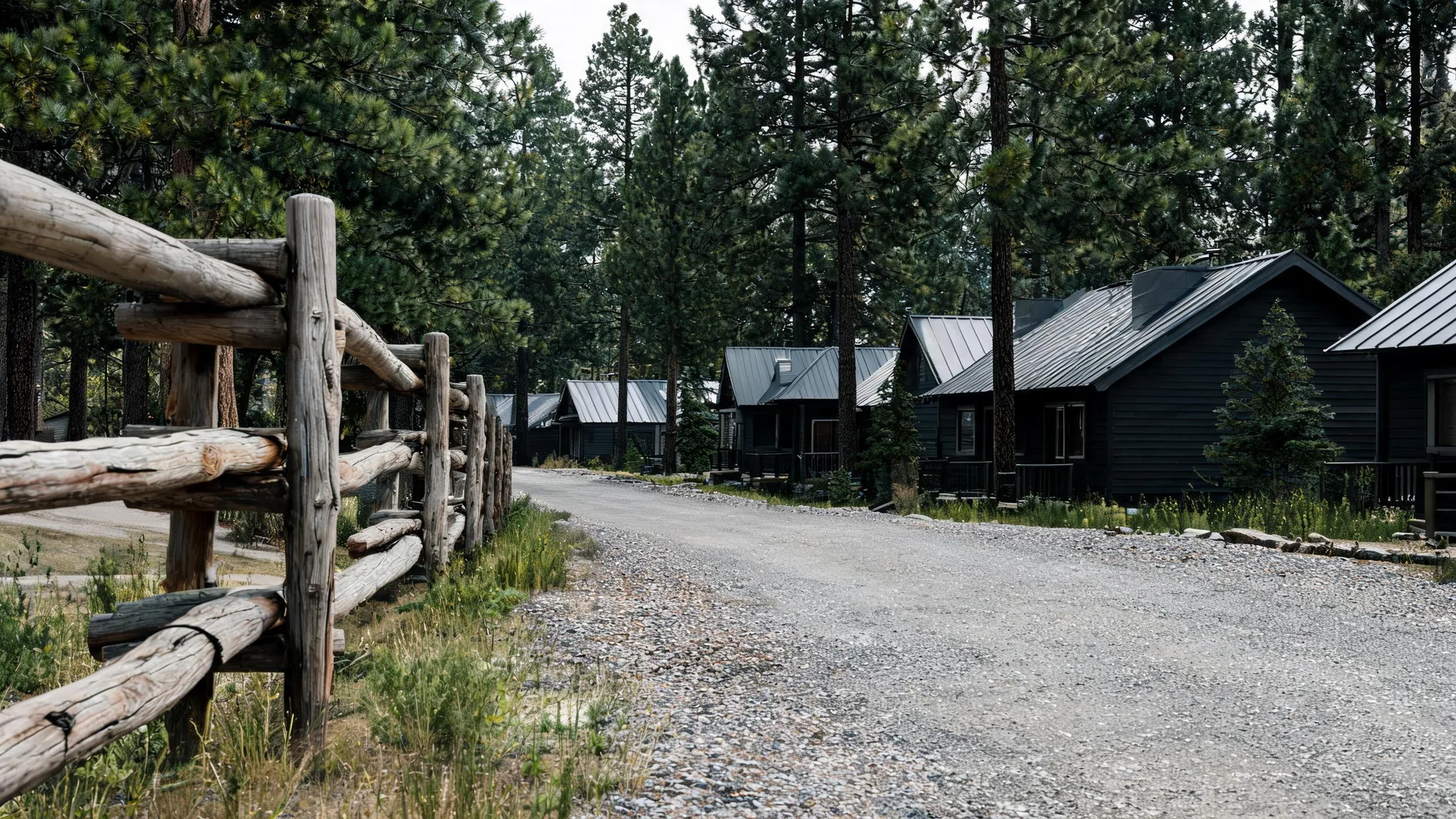






A gravel road lined with dark-sided cabins with metal roofs runs through a pine forest, with a weathered split-rail log fence in the left foreground.

AC Installation in Fairplay, CO

Tell us about the job

Takes about a minute. No obligation.

New system or replacementCentral ACPark County, CO
Step 1 of 2

What ZIP code is the job in?

Gas is the main heating fuel in Park County, at 43.3 percent of homes, with propane close behind at 30.2 percent and electricity well behind both. AC installation usually pairs with one of those two setups. If your furnace runs on gas or propane, central air means adding an outdoor condenser and matching evaporator coil to work with the existing ductwork and furnace blower. The ducts and the blower you already have are part of what a contractor needs to see before sizing a new system.

72°F
the average summer afternoon it cools against
11 hail events
in ten years, and hail bends the fins on outdoor coils
13.4 SEER2
the federal minimum any new unit must meet
Isometric line illustration of a cutaway house showing interior rooms with furniture, ductwork leading to an indoor air handler, and an outdoor condenser unit connected by a line set.
Your air conditioner works hardest from June through July.

NOAA nClimDiv, 1991–2020 normals

Colorado electricity runs 14.92 cents per kilowatt-hour, below the national average.

A high-SEER2 condenser takes longer to pay for itself here, so pick the one that fits your ducts and holds up, not just the one with the best rating.

Park County's weather asks a lot of a roof. Not much of a standard AC.

171 severe weather events from 2015 to 2024
13% of homes statewide lost power a day or more in 2024
74 damaging wind events from 2015 to 2024

Afternoons here average 72 degrees in June, July and August, and that's as warm as it gets. An AC installed in Fairplay isn't fighting the heat load it would face on the Front Range. It runs fewer hours over the summer and doesn't cycle hard when it does run. That changes what's worth paying for. A mid-range condenser, built well and sized correctly to your ducts, will hold up as long as a higher-tier one, because neither one is being pushed. Put the money into correct sizing and a clean installation rather than an efficiency tier you won't get much use out of.

New systems here have a minimum to meet

Any central air condenser installed here now has to meet 13.4 SEER2 at minimum, the federal floor for this size of system. Park County's zone 7 rating also sets what a full heating system has to meet, if you're looking at more than just AC. Worth settling before you compare units, since it narrows the field either way.

Find a contractor
A man in a cap, dark shirt and tan pants walks up porch steps toward a red front door, carrying a brown canvas tool bag, with a potted shrub beside the entry.
A gray metal air conditioning condenser unit mounted on a concrete pad in a flat grassy field under a partly cloudy sky.

Barely any season to run in

Park County has no month warm enough to call for air conditioning, and summer afternoons average 72 degrees. A condenser installed here will sit idle most of the year, and when it does run, it won't be straining against much heat. That's the case for picking a unit that fits your ducts over one with a higher efficiency tier. Spend on correct sizing and a clean hookup instead.

What SEER2 actually measures

SEER2 is a cooling efficiency rating, not a measure of how strong or how big a system is. It tells you how much cooling a condenser delivers for the electricity it uses, averaged over a season. A condenser with a high SEER2 number can still be the wrong size for your ducts, and a correctly sized one with a lower number can still cool the house fine. The rating alone doesn't tell you whether a unit fits your home.

Why the rating matters less if the unit doesn't run much

A higher SEER2 number saves more on electricity the more hours a system runs against real heat. A condenser that sits idle most of the year, or runs light when it does, never gets enough hours to turn that efficiency gap into real savings. Sizing the unit correctly to your ductwork and insulation does more for how it performs than a higher tier on the label.

An outdoor air conditioning condenser unit on a concrete pad next to the gray vinyl siding of a residential home.

Going above the federal minimum saves little here, about $0 a year.

  • A new unit at the federal minimum, 13.4 SEER2$0 a year
  • A higher-efficiency unit$0 a year

Estimates for a typical Park County home, from EIA household energy data, Colorado fuel prices and NOAA climate normals. Your home will differ.

Installation day starts with the ductwork, not the condenser. A contractor checks static pressure and airflow through your existing ducts before anything gets set on the pad, because the new coil and condenser have to match what the ducts can actually deliver. Outside, the old condenser comes out and a new pad goes down if the old one's cracked or sitting wrong. The line set connecting the outdoor unit to the evaporator coil usually gets replaced rather than reused, since old refrigerant lines can carry contamination into a new system. Once the coil's in above the furnace and the lines are run, the system gets evacuated to pull out moisture and air before refrigerant goes in. Last comes the startup check. Refrigerant charge gets verified, airflow across the coil gets measured, and the thermostat gets tested to make sure it's talking to the system the way it should.