An overhead view of a residential air conditioning condenser unit mounted on a concrete pad next to a house with vinyl siding.

AC Installation in Aspen, CO

Tell us about the job

Takes about a minute. No obligation.

New system or replacementCentral ACPitkin County, CO
Step 1 of 2

What ZIP code is the job in?

Gas heat is the norm here

Half the homes in Pitkin County heat with utility gas, and most of the rest run on electricity. If your furnace runs on gas, adding or replacing central air just means matching a condenser and coil to it, no changes to how the house is heated.

What that means for the AC side

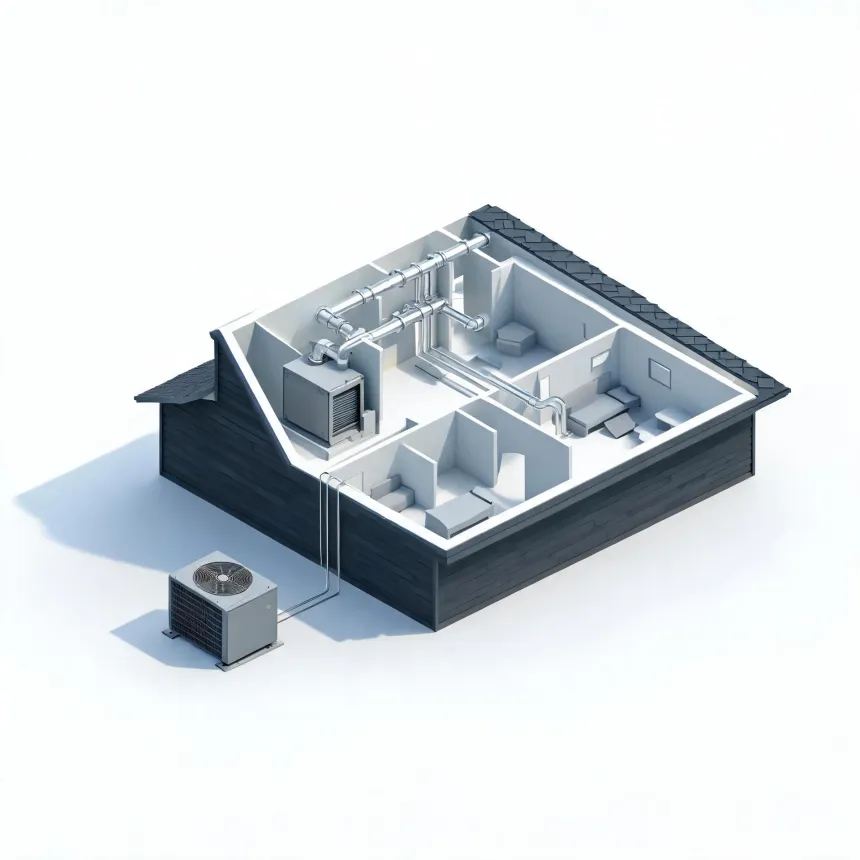
A gas furnace already has the ductwork and the air handler an AC system needs to move cold air through the house. The new work is the outdoor unit, the coil, and the line set between them, not rebuilding how air gets to each room.

70°F
the average summer afternoon it cools against
13.4 SEER2
the federal minimum any new unit must meet
Isometric 3D cutaway render of a house with dark siding showing interior rooms, ductwork and an air handler, connected by lines to an outdoor condenser unit on a white background.
Your air conditioner works hardest from July through July.

NOAA nClimDiv, 1991–2020 normals

Colorado electricity runs 14.92 cents a kilowatt-hour, below the national average.

A high-efficiency condenser costs more up front and takes longer to earn that back here, so pick one for how well it holds up, not just its SEER2 number.

A 70°F afternoon doesn't ask much of a condenser

Summer afternoons average 70°F
19 damaging wind events from 2015 to 2024
Power costs 14.92 cents a kWh statewide

Pitkin County sits in climate zone 7, the coldest tier in the energy code. That rating is about winter heating design, not summer cooling. The cooling rule comes from the federal government instead. Any new split-system AC under 45,000 Btu/h has to meet a minimum of 13.4 SEER2, the same floor whether the house is in Aspen or Phoenix. A contractor still has to size the system for this elevation and climate, but the efficiency number on the unit itself is a national standard, not a local one. A federal tax credit is available for qualifying high-efficiency equipment, worth checking against whatever system you land on.

Pick the system built to last here, not the one built for load it won't see

A condenser that sits idle most of the year doesn't need the top tier to hold up. Put the money into a unit sized right and installed well, and let that decide the job.

Find a contractor
A gray residential air conditioning condenser unit mounted on a concrete pad outdoors, surrounded by green grass under a partly cloudy blue sky.

The old equipment doesn't get a second life, it gets hauled off

This is an installation, so there's an old system coming out, if there's central air there already. A condenser that's sat outside through winters picks up its own wear regardless of how many cooling hours it logged, since the weather works on it whether the compressor ran or not. The line set gets cut loose, the old coil comes out of the plenum, and the condenser gets hauled off the pad. None of that old equipment gets reused. Refrigerant in an older system may be a type that's been phased out, which is part of why it's recovered and disposed of properly rather than topped off and left in place. A new system means new line set too, not just a new condenser and coil tied into old copper, because old lines can carry contamination or the wrong oil residue into a new compressor.

The load is worked out, not guessed

Sizing an AC system means figuring how much heat the house gains through its walls, windows and roof, then matching a condenser and coil to carry that gain. A contractor doing this right runs the numbers room by room, weighing square footage, window area and orientation, ceiling height and shade, rather than pricing the system off the size of the old one.

Oversized cools the air, not the house

A condenser too big for the house blasts cold air fast and shuts off before it pulls the moisture out of the room, so the house feels cold and damp instead of just cool. It also cycles on and off more often, and every start puts wear on the compressor and the contactor. An undersized unit has the opposite problem. It runs constantly and still can't catch up on the hottest afternoons. The right size runs long enough to dry the air out and then shuts off.

Aerial view of a residential air conditioning condenser unit mounted on a concrete pad next to a house with vinyl siding and a sliding glass door.

Going above the federal minimum saves little here, about $0 a year.

  • A new unit at the federal minimum, 13.4 SEER2$0 a year
  • A higher-efficiency unit$0 a year

Estimates for a typical Pitkin County home, from EIA household energy data, Colorado fuel prices and NOAA climate normals. Your home will differ.

Install day starts with the old equipment coming out, if there is any, and the new line set going in between the condenser pad outside and the coil above the furnace. That coil has to marry up with the furnace's air handler, so a tech is often fitting a new coil case into existing ductwork rather than swapping in a part that just slides into place. Once the line set is run and brazed, the system gets evacuated with a vacuum pump. That pulls out moisture and air, because either one left behind ruins the refrigerant charge. Only after the lines hold a vacuum does refrigerant go in, weighed to the amount that condenser needs. Last comes the test run, checking the charge against the pressures the manufacturer specifies, confirming the thermostat talks to the system, and feeling air at the vents to make sure it's actually cold. None of that depends on how big the house is or where it sits. It's the same sequence on every job.