Running the way it should
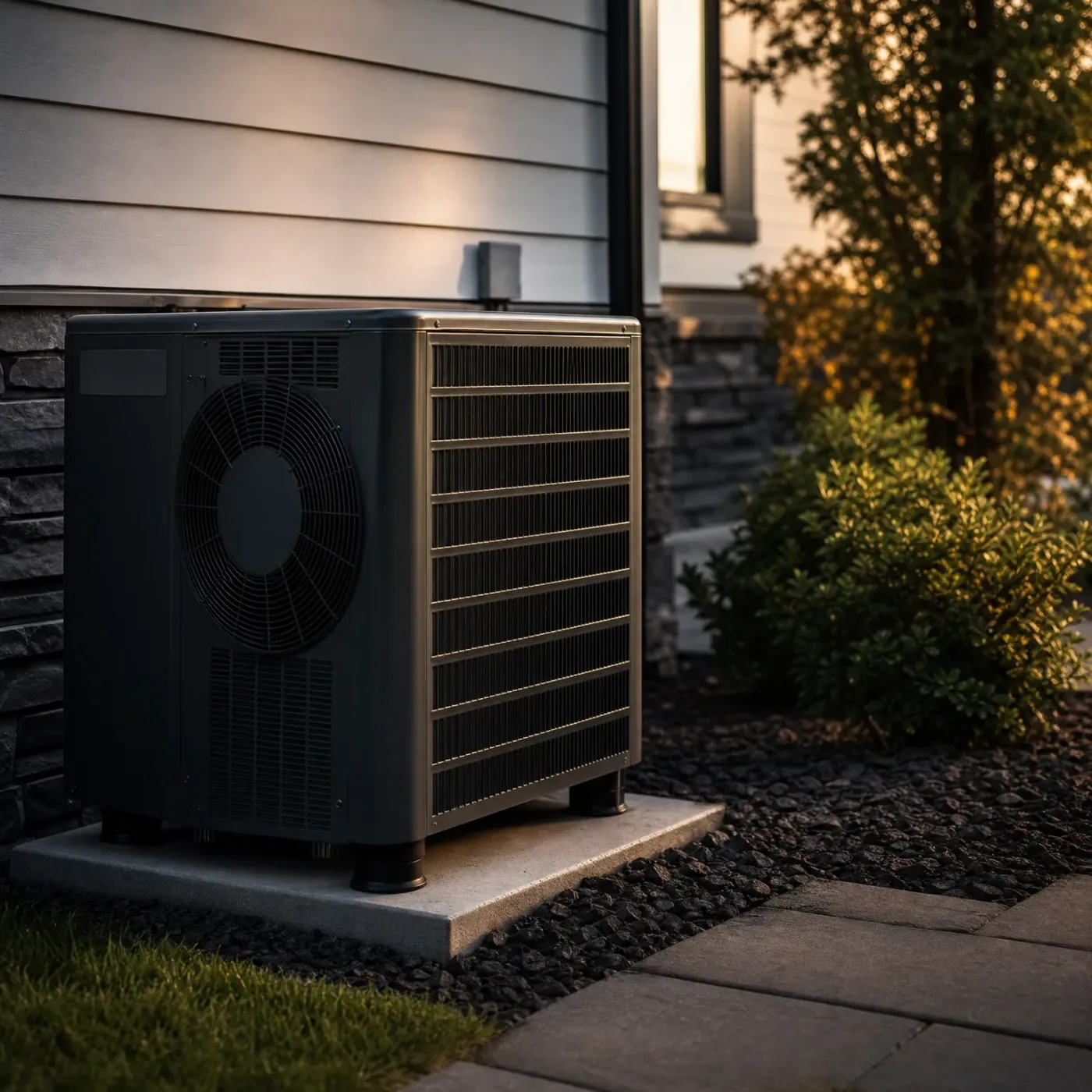
A heat pump that starts and runs stays clean around the base, and the fan turns freely with no hum or buzz from a stuck part. Conduit and refrigerant lines run tight to the disconnect box, nothing loose, nothing rattling.
Get the right pro for your heat pump
A heat pump that won't start usually comes down to a handful of causes, from a tripped breaker to a thermostat set wrong for the season to a part that's failed outright. Most homes here back up the heat pump with gas, so a cold house isn't an emergency, but you still want it fixed. Below is what to check, and a licensed Colorado contractor who works on heat pumps year-round if you need one.
Connect with a proA heat pump that won't turn on is usually a power problem, a thermostat problem, or a failed part. Start with the breaker, since a heat pump draws on a dedicated circuit and a tripped one will stop it cold with no warning at the unit itself. Check the thermostat next. If it's set to heat but the system still won't respond, or the display is blank, the thermostat or its wiring may be the actual fault, not the heat pump. If power and settings check out, the problem is likely inside the unit: a failed capacitor, a bad contactor, or a control board that's stopped sending the signal to start. Colorado winters get cold enough that outdoor units can also ice over, and a unit fighting ice won't run right even if everything electrical is fine. None of this is something to diagnose by guesswork. A failed part needs a qualified eye before you know what you're actually replacing.

A heat pump that starts and runs stays clean around the base, and the fan turns freely with no hum or buzz from a stuck part. Conduit and refrigerant lines run tight to the disconnect box, nothing loose, nothing rattling.

Years of dirt and grass clippings packed into the coil make a heat pump work harder to pull in air, and that strain is often what finally takes down a weak capacitor or motor. If yours looks like this and won't start, a worn part is a likely reason.




A heat pump moves heat from outside air into the house, which means the outdoor unit works through winter in a way a central air system never has to. That outdoor coil and fan sit exposed to snow, ice, and freezing wind all season. If ice builds up on the coil and the defrost cycle isn't clearing it, the system can lock out rather than run and risk damage to the compressor. That lockout can look identical to a power failure from inside the house, but it's the outdoor unit protecting itself, not a dead circuit.
Most homes here pair the heat pump with a gas furnace for backup, and that pairing is a clue worth checking before anything else. If the furnace is running and the house is warm, the thermostat and the gas side both work, which narrows the problem down to the heat pump and whatever stops it from turning on in the first place. If both the heat pump and the furnace are silent, the fault is more likely upstream, in the thermostat or the power feeding the whole system rather than a single component.


Your request goes to one pro, not a list of companies.
No fee to send it, and nothing to sign.

If your heat pump won't start, the house falls back on gas heat, so you likely won't feel it right away. But the thermostat may still be calling for the heat pump first, cycling the fan or clicking without the outdoor unit ever kicking on. You might notice the vents blowing cooler air than usual, or the system running longer trying to reach the set temperature. The backup keeps you comfortable, but it wasn't built to carry the whole house through a Colorado winter on its own.

Gas heat costs more to run than a heat pump, and power here is priced about average, so the difference shows up on the bill while the heat pump sits idle. The longer it stays off, the more of the heating load shifts onto gas alone, month after month. A part that's failed outright won't fix itself, and a tripped breaker that keeps tripping points to something underneath it working harder than it should. Left alone, a small problem at the breaker or the board can turn into a bigger repair.

When the thermostat calls for heat, it sends a low-voltage signal to a control board inside the air handler. That board checks for a few things before it lets the outdoor unit start: that the contactor is good, that the capacitor can deliver the jolt the compressor needs to kick on, and that nothing has tripped a safety switch. If any one of those fails, the board won't energize the outdoor unit at all, and from inside the house that looks exactly like nothing happening. No click, no hum, no fan.
A contactor that's pitted or a capacitor that's weak won't always show up as a total no-start. Sometimes the fan runs but the compressor doesn't, or the unit tries and stops. Telling those apart from a thermostat issue or a tripped breaker takes testing the voltage at each stage, not guessing from how the unit sounds. A contractor who works on heat pumps through a Colorado winter sees these same failure points often enough to know which one to check first, and matching you with one local to you means that diagnosis starts with someone who's already narrowed it down before they arrive.

At 15.69 cents per kilowatt-hour, a heat pump that's cycling on and off without actually heating can run up your power bill before you even notice the house isn't warming. A part that's failed outright, on the other hand, just draws nothing and sits idle.
EIA-861 2025 statewide residential average
Start with the breaker and the thermostat. Those two account for most of the calls like this one, and you can check both yourself before anyone comes out. If the breaker's fine and the thermostat's set right for the season, something inside the system has failed, and that's a job for someone who can open the unit and test it properly.
Your house won't go cold waiting on this. Gas backs up the heat pump in most Colorado homes, so the furnace carries the load while the outdoor unit sits idle. That buys you time to get it looked at right, instead of rushing someone out at an odd hour.
When you do call, you're matched with one contractor, not several bidding for the work. Someone local, who's worked through enough Colorado winters to know what usually stops a heat pump from starting before they've even pulled a cover off. That's worth more than a handful of quotes from companies guessing over the phone.
A heat pump that won't turn on has a reason. It's almost always one of three: no power getting to it, a thermostat not calling for it correctly, or a part that's quit. Once you know which, the fix follows from there.
The pro who reaches out is licensed in Colorado.