





Why your heat pump isn't cooling in Colorado summers

Get the heat pump repair search off your mind today.

Hand it off

Why isn't my heat pump cooling my house in the summer?

A heat pump that runs all day and never quite gets the house cool is a specific kind of frustrating, especially when Colorado's summer sun is hammering the windows and the thermostat won't move. You're not imagining it. Something in the system is working against itself, and it's worth knowing what before you decide whether this is a quick fix or something bigger.

Usually a refrigerant or airflow problem, not the heat pump itself giving up

A heat pump cools the same way a central air conditioner does, by moving heat out of the house, and it depends on the same two things: enough refrigerant and enough air moving across the coil. A low charge means the system can't absorb heat fast enough to keep up when it's 90 degrees outside. A dirty coil or a clogged filter chokes the airflow it needs to do that job. Either one shows up the same way, a heat pump that runs and runs but never catches up. Colorado's dry summer heat makes a struggling system work harder than it would somewhere humid, so a problem that was minor in June can leave you with a house stuck in the 80s by August.

An outdoor heat pump unit on a concrete pad beside a house corner, with a small electrical box and conduit on the wall, gravel border, grass, and a plain light-colored wall filling the right side.

Dry air changes the math

Colorado's low humidity means a heat pump can be low on refrigerant for a while before the house feels it, because dry air already feels a bit cooler than it is. By the time you notice the house isn't holding 72, the charge may be down enough that the outdoor coil is icing over on hot afternoons. A technician checks the charge with gauges, not by guessing from how the air feels at the vent.

A grey outdoor heat pump unit on a concrete pad beside a white stucco wall and dark siding with a downpipe, with gravel and grass in the foreground.

The outdoor unit does the work

In cooling mode, the outdoor unit is where the heat from your house actually gets dumped into the air outside. If that coil is caked with cottonwood seed or mowed grass, which happens fast here in summer, the unit can't shed heat fast enough and the system struggles on the hottest days first. A clean coil and full airflow across it matter more in July than any other month of the year.

A closed laptop and a ceramic mug on a wooden table in front of a kitchen with green cabinets, marble counter, black pot, cutting board, wooden bowl, and a white vase with greenery.

What a stuck heat pump does to your house

When the house won't drop below 78 on a July afternoon, it's not just the thermostat number. It's the upstairs bedrooms holding heat long after sunset, the dog panting on the kitchen floor, dinner plans built around how long the oven stays off. A heat pump running constantly and losing the fight also runs up your power bill for air that never gets comfortable, which is its own kind of frustrating when the house still feels like Denver in August.

You could start calling around, explain the thermostat setting and the strange noise to three different companies, then sit with three quotes trying to guess which one actually fixes it. Send the form here instead and that part is done. You stop being the one who has to track down a contractor, and start being the one who gets to wait for the house to cool back down.

A shallow dark wooden bowl and a stack of books rest on a wooden table in front of a beige sofa with linen and green cushions, with a tall ceramic vase of thin branches beside a window in the background.
A gray outdoor condenser unit sits on a concrete pad against a house wall with horizontal siding above a stone veneer base, with an electrical disconnect box and conduit on the wall and a leafy shrub in mulch to the left.

Running clean

This is what a heat pump should look like outside. The coil fins are clear, the fan isn't straining against caked-on dirt, and the disconnect box is doing its one job sitting quiet on the wall. Airflow moves through it the way it was built to.


An outdoor air conditioner condenser unit on a concrete pad beside a house with beige vinyl siding, with a gray electrical disconnect box and insulated refrigerant lines on the wall and river rock to the right.

Choked with debris

Those fins packed with dirt and cottonwood fluff can't move heat the way they need to. The unit works harder for less cooling, and on a hot, dry Colorado afternoon that's the difference between a house that holds 72 and one stuck at 80.

A smiling bearded man in a dark green hooded jacket and blue t-shirt sits on a couch in a living room with shelves, a potted plant, and a bowl of popcorn on a wooden table.
A smiling man in a green long-sleeved shirt sits on a beige sofa in a living room, with a bowl of popcorn in the foreground, a large potted plant and shelving behind him.
A smiling man in a dark blue T-shirt sits on a couch in a dimly lit living room with a bowl of popcorn and a remote on a wooden table, a lit floor lamp and bookshelves behind him, and windows showing greenery.
A smiling bearded man in a dark green long-sleeved shirt sits on a leather couch in a living room, with a bowl of popcorn and a remote control on a wooden table in the foreground.

Send one request and you're done looking

A heat pump that won't cool a Colorado house in July is usually low on charge, blocked at the outdoor coil, or short on airflow somewhere in the ducts, and none of those sort themselves out by waiting another day. Meanwhile you're the one calling around, explaining the thermostat setting and the strange noise and the day it started to whoever picks up, then doing it again with the next company because the first one can't come out till next week. Send the request once and that work is done. You stop being the person who has to track down who's even available this time of year and compare three quotes against each other while the house sits at 79. One contractor gets your information and takes it from there. The part that was yours, finding somebody and making the case for why it's urgent, is handled. What's left is the actual fix, which takes a pair of hands and the right gauge, not more of your afternoon on the phone.

A heat pump cooling a Colorado house on a dry July afternoon is working the coil hard but the air moving through the ducts should still feel genuinely cold at the vent, not just less hot than the room.

If the air at the vent is only lukewarm, the system isn't short on time or patience, it's short on charge or airflow, and that's a repair, not something that fixes itself by Thursday.

A woman with dark hair in a bun reclines on a gray sofa with her eyes closed and a slight smile, wrapped in a cream knit sweater and blanket, with an open book resting in the foreground and a lit lamp in the dim room behind.
A smiling bearded man in a dark crewneck sweater sits at a dinner table with a lit candle, glasses of wine and water, and plates of food in the foreground, with a lamp, framed art and a potted plant behind him.

Fixable this week

A low charge, a dirty outdoor coil, or a blocked return can usually be found and corrected in a single visit, and the house starts cooling again the same day it's fixed.

Send my request

Left to run as is

The compressor keeps working harder against the same restriction, July afternoons stay in the upper 70s indoors, and the part that's struggling now is more likely to fail outright by August.

Send my request

Call for help or let it ride

Call a repair tech

  • A tech with gauges can tell in minutes whether the charge is low, and by how much, instead of you guessing from the vent temperature.
  • Finding the blockage, whether it's the outdoor coil, a closed damper, or a collapsed section of duct, takes equipment you don't have in the garage.
  • Topping off refrigerant without finding the leak just means the same call again in a few months.
  • A tech can check the compressor itself, which is the one part that's expensive to replace and worth protecting now.
  • Once it's diagnosed, most of these problems get fixed the same visit, and the house starts cooling that day.

Wait it out

  • The house stays at 78 or worse through the hottest part of the Colorado summer, and that doesn't change on its own.
  • A dirty outdoor coil or a low charge doesn't improve with time; it gets worse the longer the system runs against it.
  • The compressor keeps straining to make up for whatever's blocked or low, which is how a repair turns into a replacement.
  • You're left opening windows at night and hoping the dry air helps more than it will.
  • Every week it runs like this is a week of electric bills paying for cooling the house isn't actually getting.
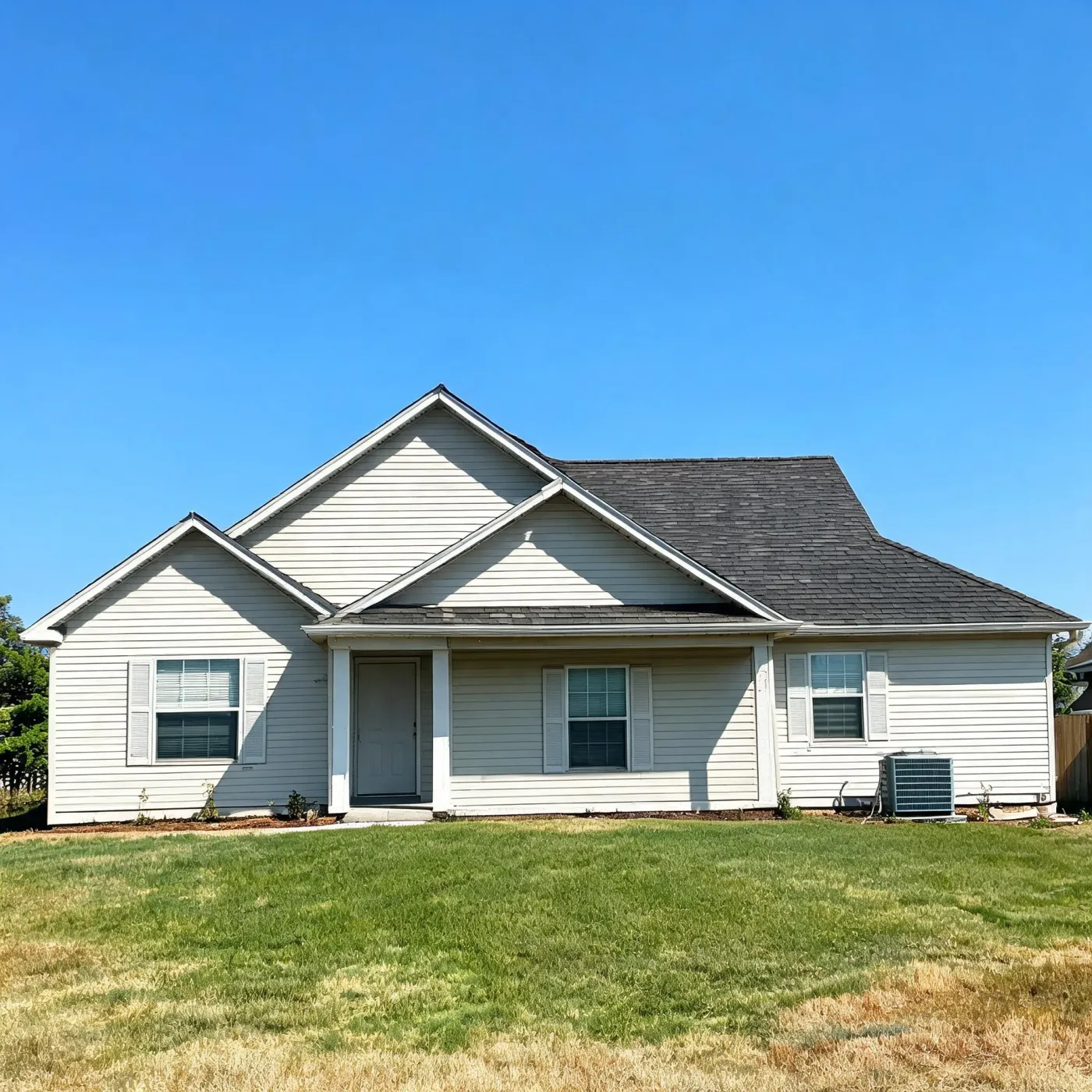
Single-story house with cream vinyl siding, gray shingled gable roof, small front porch with gray door, shuttered windows, and an outdoor AC unit, fronted by a partly dry lawn under a clear blue sky.

Colorado air is dry enough that the average summer dew point sits around 42°F, based on NOAA climate normals for the state. That's air your skin reads as comfortable even when the thermostat says otherwise, which is exactly what lets a struggling heat pump hide. In a muggier state, a system losing its grip on humidity would feel wrong fast, sticky and heavy. Here, the air stays dry no matter what the coil is doing, so the only signal you get is the temperature itself creeping up. A heat pump can be well behind on cooling the house before anything about the air feels off.

NASA POWER T2MDEW county cells weighted by homes

A gray outdoor condenser unit sits on a concrete pad beside a house with horizontal lap siding, with a wall-mounted disconnect box and refrigerant lines, mulched beds and a shrub nearby, and a concrete walkway in the foreground.
A heat pump working like this moves heat out of the house instead of fighting to.
An outdoor air conditioner condenser unit on a concrete pad beside a light gray vinyl-sided house, with an electrical disconnect box and conduit on the wall and bare soil in the foreground.
A heat pump run down to this point can't move enough heat out to matter.

Power costs 15.69 cents per kilowatt-hour statewide

At 15.69 cents a kilowatt-hour, a heat pump that's low on charge or choked at the coil isn't just failing to cool your house. It's running longer to do less, and every one of those extra hours on the compressor shows up on next month's bill.

EIA-861 2025 statewide residential average

A heat pump that won't drop a Colorado house below 78 in July is almost always low on charge, choked at the outdoor coil, or short on airflow somewhere in the ducts. None of those fix themselves, and none of them need a guess. A tech with gauges finds the cause in one visit, and the house starts cooling again once it's corrected. What's left is finding someone to do it, which usually means searching, calling a few numbers, explaining the same thing about the vents and the thermostat to each one, then sitting with quotes trying to tell them apart. Sending the form here ends that part. You stop being the one chasing it down, and the house stops being the thing you're managing around all evening. The heat pump still needs the repair. But the work of finding who does it is no longer yours to carry.

An outdoor air conditioning or heat pump condenser unit sits on a concrete pad surrounded by gravel beside a dark horizontal-sided house, with grass and shrubs nearby.

Let someone else find the pro

Describe your heat pump job once, to one pro.

RepairHeat PumpColorado
Step 1 of 2

What ZIP code is the job in?