Send the request today and let an air conditioner pro reach out to you.
A loud noise from your AC on a hot Colorado afternoon is not something to wait out. Heat like this doesn't let up, and a system that's grinding, banging or squealing is telling you something inside it is loose, worn, or about to fail outright.
The sound itself usually points somewhere specific. A screech can mean a motor bearing is going. A bang when the unit starts or stops often means a part has come loose inside the cabinet. A rattle might be nothing more than a loose panel, or it might be a fan blade hitting something it shouldn't. None of these fix themselves, and running the system while it makes that noise can turn a small repair into a bigger one.
This is the kind of problem that calls for someone who works on these systems all summer, in the same dry heat your unit is fighting against, and who's heard this exact noise before on someone else's unit down the street. A local contractor who does this work season after season knows which failures show up most in this climate and can usually tell a lot just from how you describe the sound.
Once you send the request, you're handed off to one licensed contractor local to your area, not a handful of companies competing for your callback. That means one call to answer, one technician who already has a sense of what to check first, and no juggling multiple quotes while your house gets warmer. You stop being the one who has to track down help. That part is off your plate.
Figuring out what's wrong with a noisy AC from the couch is guesswork. Getting someone out who knows the equipment is the actual answer. The rest of this page walks through what different noises usually mean, but if you're ready to get it looked at, the request takes a minute to send.
Why is my AC making a loud noise?
A loud noise from the AC is unsettling, especially when it's hot out and the system can't just be switched off and ignored. You want to know what's making the sound before you decide whether to run the unit or shut it down.
It's almost always a part that's come loose, worn out, or is about to fail
A grinding sound usually means a motor bearing is worn. Banging points to a loose part inside the outdoor unit, sometimes a blade on the fan hitting its housing. Squealing is often a belt or motor on its way out, or a fan that's lost its balance. In Colorado, outdoor units run hard through long, hot, dry stretches, and that steady demand is what wears a bearing or shakes a bolt loose over time. None of these sounds mean the system will simply fix itself. A noise that starts suddenly and keeps happening every time the AC runs is the compressor or fan telling you it needs to be looked at before it stops running altogether.
Is the noise getting worse when the AC runs longest?
Pay attention to when it happens. A bang when the compressor kicks on, a squeal that starts low and climbs, a rattle that only shows up in the afternoon when the unit has been running for hours against the heat. That pattern tells you something. A noise that worsens under load usually means a part is wearing down and losing tolerance as it heats up. If you let it ride, a loose part can work its way into something it shouldn't touch, and a motor straining against resistance can burn out instead of just needing a belt or a bearing. On a hot afternoon, that's the difference between a repair and a system that quits on you with no cool air until it's fixed.
Running quiet
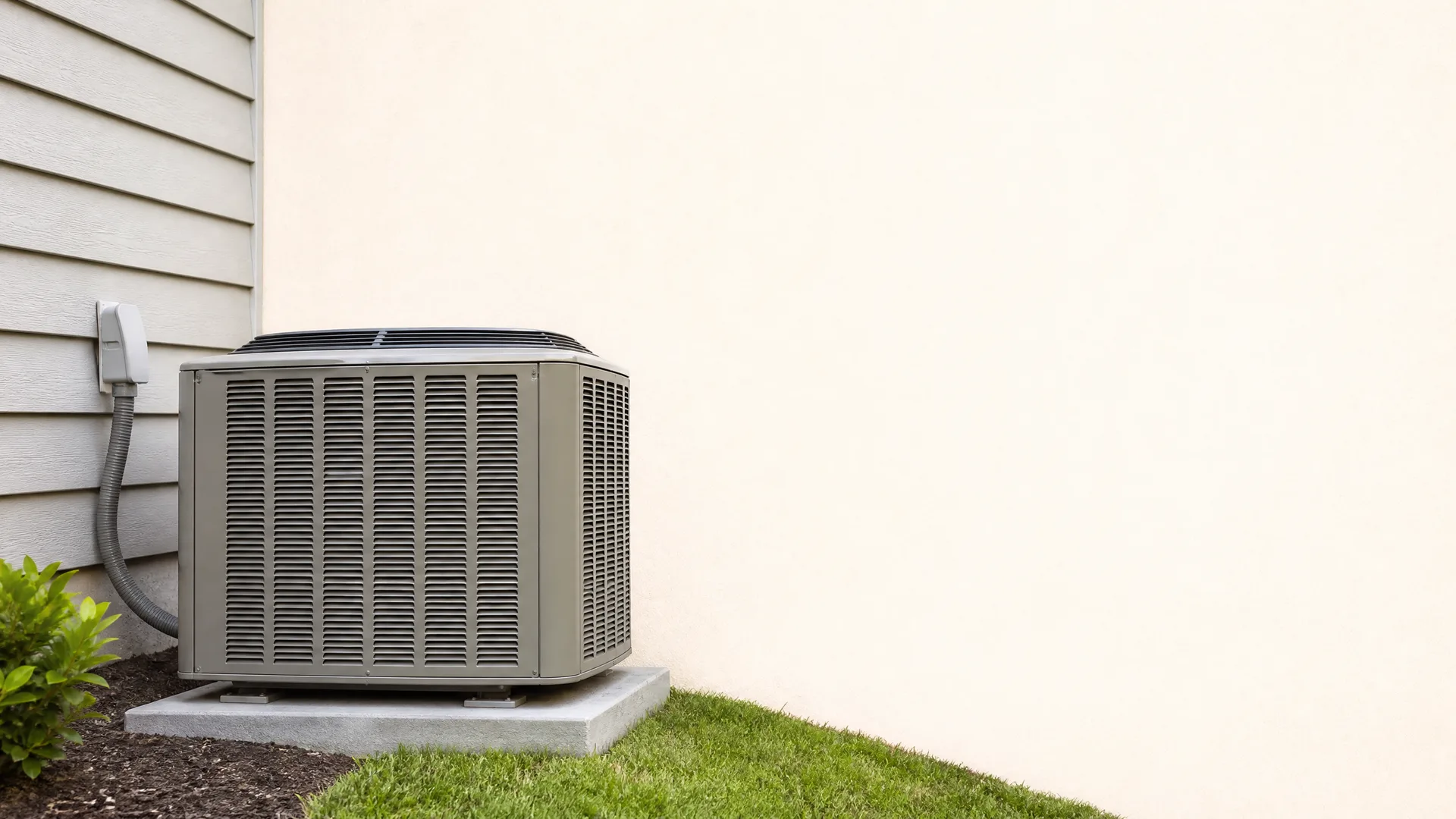
This is what a healthy unit sounds like: a steady hum from the condenser, nothing more. The fan turns, the compressor cycles, and the lines running up the wall to the disconnect box carry refrigerant without a rattle or a knock. On a hot afternoon, this is the sound you want.
Something's wrong
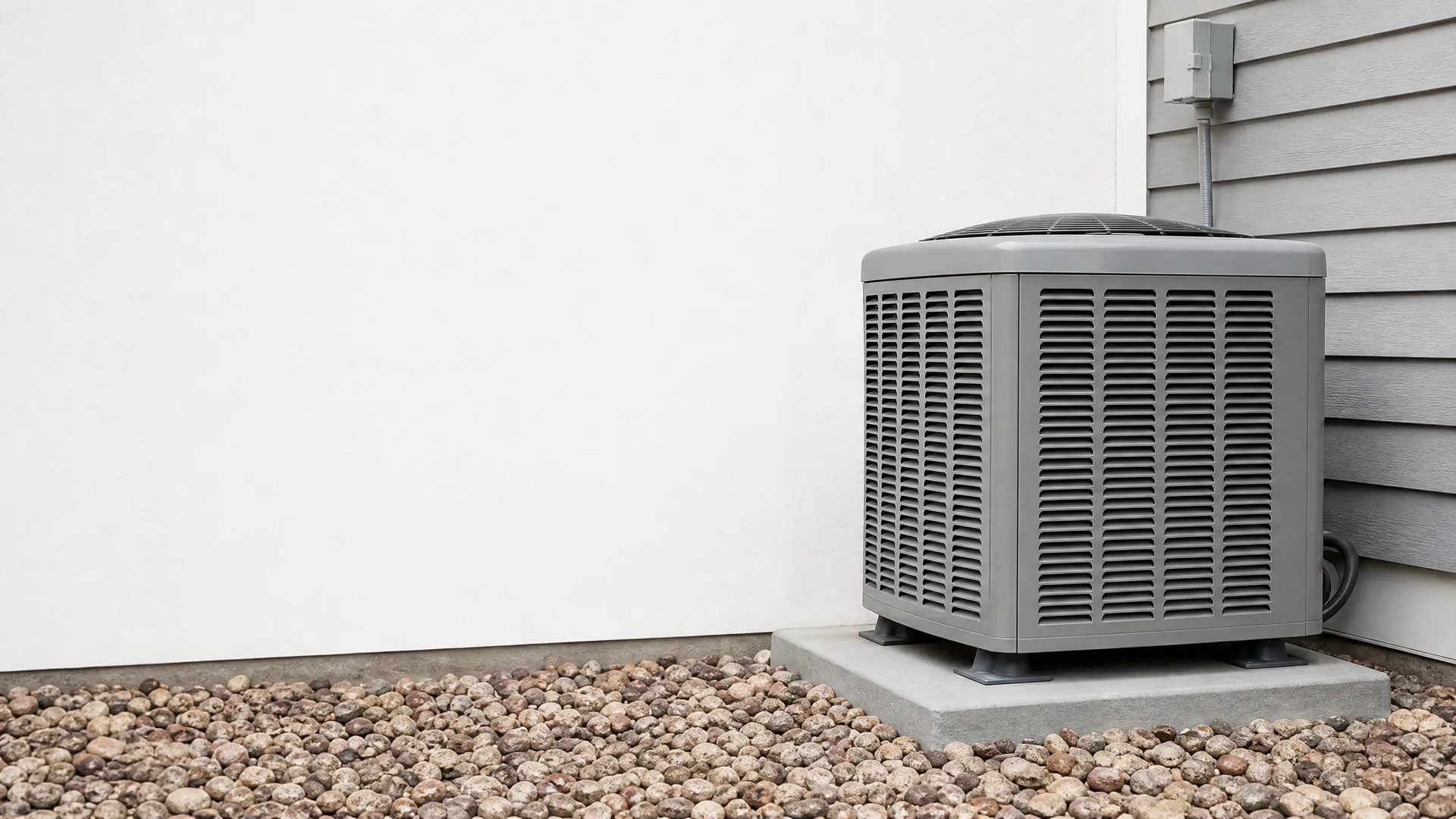
A bang, a squeal, or a metallic rattle coming from the unit against the house means something inside has worked loose or is wearing out. Left alone through a Colorado summer, that part can fail completely, and the unit that's straining to keep your house cool stops running at all.
Why afternoons are worse
Colorado summers are hot and dry, and the hardest heat lands in the afternoon. That's when your system has been running longest and every part in it has had the most time to heat up and expand. A loose panel or a worn bearing that stays quiet in the morning will start to show itself by three or four o'clock, once the compressor has been cycling for hours straight. If a noise only shows up late in the day, that's not a coincidence. It's the system telling you it's being pushed and something in it can't keep up anymore.
What a dry climate adds
Dry air doesn't cause a noise by itself, but it changes what you hear. Without humidity to dampen sound, a rattle or a squeal carries farther across a yard or through a window than it would somewhere wetter. Dust is also more of a factor here, and it settles into fan blades and motor housings over a dry summer, throwing them slightly off balance. That imbalance shows up as a new sound long before it shows up as reduced cooling. By the time you notice the noise, the part causing it has usually been wearing for a while.
Before you get your air conditioner repairAfter you get your air conditioner repair
The air in Colorado doesn't carry much moisture. Summer dew points average 42°F across June, July and August, which is low, and low humidity means the air absorbs heat fast and your AC has to move a lot of it to keep the house comfortable. That's steady, hard work on the compressor and the fan motor, hour after hour, and a part that's already worn or loose shows it sooner under that kind of load. A noise that started as a faint tick can turn into a knock before the season's over. Dry air also means less cushion for sound, so a rattle or squeal carries clearly across a yard or through a wall. A local contractor who works on systems through Colorado summers knows which parts tend to give out first under this kind of strain, and one visit from someone who already knows the pattern gets you an answer faster than guessing on your own. Figure from NOAA climate normals.
A noise that's changed isn't something to track for another week when it's this hot out. Once you know roughly where it's coming from and when it happens, the next useful step is having someone local look at it who works on these systems all summer, in this heat, and has a good idea what a bang on startup or a squeal in the afternoon usually means before they even pull the panel off. That's the kind of read you get from doing this job here every season, not from a guess. Send the request and it goes to one contractor, licensed to work on your system, not a handful of companies competing for the callback. You stop being the one who has to track down help while the house gets warmer and the sound gets harder to ignore. The noise doesn't wait for a convenient day, so there's no reason the fix should either.
What's actually making that sound
A squealing belt is rare in central AC since most condenser fans and compressors are direct-drive with no belt at all.
A rattle that starts only after the unit has run for an hour often means a fan blade has come loose on its mount.
A grinding sound points to the compressor itself, the sealed part that pressurizes refrigerant inside the outdoor unit.
A sharp bang when the compressor starts is sometimes a hard start, where the motor strains against pressure still built up from the last cycle.
A high-pitched hiss that isn't a squeal can mean refrigerant escaping from a line, not a motor or fan at all.
Loose screws on the condenser's access panel will buzz against the cabinet every time the fan spins up.
Every sound your AC makes traces back to one part doing something it shouldn't. A rattle, a bang, a hiss, a buzz, each one points somewhere different, and knowing where narrows down what's wrong before anyone opens the cabinet. Start with the fan. It sits at the top of the outdoor unit and spins constantly while the system runs, and if a blade has worked loose on its mount, you won't hear it right away. It takes the metal time to heat up and shift, which is why the rattle often starts an hour or more into a cycle, not the moment the unit kicks on. The compressor is a different story. It's the sealed component inside the outdoor cabinet that pressurizes refrigerant and pushes it through the system, and a grinding sound from it means something inside has worn down, not something you can tighten or adjust from outside. A sharp bang right when the compressor starts can mean a hard start, the motor fighting against pressure that hasn't fully equalized since the last time it ran. Refrigerant lines cause their own kind of noise. A hiss that doesn't rise and fall like a squeal usually means refrigerant is escaping from a line somewhere, not a belt (your AC almost certainly doesn't have one) and not a motor. Even something as simple as a loose screw on the access panel will buzz every time the fan spins up, since the whole cabinet vibrates with it.
Power costs 15.69 cents per kilowatt-hour statewide
At 15.69 cents per kilowatt-hour, a struggling AC costs you more every hour it runs rough. A loose part or a failing motor makes the compressor and fan work harder to move the same amount of heat, and that extra strain shows up on the bill before it shows up as a breakdown.
EIA-861 2025 statewide residential average
Letting it run as is
You can keep running the unit through the noise, and most of the time it won't quit on the spot. But a loose part under strain doesn't fix itself. A fan blade that's shifted keeps hitting what it's hitting, a bearing that's worn keeps grinding, and each hour in the Colorado heat is another hour of wear on a part already failing. By the time it stops the house will be at its hottest and you'll be choosing a contractor under pressure instead of on your schedule.
Getting it looked at now
Having someone local check it while the unit is still running gives you options a breakdown doesn't. A tech who works on these systems all summer can usually tell from the sound and when it happens what's loose or worn before it takes anything else with it. One contractor means one visit, not a string of calls to compare. You find out what's wrong on a day you chose, not the afternoon it finally gives out.
A loud noise from your AC has a cause, and that cause has a part number and a fix. Whether it's a loose fan blade, a worn bearing, or a compressor under strain, none of it gets better by waiting through another hot afternoon. What you need now is someone who already knows what a Colorado summer does to a system like yours, because they're out working on these units every week this season, in homes around you, not a dispatcher routing you to whoever's free. One licensed local contractor gets your call, looks at what you've noticed and when it happens, and tells you straight what's wrong. No chasing quotes, no juggling calls from companies you don't know. Just the one person who can actually get under the hood of this and put the noise to rest, so your house stays cool and quiet for whoever's counting on it.