Heat pump making a loud noise in Castle Rock, CO

Once you send the form, finding a pro is off your list.

Hand off my repair

Why is my heat pump making a loud noise?

You've gone outside or walked past the unit and heard something you haven't heard before, a bang, a rattle, a grinding, or a buzz that doesn't quit. With winters as hard as they are in Castle Rock, a heat pump that's struggling or about to quit is not something to wait on. You want to know what's making the noise before you decide whether it can wait until morning or needs a tech out now.

It depends on the sound, and most point to a part working loose or wearing out

A grinding or screeching sound usually means the outdoor fan motor bearings are worn. A loud bang when the system starts or stops is often a compressor issue, sometimes refrigerant finding its way where it shouldn't. Rattling points to something loose, a panel, a screw, or debris caught in the outdoor unit. Buzzing can mean an electrical problem, like a failing contactor or a loose wire. Castle Rock winters push a heat pump hard, running long hours to keep up with cold that doesn't let up, and that kind of steady strain is what wears a bearing down or shakes a panel loose over time. A new noise is the system telling you something changed. Worth having a licensed contractor look at it before the part that's struggling fails outright.

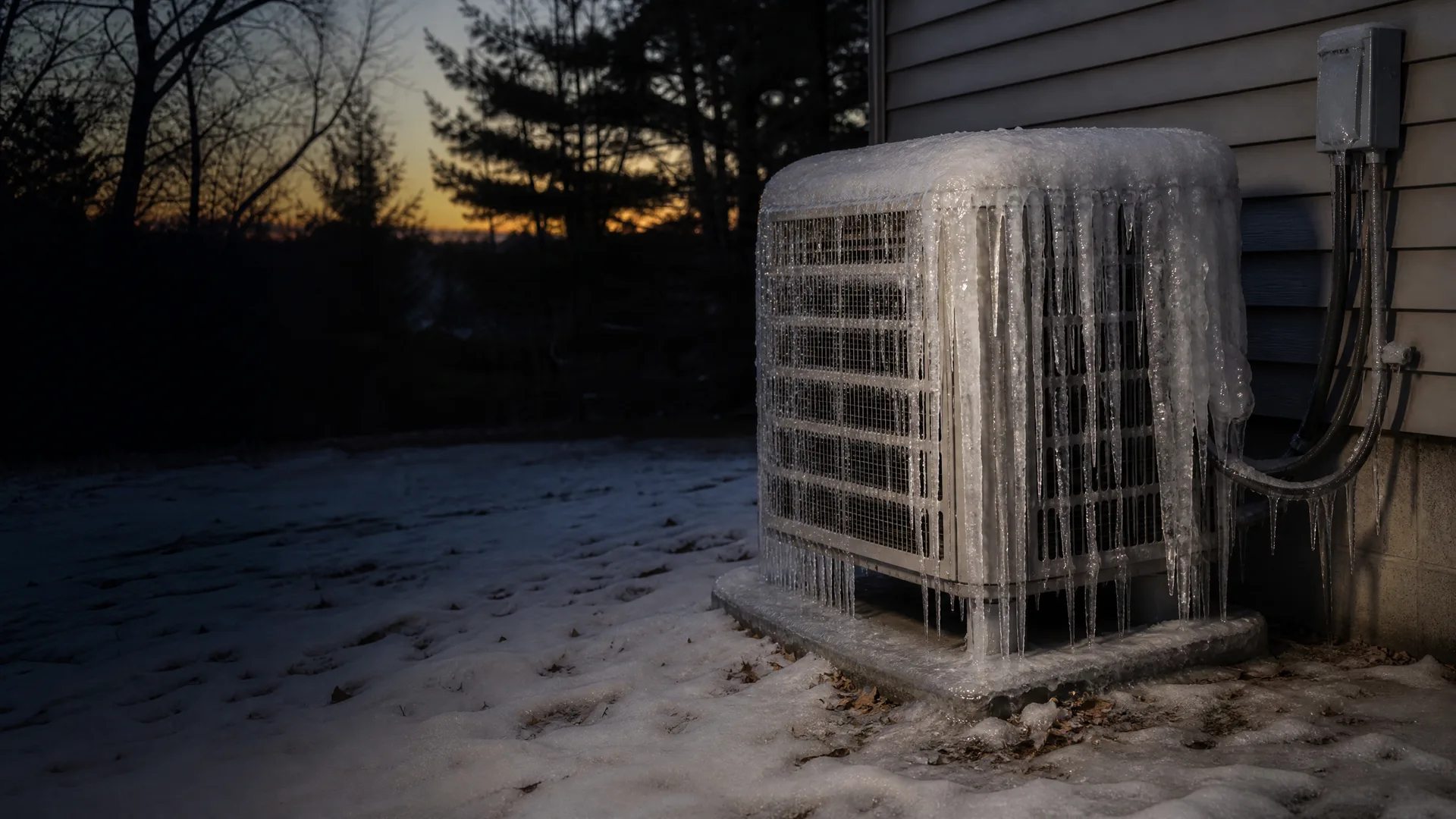
An outdoor air conditioning or heat pump unit encased in thick ice with hanging icicles, standing on a concrete pad beside a house with horizontal siding and an electrical box, with snow on the ground and a dusk sky behind bare trees.

Six in the morning and still dark when you step out for the paper. The side yard is quiet except for the heat pump, and it's not quiet at all. A low grinding sound is coming from inside the cabinet, under a shell of ice that's crept up past the fan grille overnight. Your breath fogs in front of you as you crouch down to look. The coil is solid white, every fin packed over, and the fan blade is dragging against something each time it tries to turn. Inside, the house is holding heat, but out here the unit is working against a block of ice it can't shed on its own, and the grinding keeps time with the fan's slow, uneven turn.

Why does your heat pump have to work so hard here?

  • Winter nights average 17°F

    Nights this cold put real strain on the unit. At 17°F, a heat pump runs long cycles just to keep up, and a loose or failing part gets noisier under that kind of load.

  • Heat runs September through May

    Nine months of runtime means nine months for a worn part to make itself known. A heat pump that sits idle June through August doesn't get that kind of chance to break down slowly.

  • Cooling runs July through July

    July is the one month the system runs in reverse, cooling instead of heating. A noise that only shows up then points you straight at the part doing different work.

NOAA nClimDiv 1991-2020

The noise waits until morning

You hear it on your way out the door, or when you step outside to get the paper, and then you're gone for the day. It's easy to tell yourself it'll still be there tonight and you'll deal with it then. But a grinding or a hard knocking usually means a part is already failing, and it keeps running every hour the system cycles. Waiting a few hours doesn't cost you anything most days. Waiting through a work day while it's 17°F outside and the unit is running long cycles to keep your house warm is a different thing.


The noise keeps you inside tonight

Some nights it's loud enough that you'd rather not leave the house or have anyone near that side yard until someone's looked at it. That's a fair call. A heat pump that's grinding, banging, or buzzing without stopping can be a fan blade hitting ice, a loose part, or a motor on its way out, and none of those get better on their own. If the sound changed suddenly or got worse through the evening, getting it looked at before you rely on it overnight matters more than getting it looked at first thing tomorrow.

A smiling bearded man in a dark green henley shirt sits on a blue-gray couch in a living room, with a bowl of popcorn in the foreground and a houseplant and window behind him.
A smiling man in a dark sweatshirt reclines on a gray sofa in a living room, with a wooden bowl of popcorn on a table in the foreground and a dining area, shelving, and pendant lamp behind him.
A smiling man in a navy long-sleeve shirt reclines on a sofa in a living room, with a bowl of popcorn on a wooden coffee table and framed pictures on the wall behind him.
A smiling man in a dark green long-sleeved shirt sits on a gray sofa in a living room, with a bowl of popcorn in the foreground and windows and a potted plant behind him.

Let someone else find the pro

The pro who gets in touch is licensed in Colorado and works in Douglas County.

You only hire the pro if you want to.

A heat pump outside in January is sitting in the coldest air it ever sees here, and it's also running the most hours it'll run all year to keep your house warm.

Metal contracts in the cold, bearings stiffen, ice can build on the coil, and anything already loose or worn gets louder and gets found faster than it would in July.

A woman with long wavy brown hair in a knit sweater reclines on a couch with eyes closed under a textured blanket, an open book on her lap, beside a lit table lamp and potted plant.
A smiling middle-aged man in a dark knit sweater sits at a dimly lit dinner table with a glass of red wine, a bowl of food, and a lit candle in the foreground.

Every sound your heat pump makes has a reason behind it, and the reason usually points to one part. A click when the unit switches on or off is the reversing valve changing the flow of refrigerant, sending the system into heat or into defrost. A steady buzz while it runs points to the contactor, the switch that feeds power to the compressor, starting to fail. If the rattle comes and goes with how fast the fan spins, a blade has likely taken a hit from ice or debris and isn't sitting true anymore. A grinding noise from inside the cabinet is harder to ignore, and it usually means a bearing, either in the fan motor or the compressor, is wearing down. A bang right as the compressor starts can mean refrigerant is coming back to it as a liquid instead of a gas, which the compressor isn't built to handle. A squeal that's higher pitched than any of these is often a fan motor running without enough lubrication left to keep it quiet. None of these get better by waiting them out.

What each noise is telling you

  • A clicking sound when the unit starts or stops is usually the reversing valve shifting the system between heat and defrost mode.
  • A buzzing noise that stays steady while the unit runs often points to a failing contactor, the switch that sends power to the compressor.
  • A rattle that comes and goes with the fan speed is often a blade that's hit ice or debris and bent slightly out of true.
  • A deep grinding noise from inside the cabinet usually means a bearing in the fan motor or compressor is wearing out.
  • A loud bang right when the compressor kicks on can mean refrigerant is flooding back into it instead of staying a gas.
  • A high-pitched squeal often comes from a fan motor that's lost lubrication and is running drier than it should.
A gray outdoor condenser unit on a concrete pad beside a light-colored lap-sided house, with a wall-mounted disconnect box and conduit, dark mulch, and a green shrub to the right.
A clean unit like this moves air the way it's built to, with nothing muffling the fan or blocking the coil.
A dirty outdoor air conditioner condenser unit with debris on its coil grille, sitting on a concrete pad beside a light-colored horizontal siding wall, with bare dirt ground in front and a shrub at right.
Dirt and plant matter packed into the fins make the fan strain, and a strained fan is a louder one.

Wait It Out or Call Now

Keep running it

  • A noise that's just started and doesn't change week to week might be a part wearing in rather than failing, and some units always run a little louder in defrost.
  • You risk the noise being the first sign of something that gets worse fast, like a cracked mount or a motor bearing going out.
  • If the sound is tied to ice building past the fan grille, waiting means more ice and a harder time for whatever part is already strained.
  • A loose panel or screw can sound alarming but costs you nothing to check before assuming the worst.
  • Running a unit with a failing contactor or reversing valve risks that part failing completely on the coldest night of the week.

Get it looked at

  • A contractor local to Castle Rock who works on heat pumps all winter knows which sounds mean a part is already failing versus wearing normally.
  • Catching a loose fan blade or a worn bearing early usually means a smaller repair than waiting for it to seize or break loose.
  • A technician can tell a clicking reversing valve from a failing contactor by sound and a quick check, something hard to judge from the back door.
  • With one contractor assigned to your request, you get a single visit scheduled around your equipment, not several companies competing for the job.
  • At 17°F and running long cycles, a unit already under strain doesn't have much margin left if a part inside it is going.
A dark gray outdoor condenser unit on a concrete pad beside a house with beige horizontal siding, with a gray electrical disconnect box and conduit on the wall, mulch beds, a hosta plant, a shrub, and mowed lawn in front.

Running clean

This is a heat pump with nothing in its way. The pad is clear, the fins are open, and air moves through the coil the way the unit was built to move it. A unit like this can still get loud in a hard freeze, but it isn't fighting itself to do it.

An outdoor air conditioning or heat pump condenser unit on a concrete pad beside a house with horizontal vinyl siding, a gray electrical disconnect box and conduit on the wall, and a concrete walkway in the foreground.

Running dirty

Grime on the cabinet and years on the unit don't cause a grinding or banging noise by themselves, but a unit that's sat like this is more likely to have a part worn past the point of running quiet. That same neglect makes a small problem harder to catch before it's a big one.

An outdoor air conditioning condenser unit on a concrete pad beside a house with horizontal siding and a concrete foundation, with refrigerant lines running to a wall-mounted disconnect box and shrubs at left.
Before you get your heat pump repair
A gray outdoor condenser unit on a raised pad beside a house with horizontal lap siding, with refrigerant lines, conduit and an electrical disconnect box on the wall, and shrubs on a mulch bed to the left.
After you get your heat pump repair
  1. The compressor kicks on and starts pulling refrigerant through the coil.

  2. The reversing valve shifts position to switch between heat and defrost.

  3. Ice builds on the outdoor coil during long, cold-weather run cycles.

  4. The defrost control senses the ice and reverses the cycle to melt it.

Power here costs 15.79 cents per kilowatt-hour

At 15.79 cents per kilowatt-hour, a heat pump running long hours on a cold night is already costing you more than usual. A noisy unit, one with a straining fan or a part working harder than it should, pulls even more power to do the same job.

EIA-861 2025

A loud noise from your heat pump always means something is working harder than it should, whether that's ice on the coil, a worn bearing, or a part about to fail outright. Leaving it alone through a Castle Rock winter tends to turn a cheap fix into an expensive one, since the unit keeps running long cycles in cold air whether you call or not. Getting it looked at means handing the problem to someone who services this equipment all winter and knows what a bang or a grinding sound usually turns out to be in a system like yours. You'll be connected with one licensed local contractor, not a handful of companies competing for your call, so you can explain what you're hearing once and let someone who knows this equipment take it from there.

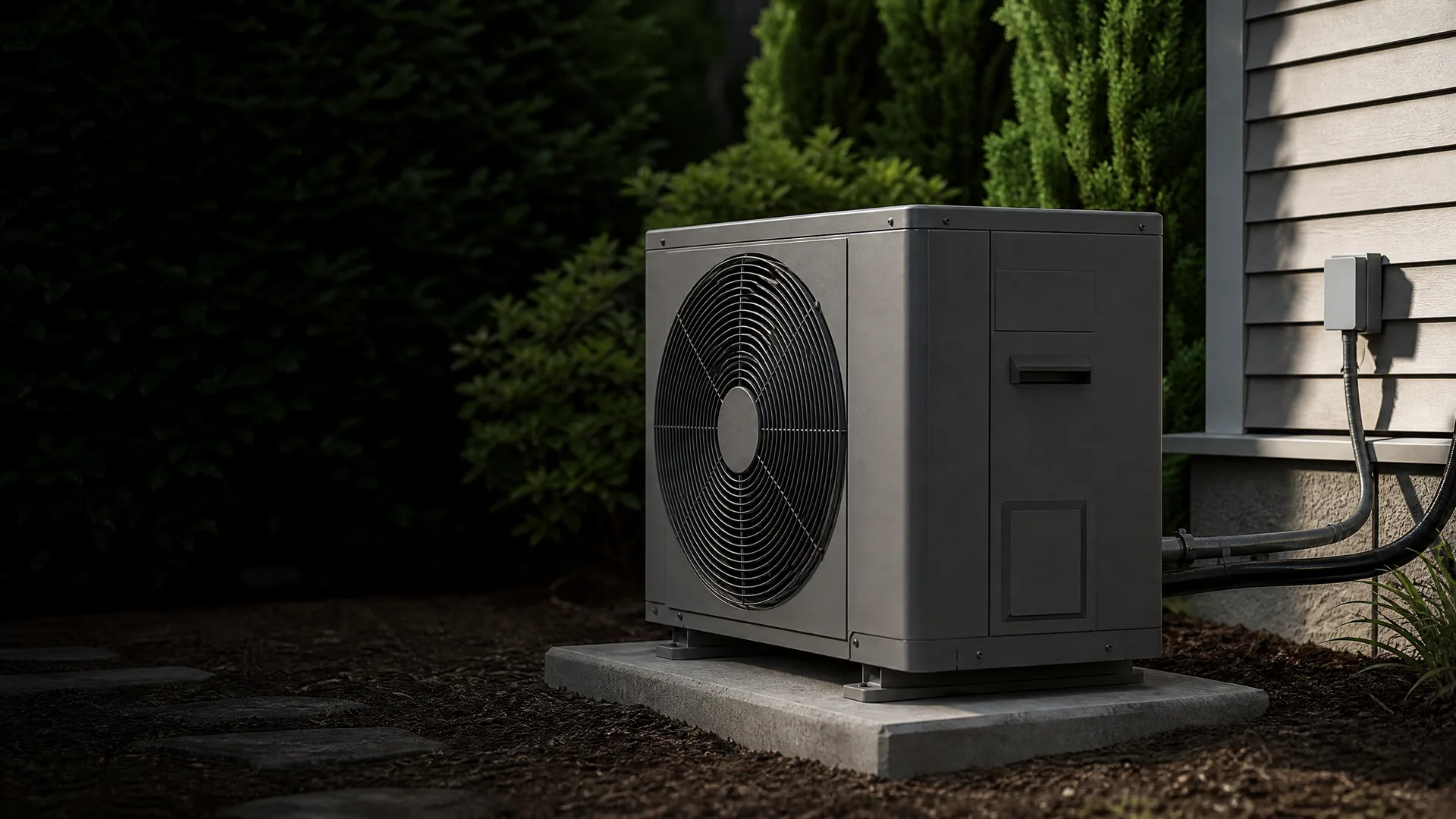
A gray outdoor heat pump unit with a large circular fan grille sits on a concrete pad beside a house with lap siding, with refrigerant lines running to an exterior electrical box and dark shrubs behind.

One request and it's handed off

RepairHeat PumpDouglas County, CO
Step 1 of 2

What ZIP code is the job in?