

Running clean
A condenser that smells like nothing at all is doing its job. Air moves through the fins, the fan turns, and the unit cools the house without putting off any odor. That's what should be happening beside your house right now.
Get matched with a pro who works on air conditioners in Weld County.
Get an air conditioner proA burning smell from the air conditioner is one most people in Greeley don't ignore for long, and for good reason. With the AC running hard through the hot, dry summers here, a smell like that usually shows up right when the system is working its hardest to keep the house cool. It's not something to wait out, and it's worth knowing what's actually causing it before you decide what to do next.
A hot or burning smell from your AC usually comes from an electrical part overheating, like a failing motor, a worn capacitor, or wiring that's loose at a connection. Dust burning off a coil on the first hot day of the year smells different, more like a dusty attic, and it clears up fast. A lasting burning smell, especially one that smells sharp or like melting plastic, points to something actually overheating inside the unit. With Weld County summers pushing the system for months at a stretch, that kind of strain adds up, and a part that's starting to fail will keep drawing more heat until it either shuts the system down or causes real damage.

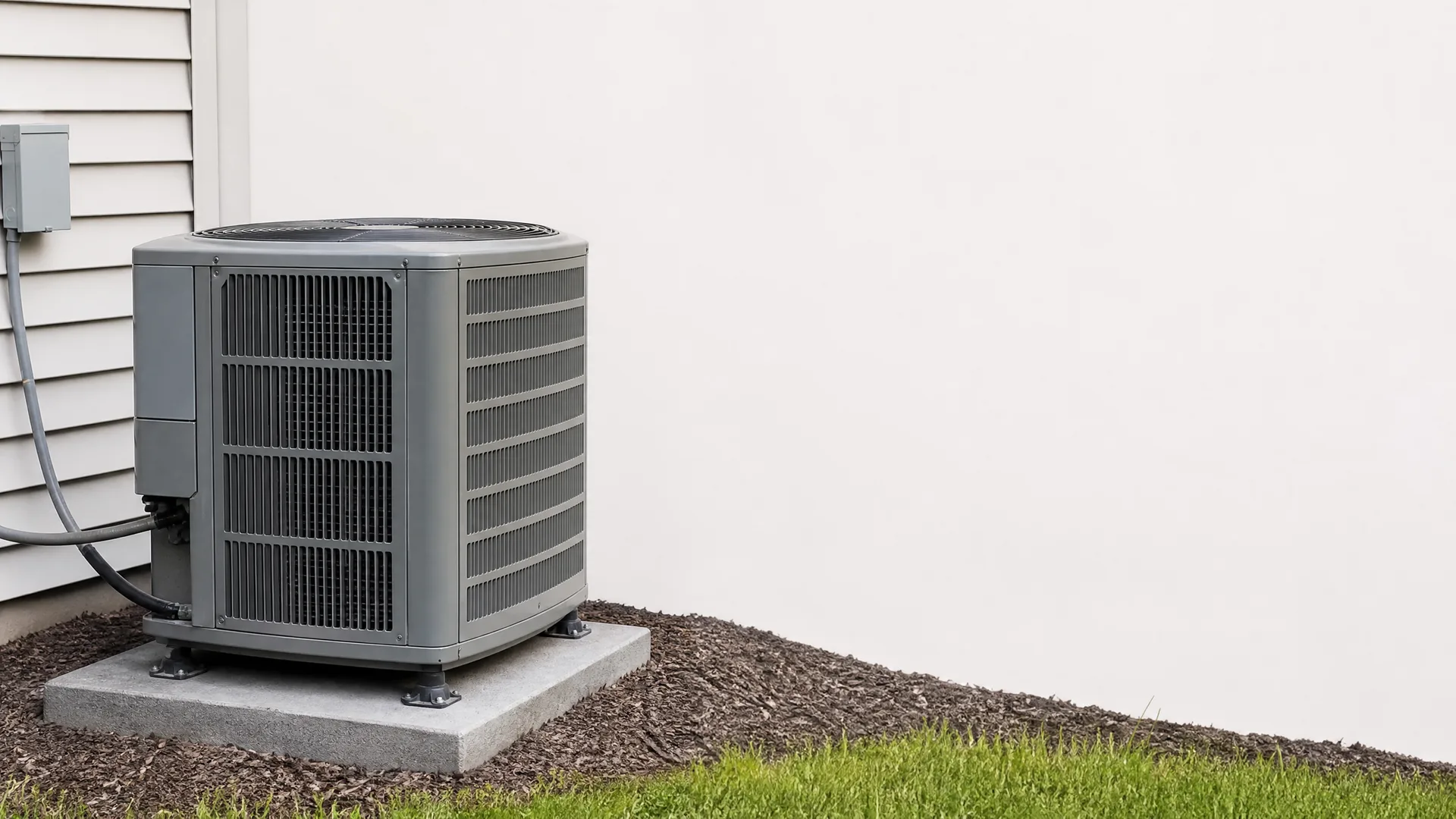
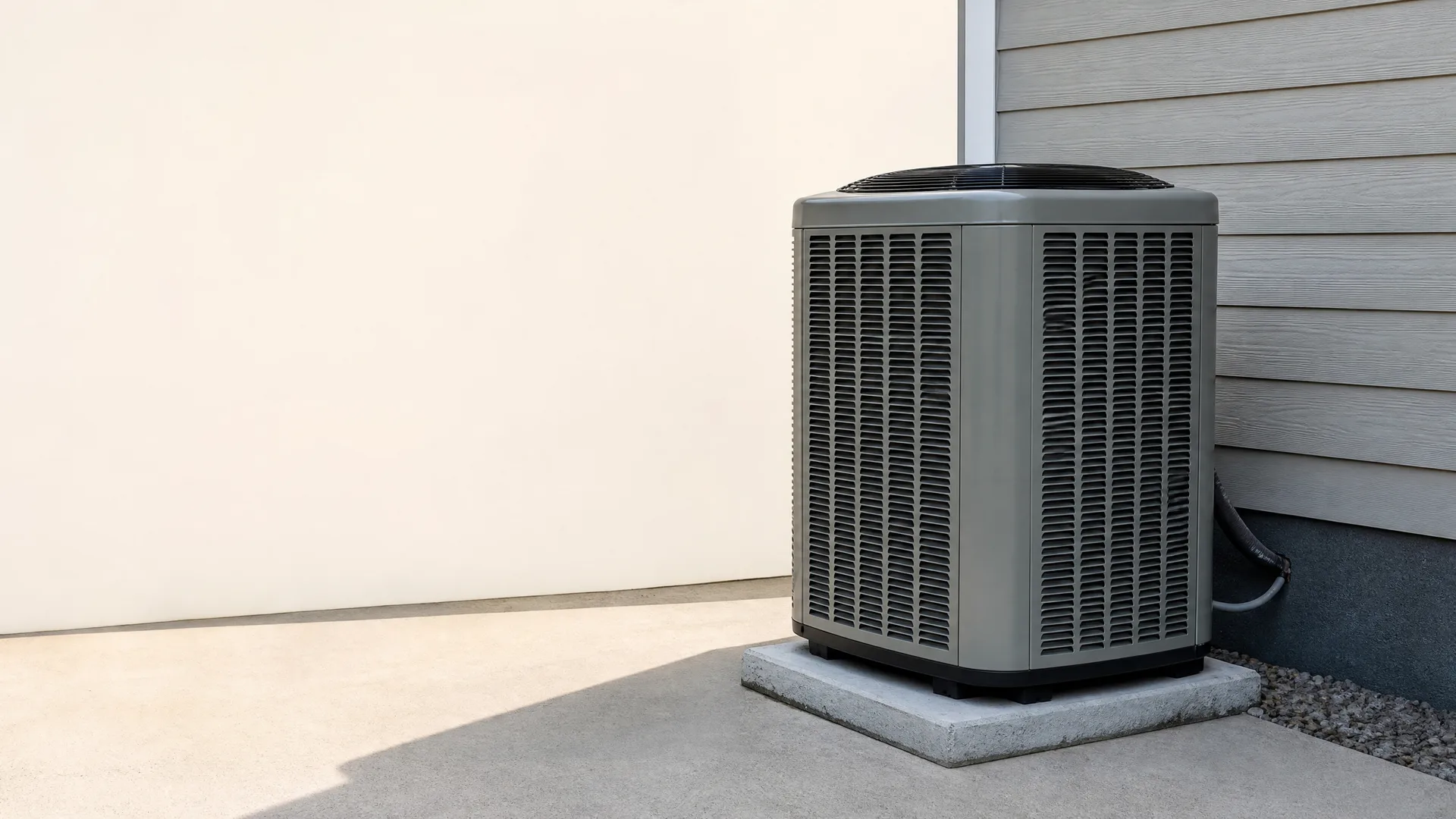
A condenser that smells like nothing at all is doing its job. Air moves through the fins, the fan turns, and the unit cools the house without putting off any odor. That's what should be happening beside your house right now.

Dirt and debris packed into the grille and fins make the motor and electrical parts work harder and run hotter than they should. That heat is often where a burning smell starts, and it's worth having a contractor look at before something inside fails.
Most of the time it's the blower motor bearings drying out or a fan belt in an older unit rubbing somewhere it shouldn't. Sometimes it's dust burning off the coil after the unit sat idle, and that clears in a few minutes. A sharper, electrical smell is different. That points to wiring insulation breaking down or a capacitor starting to fail, and neither one gets better on its own.
An AC that runs for hours at a stretch through a hot, dry Weld County afternoon puts more hours on the motor and the electrical connections than one that cycles on and off a few times a day. A weak connection or a motor already working harder than it should will show itself sooner under that kind of load. By the time the smell reaches the house, the part behind it has usually been working too hard for a while.
Three months is a short run, but it's a hard one. June through August here means the condenser outside is working close to its limit most afternoons, and a motor or belt already wearing down won't wait for a cooler day to fail.
NOAA nClimDiv 1991-2020




A burning smell doesn't fix itself, and the three months Greeley asks of that condenser don't leave much room to wait. Every afternoon it keeps running hot is another afternoon on a motor or a belt that's already struggling. The part behind it isn't always obvious from the smell alone, which is why guessing at it from the thermostat yourself tends to waste the one thing you don't have, the window before it fails outright on a 95 degree day. Finding someone who can look at it this week usually means a string of calls, explaining the smell over and over, waiting on quotes that come back on different days from different companies. Handing that off instead means one contractor familiar with Weld County systems gets your situation and reaches out to you directly. Your AC stays off until then. That's the only part that matters right now.
The timing and the strength of the smell tell you more than the smell itself. A quick burning dust odor when the AC first kicks on after sitting idle is normal. That's just dust on the coil heating up, and it should be gone in a few minutes. If it's still there well into the cycle, or it's getting stronger instead of fading, that's a different problem. The blower motor has bearings that let the shaft spin freely, and when they start to dry out or wear down, the motor has to work harder to keep turning. That extra strain is what you're smelling. If your unit is older and uses a fan belt rather than running direct drive, a burning rubber smell usually means the belt has slipped out of alignment and is rubbing against the housing with every rotation. None of that involves refrigerant. The refrigerant line doesn't produce a burning smell when it leaks, so if you're smelling something burning, look at the electrical and mechanical side of the unit instead. A hot, sharp, almost acrid smell, especially with any trace of smoke, points toward wiring or a capacitor that's starting to fail rather than a belt or a bearing. That's worth shutting the system down for rather than waiting out. The part responsible is usually one piece, not several, but figuring out which one takes a look at the unit itself.


A burning smell from your air conditioner means something is overheating, and in a Greeley summer the unit doesn't get a break long enough to make that safe to ignore. Shut it off at the thermostat or the breaker and get it looked at before you run it again. Whether it's a motor, a belt, or dust burning off a coil that clears on its own, you don't have to work that out by guessing or by taking the unit apart yourself. Instead of calling around to find someone licensed who can get to a Weld County property this week, explaining the smell over and over to different shops, and sorting through quotes that all describe the problem differently, you can get matched with a contractor who takes it from here and reaches out to you directly. Your afternoons stay yours. The condenser outside gets looked at by someone who knows what that smell is telling them.
One form replaces the calls you'd make to find an air conditioner pro.