Profile view of a bearded man wearing a black baseball cap and a dark gray t-shirt against a plain white background.

What SEER rating makes sense for a Colorado home

New system or replacementCentral ACColorado
Step 1 of 2

What ZIP code is the job in?

What SEER rating do I need for a Colorado home?

You're shopping for a new air conditioner and keep seeing SEER numbers that range from 14 up past 20, with no clear sense of which one actually fits a house here. The higher-rated units cost more up front, so you want to know if that extra rating is worth paying for in Colorado or if it's overkill for a dry climate that isn't running the AC nonstop.

15 SEER2 is the federal minimum here, and most Colorado homes don't need to go far past it

Colorado falls in the federal South-Central region for the newer SEER2 standard, and the minimum for new central air conditioners is 15 SEER2. That's the floor, not a suggestion, so any unit installed now meets it. Summers here are hot but dry, and the air conditioner isn't carrying the same load it would in a humid state where it runs nearly half the year. With gas heat handling winter and power priced in the normal range, the cooling bill is a smaller share of the year's energy cost than it is in places where AC runs on and off from spring through fall. A unit in the 15 to 17 SEER2 range covers most houses here without paying for capacity the climate doesn't ask for.

A dim bedroom with a bed in the foreground, a radiator against the wall, and a box fan set in a sunlit window with sheer curtains and green trees outside.

The box fan has been running since you got home. It's past eight and still warm enough that the air coming through the screen doesn't do much. You're sitting on the edge of the bed, shirt stuck to your back, listening to the fan rattle on its highest setting against the frame. Outside, the evening light is flat and dry, the kind of heat that doesn't let up once the sun's down. Downstairs the thermostat reads where you left it, but up here it hasn't moved. You're doing the math on another night like this, and then another, before the fan ever got you comfortable.


A gray outdoor air conditioning condenser unit on a concrete pad beside a house with horizontal gray siding, with a wall-mounted electrical disconnect box and insulated refrigerant lines, and blue hydrangeas in a mulched bed to the left.
A SEER rating that matches your house and runs for years without a second thought.
A gray outdoor air conditioner condenser unit on a concrete pad beside a house with beige horizontal siding, with an electrical disconnect box and insulated refrigerant lines on the wall and dry leaves on the ground.
A unit old enough to rust, pulling more power each summer just to keep up.

How SEER Actually Plays Out

  • A SEER rating measures how much cooling a unit produces per unit of electricity over a full summer, not at a single moment.
  • The number is tested across a range of outdoor temperatures, which is why dry, hot climates like Colorado's push the rating harder than humid ones.
  • Colorado's dry air means the condenser coil sheds heat more easily than it would in a humid state, so the same unit runs a bit more efficiently here than its rating alone suggests.
  • A unit sized too large for the house will cycle on and off quickly and never run long enough to reach its rated efficiency.
  • The compressor, not the thermostat, is what the SEER number actually describes, since it's the part doing the work of moving heat out of the house.
  • Installation quality, correct refrigerant charge and proper airflow across the coil affect real-world efficiency as much as the SEER number on the box.

SEER sounds like a single number that tells you everything, but it comes from a test that runs a unit across a range of outdoor temperatures and averages the result. It's a measure of cooling delivered per unit of electricity used over a whole summer, not a snapshot of any one afternoon. In a dry climate like Colorado's, that average plays out differently than it would somewhere humid. The condenser coil outside gives up heat more easily when the air around it is dry, so the compressor isn't working as hard to do the same job. That means a unit's real performance here can run a bit ahead of what the rating alone suggests.

The compressor is the part actually earning that number. It's what compresses and moves refrigerant, pulling heat out of the house and releasing it outside, so when people talk about a unit's SEER rating, they're really describing how hard that compressor has to work for the cooling it produces. A high rating on the box doesn't guarantee that result in your house. If the unit is too large for the space, it shuts off before it ever settles into a steady rhythm, cycling on and off without running long enough to hit its rated efficiency. Even a well-matched unit depends on how it's installed. The refrigerant charge has to be correct and air has to move across the coil the way it was designed to, or the number on the box stays just that, a number on the box.

An older man with gray hair and a beard stands in a dimly lit entryway wearing a dark hooded coat dusted with snow, with a lit table lamp, framed picture, and front door with glass panels behind him.
An older man with gray hair and a beard, wearing a dark snow-dusted jacket and scarf, stands smiling in a dimly lit entry hall with a lamp, wooden front door and staircase behind him.
A gray-haired bearded man in a dark coat with snow flecks on the shoulders stands just inside a dimly lit home entryway, with a lamp, framed pictures, sofa and candle-style lights in the background.
An older man with gray hair and a beard, wearing a dark coat and scarf dusted with snow, stands in a warmly lit home entryway with an arched doorway, lamps, and a living room visible behind him.

A pro who works on air conditioners

Skip collecting and comparing quotes for the new air conditioner.

It costs nothing to send, and you don't have to hire anyone.

Why Colorado's dry heat matters

Humidity changes how hard an air conditioner works. In a sticky climate the unit spends a lot of its energy pulling moisture out of the air, and a higher SEER rating pays for itself fast because the compressor is running so much. Dry heat doesn't ask that of the system. Colorado's air conditioners are mostly fighting temperature alone, so they cycle differently than the same unit would in a humid state. That's part of why a rating built for the most demanding conditions nationwide doesn't translate evenly here. The unit still has to run on the hot afternoons, but the load on it is a different shape than it would be somewhere wet.

What gas heat changes about the math

Most homes in Colorado heat with gas, which means the air conditioner only carries the cooling load and nothing else. In a home where one system handles both heating and cooling, the efficiency math has to account for both seasons stacked together. Here, the SEER rating only has to earn its keep across summer. That narrows what you're actually paying for when you move up in rating. It also means a contractor sizing your system is working from cooling demand alone, without a furnace's heating output pulling the decision in another direction.

A woman wrapped in a thick fleece blanket sits on a sofa holding an open book, beside a lit table lamp and a frost-covered dark window.
A woman in a cream knit sweater sits in a light upholstered armchair with her eyes closed and a slight smile, beside a window showing orange autumn foliage, with a bookshelf, lamp, and a mug on a side table nearby.
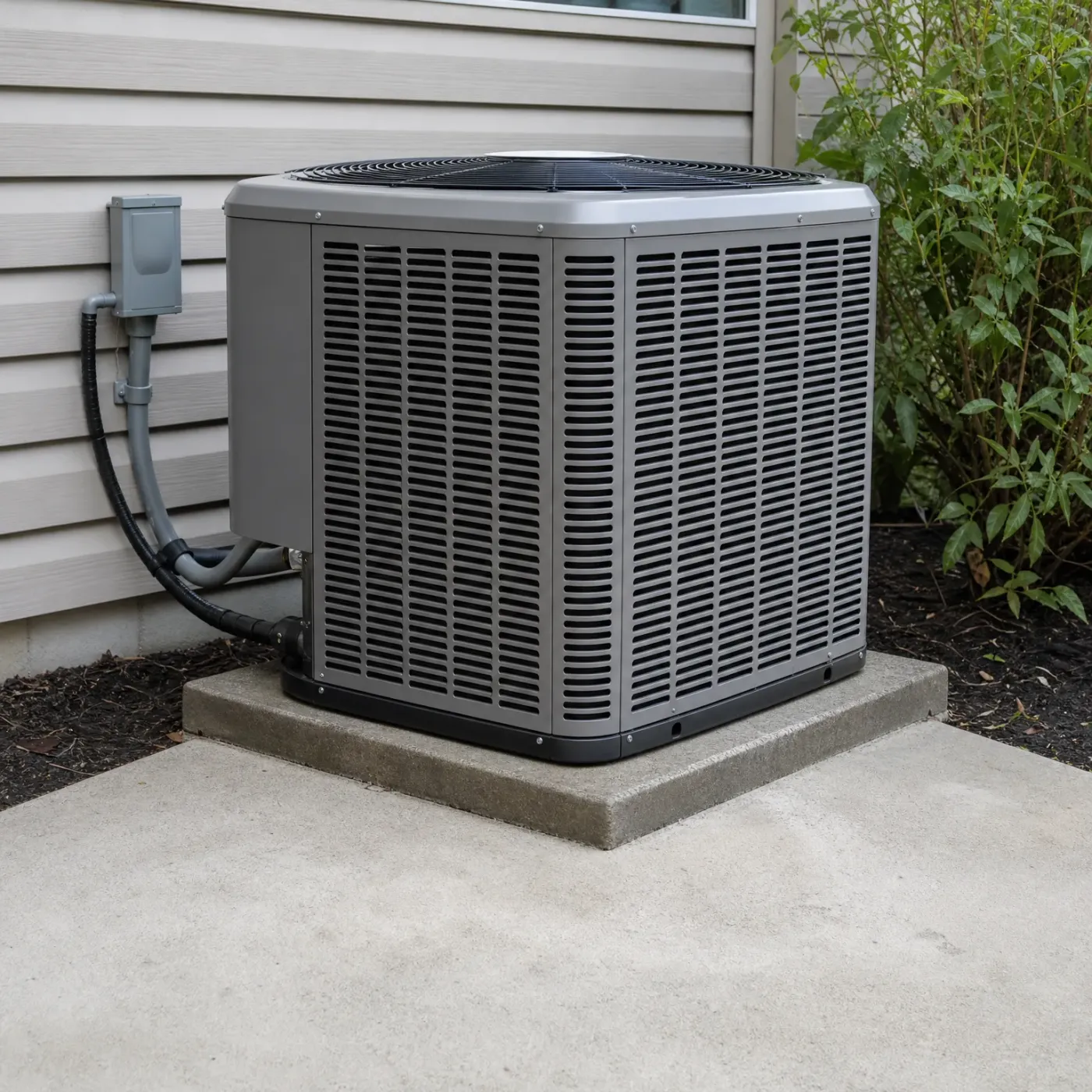
A gray outdoor air conditioner condenser unit on a concrete pad beside a house with light vinyl siding, with an electrical disconnect box and conduit on the wall and a leafy shrub with dark mulch to the right.

Working the way it should

This is a condenser doing its job: set on a level pad, lines and conduit running clean to the disconnect, nothing blocking the sides. A unit installed at the right SEER for your house keeps looking like this for years, not just the first summer.

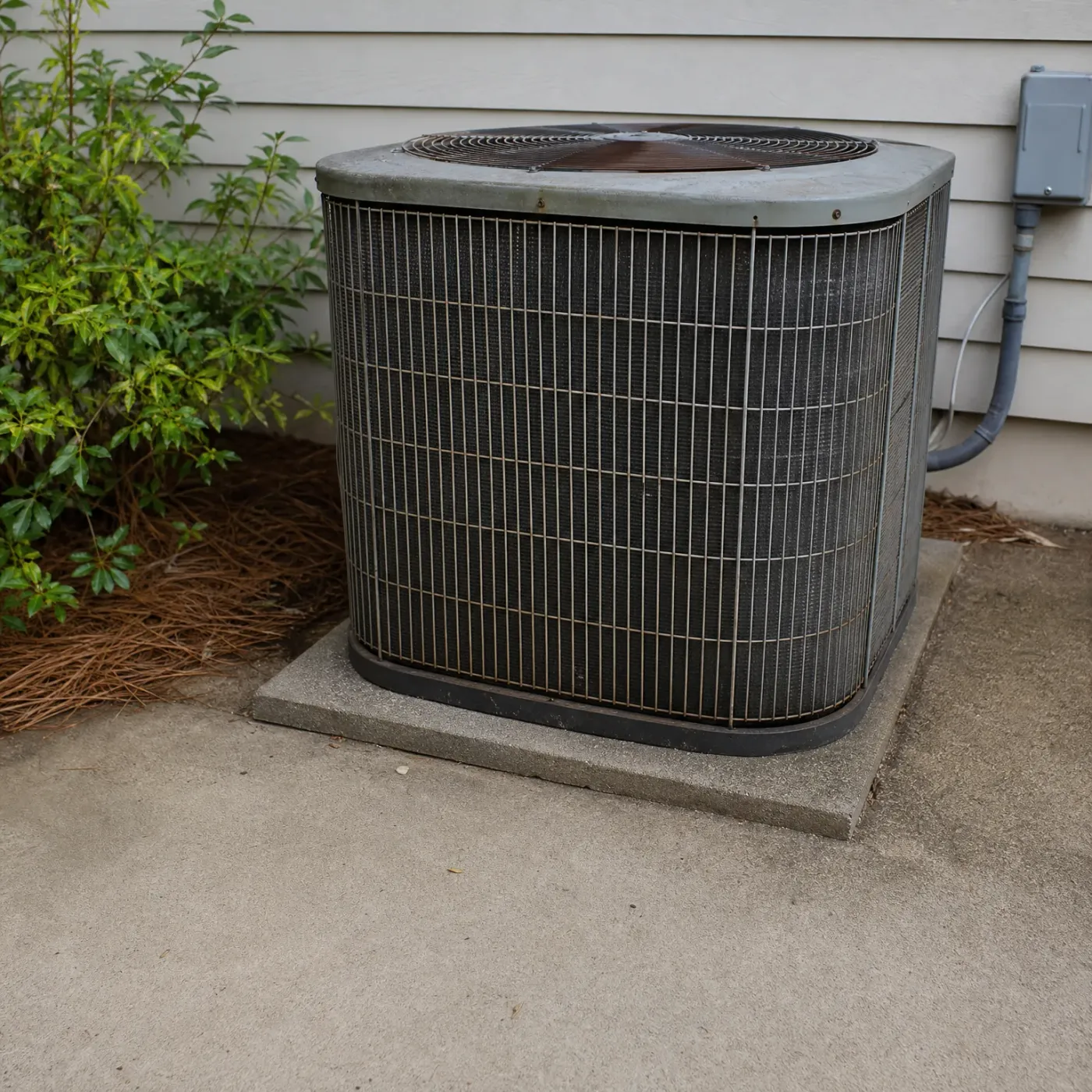
An outdoor air conditioner condenser unit on a concrete pad beside a house with horizontal lap siding, with a gray electrical disconnect box and conduit on the wall and a green shrub over pine-needle mulch at left.

A grille that tells you something

Dirt packed into the wire grille like this means the coil behind it is working harder to pull air through, even on a mild afternoon. Pine needles and mulch pressed up against the side don't help. By the time it looks like this, it's already costing you more to run.

Mid-Range SEER2 or High SEER2

Mid-range SEER2

  • Costs less to install than a high-efficiency unit, which matters if the house needs other work too.
  • Still cools a Colorado home through a hot, dry summer without strain if it's sized right for the square footage.
  • Replacement parts and service are easier to find since these units are the most common ones installed.
  • Dry heat here doesn't push the compressor as hard as humid climates do, so the gap in performance against a higher-rated unit is smaller than it looks on paper.
  • Pairs fine with a gas furnace, since the SEER rating only concerns the cooling side of the system.

High SEER2

  • Costs more at installation, sometimes a few thousand dollars more depending on the equipment and the home.
  • Pulls less power to produce the same cooling, which matters most on the hottest days when the compressor runs longest.
  • Often comes with a variable-speed or two-stage compressor, so it holds a steadier temperature instead of cycling hard on and off.
  • Power prices in Colorado are typical, not high, so the monthly savings take longer to add up than they would somewhere with expensive electricity.
  • Tends to run quieter outside the house, which matters if the condenser sits near a bedroom window or a patio.
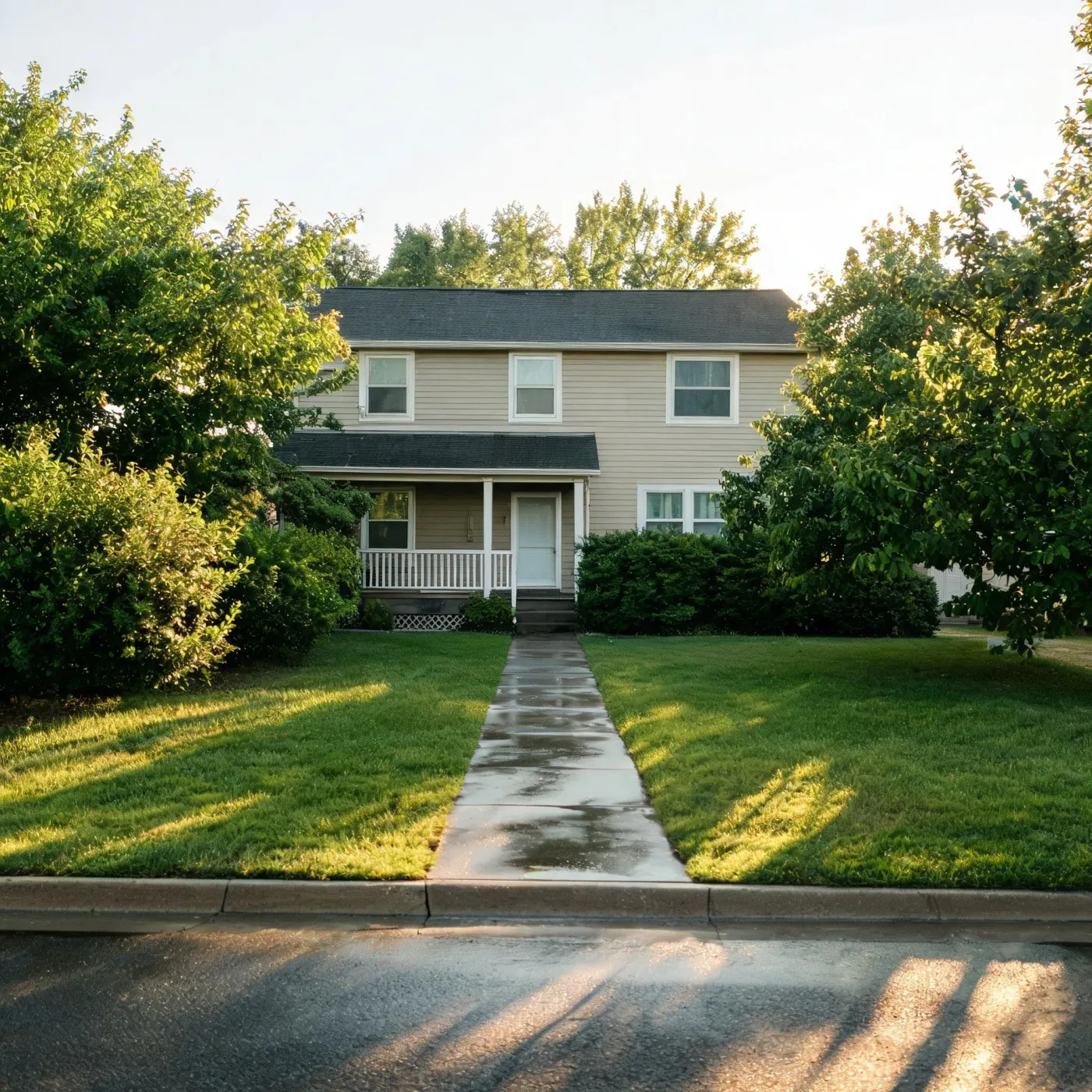
A two-story house with beige siding, a covered front porch and dark shingled roof, set behind a mown lawn with a wet concrete walkway leading from the street curb, flanked by large green trees and shrubs.

A dew point is what tells you whether the air feels heavy or dry, and across a Colorado summer it averages 42°F, according to NOAA climate data. That's dry air by any measure. Your air conditioner isn't fighting moisture the way a unit in a humid state would. Most of its work goes straight into dropping the temperature, not wringing water out of the air first. You'll notice it in how fast a room cools once the unit kicks on, and in how little the house feels clammy even on the hottest afternoons. It's also why SEER ratings built for muggy climates don't tell you much here. A rating earned in dry heat is the one that matters for your house.

NASA POWER T2MDEW county cells weighted by homes

Is your old AC struggling to keep the house cool?

You notice it most in the afternoon. The unit outside runs long stretches without shutting off, and the house still sits a few degrees warmer than the thermostat says it should. Maybe you've heard it cycling on again just minutes after it stopped. The electric bill in July and August has crept up the last couple of summers, even though nothing in the house changed. If the condenser is old, the compressor is working harder than it used to just to hold the same temperature, and that strain tends to end in a breakdown on the hottest day of the year rather than a quiet one. A unit sized and rated for a Colorado summer shouldn't labor like that.

  1. A technician calculates your home's cooling load, not just its square footage.

  2. The outdoor condenser and indoor coil get matched to that load together.

  3. Refrigerant lines get sized and connected between the two units.

  4. The system gets charged with refrigerant to the exact weight specified.

Power costs 15.69 cents per kilowatt-hour statewide

At 15.69 cents per kilowatt-hour, every hour your air conditioner runs shows up on the bill fast, especially if it's cycling long and often in a dry Colorado summer. A unit with the right SEER rating for your house pulls less power to do the same job, month after month.

EIA-861 2025 statewide residential average

A Colorado home with dry summer heat and gas heat doesn't need the highest SEER number on the shelf. It needs one sized to your house and installed right, somewhere in the mid-range unless your situation calls for more. That's the whole answer. What's harder is getting there: calling around for quotes, explaining your house and your old unit to every contractor who picks up, then sitting with a stack of estimates trying to figure out which one actually matches what you need. You don't have to do that part. Get matched with a contractor who installs the right system for a house like yours, and let them take it from there.

Corner of a house with cream horizontal lap siding and tree shadows, beside a covered porch with a square column, wooden deck, steps, white balusters, and a shrub at right.
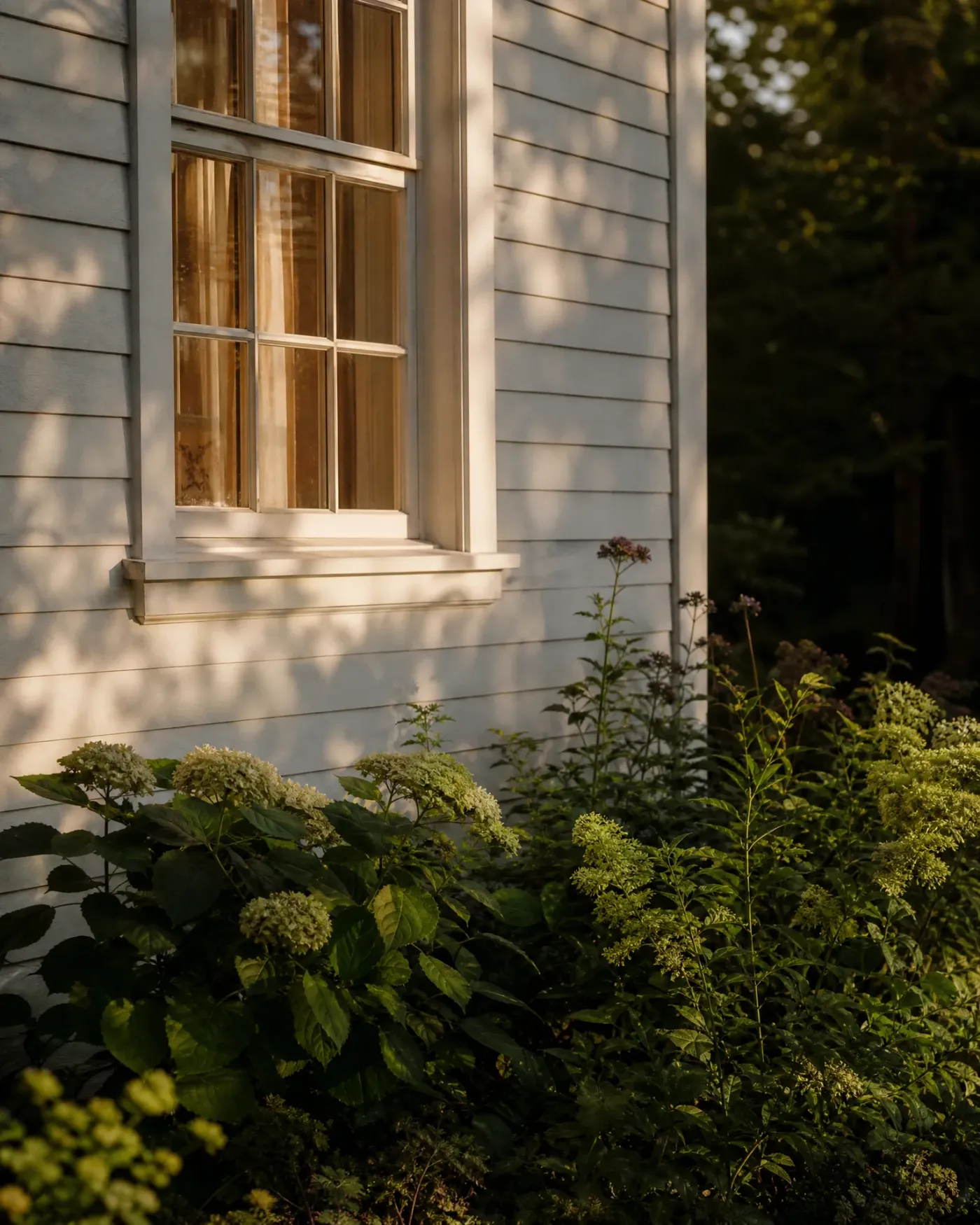
Corner of a white clapboard house with a multi-pane wood window in warm low-angle sunlight, with hydrangea shrubs and other green foliage growing along the base and dark trees behind.
A wooden front door with divided-light glass panes set under an arched entry on a white shingled house, with a black wall lantern, a tall gray planter, flowering shrubs, and a flagstone walkway.
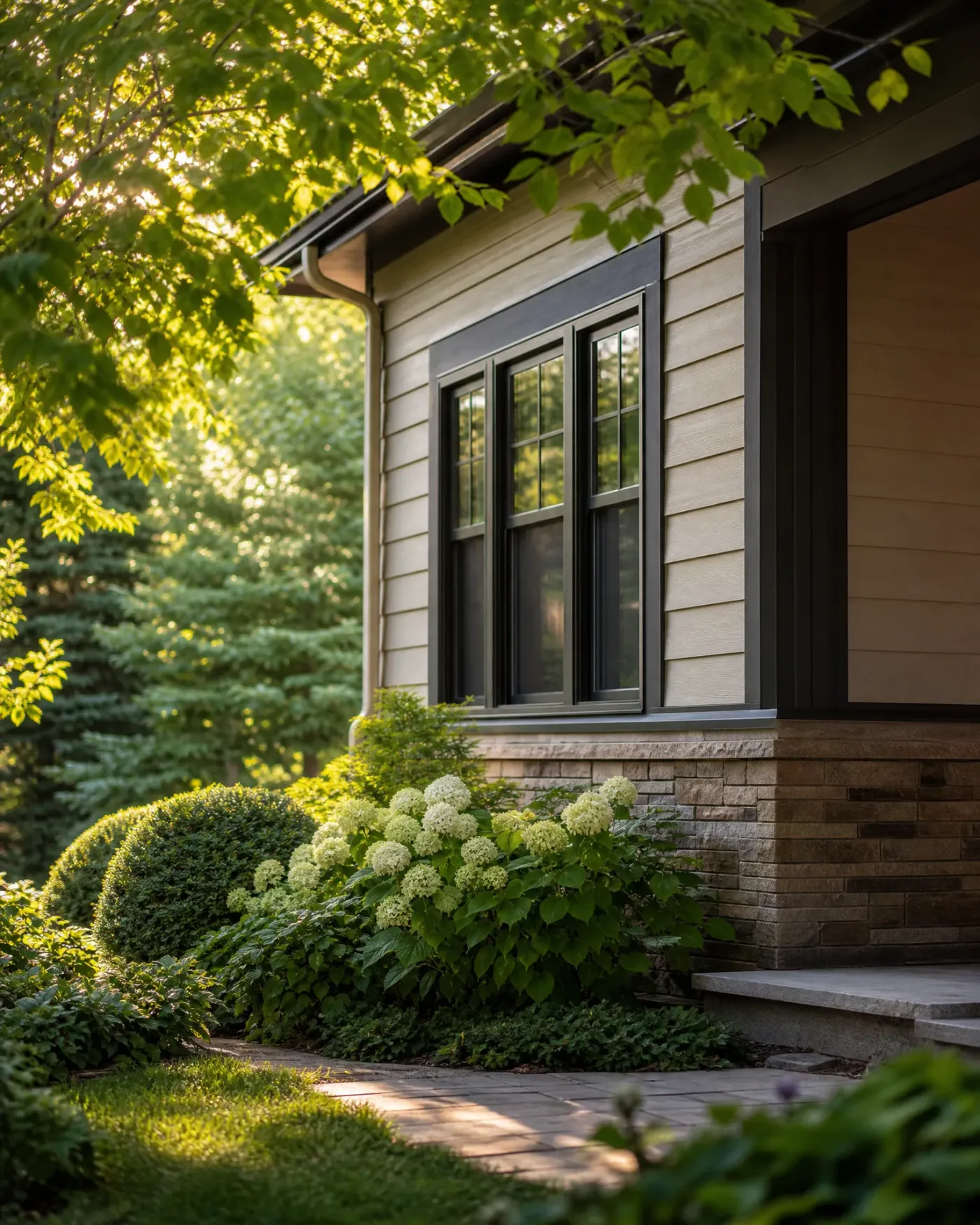
Exterior corner of a house with cream horizontal siding, a dark-framed three-section window, and a stone veneer foundation, with white hydrangeas and clipped shrubs along a paved walkway and tree branches overhead.
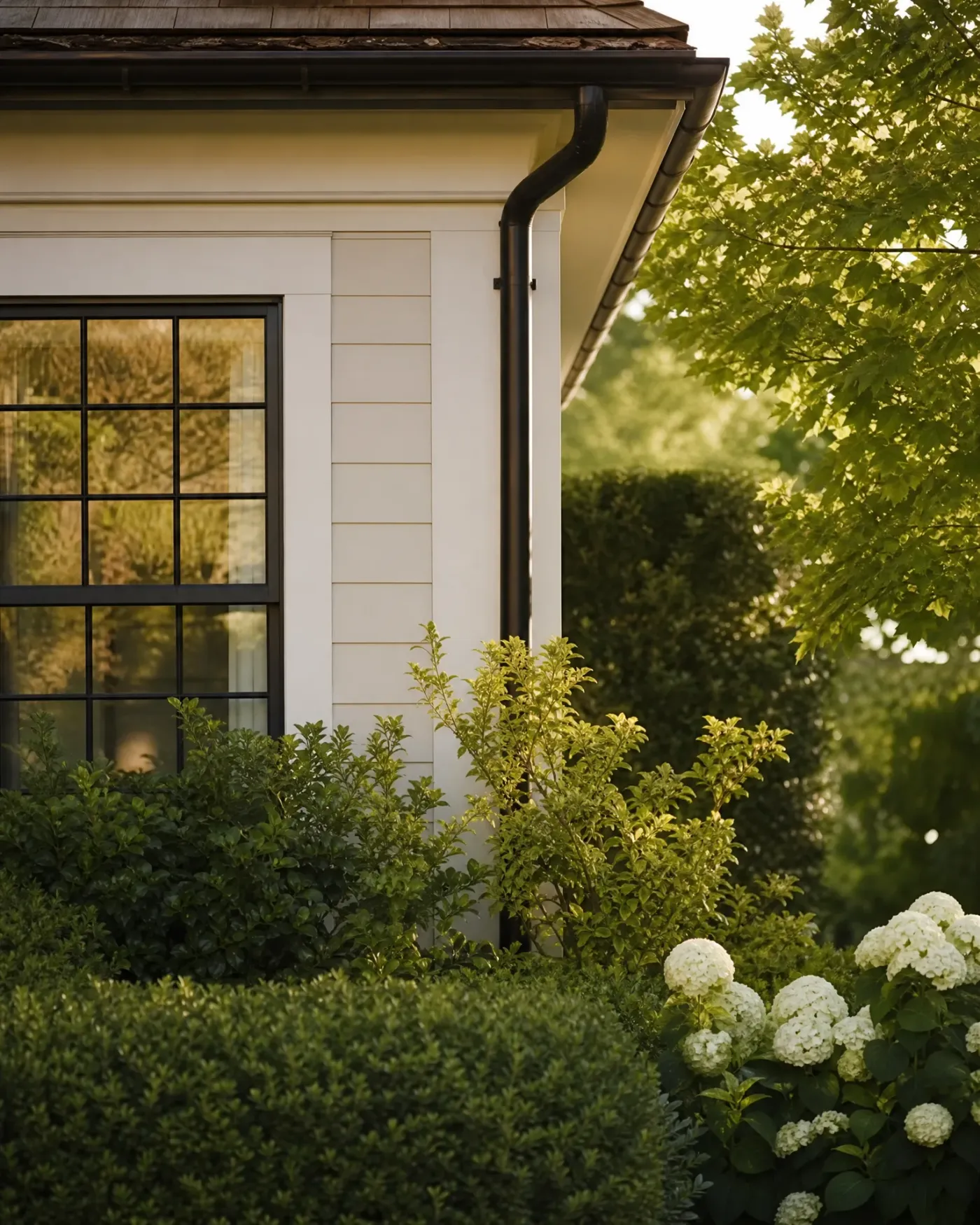
Corner of a white-clad house with a dark-framed grid window, dark downspout and eaves, surrounded by trimmed hedges, shrubs, white hydrangeas and a leafy tree in sunlight.

Get your air conditioner to the right pro

Skip the round of in-home estimates for a new air conditioner.

Find a pro near me

No charge to send it. You decide if you hire them.