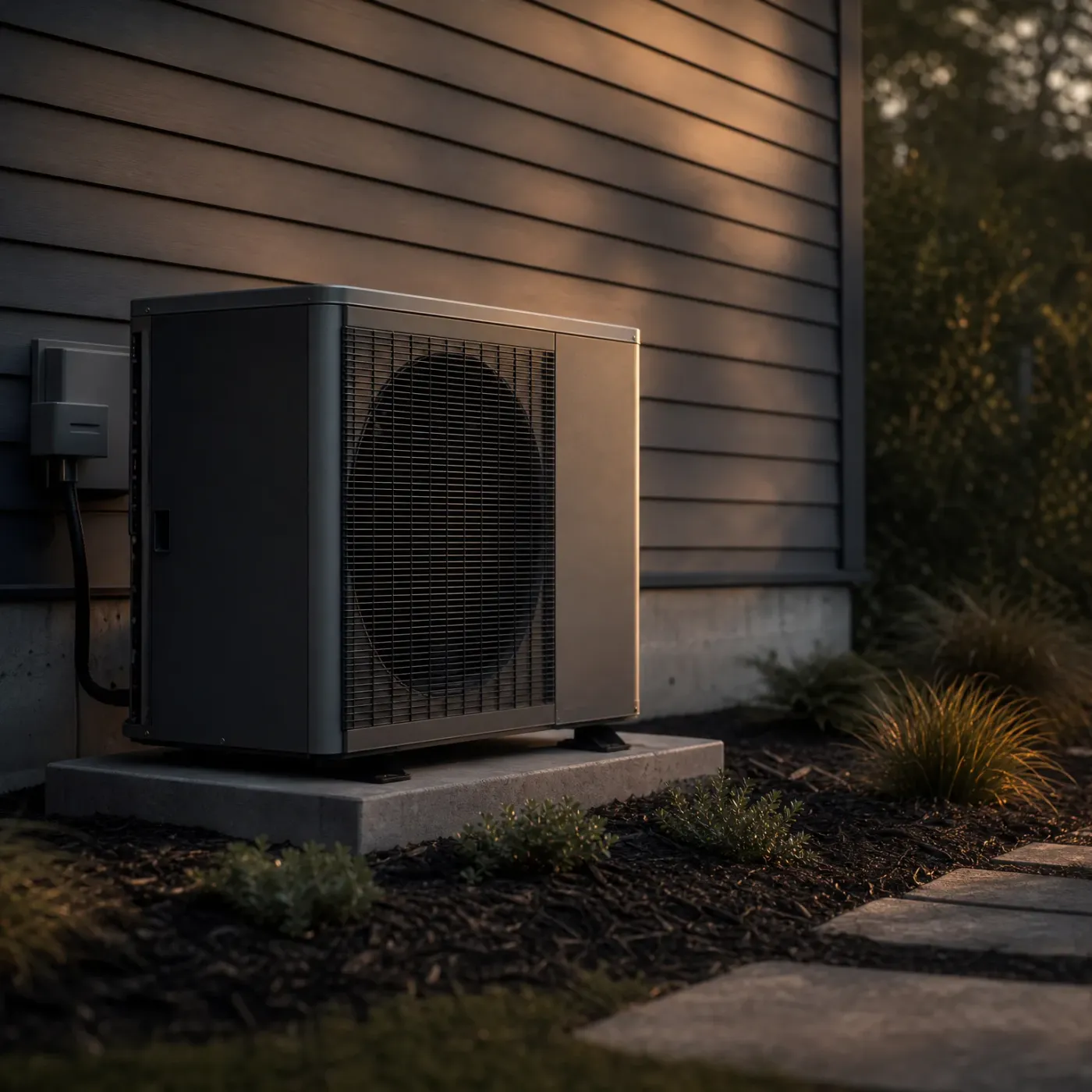




An outdoor heat pump unit on a concrete pad beside a house with horizontal lap siding, with a wall-mounted disconnect box and conduit at left and mulched planting beds with grasses and a stone path at right.

No calling every shop in Mesa County

How long a heat pump lasts in Grand Junction, CO

A heat pump in Grand Junction has to handle hot, dry summers and hard winters, and that wear adds up differently than it would somewhere milder. This page gets into how long you can expect yours to hold up, and what shortens that. If yours is on the way out, it saves you the work of finding a Mesa County installer yourself and explaining your setup more than once.

Describe it once

A heat pump in Grand Junction typically runs 12 to 15 years. It works harder here than it would in a milder climate, because it has to cover both jobs. All summer it pulls heat out of dry, 95-degree air. All winter it reverses and pulls what little heat it can out of cold air, which asks more of the compressor than straight air conditioning does. That compressor is usually what decides the lifespan. Once it starts struggling in cold weather, the unit runs longer cycles to keep up, and that extra runtime wears it down faster than a furnace paired with a separate AC would wear. Most homes in Mesa County heat with gas, so a heat pump here is often doing cooling duty the bulk of the year and heating duty only through the coldest stretch. That mixed workload is part of why age alone does not tell you much. A unit that has been maintained and sized right for the house can hold up through the full range, while one that was undersized or neglected often falls short of it.

A gray-haired man in a dark green sweater sits on a sofa in a sunlit living room, looking off to the side, with a framed landscape painting, dining table and shelving behind him.
A gray-haired bearded man in a dark green collared sweater sits on a sofa in a living room with a window, houseplant, floor lamp and bookshelves, looking off to the side.
A middle-aged man in a dark green sweater sits on a light grey sofa looking toward a sunlit window, with a wooden shelving unit, lamp and potted plants in the background.
A gray-haired bearded man in a dark knit sweater sits on a light gray sofa in a sunlit living room, looking to his left, with a framed artwork, a potted palm, and a curtained glass door behind him.

What does Grand Junction's weather ask of a heat pump all year

  • Winter nights average 18°F

    Winter nights here average 18°F. That's cold enough that your heat pump is pulling heat out of air with almost nothing left to give, which is the hardest work it does all year.

  • Heat runs September through May

    Nine months of heat, from September through May, means the compressor is cycling on most days of the year. A system that only ran half that long would wear at half the rate.

  • Cooling runs July through August

    Two months of cooling in July and August is short next to the heating season, but those are the hottest, driest weeks of the year, and the unit is working the whole time.

NOAA nClimDiv 1991-2020

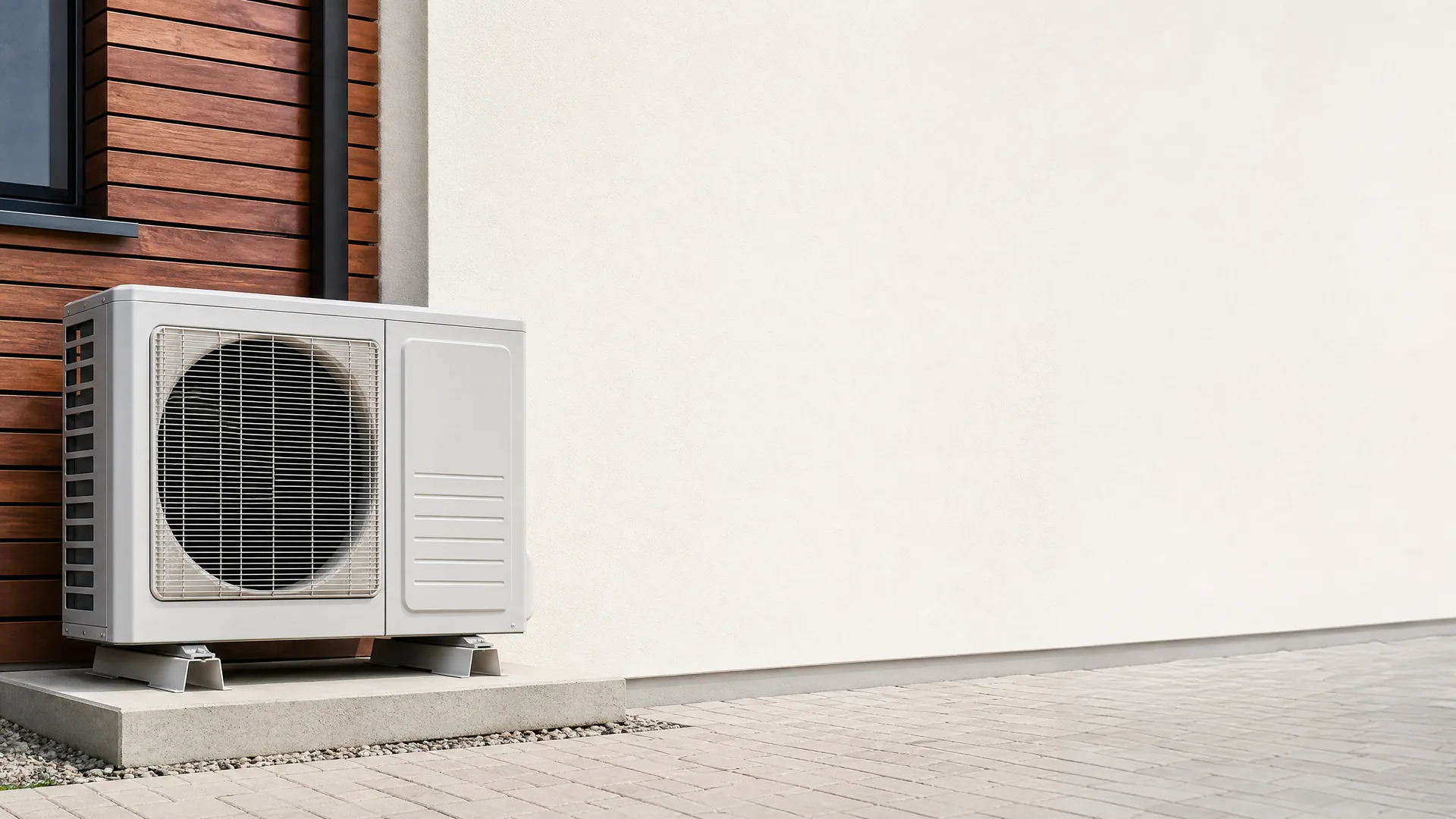
A white outdoor heat pump unit on a concrete pad beside a house with wood-slat siding and a large plain light-colored stucco wall, with paving stones in the foreground.

A heat pump sized and installed right

How long a heat pump lasts starts with the day it goes in. A unit sized correctly for your house, with the refrigerant charge set right and the ductwork connected properly, can reach that 12 to 15 year range without much trouble. One that's oversized short-cycles, and one that's undersized runs constantly trying to keep up with an 18-degree night or a 95-degree afternoon. Both wear out early, no matter how well you maintain them after.

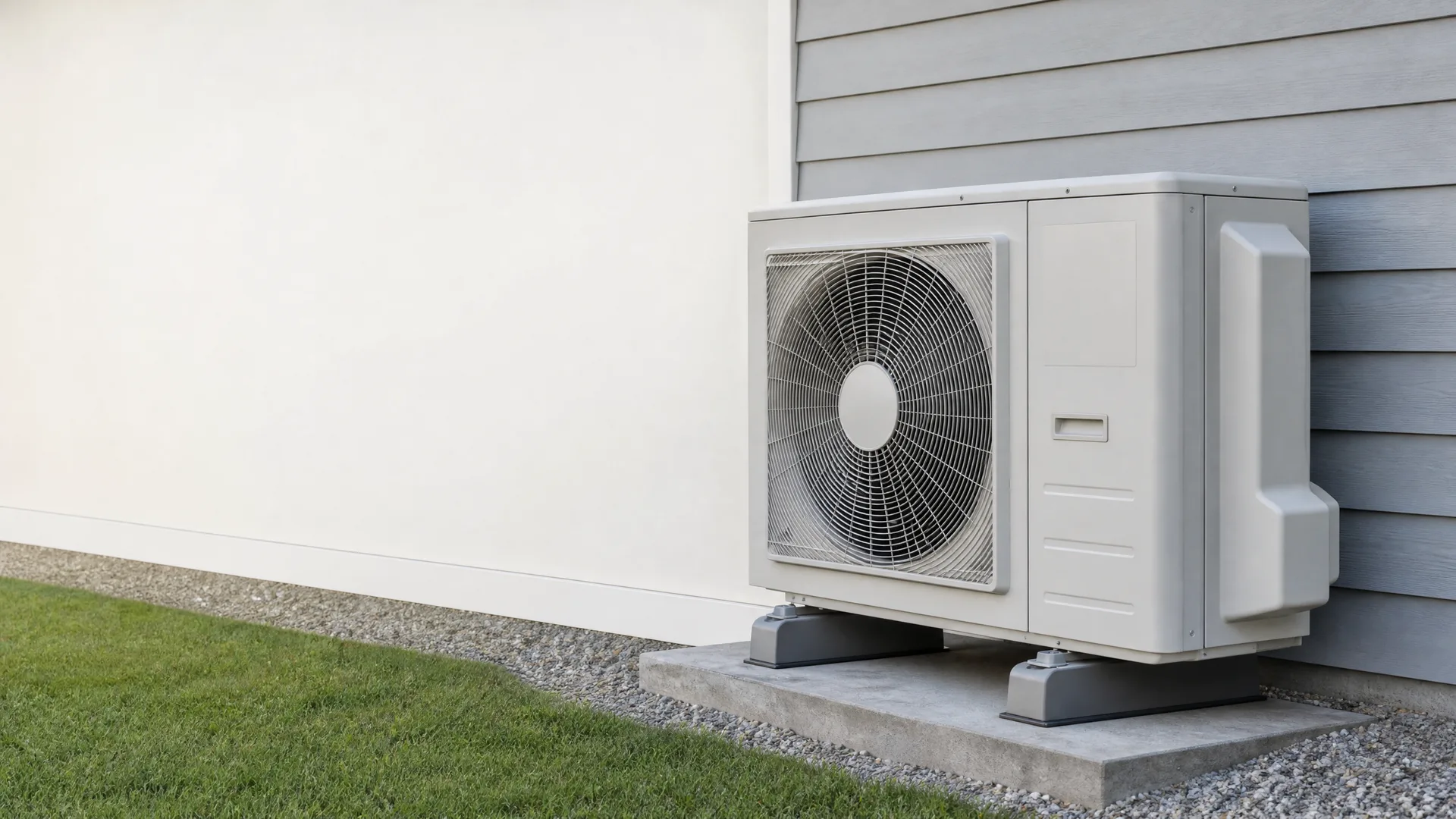
A white outdoor heat pump unit on rubber feet sits on a concrete pad beside a gray-sided house wall, next to a smooth light wall, gravel strip and lawn.

A heat pump installed in a hurry

A rushed install shows up early, not late. A low charge means the compressor strains through every winter night. Ducts that leak send conditioned air into the attic instead of your rooms, so the system runs longer to do the same job. None of this shows up on day one. It shows up two or three years in, as higher bills and a compressor that's worked harder than it should have, and it's often the reason a heat pump needs replacing well before 12 years.

Repair It or Replace It

Keep repairing

  • A sensor, a capacitor, or a contactor can be swapped out for a few hundred dollars and the unit runs like normal again.
  • If the compressor itself is still sound, most of what fails on a heat pump is cheaper to fix than to replace.
  • A unit under 10 years old that's needed one or two repairs is usually still worth fixing rather than pulling out.
  • Parts for most residential heat pumps stay available well past the 12 to 15 year mark, so an older unit isn't automatically stranded.
  • If the refrigerant charge and ductwork were set up right at install, a repair now doesn't mean more are coming right behind it.

Replace now

  • Once the compressor fails, that's usually the end of the unit, since a compressor swap often costs close to a new system.
  • A heat pump past 12 to 15 years that needs a repair is competing against the cost of a new one that won't need that repair again soon.
  • If it's been losing ground on cold nights for a couple of winters, the compressor is likely working harder than it should to keep up.
  • Repeated repairs within the same year or two point to a system that's failing in more than one place at once.
  • A new heat pump sized and installed correctly for your house starts that 12 to 15 year clock over, instead of patching a unit already most of the way through it.
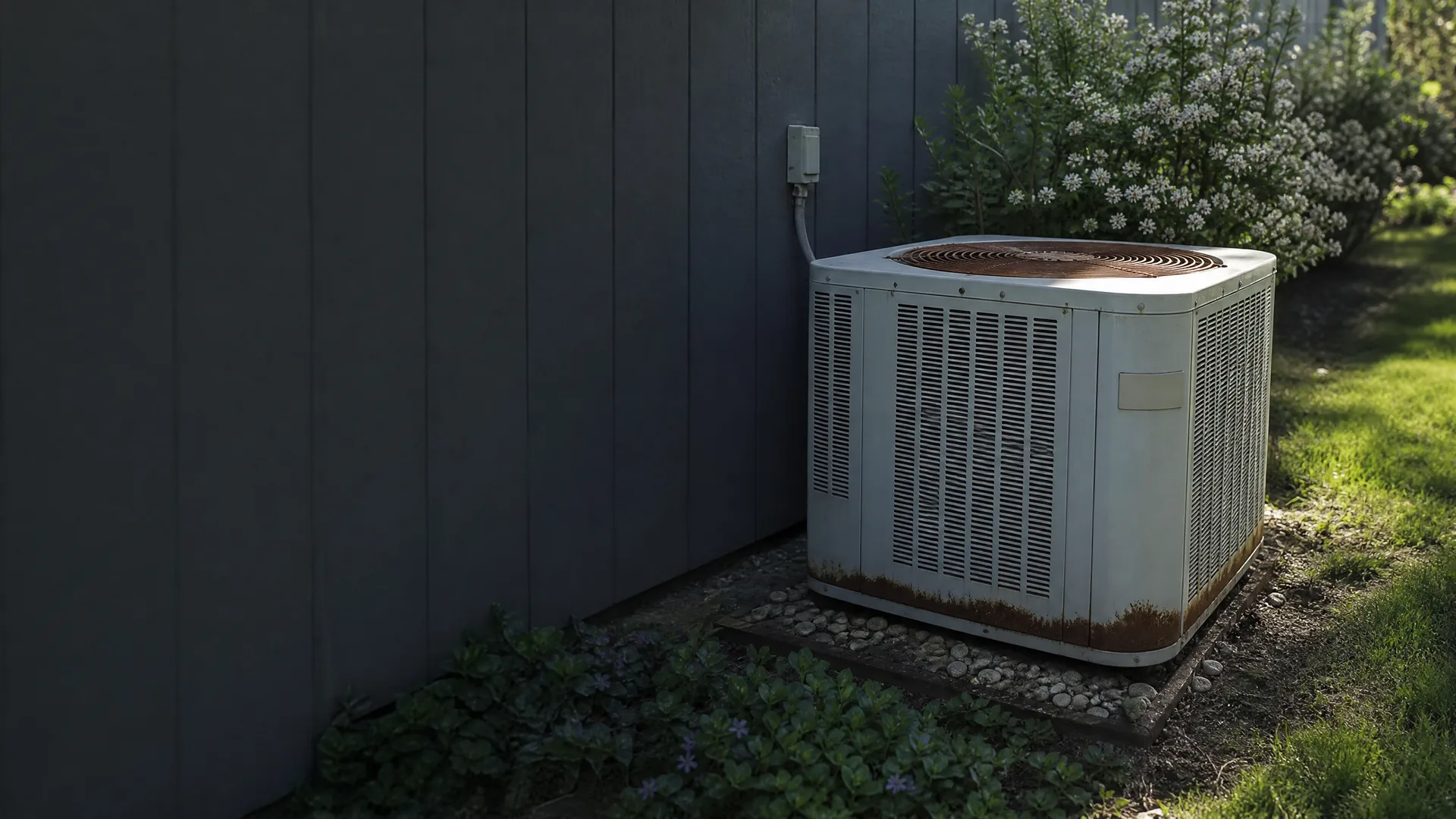
An outdoor air conditioning condenser unit with rust stains sits on a concrete pad beside a dark gray vertical-board house wall, surrounded by gravel, groundcover plants, a flowering shrub, and grass.

The side yard still has shade on it this time of year, the sun not high enough yet to reach past the fence. The unit sits where it's sat for years, and the rust along the base has worked its way up past the seam, flaking where the cabinet meets the pad. You crouch down to look, the way you do when something's been nagging at you, and you notice the panel doesn't sit flush anymore. It's not making noise. It ran fine all winter. But the rust tells you something the sound doesn't, and you straighten up thinking you should have someone who knows these units look at it before summer asks more of it than it has left to give.

Explain it one time

If your heat pump is past 12 years, or it's already needed more than one repair this year, the question isn't really how long it lasts anymore. It's whether to keep paying to patch it or put in a system built for what Mesa County asks of it every summer and winter. Getting to that answer usually means calling around Grand Junction, explaining the unit's age and history to each one, then sitting with a stack of quotes that aren't quite comparable. Hand in the details once and a licensed contractor local to this area, one who sees these units fail in the same handful of ways every season, looks at your situation and gets back to you. You deal with one contractor who already knows what Grand Junction winters and summers do to a heat pump, not a round of calls repeating yourself to five.

What defrost cycles do to the system

On cold mornings here, frost builds up on the outdoor coil, and the unit has to pause and run a defrost cycle to melt it off. That means switching the reversing valve, briefly running in cooling mode to warm the coil, then switching back. Every cycle is a small jolt to the compressor and the valve, and a Grand Junction winter runs enough cold mornings that the parts handling that switch see more wear than they would somewhere with a shorter cold season. Over the years, the reversing valve is often one of the first major parts to show its age.

Why the compressor is what decides it

Most of what fails on a heat pump can be replaced on its own. The compressor can't, at least not for a price that makes sense next to a new unit. It's sealed, it's the most expensive part in the cabinet, and it's the one running continuously through both the summer heat load and the winter defrost cycles described above. A compressor that makes it to year 12 or 15 has usually been running on a correctly charged system that wasn't asked to work harder than it was sized for.

Power here costs 15.80 cents per kilowatt-hour

At 15.80 cents per kilowatt-hour, running your heat pump through those hard winter nights and hot summer days doesn't punish your bill the way it would somewhere with pricier power. That's worth knowing before you decide whether an aging unit is worth repairing or replacing.

EIA-861 2025

Replacing it yourself

You can start calling around, but Grand Junction doesn't have an endless list of contractors who install heat pumps often. You'd be checking licenses, asking who actually works on heat pumps versus furnaces and straight AC, and explaining your situation to each one before you even get a number to compare. A few calls in, most homeowners can't tell which quote reflects the job your house needs and which one is just a guess. That's hours spent before any work starts, and no way to know if the one you pick has seen Mesa County winters do this to a unit before.


Getting matched instead

Submit the request once and it goes to a licensed local contractor who installs and services heat pumps in Mesa County, not a list of five companies competing for your callback. Someone who works on this equipment every season already knows how winter nights here run a unit down and what sizing a Grand Junction house actually needs. You explain your situation once, to the contractor who's going to do the work, instead of repeating it to company after company while you try to sort out who's worth trusting.

A woman with shoulder-length brown hair in a cream cardigan and top sits in an armchair indoors, looking toward a sunlit window with trees outside.
A woman and a child wrapped in a knitted blanket on a couch indoors, with a lit table lamp and a potted plant in the background.

Where your heat pump stands now

  • A heat pump in Grand Junction typically lasts 12 to 15 years given the demands of hot summers and hard winters here.
  • Sizing, charge and installation quality set the ceiling on that lifespan more than any single repair decision later on.
  • Frost and defrost cycles on cold mornings add wear that a milder climate wouldn't put on the same unit.
  • A unit past 12 years with repeat repairs is past the point where patching it makes sense over replacing it.
  • A Mesa County contractor who installs and services heat pumps all year knows which parts tend to fail first in this climate.
  • One licensed local contractor means one conversation about your system, not a round of calls to sort through.

A heat pump in Grand Junction doing its job well should get you 12 to 15 years before it's worn out. Where you land in that range comes down to how it was put in. A unit sized right for your house, with the charge set correctly and the ductwork connected the way it should be, holds up against what this climate asks of it. Those 18-degree winter nights and the defrost cycles that come with them, the long stretch of hot, dry summer days, all of that wears harder on a heat pump than it would somewhere milder. A unit that started out right can take it. One that didn't will show its age early, with repairs that keep coming back.

If yours is past 12 years and you've already paid for more than one repair this year, you're at the point where the math shifts from fixing to replacing. That's not a call to make off a guess. It's worth having someone look at the unit itself, what's failed and why, before you decide.

Mesa County doesn't have a long list of contractors who work on heat pumps regularly, the way it might for furnaces or straight air conditioning. The ones who do this every season know what tends to go first on a unit that's run through winters and summers here, and what's actually worth fixing versus replacing. Getting matched with one licensed, local contractor means you're having that conversation once, with someone who already knows the equipment, not sorting through quotes from several companies at once.

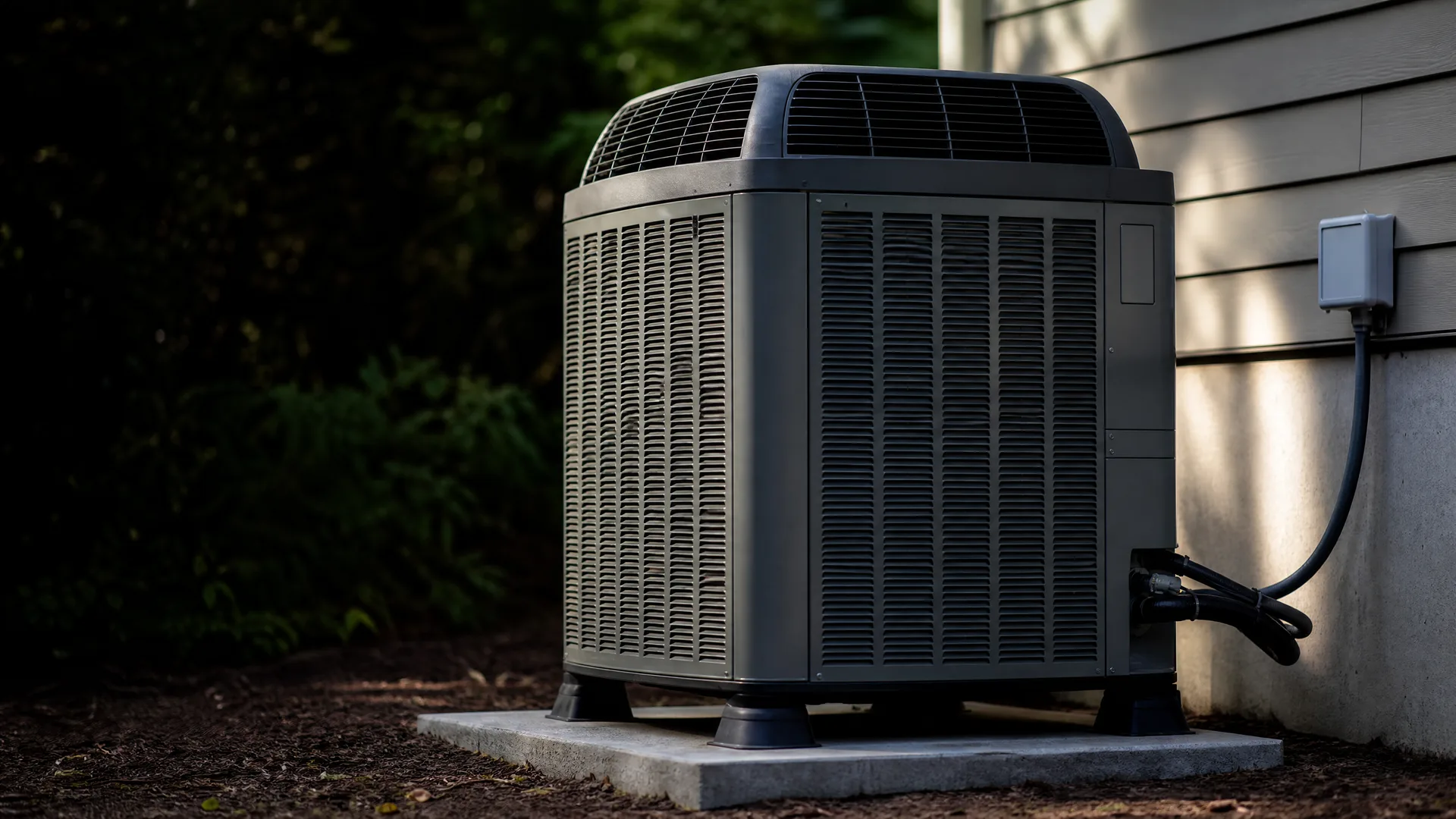
An outdoor air conditioning or heat pump condenser unit on a concrete pad beside a house with horizontal siding, with a wall-mounted disconnect box and refrigerant lines, and dark shrubs to the left.

No quotes to chase

New system or replacementHeat PumpMesa County, CO
Step 1 of 2

What ZIP code is the job in?