





Stone and timber luxury homes with glowing windows line a mountain street at dusk, with evergreen trees and a rocky mountain range in the background.

Heat Pump Repair in Grand Junction, CO

Tell us about the job

Takes about a minute. No obligation.

RepairHeat PumpMesa County, CO
Step 1 of 2

What ZIP code is the job in?

Winters here bring overnight lows around 18°F, and your heat pump has to work for every degree of that. When one stops keeping up, the cause is usually ordinary. A dirty filter, a low refrigerant charge, a reversing valve that's stuck, a defrost sensor gone bad. Mesa County sees its share of wind and winter storms, but nothing here is hard on a heat pump in a way that's different from anywhere else. The fix is almost always a known one, not a mystery.

9 months
September through May, your system heats
2 months
July through August, it cools
18°F
the average winter night it heats against
83°F
the average summer afternoon it cools against
Isometric line illustration of a cutaway single-story house showing interior rooms with beds and furniture, ceiling ductwork connected to an indoor air handler, and an outdoor condenser unit linked by refrigerant lines.
Your system heats September through May and cools July through August.

NOAA nClimDiv, 1991–2020 normals

Heat pumps here switch over to heat in September, right when the easy months end.

A unit with a weak part can coast through summer and still fail the first cold week, so September is when repairs show up.

Half the homes here are new enough that repair still makes sense

Half the homes here were built by 1987
152 damaging wind events from 2015 to 2024
14 hail events from 2015 to 2024

Age matters more than the symptom. An older heat pump that loses its compressor or reversing valve is usually telling you the rest of the system is tired too, and a repair there just buys a little time before the next part goes. A younger one is almost always worth fixing outright, especially for something ordinary like a capacitor or a defrost sensor. The other thing worth noticing is whether this is the first real failure or another one in a string of them. A heat pump that keeps breaking in different ways from one season to the next is further along than any single repair will fix.

A heat pump running badly still runs up a bill

Colorado electricity runs 14.92 cents per kilowatthour, on the higher side for running a heat pump hard all winter. One that's low on charge or stuck in the wrong cycle still draws power, it just does less with it. That's a bill going up every month until someone looks at it.

Find a contractor
A dark gray heat pump unit mounted on a concrete pad next to a house with gray siding and a stone veneer wall.

A newer system is worth fixing

Half the homes in Mesa County were built in 1987 or later. If yours is one of them, a contractor can still check the nameplate to be sure, but a system that came with a newer house is a good candidate for repair rather than replacement. A stuck reversing valve or a bad defrost sensor on a unit like that is a straightforward fix, worth doing right.

A low charge gets worse on its own

A heat pump low on refrigerant makes the compressor work harder to move what's left. That extra strain means extra heat, and heat breaks down the oil that's supposed to keep the compressor's moving parts protected. Left running long enough, a low charge stops being a simple top-off and starts being a compressor failure.
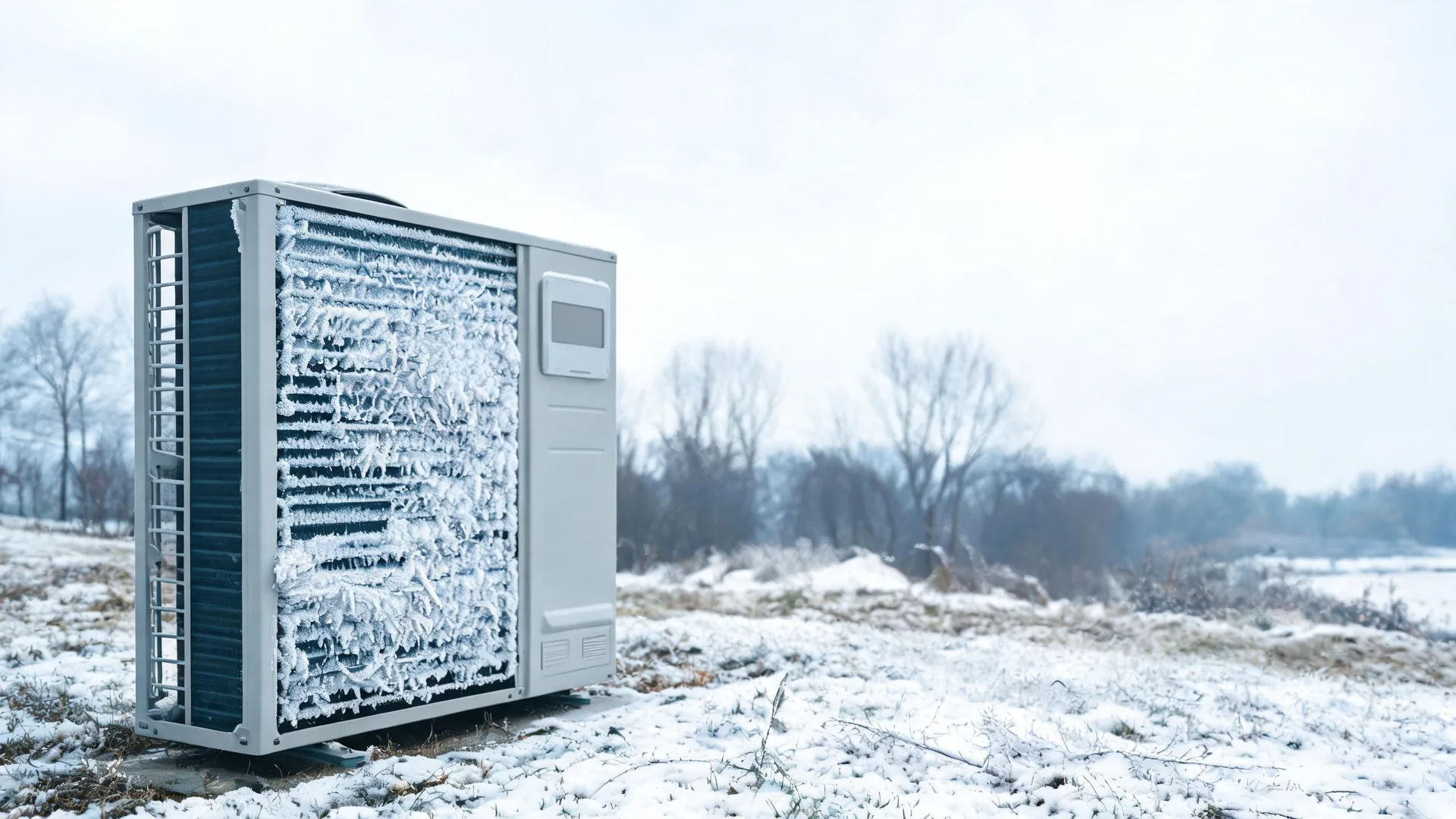
A stuck defrost cycle can freeze the coil solid

If the defrost sensor or control board isn't switching the cycle right, frost builds on the outdoor coil instead of clearing. Keep the unit running and that frost turns to ice, blocking airflow across the coil entirely. At that point it isn't just losing efficiency, it can't move heat at all.

A few things wear out on a predictable schedule. The contactor that switches the compressor on pits and sticks after enough cycles, and once it does, the outdoor unit hums but doesn't start. The capacitor that gets the compressor and fans spinning weakens the same way. Either one makes the same kind of trouble, a unit that tries to start and can't quite manage it. Other failures come from somewhere else. An outdoor coil packed with leaves or dirt can't shed heat properly, and the system strains to make up for it until something else gives out. None of this is particular to one brand or one kind of heat pump. It's just what happens to a machine that runs for months without a break.

A diagnostic visit starts outside at the unit itself. A contractor checks the refrigerant charge, tests the capacitor and contactor, and watches how the system responds when it switches between heating and defrost. Gauges and a multimeter tell most of the story, no guessing involved. Inside, they'll check airflow at the vents and look at the filter, since weak airflow can look like a refrigerant problem or a failing part when it isn't. If the outdoor coil is iced over, that gets cleared first, because nothing else can be tested properly until it is. The visit ends with the actual cause named, not just the symptom, and a straight answer on what it takes to fix it.