






Illuminated timber-and-stone luxury homes along a residential street at dusk, with snow-capped mountains visible in the background.

Heat Pump Repair in Castle Rock, CO

Tell us about the job

Takes about a minute. No obligation.

RepairHeat PumpDouglas County, CO
Step 1 of 2

What ZIP code is the job in?

Castle Rock winters bring overnight lows that average 17°F across December, January and February, and your heat pump has to work through that without a break. Hail and wind show up in the county too, and either one can bend the fins on an outdoor unit or knock loose a wire. None of that is unusual for this area. It's the same kind of wear heat pumps deal with anywhere cold winters and the occasional storm roll through. A unit that's icing up, short cycling, or blowing air that's not warm enough usually has a specific cause behind it, like a low refrigerant charge, a failing defrost control, or a dirty coil. Finding which one it is matters more than guessing.

9 months
September through May, your system heats
1 months
July through July, it cools
17°F
the average winter night it heats against
81°F
the average summer afternoon it cools against
Isometric illustration of a cutaway single-family house showing interior ductwork and an air handler, with an outdoor condenser unit connected by lines along the exterior wall.
Your system heats September through May and cools July through July.

NOAA nClimDiv, 1991–2020 normals

Heat here switches over in September, with August the month homes lean on it first.

A heat pump that struggled last winter will show the same weak spot again this August.

Douglas County sees its share of storms, but that's not why your heat pump is struggling

353 severe weather events from 2015 to 2024
13% of homes statewide lost power a day or more in 2024
97 damaging wind events from 2015 to 2024

Half the homes in Douglas County were built in 2002 or later. If yours is one of them, your heat pump is probably well inside its working life, not at the end of it. A system that age failing outright would be the unusual case, not the expected one. Most problems at this stage come down to a part that failed or a setting that drifted, not a unit that's worn out. That's worth knowing before anyone talks about replacing it.

A heat pump running wrong costs you here every month it's not fixed

Colorado electricity runs 14.92 cents per kilowatthour, and a heat pump that's icing up or short cycling is pulling that power without doing its job. The longer the real cause sits unfound, the more that shows up on your bill every month it runs this way.

Find a contractor
A man in a dark knit hat, navy long-sleeve shirt and tan work pants walks up painted wooden porch steps toward an orange front door, carrying a canvas tool bag.
A gray heat pump outdoor unit mounted on a concrete pad next to a residential house with lap siding and stone accents.

This heat pump has years left in it

Get whoever comes out to tell you exactly what failed, the defrost board, the charge, a stuck reversing valve. That's the part worth knowing before any talk of a new unit. A heat pump this age has the years left to make fixing it the right call, so ask for the diagnosis first.

A reversing valve that sticks

The reversing valve is what lets a heat pump switch between heating and cooling, and it's the part most specific to this machine. When it sticks partway, the system can blow cold air during a heating cycle or stop switching modes at all. It fails from wear on the internal slide, or sometimes from being stuck in one position for a long stretch without moving.
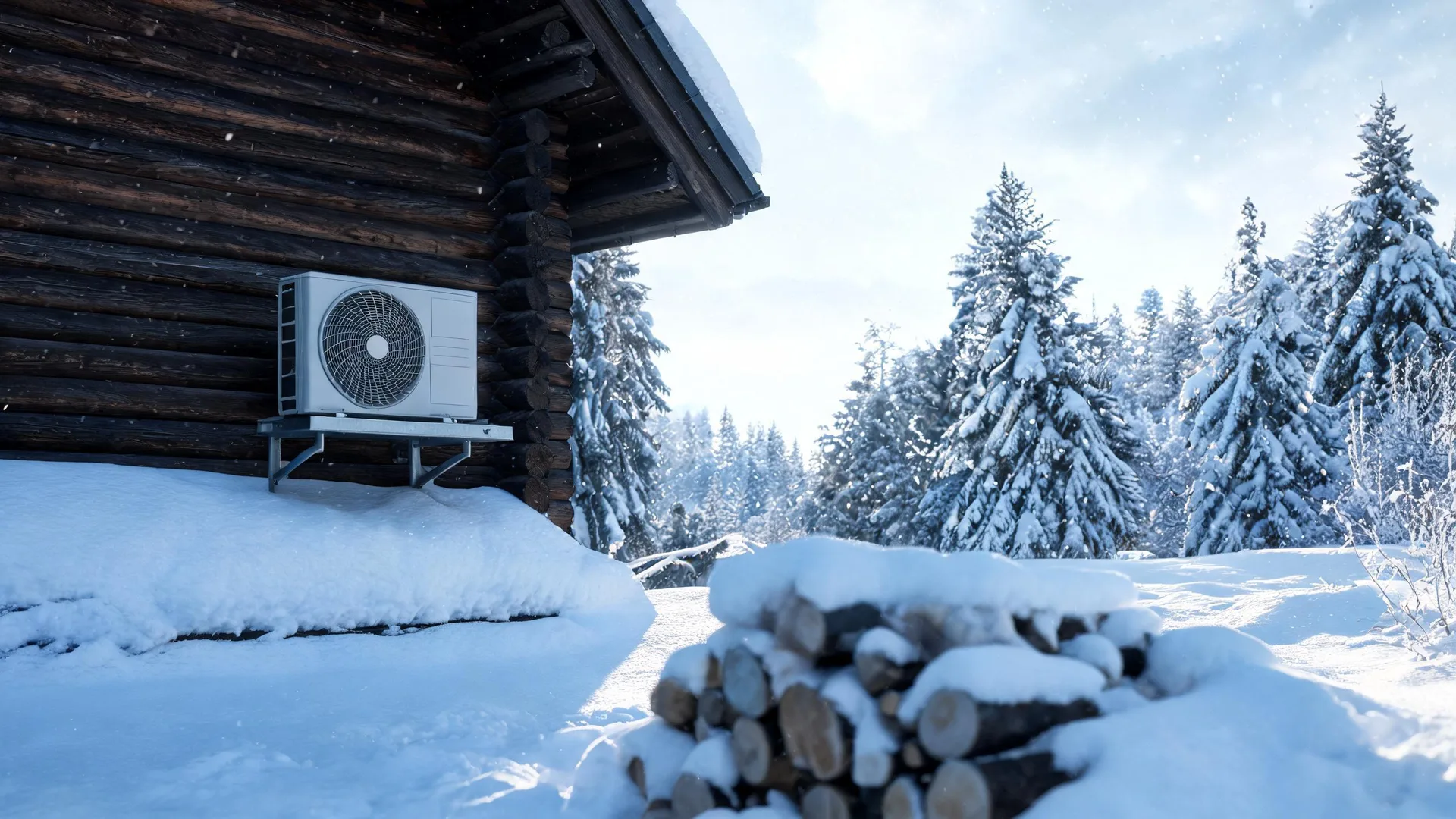
Why most calls aren't the valve

A stuck reversing valve gets blamed first because it's well known, but a low refrigerant charge or a failed defrost sensor causes the same symptoms and shows up more often. Both are easier to find and fix than a valve replacement. Whoever diagnoses it should check those before assuming the valve is the problem.

A heat pump that needs attention usually tells you in how it runs, not just how it sounds. Ice building up on the outdoor unit beyond a thin frost is one sign, especially if it's not melting off during the defrost cycle like it should. Short cycling, where the system kicks on and off in quick bursts instead of running a full cycle, is another. So is air coming out of the vents that feels barely warm, or a unit that runs constantly without ever seeming to catch up. Any of these point to something specific, like a failing sensor, a refrigerant leak, or a control board not switching the defrost cycle on when it should. Catching it early usually means a smaller repair than waiting until the system stops running altogether.

A repair is worth it when the failed part is specific and known, a sensor, a capacitor, a control board. Those fail on their own without taking the rest of the system down with them, and replacing one brings the unit back to normal. Replacement starts to make sense when the compressor itself is failing, since that part is expensive enough on its own that putting it into an aging unit rarely makes sense. The compressor is also the hardest part to predict. It can run fine for years and then go without much warning. What matters is what actually broke, not how long the unit has been running. A heat pump with a bad capacitor is a repair. One with a dying compressor is a harder call, and worth getting a straight answer on before deciding either way.