Heat pump running all the time in Thornton, CO
Why does my heat pump run constantly in Thornton?
A heat pump that runs nonstop usually catches your attention on a cold morning when it never seems to shut off, or your Xcel bill shows up higher than expected. You're not imagining it. It's worth knowing when this is normal for the weather and when it means something in the system needs attention before it fails outright.
It's likely struggling to keep up with the cold, or it's low on refrigerant
A heat pump works harder as the temperature drops, and once Thornton gets into the teens or below, which happens plenty through the winter, the unit can run almost nonstop just trying to hold the temperature you set. That alone isn't a defect. But if it's running constantly even on a mild day, or the house still feels cold while it runs, that points to something else: low refrigerant, a failing defrost control, or a compressor that's wearing out. Most homes here back up the heat pump with a gas furnace for the coldest stretches, and if that backup isn't kicking in when it should, the heat pump ends up carrying a load it wasn't meant to carry alone.
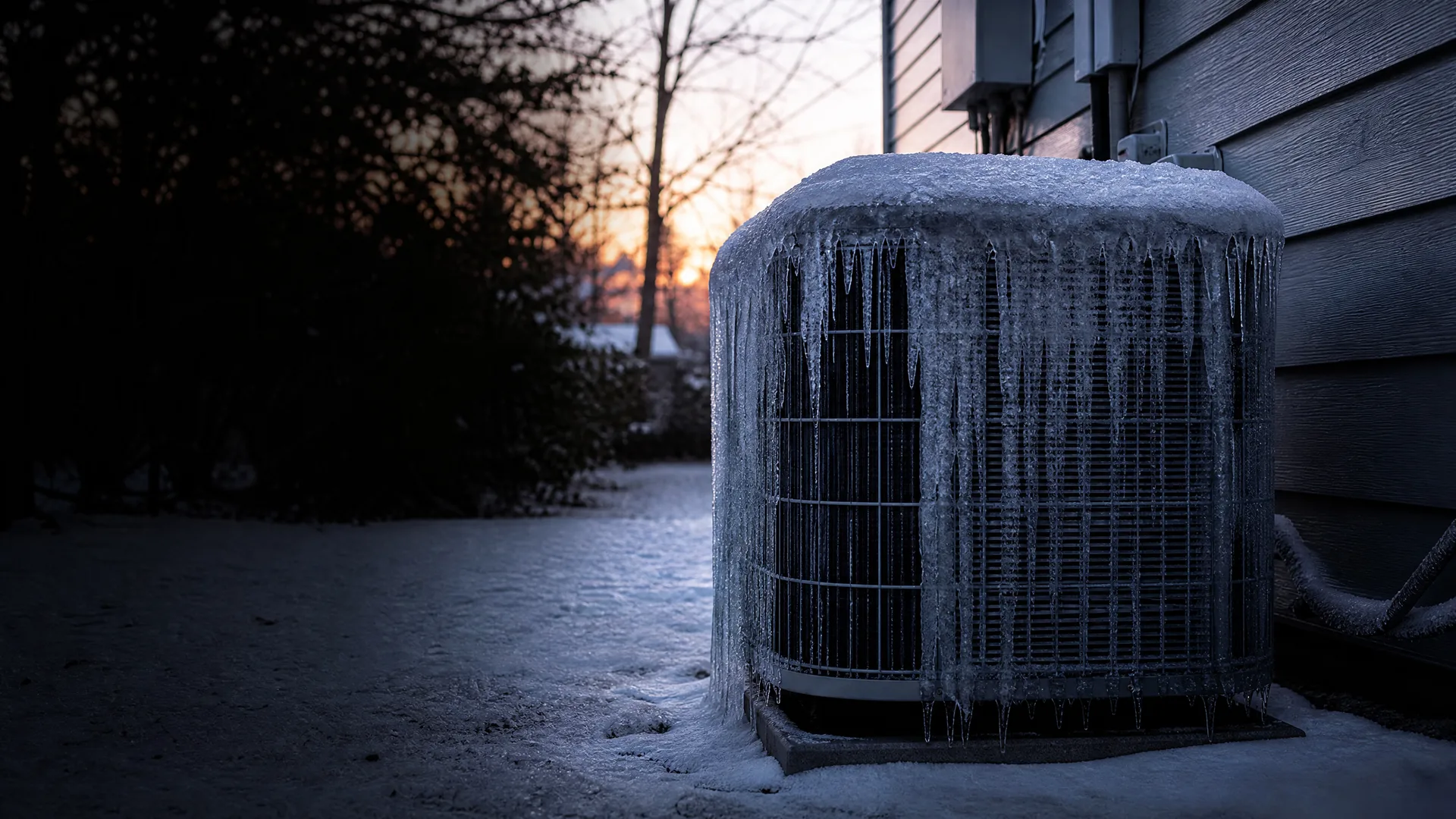
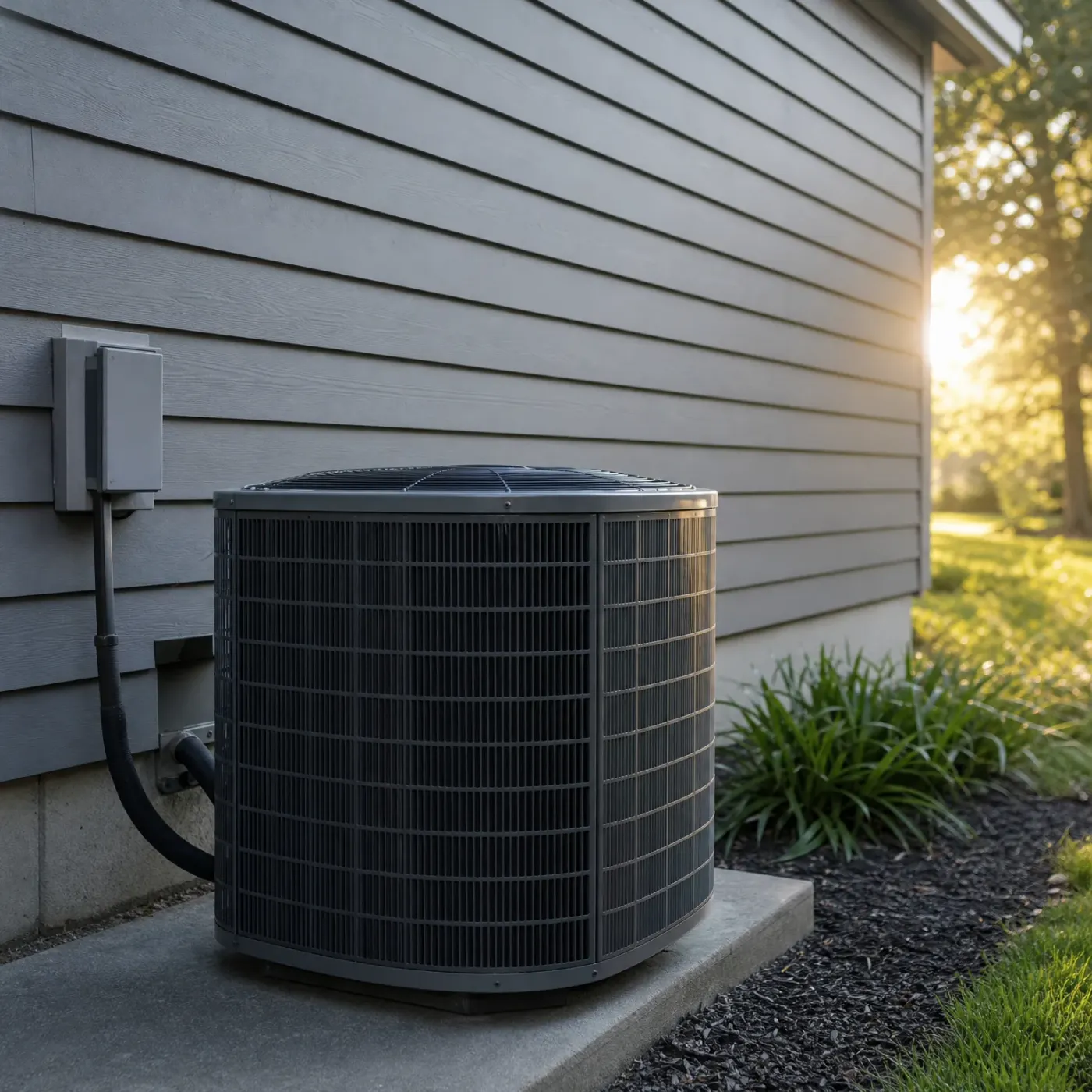
Six in the morning, still dark, and you're pulling on boots to grab the paper before work. The side yard light catches the outdoor unit and you stop. The whole cabinet is sheathed in ice, thick over the coil and climbing the fan grille. It's been running since you went to bed and you can hear it still going now, that low hum that hasn't quit all night. The air coming off it is barely warm. Somewhere past this kind of cold, a heat pump stops keeping up, and standing there in the dark on a January morning in Adams County, you can see it's already lost that fight.
Why does a heat pump work this hard in Thornton?
Winter nights average 16°F
Winter nights here average 16°F, and a heat pump has to pull heat from air that cold. That takes longer run times, not a broken unit.
Heat runs October through May
Heat runs October through May here, about eight months out of twelve. That's most of the year your system is working, so steady cycling is normal.
Cooling runs June through August
Cooling only runs June through August here. The other eight months, the heat pump is doing the harder job of heating, which is why it works longer.
NOAA nClimDiv 1991-2020
Running long versus running wrong
A heat pump that runs for hours on a cold night in Thornton is doing its job. Below freezing, it has to pull what little heat there is out of the outside air, and that takes time. If the house holds a steady temperature and the air coming out of the vents feels warm, long run times alone aren't a problem. That's just what the equipment has to do when it's 16°F outside and dropping.
What points to a real fault
It's a different story if the unit runs constantly and the house still won't hold its set temperature, or the air from the vents feels barely warm at all. Ice building up past the bottom of the outdoor coil, a defrost cycle that never seems to end, or the outdoor fan not turning while the compressor runs are all signs something's wrong, not signs of cold weather working as expected. Short-cycling, where the unit shuts off and restarts every few minutes instead of running a long steady cycle, points to a different problem entirely and is worth having looked at before it gets worse.




Hand off the heat pump problem
A heat pump that won't stop running on a cold Thornton night might be working exactly as it should. But a unit icing over, short cycling, or still running flat out well past sunrise, once the air has warmed some, is telling you something is wrong, and it's easy to miss the difference from inside the house. Sorting that out means someone looking at the coil, the defrost cycle, the refrigerant charge, not another night of guessing while Xcel adds it up. Finding that person usually means calling around, explaining the ice on the cabinet or the bill that jumped, getting quotes back on different days and trying to judge which one actually knows heat pumps built for Adams County winters. Send the request once and that legwork is off your plate. One contractor gets it, not five, and you go back to waiting out the cold without wondering if the unit behind the fence is struggling or just doing its job.
How defrost actually works
- The outdoor unit reads the coil temperature and starts a defrost cycle on its own when frost builds up past a set point.
- During defrost the reversing valve flips the system into cooling mode for a few minutes to send heat outside and melt the ice off the coil.
- A sensor near the coil, not a timer on the wall, is what tells the unit when frost has melted enough to switch back.
- The indoor air handler often keeps blowing during defrost unless the system has an electric strip to take the chill off that air first.
- A stuck reversing valve or a failed defrost sensor will keep the unit in one mode too long, which shows up as constant running or a coil that stays iced over.
- Low refrigerant charge makes the coil run colder than it should, so frost forms faster than the defrost cycle can keep up with.
A heat pump outdoor unit is built to ice up some. Cold, damp air passing over the coil leaves frost behind the same way a cold glass sweats, and on a Thornton winter night that frost will keep building unless the system does something about it. A sensor clipped to the coil itself watches the temperature there, not the air temperature and not a clock. Once that coil reading drops past a set point, the system switches the reversing valve, the same valve that lets it heat in winter and cool in summer, and runs backward for a few minutes. Heat that was going into your house goes outside instead, long enough to melt the frost off the coil. You may notice the outdoor fan stop, or steam rising off the unit as the ice lets go. Inside, the air handler usually keeps moving air during this, and unless there's an electric strip to warm it first, what comes out of the vents feels cool for those few minutes. Once the coil sensor reads clear, the valve switches back and the unit goes on heating. When any part of that chain sticks, the reversing valve stuck in one position, the defrost sensor reading wrong, or refrigerant low enough that the coil runs colder than it should, the cycle stops correcting itself. The unit either defrosts constantly or never, and either one shows up as a system that won't settle down.



Thermostat calls for heat and the compressor starts up outside.
Outdoor coil pulls heat from the cold air into the refrigerant.
Indoor coil releases that heat into the air moving through your ducts.
Frost builds on the outdoor coil as it runs in cold air.
Long Runtime or Something Wrong
Normal long runtime
- The unit shuts off on its own once the house reaches the thermostat setting, even if that takes a couple of hours on a cold night.
- The outdoor coil looks clean when you check it, maybe a light frost that clears during a normal defrost cycle.
- Air coming out of the vents feels warm, not lukewarm, even though the system has been running a while.
- The compressor sound stays steady, no grinding or clicking that wasn't there before.
- Your Xcel bill is higher in January than it was in October, which tracks with more hours of operation, not a broken unit.
Running wrong
- The unit never cycles off, even once the house is well past the thermostat setting and the outside air has warmed some.
- Ice covers the outdoor coil and climbs past the fan grille instead of melting off during a defrost cycle.
- Air from the vents feels cool or barely warm, meaning the system is running without putting out real heat.
- The compressor short cycles, kicking on and off every few minutes instead of settling into a steady run.
- Frost shows up on the coil even on a mild afternoon, when outdoor temperatures don't call for a defrost.
Overnight lows in Adams County average 16°F across December, January and February, and that's the stretch where your heat pump works hardest. At that temperature there's not much heat left in the outside air for the unit to pull in, so it has to move more air for longer to keep the house at the thermostat setting. Expect runtimes to stretch into hours on those nights, with the outdoor fan turning the whole time. That alone isn't a problem. What matters is whether the house reaches temperature and the unit shuts off, or whether it just keeps going no matter how cold it got outside.
NOAA nClimDiv 1991-2020
A heat pump running long on a cold Thornton night is usually just keeping up with the cold. One that's iced over, short cycling, or still running flat out after the sun's been up for hours is asking for a look. That's the line to watch for. If your unit falls on the wrong side of it, you don't have to figure out who's licensed, who answers the phone, or who can actually get out to your place this week. You won't need to call around and describe the same ice buildup three different times to three different companies, then sit with a stack of quotes trying to guess which one is fair. Send the form and that part is handled. What's left is the actual repair, done by someone who knows what a coil caked in ice at 9am is telling them, and what it isn't.
Hand off the search today
Skip calling shops to ask who repairs heat pumps in Adams County.
You only hire the pro if you want to.