An outdoor central air conditioning unit mounted on a concrete pad beside a blue-sided house at sunset.

AC Repair in Trinidad, CO

Tell us about the job

Takes about a minute. No obligation.

RepairCentral ACLas Animas County, CO
Step 1 of 2

What ZIP code is the job in?

Warm air from the vents means it's not keeping up

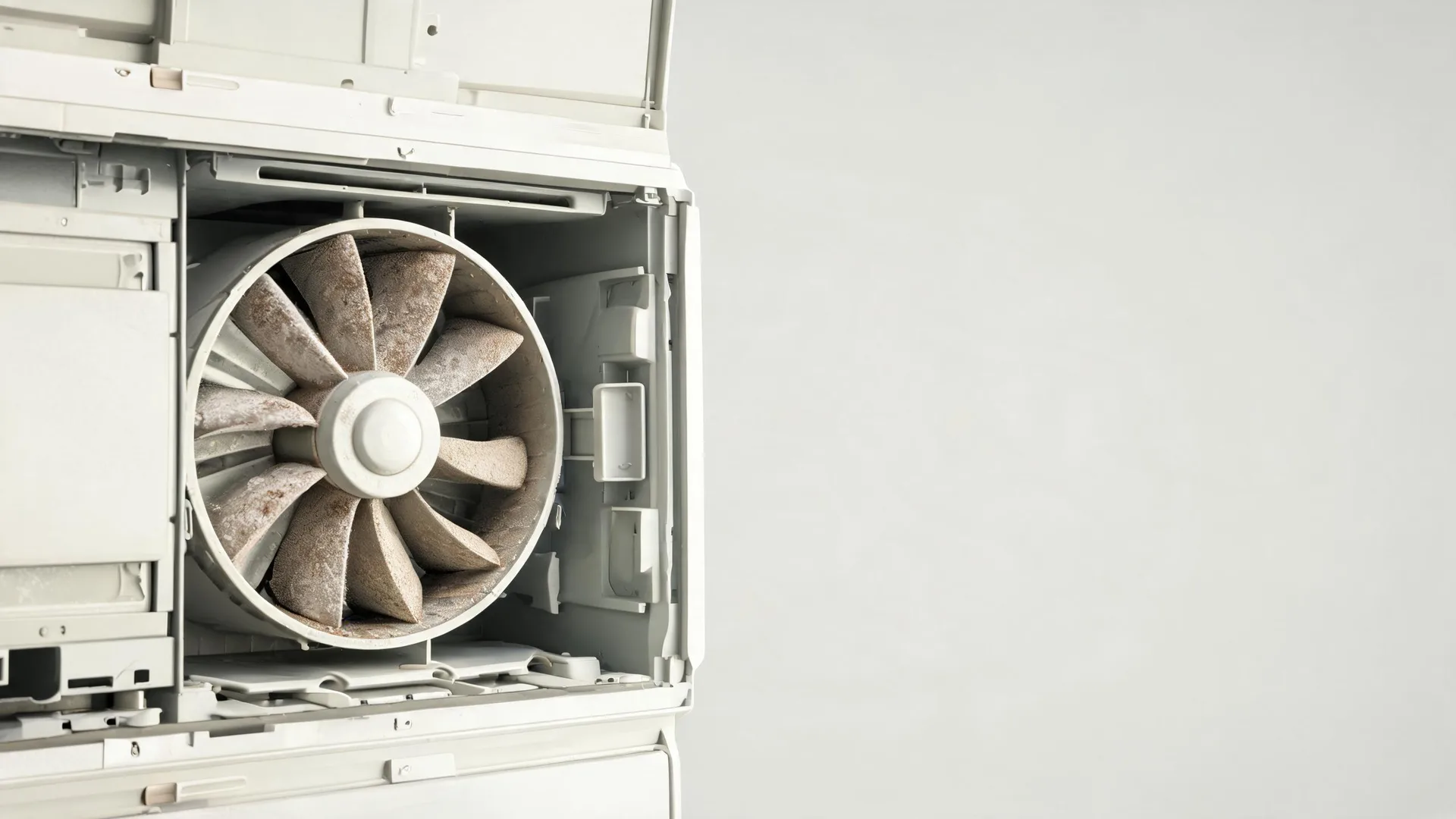
Air that used to feel cold now feels lukewarm or barely cool. That points to a refrigerant leak, a failing compressor, or a dirty coil that can't pull heat out of the air anymore. It rarely fixes itself, and running the system in that state tends to wear the compressor harder.

Short cycling wears out parts fast

If the unit kicks on, runs a few minutes, then shuts off before the house cools, something is cutting the cycle short. A dirty filter, a weak capacitor, or a thermostat sensing the wrong temperature can all cause it. Every one of those short cycles puts extra strain on the compressor, so this is worth having looked at before it leads to a bigger failure.

3 months
June through August, your air conditioner is on duty
86°F
the average summer afternoon it cools against
65 hail events
in ten years, and hail bends the fins on outdoor coils
151 wind events
in ten years, and wind drives debris into outdoor units
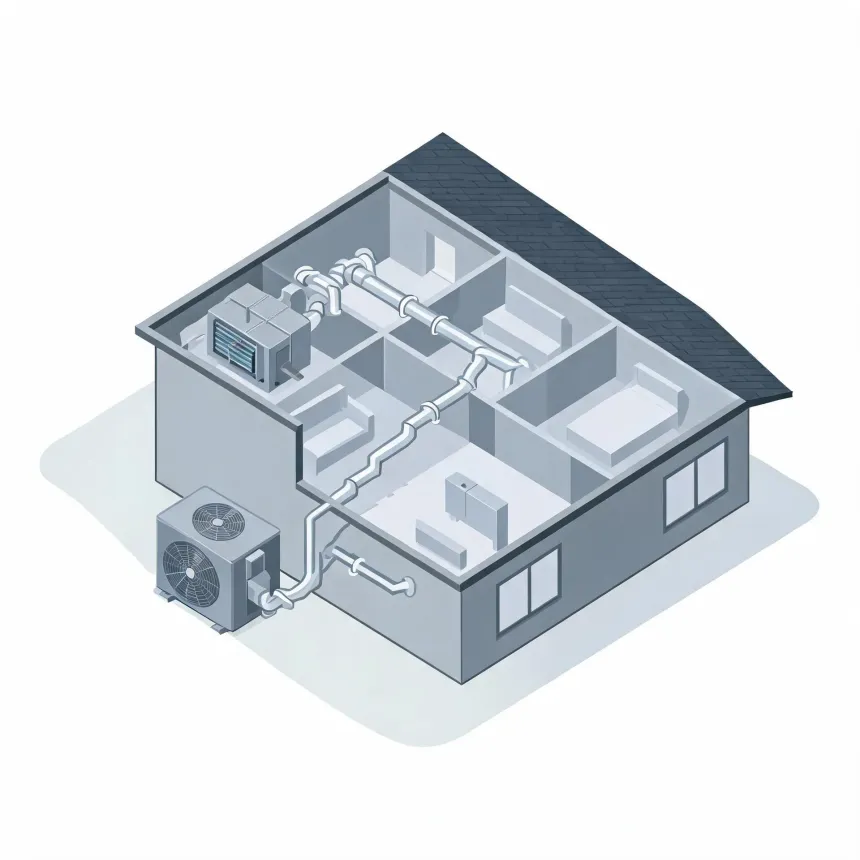
Isometric grey illustration of a cutaway single-story house showing interior rooms, ceiling ductwork connected to an indoor air handler, and an outdoor condenser unit linked by lines outside the wall.
Your air conditioner works hardest from June through August.

NOAA nClimDiv, 1991–2020 normals

AC in Trinidad runs June through August.

May is when a weak capacitor or low charge still holds, so trouble waits for the first hot week to show itself.

Half the homes here were built in 1972 or earlier, and the AC working hardest in August may be original to the house

Half the homes here were built by 1972
Cooling runs June through August
Summer afternoons average 86°F
Nothing about this county is hard on an ACLas Animas County sees its share of wind, hail and winter storms, same as a lot of places. None of that is what wears out an AC.

If your AC came with the house, ask the contractor for its age before approving a repair. A unit from the original install is already old enough that a big repair, a compressor or a coil, may not be worth paying for on its own. A technician can check the age off the data plate on the unit and weigh that against what's wrong with it. That's a different call than fixing a five-year-old system with the same symptom.

Get it looked at early

Problems tend to show up in the first weeks of the season, when the load hits a part that was already weak.

Find a contractor
A gray residential air conditioner condenser unit mounted on a concrete pad in an open grass field.

Running it longer doesn't buy you time

A refrigerant leak gets worse with runtime, not better. Low charge makes the compressor work harder to move heat, and the extra heat it generates has nowhere to go. Keep running it and the compressor can overheat and seize, turning a leak repair into a full system replacement. A dirty coil does something similar. Airflow keeps dropping as it gets worse, the compressor keeps working against that restriction, and heat that should be leaving the house stays trapped in the system itself. Short cycling is its own slow damage. Every start draws a hard surge of current through the compressor windings, and a unit that starts and stops every few minutes is taking that hit over and over instead of settling into a steady run. None of this fixes itself by waiting for a cooler day.

Check these before you call

Check the thermostat is set to cool and below room temperature. Check the breaker for the outdoor unit and the furnace or air handler haven't tripped. Pull the filter and hold it up to light. If you can't see light through it, it's restricting airflow and the system is working against itself. Look at the outdoor unit for leaves, grass clippings or anything blocking the sides, and clear it by hand.

What tells a tech something before they arrive

Notice whether the air from the vents is cool, warm or not moving at all. Listen for whether the outdoor unit is running when the thermostat calls for cooling. Check if ice has built up on the indoor coil or the copper line running to the outdoor unit. Any of that narrows down what's wrong before the service call even starts, and it's information a homeowner can gather without opening anything up.

An outdoor air conditioning condenser unit installed beside the exterior wall of a blue vinyl-sided house at sunset.

A new air conditioner would save little on running costs in Las Animas County, so the repair decision comes down to the unit's condition.

  • A new one at the federal minimum, 13.4 SEER2$260 a year
  • An older air conditioner$280 a year

Estimates for a typical Las Animas County home, compared with an older unit built to the previous federal minimum, from EIA household energy data, Colorado fuel prices and NOAA climate normals. Your home will differ.

Repair makes sense when a part like a capacitor or contactor has failed.

Replacement makes sense when the compressor has failed or the system uses R-22 refrigerant, which is no longer made.

A diagnostic visit starts before the panels come off. A technician will ask when the problem started and what the system was doing right before, then check the thermostat call, the breaker, and the air coming off the vents. From there it's gauges on the refrigerant lines to read the pressure, a meter on the capacitor and the wiring to check for the right voltage and amp draw, and a look at the coil and the airflow through it. Each reading rules something in or out. Low pressure points at a leak, a capacitor out of range points at a motor about to fail, and normal electrical readings with weak airflow point back at the coil or the duct system instead of the compressor. The point of all that is to find the actual failure before anything gets replaced, not to guess and swap parts until the air runs cold again.