





Illuminated timber-and-stone mountain cabins along a curved road at twilight, with lit trees and mountain peaks in the background.

AC Repair in Thornton, CO

Tell us about the job

Takes about a minute. No obligation.

RepairCentral ACAdams County, CO
Step 1 of 2

What ZIP code is the job in?

Thornton runs its AC about three months a year, June through August, with afternoon highs around 87. That's a normal summer load, not a punishing one. The county does see a fair number of hailstorms and wind events, and either one can dent a condenser's fins or knock debris into the unit. Most repair calls still come down to ordinary wear. A weak capacitor, a low refrigerant charge, a dirty coil, or a thermostat that's lost its connection to the system. If your AC is struggling, chances are it's one of these rather than anything particular to this area. A contractor can usually narrow it down on the first visit.

3 months
June through August, your air conditioner is on duty
87°F
the average summer afternoon it cools against
135 hail events
in ten years, and hail bends the fins on outdoor coils
85 wind events
in ten years, and wind drives debris into outdoor units
Isometric grayscale illustration of a cutaway house showing interior rooms, ceiling ductwork connected to an indoor air handler, and an outdoor condenser unit linked by lines along the exterior wall.
Your air conditioner works hardest from June through August.

NOAA nClimDiv, 1991–2020 normals

AC in Thornton starts its work in June.

May is the month to get a weak capacitor or low charge caught before that first hot stretch finds it.

Adams County sees its share of hail and wind, but that's not what's usually wrong with your AC

292 severe weather events from 2015 to 2024
13% of homes statewide lost power a day or more in 2024
85 damaging wind events from 2015 to 2024

A capacitor that's starting to go won't always keep your AC from running. It'll run longer than it should, or the outdoor fan will struggle to start, and you might not notice until the day it just doesn't. Same with a low charge. The system still blows air, just warmer air, and it keeps running that way until someone puts a gauge on it. Colorado homes paid 14.92 cents per kilowatt-hour for electricity in 2024, so a unit that's low on charge or coated in dirt isn't just cooling worse, it's costing more to do it every month it runs that way. None of that is particular to Thornton. It's what happens to an AC anywhere after a few seasons of normal use.

A newer system is usually worth fixing

Half the homes in Adams County were built in 1991 or later. If yours is one of them, the AC that came with it is probably still within its working life. A repair gets it back to doing what it's supposed to do.

Find a contractor
An outdoor air conditioning condenser unit mounted on a concrete pad surrounded by gravel, photographed against a partly cloudy blue sky.

Find out what's wrong before you write it off

If your AC came with the house, get the capacitor or charge checked before you decide anything else. A diagnosis takes one visit. Replacing a unit that still had years left in it is a bigger step than most of these repairs call for.

A struggling compressor keeps drawing full power

When a capacitor is weak or the charge is low, the compressor has to work harder to do the same job. It doesn't pace itself or back off. It pulls the same current trying to push refrigerant through a system that's fighting it, and that extra strain is what burns a compressor out early.

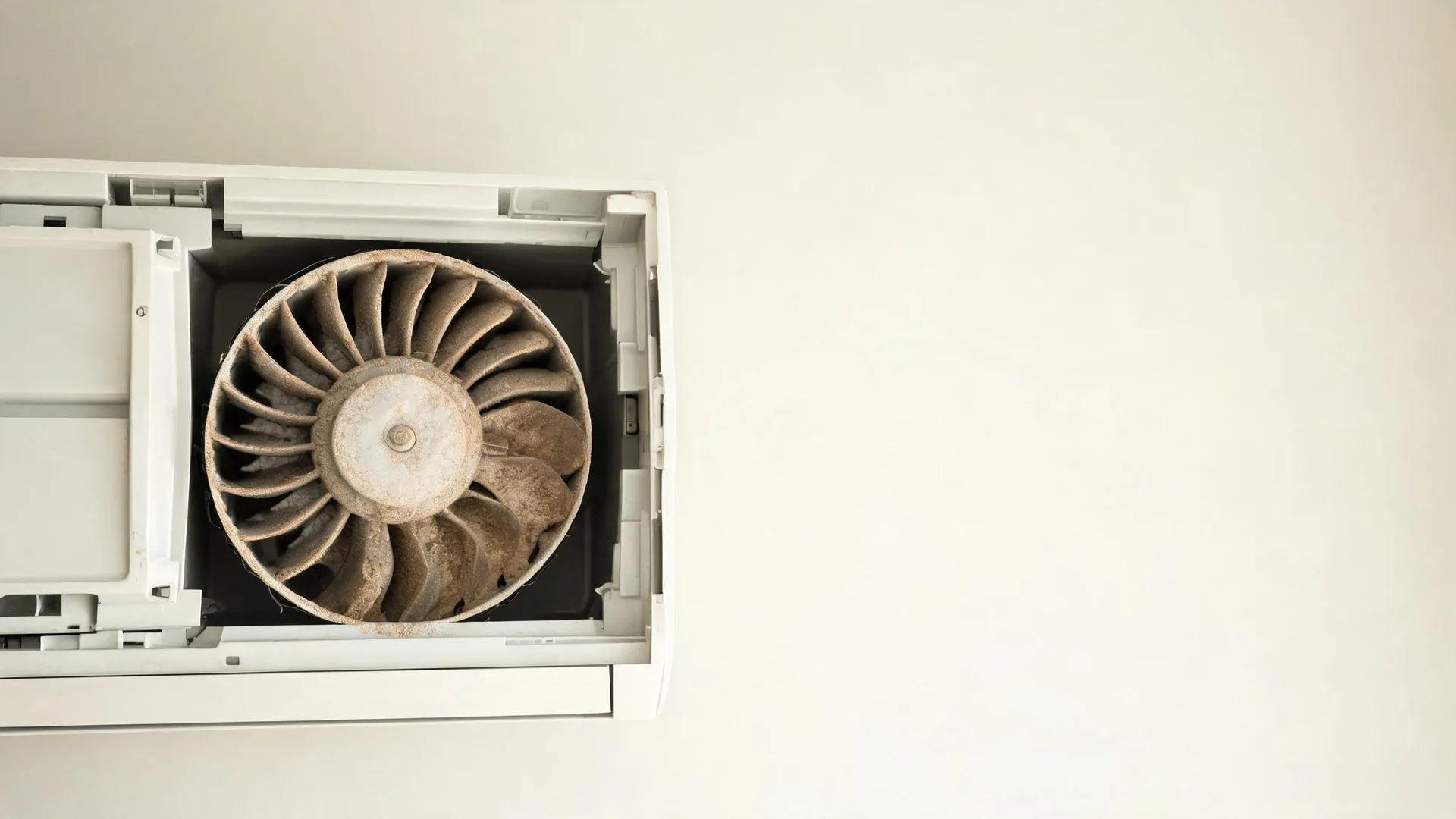
Running it doesn't buy you time, it spends it

A dirty coil or a low charge won't shut the system down. It'll keep blowing air while the problem gets worse underneath, ice building on the coil, oil breaking down in the compressor. Shutting it off and calling someone is what actually protects the unit. Letting it run is what wears out the part that was already failing.

Aerial view of a residential air conditioning condenser unit mounted on a concrete pad next to a house with vinyl siding and a sliding glass door.

A new air conditioner would save little on running costs in Adams County, so the repair decision comes down to the unit's condition.

  • A new one at the federal minimum, 13.4 SEER2$290 a year
  • An older air conditioner$310 a year

Estimates for a typical Adams County home, compared with an older unit built to the previous federal minimum, from EIA household energy data, Colorado fuel prices and NOAA climate normals. Your home will differ.

Repair makes sense when a part like a capacitor or contactor has failed.

Replacement makes sense when the compressor has failed or the system uses R-22 refrigerant, which is no longer made.

A diagnostic visit starts outside at the condenser. A tech checks the capacitor first, since that's what gets the compressor and fan started, then puts gauges on the lines to read the refrigerant charge. Low charge almost always means a leak somewhere, so they'll look for oil residue at the fittings and along the coil. Inside, they'll check the air handler or furnace coil for ice or dirt, and check the thermostat's wiring if the system isn't responding to calls for cooling. Most of this gets diagnosed with gauges, a multimeter, and a look at the coil, nothing exploratory about it. By the end they can usually tell you which part failed and why, not just that something's wrong.