







An outdoor air conditioning condenser unit installed beside the exterior wall of a blue vinyl-sided house at sunset.

AC Repair in Silverthorne, CO

Tell us about the job

Takes about a minute. No obligation.

RepairCentral ACSummit County, CO
Step 1 of 2

What ZIP code is the job in?

Summers here don't ask much of an air conditioner. The afternoon high averages 68°F in June, July and August, and plenty of homes get through the year without needing cooling at all. A unit running under those conditions isn't fighting the kind of heat load that wears down compressors and coils in other parts of the country. So when one in Silverthorne breaks down, the cause is rarely years of hard use. More often it's a part that failed on its own, or a system that sat unused long enough for something to seize up or wear out. That's worth knowing before you decide whether to repair or replace. A machine that's had an easy life is usually a machine still worth fixing.

68°F
the average summer afternoon it cools against
1 hail events
in ten years, and hail bends the fins on outdoor coils
42 wind events
in ten years, and wind drives debris into outdoor units
Isometric cutaway illustration of a house interior showing ducted HVAC piping, an indoor air handler unit, and an outdoor condenser with fan connected by a line, rendered in grey tones on a white background.

Warm air still coming out of the vents means the air conditioner is running but not cooling.

A system blowing warm points to a sealed problem like a refrigerant leak or a failed compressor, not something a filter change will fix.

Half the homes here were built in 1989 or later, and the AC in them is too

Half the homes here were built by 1989
Summer afternoons average 68°F
42 damaging wind events from 2015 to 2024
A newer AC is still worth repairingHalf the homes in Summit County were built in 1989 or later

If your system sat idle for weeks between warm spells, a repair call is still the right first move. Get a technician out to look at it rather than assuming the worst. A stuck contactor or a capacitor that lost its charge over a long stretch of downtime isn't a sign the unit is done, just a sign it needs attention. Given how light the duty is here, there's no reason to expect the compressor or coil to be the problem. Call someone to diagnose it before you consider replacing anything.

It's usually worth repairing

It has an easier job here than in most places, so your air conditioner is often in decent shape. Repair is usually worth it.

Find a contractor
A man in a cap, dark T-shirt and tan work pants walks up porch steps toward a red front door, carrying a worn canvas tool bag, with a potted plant beside the door.
A gray cylindrical air conditioning condenser unit mounted on a concrete pad next to a light-colored vinyl-sided house exterior.

What you can rule out yourself

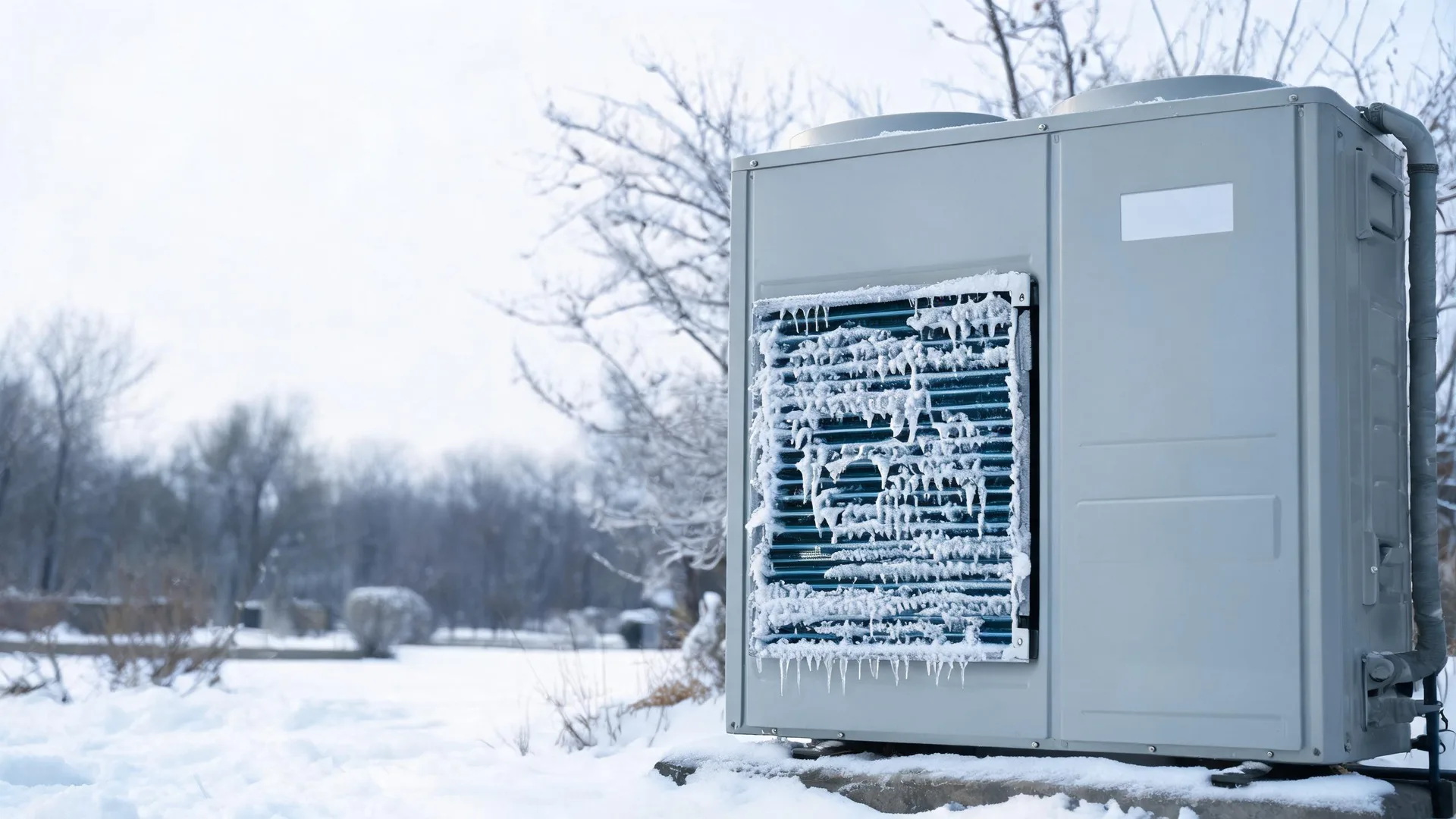
Before anyone comes out, check the thermostat first. Make sure it's set to cool and set below room temperature, and swap the batteries if it uses them. Next look at the air filter. A filter clogged with dust can choke airflow enough to make the system struggle or ice up, and it's something you can see just by pulling it out and holding it to the light. Outside, check the condenser unit. Grass clippings, leaves and dirt built up against the fins block airflow, and a dirty coil can't shed heat the way it needs to. Look for ice on the refrigerant lines or the indoor coil too. If you see frost, shut the system off and let it thaw completely before anyone touches it, since running it iced up can damage the compressor. Check the breaker panel as well. A tripped breaker will shut the whole system down and it's a simple flip to test. If the outdoor unit is dead quiet, the air handler runs, and the vents only blow room-temperature air, that points to something sealed inside the system that none of these checks will reach.

A frozen coil left running kills the compressor

Once ice builds up on the indoor coil, airflow drops even further and the system pulls in warmer, wetter air to try to compensate. That lets liquid refrigerant back up into the compressor instead of boiling off like it should. A compressor built to pump gas isn't built to pump liquid, and it can take lasting damage in the time it takes someone to notice the vents have gone warm.

A small refrigerant leak only grows

A system low on refrigerant runs its compressor harder to make up for it, and heat that should be building the leak worse under that extra pressure. What starts as a slow leak that still cools the house some days can turn into one that empties the lines completely. Shutting the system off when you notice warm air doesn't fix the leak, but it stops feeding the problem until someone can find it.

An outdoor air conditioning condenser unit positioned beside a blue-sided house at sunset.

A new air conditioner would save little on running costs in Summit County, so the repair decision comes down to the unit's condition.

  • An older air conditioner$0 a year
  • A new one at the federal minimum, 13.4 SEER2$0 a year

Estimates for a typical Summit County home, compared with an older unit built to the previous federal minimum, from EIA household energy data, Colorado fuel prices and NOAA climate normals. Your home will differ.

Repair makes sense when a part like a capacitor or contactor has failed.

Replacement makes sense when the compressor has failed or the system uses R-22 refrigerant, which is no longer made.

A diagnostic call starts outside, at the condenser. The technician checks for power at the unit, watches whether the fan and compressor actually kick on, and listens for the hum of a contactor trying to close. Gauges go on the refrigerant lines next, since pressure readings say more about what's wrong than anything visible from outside. Inside, they'll pull the panel on the air handler and test the capacitor and run capacitor with a meter rather than guess from how old it looks. If the coil's been frozen, they want it fully thawed before they touch any of this, since readings taken on a frozen system don't mean anything. By the time the gauges come off, they usually know whether they're replacing a part or chasing a leak.