






Overhead view of a gray outdoor AC condenser unit on a concrete pad beside a mulched garden bed and a house with vinyl siding.

AC Repair in Rifle, CO

Tell us about the job

Takes about a minute. No obligation.

RepairCentral ACGarfield County, CO
Step 1 of 2

What ZIP code is the job in?

Garfield County saw 405 severe weather events between 2015 and 2024. Winter storms accounted for 258 of those, and damaging wind hit the county 144 times in the same stretch. That kind of wind carries branches and grit into an outdoor condenser, bending fins and fouling the coil even when the unit keeps running. Hail is rarer here, only 3 events in that span, but it still happens, and a dented cabinet can mean a bent fan blade inside. If your unit sat through a bad storm, have it looked at even if the air coming out still feels cold.

77°F
the average summer afternoon it cools against
3 hail events
in ten years, and hail bends the fins on outdoor coils
144 wind events
in ten years, and wind drives debris into outdoor units
Isometric cutaway illustration of a house showing interior ductwork, an air handler and furnace unit, and an outdoor condenser connected by lines outside the wall.
Your air conditioner works hardest from July through August.

NOAA nClimDiv, 1991–2020 normals

Half the homes in Garfield County were built in 1993 or later.

A system installed with a newer house usually still has years of life left in it.

77 degrees doesn't ask much of a compressor

Summer afternoons average 77°F
144 damaging wind events from 2015 to 2024
3 hail events from 2015 to 2024

If your air conditioner is still the one that came with the house, repair is worth calling before replacement. A unit that age has usually got years left in it, and a broken capacitor or a failed run of refrigerant doesn't mean the whole system is done. Have the technician check the age and condition of the unit before deciding anything bigger. If the house is one of the older ones in the county, ask the same question anyway. It costs nothing to find out what you're actually working with.

If the storm got to the unit, get it checked before you decide it's fine

A system that still runs after a bad storm hasn't necessarily come through clean. Wind-driven debris can bend fins and foul the coil without stopping the unit, and a dented cabinet can mean a bent fan blade inside. Have it looked at now, before the next hot stretch finds the problem for you.

Find a contractor
A man in a cap, dark shirt and tan pants walks up porch steps toward a red front door, carrying a brown canvas tool bag, with a potted shrub beside the entry.
A gray metal air conditioning condenser unit mounted on a concrete pad in a flat grassy field under a partly cloudy sky.

It hasn't worked that hard to get here

Count the hours this unit actually works against heat alone. Afternoons sit around 77 degrees across June, July and August, and that's the whole job most summers. A compressor that only has to fight mild heat doesn't wear the way the same unit would somewhere hotter. The storms are a separate matter, and worth checking for on their own. But if nothing's hit it and something still goes wrong, a capacitor, a contactor, a low charge, that's more likely age catching up with a part than the machine being run into the ground. Worth knowing before you decide what to do about it.

What the unit itself tells you

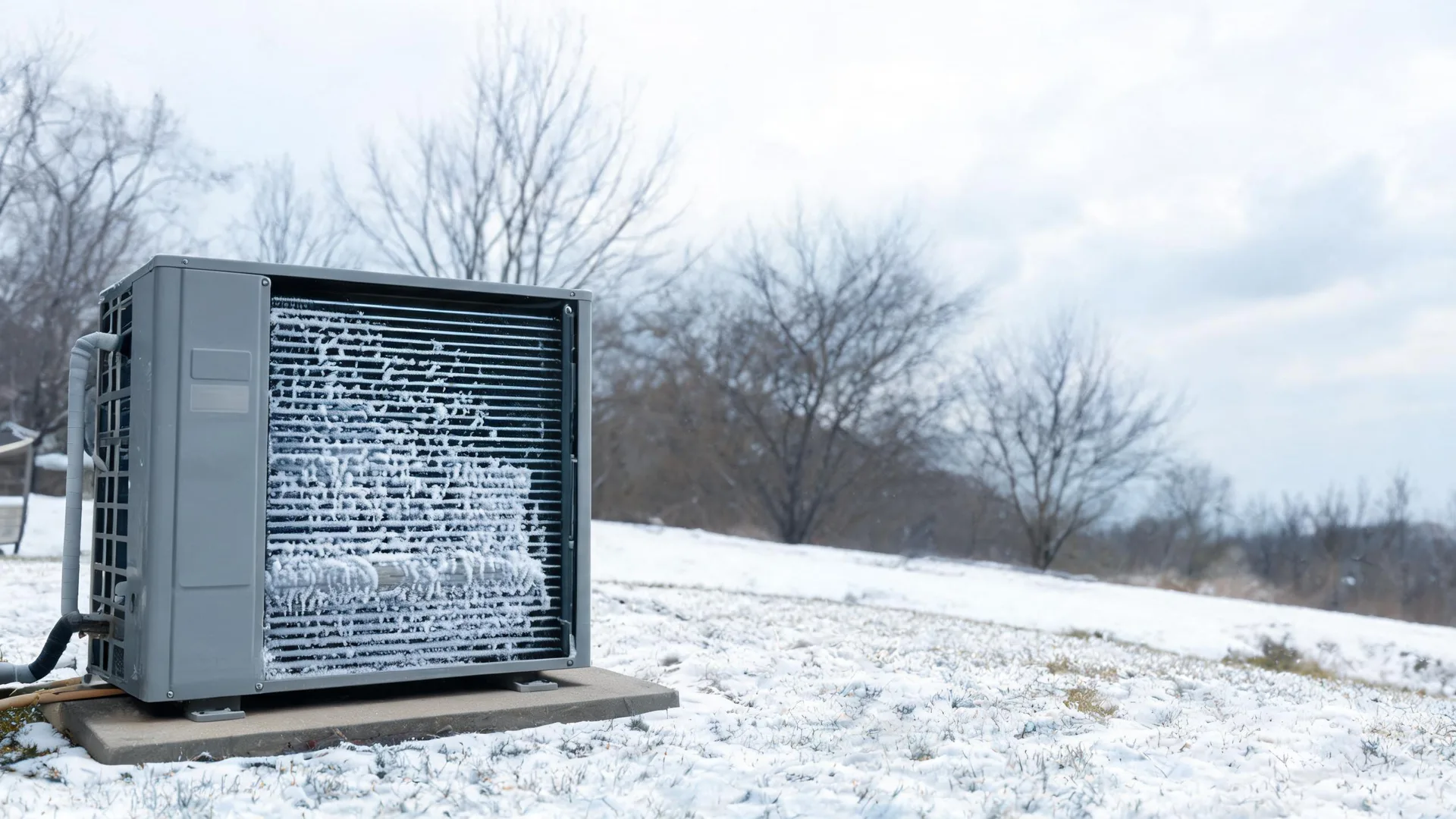
Warm air out of the vents, ice on the coil, a smell when it kicks on, or a hum with no air moving all point to something specific. Short cycling, where the unit shuts off a minute or two after starting, usually means a sensor or a refrigerant problem, not just a dirty filter. A unit that runs constantly without the house cooling down is losing the fight somewhere, often the compressor or the charge.

What that means for the call

Noise and smell matter more than most homeowners think. A grinding or screeching sound means a motor bearing is going. A burning smell means wiring or a motor winding, and that one can't wait. A musty smell usually just means the coil or drain pan needs attention. Tell the technician exactly what you heard or smelled and when it started, it points them straight at the problem instead of making them hunt for it.

An outdoor air conditioning condenser unit mounted on a concrete pad next to a blue-sided residential house at sunset.

A new air conditioner would save little on running costs in Garfield County, so the repair decision comes down to the unit's condition.

  • An older air conditioner$70 a year
  • A new one at the federal minimum, 13.4 SEER2$70 a year

Estimates for a typical Garfield County home, compared with an older unit built to the previous federal minimum, from EIA household energy data, Colorado fuel prices and NOAA climate normals. Your home will differ.

Repair makes sense when a part like a capacitor or contactor has failed.

Replacement makes sense when the compressor has failed or the system uses R-22 refrigerant, which is no longer made.

Age is one way to judge a repair call, but how the unit has been treated matters just as much. A compressor that's been short on refrigerant for a season runs hotter than it should, and that shortens its life even if the unit is young. A coil that's stayed dirty wears the system down the same way. So two units of the same age can be in very different shape. A good technician checks the compressor and the coil condition directly instead of guessing from a manufacture date. If those parts still look sound, a repair holds up fine. If the compressor is already strained, replacing one part just means the next one fails soon after.