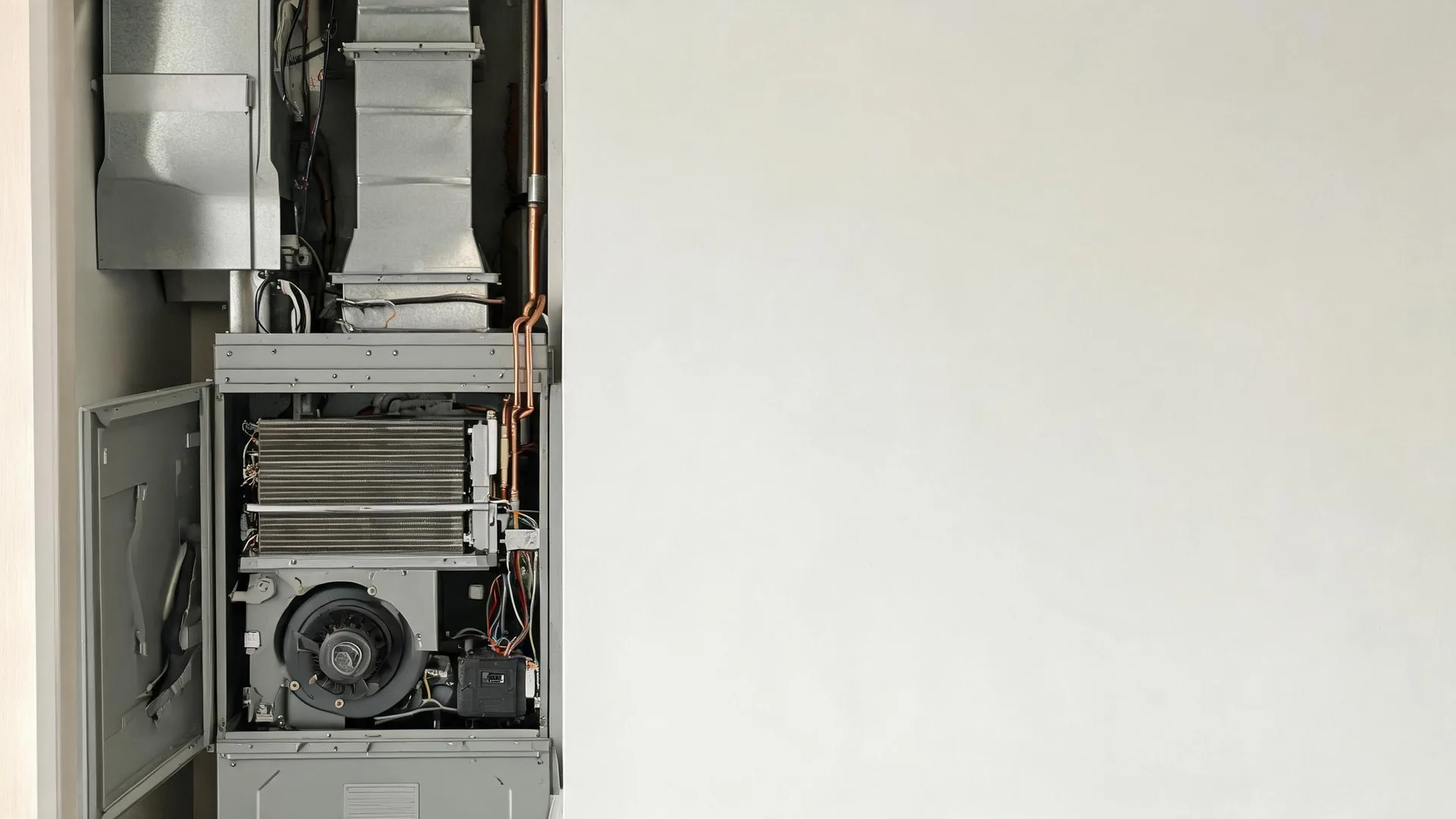
June is when weak systems show up
Cooling in Pueblo County starts in June after sitting idle since last summer. Whatever was borderline in August tends to fail in the first real heat, not months into the season.
Takes about a minute. No obligation.
Cooling in Pueblo County starts in June after sitting idle since last summer. Whatever was borderline in August tends to fail in the first real heat, not months into the season.
The season only runs June through August here, about three months. Having an AC checked in May means a repair gets done before the first hot week, instead of during it.

NOAA nClimDiv, 1991–2020 normals
Pueblo County summers run about three months, June through August, with afternoon highs averaging 88.
A system here isn't fighting the weather. If it's struggling, the cause is wear or a part failing, not the climate.



A technician looking at an older AC isn't just checking if it still cools. They're checking what it would take to keep it cooling. A capacitor or a contactor is a straightforward swap, worth doing no matter the age of the unit. A failing compressor or a coil leaking refrigerant is a different question, because that's the heart of the system, and once it's going, other parts tend to follow soon after. The pattern worth knowing is repeat failures. One repair in a season is normal wear. A second or third on the same unit usually means the system is telling you it's done, one part at a time.
A broken AC in Pueblo almost always comes down to one worn part, not the heat. Electricity here runs 14.92 cents per kilowatt-hour, so a system cooling harder than it should costs more every day it keeps running that way. Getting the actual cause found and fixed stops that.
Find a contractor
Most AC problems show themselves before the system quits outright. Warm air coming out of the vents while the unit still runs usually points to a refrigerant leak or a failing compressor. Short cycling, where the system turns on and off every few minutes instead of running a full cycle, is often a bad thermostat sensor or a unit that was never sized right for the space. A fan that runs but barely moves air can mean a failing motor or a blower wheel caked with dirt. Ice on the indoor coil is not a sign the system is working hard. It means airflow is restricted, often a dirty filter or a low refrigerant charge, and running it more only builds the ice up. Grinding, squealing or a hard metallic bang when the compressor kicks on are sounds worth stopping for, not sounds to wait out. Water pooling near the indoor unit points to a clogged condensate line, which seems minor until it backs up and trips a safety switch that shuts the whole system down. None of these fix themselves by running the system less. Left alone, a small electrical fault or a refrigerant leak tends to take out a bigger part next.
A compressor needs refrigerant to stay cooled while it runs. As the leak drains the charge, the compressor keeps running hotter each cycle, and that heat is what wears out its internal parts. The leak doesn't pause because the system is still running. It gets smaller by volume and larger in effect the longer the unit stays on.
When the outdoor coil is caked with dirt, the system can't shed heat properly, so the compressor works harder to do the same job. That extra strain is cumulative. A compressor that runs hot for one afternoon usually survives it. One that runs hot all season is the one that fails.
Estimates for a typical Pueblo County home, compared with an older unit built to the previous federal minimum, from EIA household energy data, Colorado fuel prices and NOAA climate normals. Your home will differ.
Repair makes sense when a part like a capacitor or contactor has failed.
Replacement makes sense when the compressor has failed or the system uses R-22 refrigerant, which is no longer made.
A diagnostic visit starts outside, at the condenser, before anyone touches the thermostat. The tech checks refrigerant pressure, amperage draw on the compressor, and whether the contactor and capacitor are holding up under load. Inside, they'll pull the filter, check airflow across the coil, and look for ice or buildup that points to a restriction rather than a failing part. They'll run the system through a full cycle if they can, because some problems only show up once the compressor has been working for a few minutes, not at startup. A gauge reading or a wiring fault tells them what's actually wrong, instead of guessing from the symptom alone. The goal is to find the one part behind the problem, not to replace things until something works.