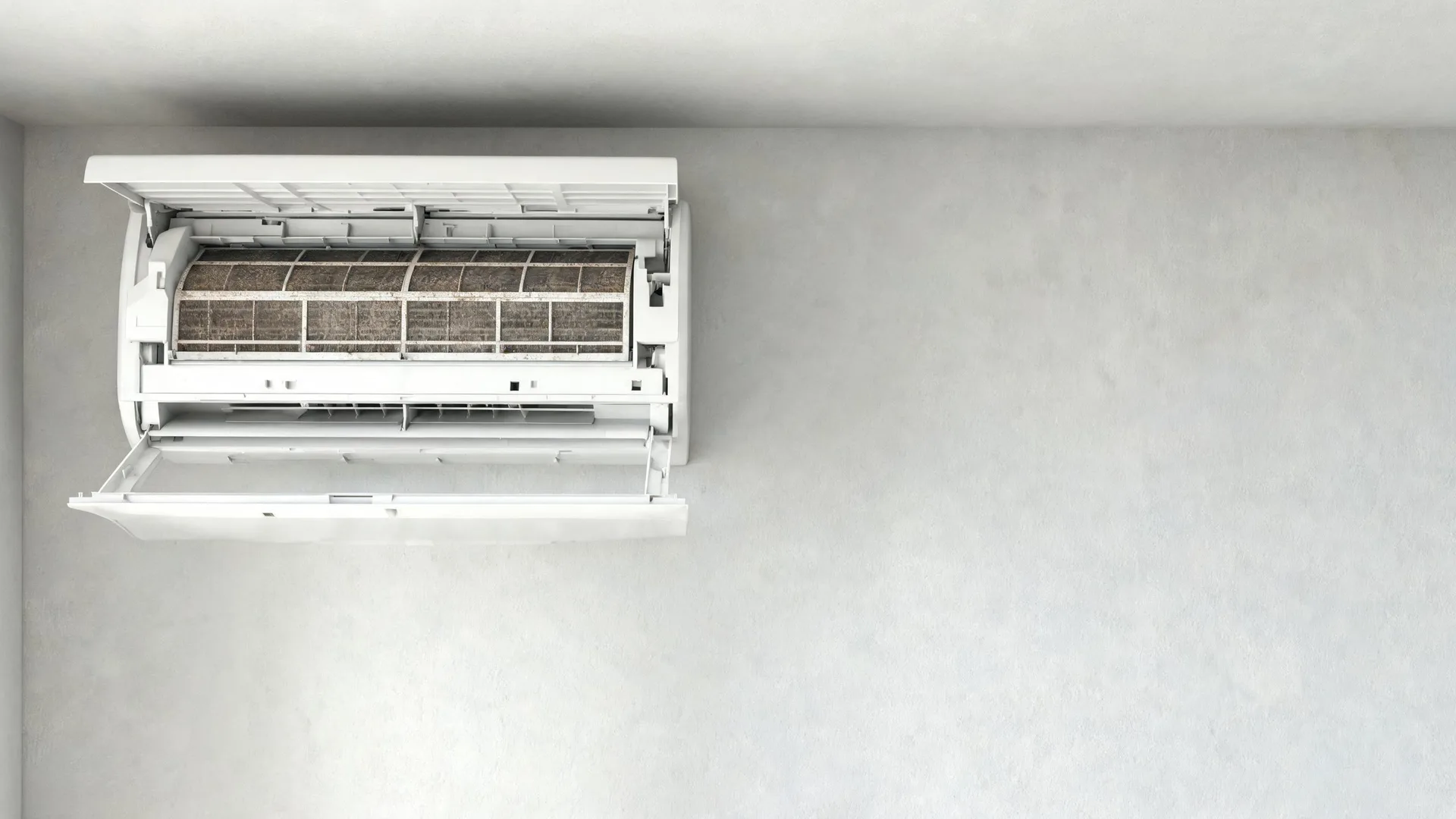
A low charge gets lower
A refrigerant leak doesn't hold steady. Running the system with a low charge pulls the compressor down to temperatures and pressures it wasn't built for, so a leak that was small becomes a compressor that needs replacing.
Takes about a minute. No obligation.
Warm air coming out of the vents when the thermostat is set cold usually means the compressor isn't keeping up or the refrigerant charge is low. A unit that short cycles, turning on and off every few minutes instead of running a full cycle, is often struggling with a dirty coil or a failing capacitor. Pay attention to sound too. A hard clunk at startup or a high-pitched squeal points to a motor bearing wearing out, and that part won't fix itself. Water pooling near the indoor unit means the condensate line is clogged or the drain pan has rusted through. None of these get better by waiting. A system that's working harder than it should is also pulling more power to do the same job.
NOAA nClimDiv, 1991–2020 normals
A weak capacitor can't give the compressor or fan motor the jolt they need to start.
A compressor that struggles to start wears out faster, even if it still runs most days.




If your AC is one of the parts that came with the house, a repair call makes sense before you think about replacing anything. A compressor or capacitor that's a few years old has no business failing for good when one part can be swapped. Ask whoever comes out how old the outdoor unit actually is, since the sticker on it will say. If it turns out the system is old and was never replaced when the house changed hands, that changes the math, but there's no reason to assume that before you know it.
If your system came with a newer house, it likely has plenty of life left. Repair is usually the right call.
Find a contractorBefore anyone comes out, check the easy things first. Look at the air filter. If it's gray with dust or you can't see light through it, swap it, since a clogged filter starves the system of airflow and can make it freeze up or run the compressor harder than it should. Go outside and look at the condenser unit. If leaves, grass clippings or seed fluff are packed into the fins, clear them away so the coil can breathe. Check the thermostat batteries and make sure it's set to cool, not just fan. Look under the indoor unit or around the furnace for a shutoff float switch that's tripped. That's a safety that kills the system when the condensate line backs up, and it means the line needs clearing before the system will run again. If the outdoor unit isn't turning on at all, check the breaker before assuming the worst. None of this fixes a bad capacitor or a low refrigerant charge, but it rules out the things that look like a broken system and aren't.
A refrigerant leak doesn't hold steady. Running the system with a low charge pulls the compressor down to temperatures and pressures it wasn't built for, so a leak that was small becomes a compressor that needs replacing.
Once ice forms on the indoor coil, airflow drops further and more ice builds behind it. Keep the system running in that state and the compressor can take in liquid refrigerant instead of gas, which is one of the faster ways to kill it.
Estimates for a typical Archuleta County home, compared with an older unit built to the previous federal minimum, from EIA household energy data, Colorado fuel prices and NOAA climate normals. Your home will differ.
Repair makes sense when a part like a capacitor or contactor has failed.
Replacement makes sense when the compressor has failed or the system uses R-22 refrigerant, which is no longer made.
Age is the real question, not what's wrong today. A capacitor or a fan motor is a part like any other part, and swapping it brings the system back to normal. There's no reason to replace a unit over a failure like that. What changes the math is a compressor on its way out, or a coil so corroded it leaks faster than it can be patched. Those sit inside the cabinet and cost close to what a new system would, so paying to fix them rarely makes sense. A tech who's been inside the unit can tell you which kind of problem you have, since they look a lot alike from the thermostat.