Montrose sees a lot of weather
Montrose County logged 260 severe weather events between 2015 and 2024. Most of that was winter storms, 202 of them, plus 53 damaging wind events and 4 hail events.
Takes about a minute. No obligation.
Montrose County logged 260 severe weather events between 2015 and 2024. Most of that was winter storms, 202 of them, plus 53 damaging wind events and 4 hail events.
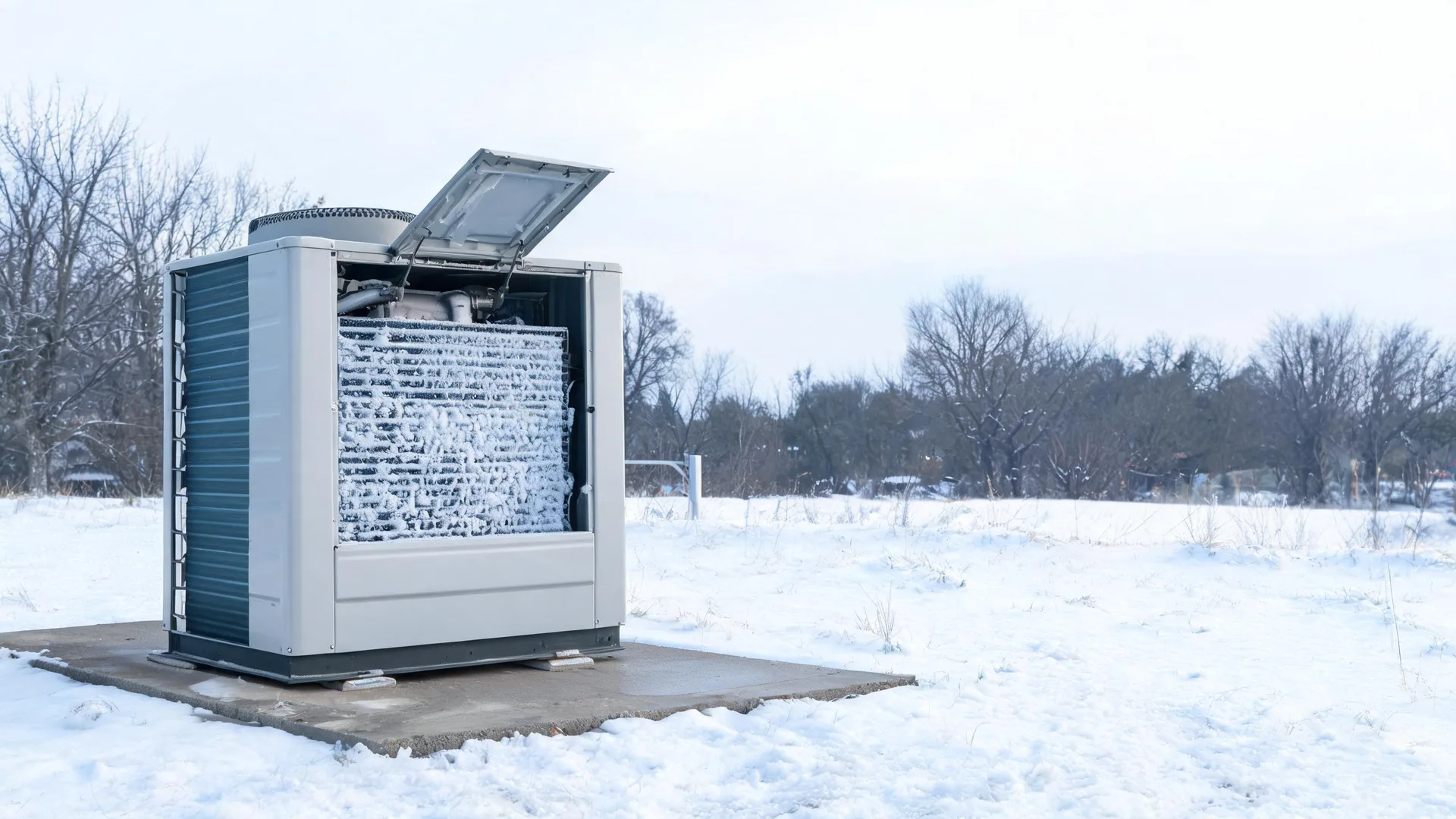
Your condenser sits outside through all of it. Wind-blown debris and hail can bend the fins or crack the fan blade without stopping the unit from running. A system that still starts up isn't necessarily one that came through clean.

NOAA nClimDiv, 1991–2020 normals
Cooling runs about two months here, July and August.
A part that was already weak from winter storms or wind-blown debris often fails in those first July weeks, right when the heat load hits it hardest.



Half the homes in Montrose County were built in 1991 or later. If yours is one of them, and the system hasn't been swapped out since, it's probably not as old as you'd guess from a bad week. A compressor that's a few years old and one that's near the end are two different conversations. Most of what goes wrong after a storm or a hard freeze is a bent fin, a tripped capacitor, or a wire that worked loose, not a dead unit. Worth finding out which one you've got before you write it off.
A condenser that starts up after a storm hasn't necessarily come through clean. Bent fins and a cracked fan blade don't always stop a unit from running, they just stop it from running right. Worth having it looked at before summer puts real load on it.
Find a contractor
Figure a couple months of real work each summer. Over several years that's still a light duty cycle for a compressor, nowhere near what the same unit would see in a hotter state. If your house dates to the newer half of the county, that compressor hasn't logged much more than a handful of those two-month runs. Low hours plus a newer system is a good reason to get a part fixed rather than start pricing a new unit.
Warm air from the vents, ice on the copper line, a hard clicking when it tries to start, water pooling by the indoor unit. Any one of these means something specific is wrong, a low charge, a failing capacitor, a clogged drain line, and none of them clear up on their own.
A healthy air conditioner hums. A new rattle, squeal, or grinding sound means a part has come loose, worn out, or is about to fail outright. Shutting it off and getting it looked at beats running it until that part takes something else down with it.
Estimates for a typical Montrose County home, compared with an older unit built to the previous federal minimum, from EIA household energy data, Colorado fuel prices and NOAA climate normals. Your home will differ.
Repair makes sense when a part like a capacitor or contactor has failed.
Replacement makes sense when the compressor has failed or the system uses R-22 refrigerant, which is no longer made.
At some point a repair stops making sense and replacement takes over, but age alone doesn't decide it. What matters is the compressor. If that's still sound, a failed capacitor or a blown fan motor is just a part swap, and the unit goes back to running like it did before. Once the compressor itself is failing, on the other hand, you're paying to patch a system that's already on its way out, and the next thing will go soon after. A tech can tell you which situation you're in by checking the compressor's amp draw and how it's cycling, not by guessing from the unit's age. That's the conversation worth having before you decide anything.