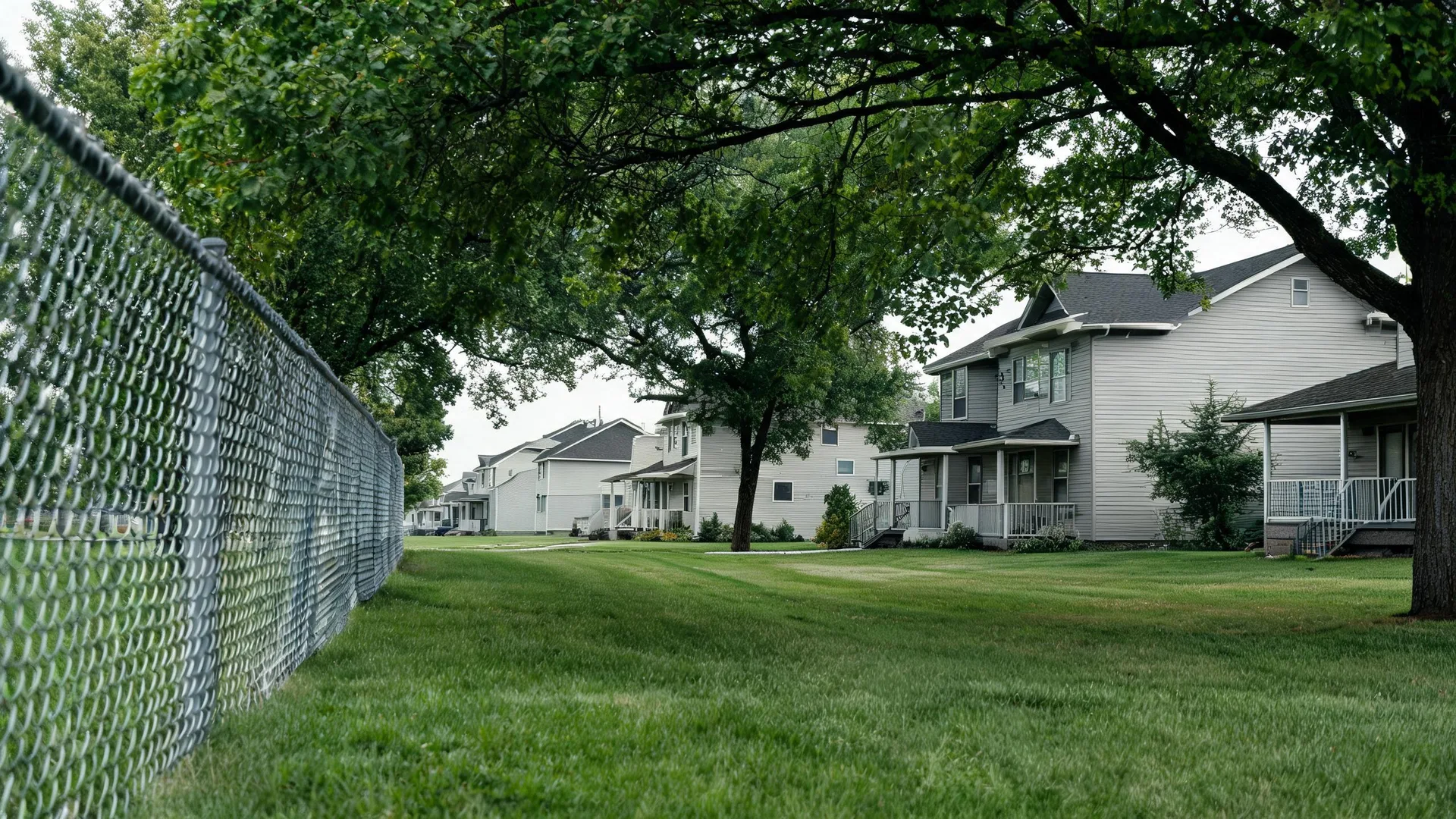







A chain-link fence runs along the left edge of a mowed grass lawn beside a row of light gray two-story houses with porches, shaded by large leafy trees.

AC Repair in Lamar, CO

Tell us about the job

Takes about a minute. No obligation.

RepairCentral ACProwers County, CO
Step 1 of 2

What ZIP code is the job in?

Prowers County saw 271 severe weather events between 2015 and 2024. Hail accounted for 115 of them, wind damage another 132, and the county took 8 tornadoes in that same stretch. An outdoor AC unit sits outside through all of it, with nothing but a thin fin coil and a fan housing between it and whatever comes down. Hail can bend those fins or crack the fan blade without stopping the unit from running that same day. A system that still turns on after a storm isn't necessarily a system that came through fine.

4 months
June through September, your air conditioner is on duty
91°F
the average summer afternoon it cools against
115 hail events
in ten years, and hail bends the fins on outdoor coils
132 wind events
in ten years, and wind drives debris into outdoor units
Isometric line illustration of a cutaway single-story building showing interior rooms, ceiling ductwork and an air handler, connected by lines to an outdoor condenser unit beside the exterior wall.
Your air conditioner works hardest from June through August.

NOAA nClimDiv, 1991–2020 normals

Your AC runs about four months a year here, but on a 91 degree afternoon it doesn't get a break in that stretch.

That kind of steady load wears parts down faster, so what looks like a random breakdown is usually just a part that gave out early.

June is when a weak part finally gives out

Cooling runs June through September
Summer afternoons average 91°F
132 damaging wind events from 2015 to 2024
An older home can mean an older ACHalf the homes in Prowers County were built in 1971 or earlier.

If your AC is acting up right now, don't assume it's something new. A part that's been weakening all summer tends to let go once the heat sits at 91 degrees day after day with no break. That's worth telling the contractor when they come out, since it points them toward wear rather than a one-off glitch. It's also worth mentioning if the unit has taken any hail or wind lately, even if it kept running afterward. A bent fin or a cracked blade doesn't always stop the system that same day, but it can be what's behind the problem now. Getting the actual cause checked, instead of just getting it running again, is what keeps the same failure from coming back in August.

If your AC has been through a storm, get it checked even if it still runs

Hail and wind have already been named as the likely cause on this page. If the outdoor unit has taken either recently, a contractor can check the coil fins and fan blade for damage that doesn't stop the system from running right away. That's a quick thing to rule out before anything else.

Find a contractor
A man in a dark jacket, tan pants and a cap, seen from behind, carries a worn canvas tool bag up wooden porch steps toward a red front door.
An outdoor air conditioning condenser unit mounted on a concrete pad surrounded by gravel, photographed against a partly cloudy blue sky.

Running it while something's wrong turns a repair into a replacement

A struggling AC rarely fails clean. A compressor working against a low charge or a dirty coil draws more current than it should, and heat starts building up in places it shouldn't. Keep running it in that state and the motor windings take the damage, or the compressor seizes outright. A blower straining against a clogged filter behaves the same way, pulling more amps to push the same air, until the motor overheats and trips out for good. None of that happens on the first hour of strain. It happens on the fifth or the tenth, after the part has been running hot longer than it was built for. Shutting the system off when something sounds wrong, smells off, or trips the breaker more than once is what keeps a bad capacitor from taking the compressor down with it.

What you can check yourself

Look at the thermostat first. Make sure it's set to cool and set below room temperature, and swap the batteries if the screen is dim or blank. Check the breaker panel for a tripped switch. If the outdoor unit is silent, flip the breaker off and back on once, but if it trips again, leave it off and don't keep resetting it. Pull the filter and hold it up to a light. If you can't see light through it, replace it. A filter that's choked off can mimic a much bigger problem.

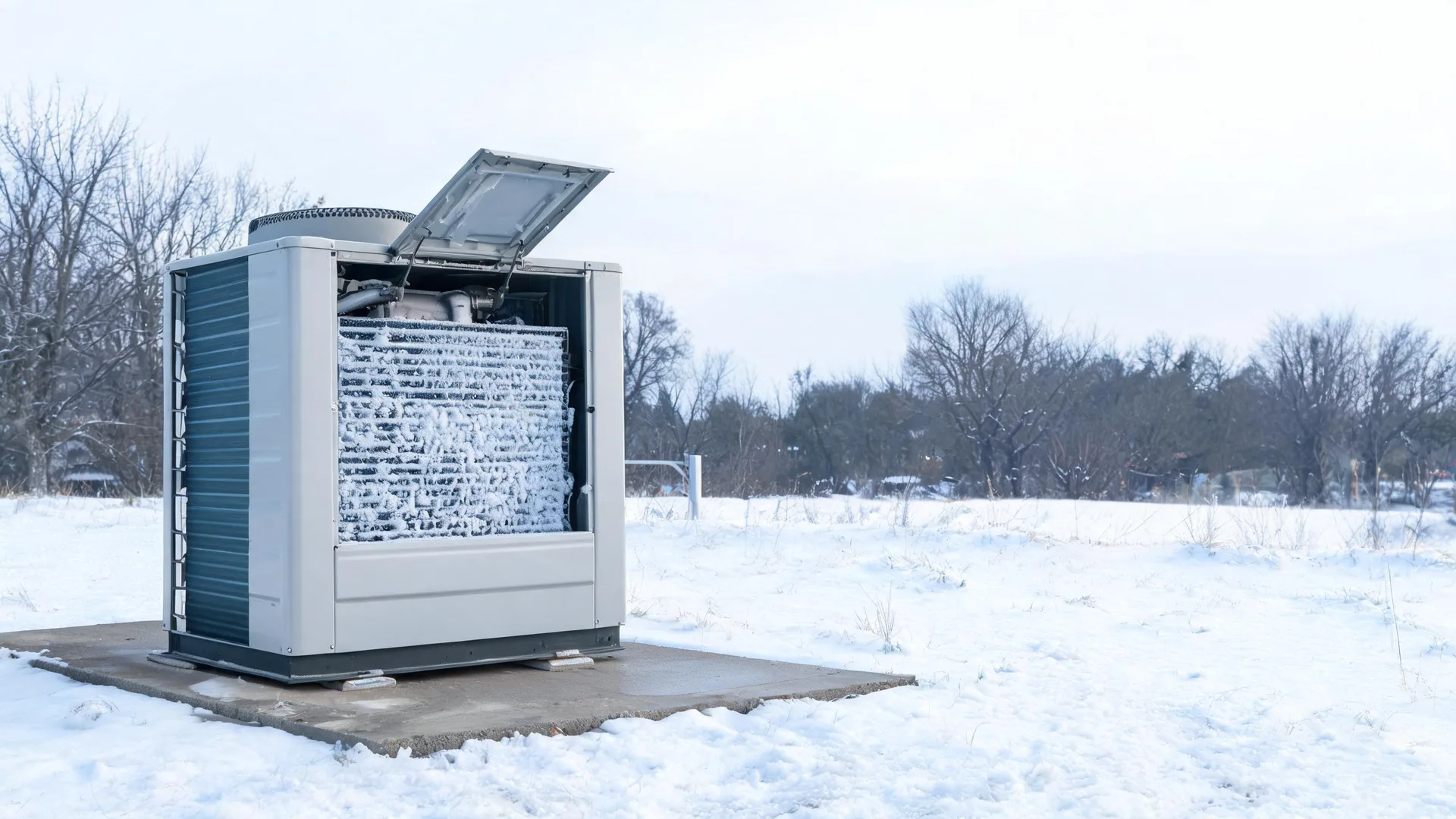
What to leave alone

Don't pull the panels off the outdoor unit or touch anything inside the indoor cabinet. The capacitor in that outdoor unit can hold a charge even with the power off. If the coil outside looks dirty, a gentle rinse with a hose from the outside in is fine, but skip it if you're not sure which way the fins run. If the system is tripping the breaker, blowing warm air, or making a grinding or clicking noise, that's the point to stop and call, not to keep testing.

Aerial view of a gray outdoor air conditioning condenser unit mounted on a concrete pad next to a house with vinyl siding.

A new air conditioner would cut about $40 a year off cooling for a typical Prowers County home.

  • A new one at the federal minimum, 13.4 SEER2$480 a year
  • An older air conditioner$520 a year

Estimates for a typical Prowers County home, compared with an older unit built to the previous federal minimum, from EIA household energy data, Colorado fuel prices and NOAA climate normals. Your home will differ.

Repair makes sense when a part like a capacitor or contactor has failed.

Replacement makes sense when the compressor has failed or the system uses R-22 refrigerant, which is no longer made.

A diagnostic visit starts before any panel comes off. A tech will ask what the system was doing, what it sounded like, and when it started, because that narrows down where to look first. Then comes gauges on the refrigerant lines, a check of the capacitor and contactor in the outdoor unit, and a look at the coil fins and fan blade for anything bent or cracked. Amp draw on the compressor and blower motor gets checked too, since a motor pulling more current than it should is usually a motor that's been struggling for a while. Inside, the evaporator coil and blower wheel get a look, along with the filter if it's still in place. The point of all that isn't just to get the system running again. It's to find the part that's actually failing, so the fix holds instead of calling someone back out in a few weeks.