





An overhead view of a residential air conditioning condenser unit mounted on a concrete pad next to a house with vinyl siding.

AC Repair in La Junta, CO

Tell us about the job

Takes about a minute. No obligation.

RepairCentral ACOtero County, CO
Step 1 of 2

What ZIP code is the job in?

Summers here run June through September, with afternoon highs averaging 91 degrees. That's real work for an air conditioner, but it's not extreme, and nothing about La Junta summers should wear out a unit ahead of schedule. Hail and wind both show up in this county, and either can bend fins on an outdoor coil or knock a unit out of alignment. If your AC trouble started right after a storm, mention that to whoever comes out. Short of storm damage, a system that's cooling poorly or short cycling in weather like this is usually dealing with something ordinary. A weak capacitor. A low refrigerant charge. A dirty coil. Find the actual cause and the fix is usually straightforward.

4 months
June through September, your air conditioner is on duty
91°F
the average summer afternoon it cools against
54 hail events
in ten years, and hail bends the fins on outdoor coils
82 wind events
in ten years, and wind drives debris into outdoor units
Isometric cutaway illustration of a single-story house showing interior rooms, ceiling ductwork connected to an indoor air handler, and an outdoor condenser unit beside the exterior wall.
Your air conditioner works hardest from June through August.

NOAA nClimDiv, 1991–2020 normals

Cooling starts in June here, right after a May that asks nothing of the system.

The first hot stretch is when a weak part finally gets found out, so trouble in June is worth a quick look, not a wait and see.

Otero County weather explains some AC calls, not most of them

160 severe weather events from 2015 to 2024
13% of homes statewide lost power a day or more in 2024
82 damaging wind events from 2015 to 2024
An AC running on electricity, not luckColorado homes paid 14.92 cents per kilowatthour in 2024

Half the homes in Otero County were built in 1958 or earlier. If your AC came with a house that old, it's not the original unit, but it may still be the one installed decades ago by whoever owned it before you. An older system can still run fine, but parts wear differently once a unit's been in service a long time, and a repair that would be routine on a five year old AC can be the first sign the whole system is closing in on the end. Before you pay for a big repair, it's worth asking the contractor how much life is likely left in it.

Know what you're repairing before you pay for it

Ask about the age of the unit before you approve a repair, not after. A contractor can look at the system and tell you whether it's worth fixing or closer to the end of its run.

Find a contractor
A gray metal air conditioning condenser unit mounted on a concrete pad in a flat grassy field under a partly cloudy sky.

The system tells you before it quits

An air conditioner doesn't fail the moment something goes wrong. It struggles first, and the struggle usually shows up as a sound or a smell before it shows up as warm air. A hard clunk when the compressor kicks on. A hissing near the lines. A burning smell from the vents, which almost always means an electrical problem and is worth shutting the system off for until someone looks at it. Short cycling, where the unit turns on, runs a few minutes, and shuts off again, points at a different kind of trouble, often electrical or a refrigerant charge that's off. Ice on the indoor coil means airflow isn't getting through, whether that's a dirty filter, a failing blower motor, or something blocking the return. None of these mean the system is done. They mean something specific inside it needs attention, and the sooner it gets looked at, the less likely it is to take another part down with it.

What you can check yourself

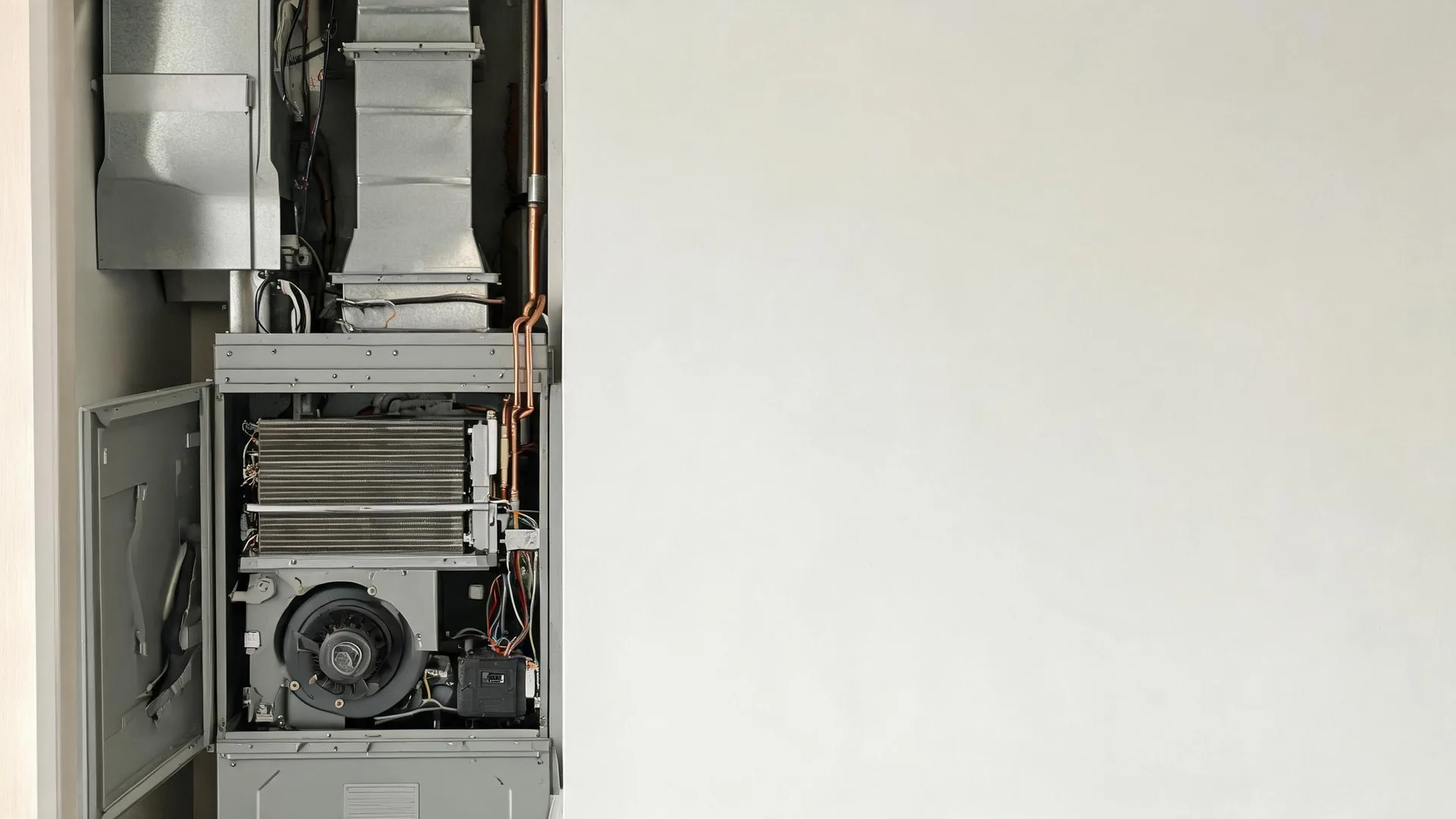
Look at the outdoor unit and clear anything pressed against it, leaves, grass clippings, a fallen branch. Check the thermostat is set to cool and set below room temperature, and swap the batteries if it uses them. Pull the filter from the air handler or furnace closet and hold it up to a light. If light doesn't pass through, that alone can starve the system of airflow and freeze the coil. These take a few minutes and rule out the simplest causes before anyone comes out.

What to leave alone

Don't pull the panels off the outdoor unit or reach into the electrical box. Don't add refrigerant, even with a gauge on hand, because the charge has to match what that system calls for and too much does as much damage as too little. If a breaker trips and you reset it and it trips again, stop there and call. A breaker that won't hold is telling you something is actually wrong.

An outdoor air conditioning condenser unit on a concrete pad next to the gray vinyl siding of a residential home.

A new air conditioner would cut about $40 a year off cooling for a typical Otero County home.

  • A new one at the federal minimum, 13.4 SEER2$440 a year
  • An older air conditioner$480 a year

Estimates for a typical Otero County home, compared with an older unit built to the previous federal minimum, from EIA household energy data, Colorado fuel prices and NOAA climate normals. Your home will differ.

Repair makes sense when a part like a capacitor or contactor has failed.

Replacement makes sense when the compressor has failed or the system uses R-22 refrigerant, which is no longer made.

A diagnostic visit starts with questions. When the trouble started, what the system was doing, whether anyone heard a sound or noticed a smell first. That history narrows things down before a panel ever comes off. From there a tech checks the electrical side, capacitor, contactor, wiring, since those fail often and fail in ways that look like bigger problems. Pressure gauges go on the lines to see whether the refrigerant charge is where it should be. Airflow gets checked too, at the filter, the coil, the return, because a system can have good electrical and good charge and still cool poorly if air isn't moving through it. By the end of the visit the cause should be named, not guessed at, and that's what decides whether the next step is a small repair or a harder conversation about the unit's age.