






Aerial view of a residential air conditioning condenser unit mounted on a concrete pad next to a house with vinyl siding and a sliding glass door.

AC Repair in Idaho Springs, CO

Tell us about the job

Takes about a minute. No obligation.

RepairCentral ACClear Creek County, CO
Step 1 of 2

What ZIP code is the job in?

Summers up here barely ask anything of an air conditioner. The afternoon high averages 68°F across June, July and August, and plenty of homes get by without cooling most of the year at all. A system running in air like that isn't fighting heat the way one in Denver or further east is. So when something does go wrong, it's rarely because the unit got run into the ground. More often it's a part that wore out on its own schedule, or something that sat unused long enough to seize up or leak. That's usually a straightforward fix, not a sign the whole system is done.

68°F
the average summer afternoon it cools against
3 hail events
in ten years, and hail bends the fins on outdoor coils
72 wind events
in ten years, and wind drives debris into outdoor units
Isometric line illustration of a cutaway house showing an indoor air handler with branching ducts in the attic space, connected by a line set to an outdoor condenser unit beside the building, with simple furniture in two rooms.

A struggling compressor still draws full power even when it can't keep up.

Let it run like that and the motor windings take the damage, not just your cooling.

Nothing up here runs an AC into the ground

Half the homes here were built by 1976
Summer afternoons average 68°F
72 damaging wind events from 2015 to 2024

If your AC is giving you trouble, that history is worth something when you call someone out. A technician isn't starting from scratch wondering if the compressor is just worn past its years, because up here it usually isn't. Worth checking first is whether the unit sat idle through a stretch of mild weather and something seized or a line dried out. Also worth a look is anything outside the unit itself. Clear Creek County saw 72 damaging wind events between 2015 and 2024, and wind throws debris into a condenser or knocks a unit out of level faster than it wears one out from the inside. Either way, it points to a repair, not a replacement.

It's usually worth repairing

It has an easier job here than in most places, so your air conditioner is often in decent shape. Repair is usually worth it.

Find a contractor
A man in a dark cap, dark long-sleeved shirt and tan work pants walks up porch steps toward a red front door, carrying a worn canvas tool bag.
An outdoor residential air conditioning condenser unit mounted on a concrete pad, surrounded by gravel with a blue sky in the background.

What actually wears out, and what just runs its course

A capacitor is what kicks the compressor and fan motor into motion, and it weakens a little with every start whether the unit runs hard or barely at all. Once it's too weak, the motor just hums without turning over. Contactors wear the same way, pitting and burning from repeated arcing until they stop making good contact. Refrigerant lines are different. They don't wear from use, they leak from a fitting or joint that was never quite tight enough, and that can happen to a unit that ran all season or one that sat idle. A system low on charge then makes the compressor strain to deliver cooling it can't quite reach, which is its own kind of damage on top of the leak. None of this tracks with hours logged. It happens on its own schedule.

What you'll actually notice first

Warm air out of the vents when the thermostat is calling for cool is the most common complaint. Sometimes the fan runs but nothing feels cold. Other times the outdoor unit won't come on at all, or it clicks and hums without starting. Short cycling, where it kicks on and off every few minutes instead of running a full cycle, is another one worth paying attention to.

What those signs are worth paying attention to

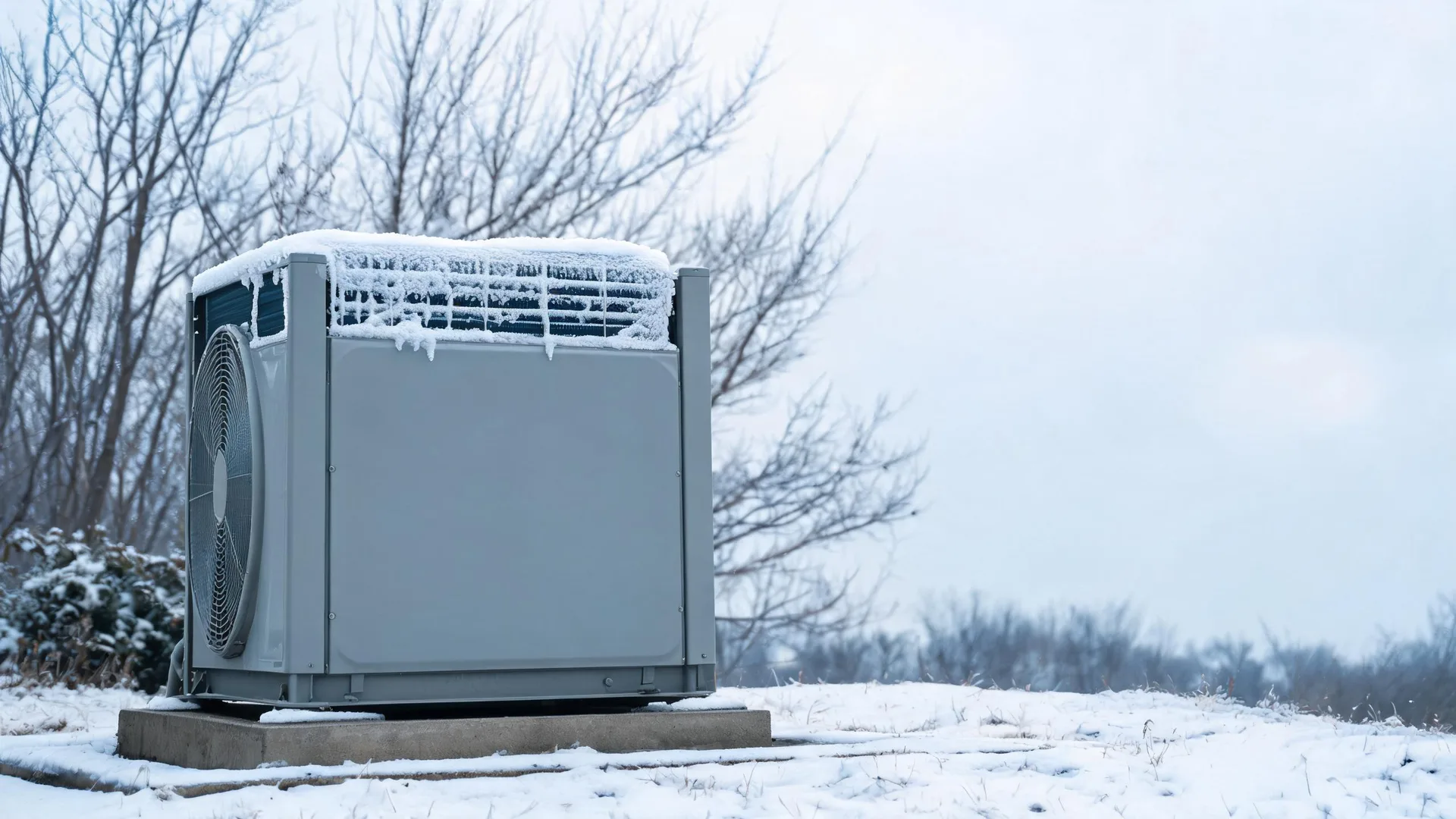
A hum with no start usually means the capacitor is too weak to get the motor turning, and that gets worse until it fails outright, so it's worth calling before it strands you on a hot afternoon. Warm air can mean low refrigerant or a failed compressor, and only a gauge set tells those apart. Ice on the lines or the indoor coil means stop running it until someone looks, since ice covers up several different problems at once.

Overhead view of an air conditioning condenser unit on a concrete pad next to a house with asphalt shingle roofing and vinyl siding.

A new air conditioner would save little on running costs in Clear Creek County, so the repair decision comes down to the unit's condition.

  • An older air conditioner$0 a year
  • A new one at the federal minimum, 13.4 SEER2$0 a year

Estimates for a typical Clear Creek County home, compared with an older unit built to the previous federal minimum, from EIA household energy data, Colorado fuel prices and NOAA climate normals. Your home will differ.

Repair makes sense when a part like a capacitor or contactor has failed.

Replacement makes sense when the compressor has failed or the system uses R-22 refrigerant, which is no longer made.

Age alone doesn't tell you whether to fix a unit or replace it. What matters more is what's actually failed and whether it's likely to be the only thing that fails soon after. A capacitor or contactor is a small, contained repair, and replacing one doesn't say anything bad about the rest of the system. A compressor is different. It's the most expensive part to replace and often costs enough on its own that putting in a new system makes more sense than rebuilding the old one around a new compressor. Refrigerant leaks sit in between. One fitting can be repaired on its own, but a system that's leaked once and been recharged before is worth asking about, since it may just leak again somewhere else. The honest question isn't how old the unit is. It's whether the part that failed is one failure or the first of several.