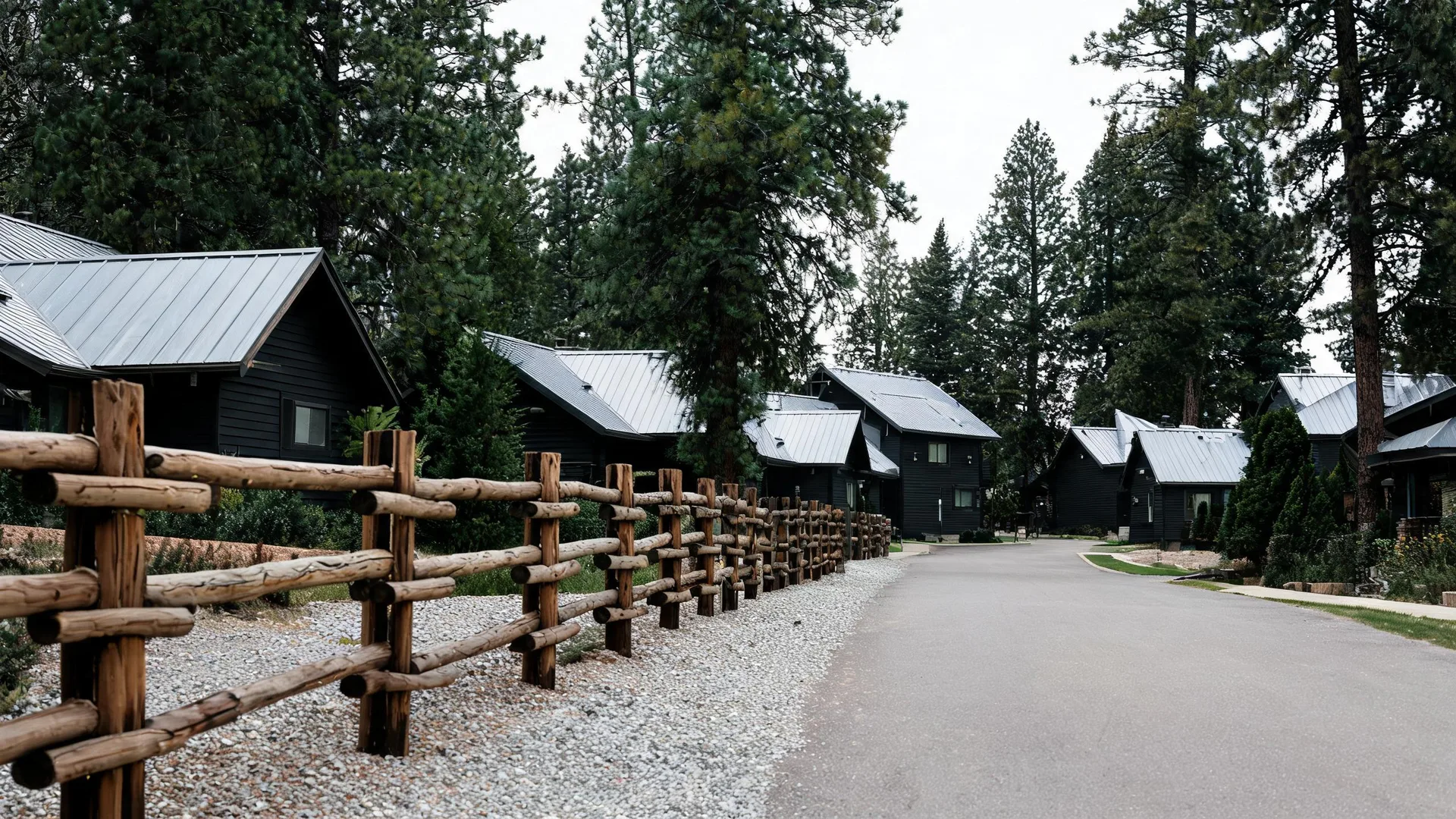
A paved road lined by a rustic wooden log fence and gravel leads past a row of dark-clad cabins with metal gable roofs among tall conifer trees under an overcast sky.

AC Repair in Gypsum, CO

Tell us about the job

Takes about a minute. No obligation.

RepairCentral ACEagle County, CO
Step 1 of 2

What ZIP code is the job in?

Mild duty most of the year

Afternoon highs around Gypwood average 73°F through June, July and August. The air stays dry too, with a dew point near 36°F on summer afternoons, lower than most of the country sees. An air conditioner here rarely gets pushed to run hard.


What that means for a repair call

A compressor or capacitor that's been running light for years usually has more life left than one worked hard every summer. If your AC is acting up, the cause is more likely age, dust, or something coming loose than years of strain. That kind of problem is usually worth fixing rather than replacing.

73°F
the average summer afternoon it cools against
28 wind events
in ten years, and wind drives debris into outdoor units
Isometric grayscale illustration of a cutaway house interior showing a furnace with ductwork, interior rooms with furniture, and an outdoor condenser unit connected by lines at the exterior wall.
Your air conditioner works hardest from July through July.

NOAA nClimDiv, 1991–2020 normals

An air conditioner rarely fails without warning signs first.

Short cycling, warm air from the vents, or ice on the lines all point to a specific part worth checking before anything gets replaced.

Half the homes here were built in 1993 or later, so a lot of these systems are still young

Half the homes here were built by 1993
Summer afternoons average 73°F
28 damaging wind events from 2015 to 2024

Most AC failures start small. A capacitor weakens over a few seasons until it can't kick the compressor or fan motor into gear, and the system hums or clicks without starting. Dirty coils make the whole system work against itself, since a coil caked with dust can't move heat the way a clean one does. Refrigerant doesn't get used up, so a low charge almost always means a slow leak somewhere in the line, not normal wear. A contactor can stick or burn from years of opening and closing, and that one part failing can leave the outdoor unit silent while the indoor blower keeps running. None of these show up overnight. They start as a sound, a smell, or a system that runs longer than it used to before any of them leave you without cool air.

A light workload for years means repair is usually the right call

A system that's had an easy summer workload for years usually still has good parts left in it. Whatever's causing the trouble now is worth finding before it's written off.

Find a contractor
A man in a dark shirt and tan work pants carries a worn leather tool bag up porch steps toward a red front door, with a potted shrub beside the entry.
A gray residential air conditioning condenser unit mounted on a concrete pad outdoors, surrounded by green grass under a partly cloudy blue sky.

A young system is worth a diagnosis before a replacement quote

If your house dates to 1993 or later, the system outside is likely still within its working life. That makes a repair call worth the time before anyone talks replacement. A tech can look at the part that's actually failing and tell you what shape the rest of the unit is in. For a system that hasn't been worked hard, that's usually good news.

What you can check yourself

Look at the outdoor unit first. Leaves, cottonwood fluff and grass clippings build up on the condenser coil and choke it off, and clearing them off by hand or with a hose can bring a sluggish system right back. Check the thermostat batteries and make sure it's set to cool, below room temperature. Go inside and look at the air filter. A filter packed with dust starves the system of airflow and can ice up the evaporator coil, so if it's gray and stiff, swap it. Check the breaker panel too. A tripped breaker on the AC circuit is sometimes the whole story.

What to leave alone

Don't pull the panel off the outdoor unit or touch anything inside the indoor air handler. Capacitors hold a charge even with the power off and can still give a shock. If you see ice on the refrigerant lines, turn the system off and let it thaw instead of chipping at it. Running the system with ice on the coil only makes the damage worse. If the breaker trips again right after you reset it, stop, that's a sign of a real electrical fault and flipping it back and forth won't fix anything.

An outdoor air conditioning condenser unit on a concrete pad next to the gray vinyl siding of a residential home.

A new air conditioner would save little on running costs in Eagle County, so the repair decision comes down to the unit's condition.

  • An older air conditioner$10 a year
  • A new one at the federal minimum, 13.4 SEER2$10 a year

Estimates for a typical Eagle County home, compared with an older unit built to the previous federal minimum, from EIA household energy data, Colorado fuel prices and NOAA climate normals. Your home will differ.

Repair makes sense when a part like a capacitor or contactor has failed.

Replacement makes sense when the compressor has failed or the system uses R-22 refrigerant, which is no longer made.

When a tech looks at an AC that's acting up, the question is always whether the part that failed is one part or a sign the whole system is worn out together. A capacitor, a contactor, a blower motor, these fail on their own schedule and swapping one doesn't tell you anything about the rest. A compressor is different. If that's going, it's usually because the system ran hard for years, and other parts are often close behind it. The age of the unit matters less than how it was used. A unit that's been running clean and easy tends to fail one part at a time, and each of those is a repair, not a reason to replace the whole system. Replacement starts making sense when the compressor itself is the problem, not before.