Check the thermostat first
Make sure it's set to cool and set below room temperature, and swap the batteries if it uses them. A thermostat that lost its setting or lost power can make a working AC look dead.
Takes about a minute. No obligation.
Cooling in Greeley runs June through August, and May is the month before it starts. Most breakdowns show up right after the system has sat idle since last summer, when a capacitor or contactor that was already weak gets asked to work hard again. If your AC made it through last August fine and is acting up now, the issue is almost always something specific, not general wear. Getting it looked at in May, before the heat starts, catches most of these before they turn into a no-cool day in June.
NOAA nClimDiv, 1991–2020 normals
Greeley runs its AC about three months a year, June through August, with afternoon highs near 86.
Three summer months is a normal workload for an AC system, so a breakdown now points to one specific part, not a system worn out from overuse.



Half the homes in Weld County were built in 2001 or later. If yours is one of them, the AC probably isn't old enough to be the problem on its own. A system that age hasn't seen much wear, especially with any upkeep at all. A newer system with a bad capacitor or a stuck contactor is still a newer system underneath. Fixing the part that failed usually makes more sense than replacing the whole thing.
A repair call gets a straight answer. What failed, and whether it's worth fixing. For a system this age, it usually is.
Find a contractor
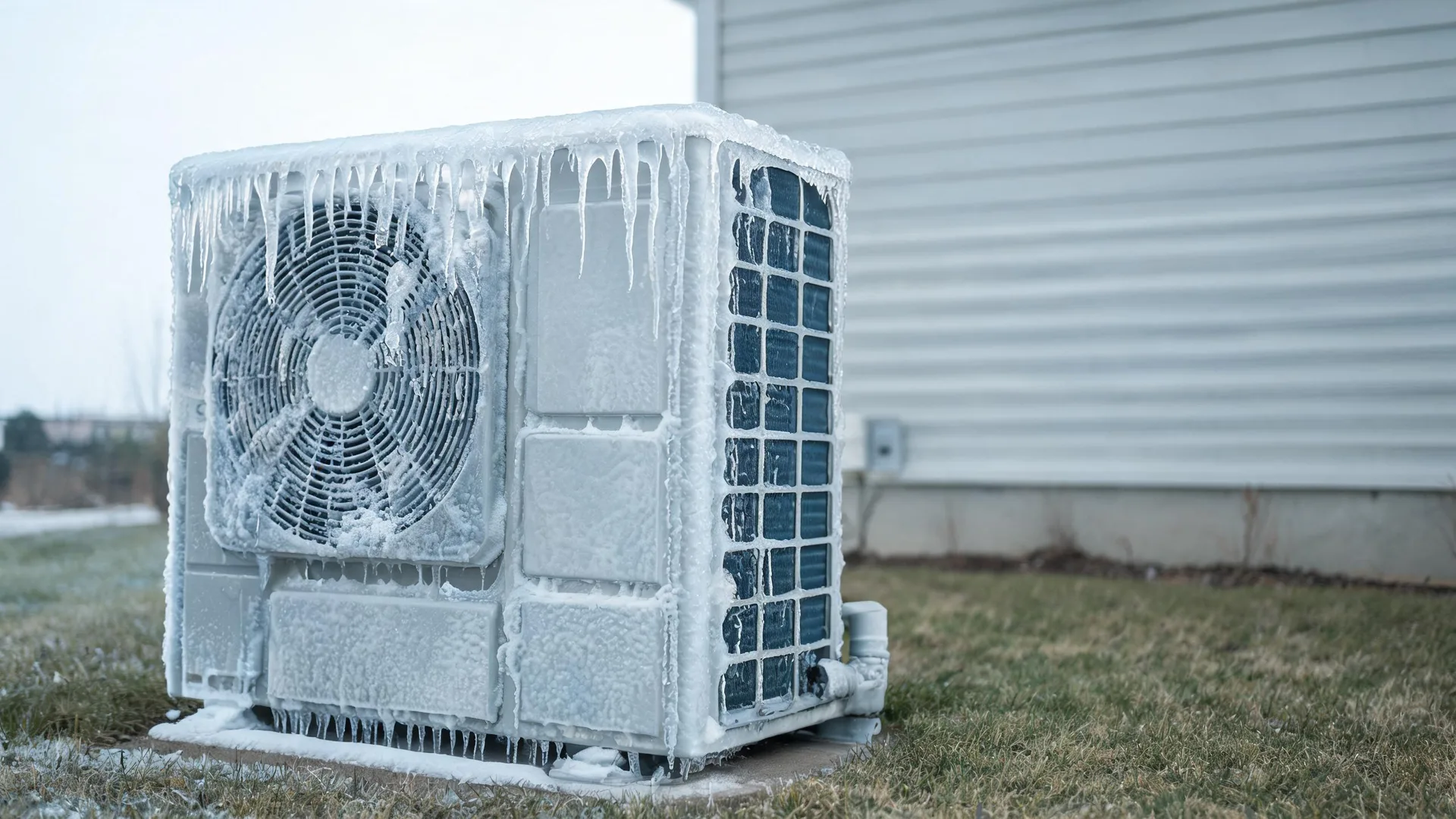
An AC that's struggling gives you warning before it quits outright. It runs longer than it used to, cycling on through the afternoon without the house ever catching up. The air coming out of the vents feels less cold than it should. You might hear it click and try to start, then hum without catching, which usually points to a weak capacitor. A hard clunk when it kicks on can mean a failing contactor. Ice on the copper line outside or on the indoor coil means an airflow or refrigerant problem, not something to run through and wait out. A system that shuts itself off shortly after starting is protecting itself from something that won't fix itself by waiting. None of this means the system is done. It means one part is asking for attention before it takes something else down with it.
Make sure it's set to cool and set below room temperature, and swap the batteries if it uses them. A thermostat that lost its setting or lost power can make a working AC look dead.
Walk outside and check that the condenser fan is spinning and not jammed with leaves or grass clippings. Check your breaker panel too. A tripped breaker that keeps tripping again after you reset it means an electrical problem, not something to keep resetting.
Estimates for a typical Weld County home, compared with an older unit built to the previous federal minimum, from EIA household energy data, Colorado fuel prices and NOAA climate normals. Your home will differ.
Repair makes sense when a part like a capacitor or contactor has failed.
Replacement makes sense when the compressor has failed or the system uses R-22 refrigerant, which is no longer made.
A repair tech is really answering one question. Did one part fail, or is the system as a whole breaking down. Those are different problems. A capacitor, a contactor, a fan motor. Parts like these fail on their own, with no connection to anything else in the system, and swapping the part brings it back to normal. That covers most service calls. It turns into a replacement conversation when the compressor is failing, when the coil is leaking refrigerant, or when more than one major part is going at once. A system that needs a second repair a year after the first one is telling you something different than a system that ran for years without trouble and just hit one bad part. Age plays a role, but age alone doesn't take a system down. What matters more is whether the part that failed is cheap and common, like a capacitor, or expensive and central, like a compressor.