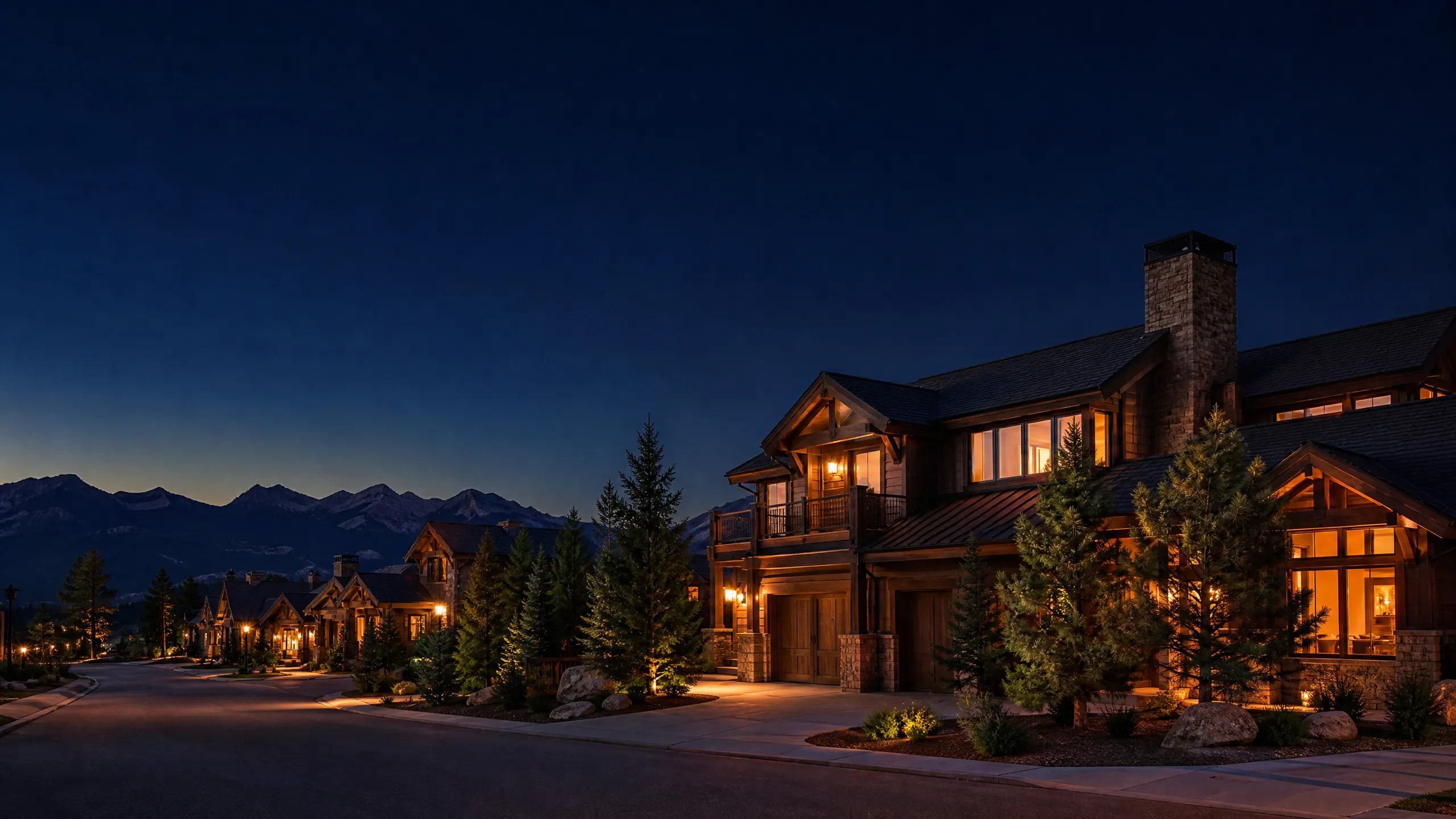






Illuminated timber-and-stone luxury homes along a residential street at dusk, with snow-capped mountains visible in the background.

AC Repair in Granby, CO

Tell us about the job

Takes about a minute. No obligation.

RepairCentral ACGrand County, CO
Step 1 of 2

What ZIP code is the job in?

Your air conditioner doesn't have much to do here. Afternoon highs average 72°F through June, July and August, and the air stays dry, with a dew point around 37°F. Most places in the country ask more of a compressor than that. So when something goes wrong with yours, it's rarely because the unit has been working hard for years. More often it's a part that's failed on its own, or a system that sat unused and picked up some dust or a loose connection. That's worth knowing before you decide whether repair makes sense.

72°F
the average summer afternoon it cools against
1 hail events
in ten years, and hail bends the fins on outdoor coils
56 wind events
in ten years, and wind drives debris into outdoor units
Isometric line illustration of a cutaway house showing interior rooms with furniture and ceiling ductwork, connected to an outdoor condenser unit with a fan beside the building.
Your air conditioner works hardest from July through July.

NOAA nClimDiv, 1991–2020 normals

A technician checks the capacitor, the contactor and the refrigerant charge before touching anything else.

Most service calls come down to one failed part, not a system in decline.

A newer home usually means a newer system

Half the homes here were built by 1990
Summer afternoons average 72°F
56 damaging wind events from 2015 to 2024

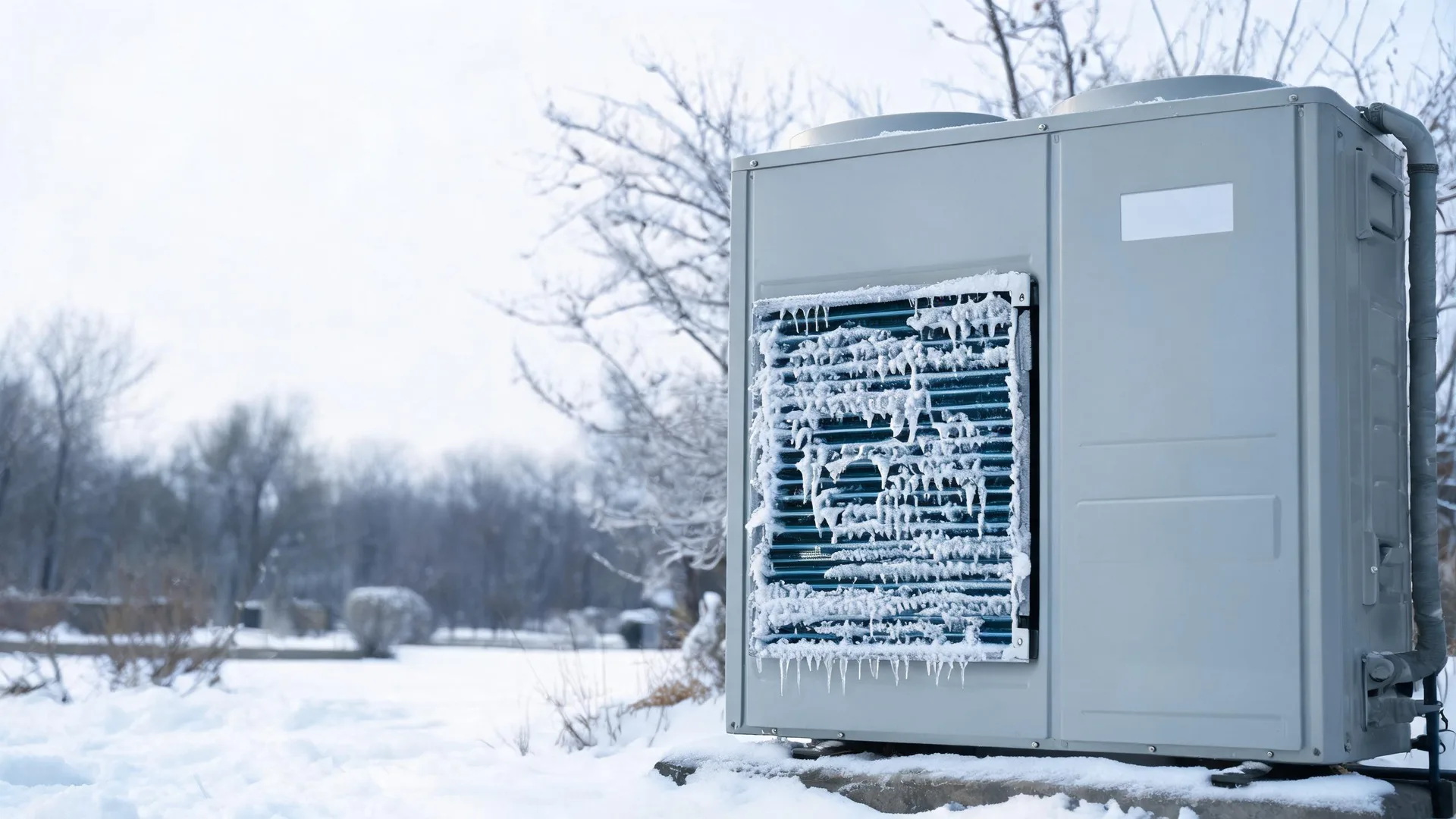
Before you call anyone, check the thermostat batteries and make sure it's set to cool, below room temperature. Go to the breaker panel and look for a tripped breaker, there are usually two for an AC, one for the outdoor unit and one for the air handler. Outside, look at the condenser and clear away any leaves, grass clippings or growth blocking the sides. Check the air filter, if it's gray and clogged, swap it, a blocked filter can starve the system of airflow and cause it to ice up. If you see ice on the refrigerant lines or the indoor coil, turn the system off and let it thaw completely before anyone works on it. Check the outdoor disconnect, a small box near the condenser, and make sure the pull block is seated all the way in. None of this requires opening the unit itself, and if the problem is still there after these checks, it's a part a technician needs to test.

A failed part isn't a failing system

A part that fails on its own is usually worth fixing rather than replacing outright. Get a technician out to test it before deciding it's time for a new system.

Find a contractor
A man in a cap, dark T-shirt and tan work pants walks up porch steps toward a red front door, carrying a worn canvas tool bag, with a potted plant beside the door.
A gray residential air conditioning condenser unit mounted on a concrete pad outdoors, surrounded by green grass under a partly cloudy blue sky.

A system that young still has years in it

If the system in your house came with it, check what year that was. Half the homes in Grand County were built in 1990 or later, so there's a good chance yours is one of them, and a part failing on a system that age is just a part that failed, not a system wearing out. That history also means the compressor behind the wall hasn't logged the hours one in a hotter state would have by now. Get the failed part tested and fixed rather than treat the whole unit as due for replacement.

What you'll notice first

The system runs but the air coming out isn't cold, or it cycles on and off in short bursts instead of running a full cooling cycle. Sometimes it's a sound: a hum from outside with no fan turning, a click that repeats without the compressor starting, or a rattle that wasn't there before. Water pooling near the indoor unit or ice on a line are signs too. None of these tell you the exact part, but each one points a technician toward where to look first.

What it means for the repair

A system that won't cool but still runs points at the compressor, the capacitor or the refrigerant charge. One that trips the breaker points at an electrical fault, maybe a motor pulling too much current. Short cycling often traces back to a dirty coil or a thermostat sending bad signals. The sign you describe when you call is what lets a technician bring the right parts on the first visit instead of the second.

An outdoor air conditioning condenser unit installed beside the exterior wall of a blue vinyl-sided house at sunset.

A new air conditioner would save little on running costs in Grand County, so the repair decision comes down to the unit's condition.

  • An older air conditioner$0 a year
  • A new one at the federal minimum, 13.4 SEER2$0 a year

Estimates for a typical Grand County home, compared with an older unit built to the previous federal minimum, from EIA household energy data, Colorado fuel prices and NOAA climate normals. Your home will differ.

Repair makes sense when a part like a capacitor or contactor has failed.

Replacement makes sense when the compressor has failed or the system uses R-22 refrigerant, which is no longer made.

Most of what goes wrong with an air conditioner has nothing to do with the compressor. The capacitor, the contactor, the fan motor, these are the parts built to wear out over time and get swapped without touching the rest of the system. The compressor itself is built to outlast all of them. Replacement starts to make sense when the compressor has actually failed, or when refrigerant lines are leaking from corrosion that's spread through the coil, because at that point you're paying to fix the same unit again before long. Age tells you less than what's actually broken. A system with a bad capacitor is still the same system once that capacitor's replaced, running the way it did the day before. Ask the technician what failed and why, not just what it costs to fix. That answer tells you whether it was one part giving out or a sign the compressor itself is going.