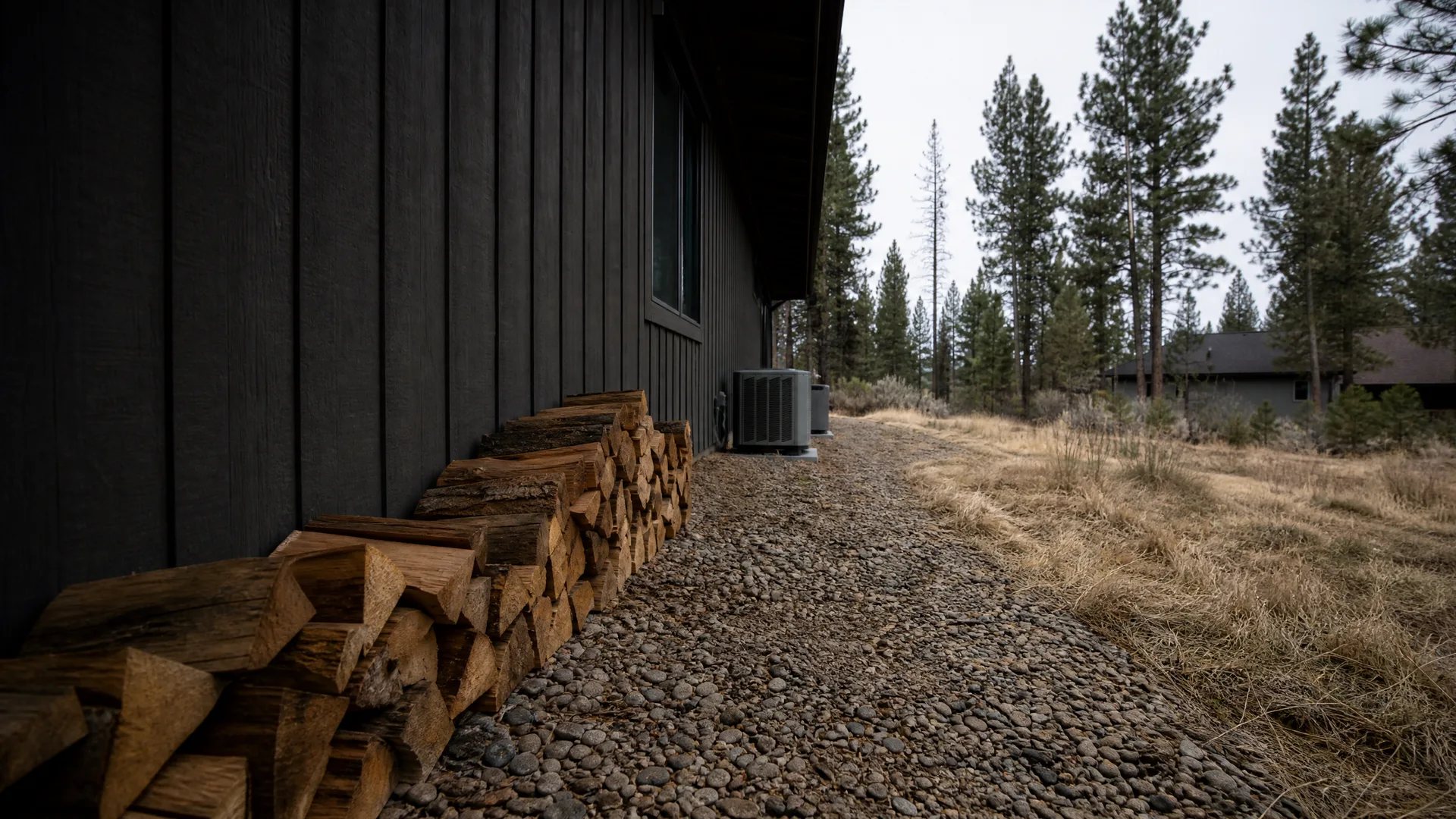
Stacked firewood along the base of a dark vertical-board house wall beside a gravel path, with an air conditioning unit, dry grass, and pine trees in the background.

AC Repair in Fairplay, CO

Tell us about the job

Takes about a minute. No obligation.

RepairCentral ACPark County, CO
Step 1 of 2

What ZIP code is the job in?

A weak capacitor stops the compressor cold

The capacitor gives the compressor and fan motor the jolt they need to start. When it wears out, the outdoor unit hums but the fan won't spin, or the compressor tries and gives up. This part wears down over years of normal cycling, not from anything done wrong, and it's one of the cheaper, faster fixes a tech can make.


A dirty coil makes everything else work harder

The outdoor coil has to shed heat for the system to work. When it's coated in dust or grass clippings, the unit runs longer to do the same job, and that extra strain is what pushes a marginal capacitor or a tired compressor into failing outright. A coil cleaning now can be the difference between a repair and a replacement later.

72°F
the average summer afternoon it cools against
11 hail events
in ten years, and hail bends the fins on outdoor coils
74 wind events
in ten years, and wind drives debris into outdoor units
Isometric cutaway illustration of a house interior showing ducted air handling equipment, ceiling ducts, furniture in two rooms, and an outdoor condenser unit connected by lines outside the wall.
Your air conditioner works hardest from June through July.

NOAA nClimDiv, 1991–2020 normals

A tech checks the capacitor, the contactor and the refrigerant charge before touching anything else.

That order matters because a cheap part can look like a dying compressor until it's ruled out first.

Half the homes here were built in 1992 or later, and the AC inside them usually still has years left

Half the homes here were built by 1992
Climate zone 7
Power here costs 15.88 cents per kilowatt-hour
Your AC barely has to work hereSummer afternoons average 72°F in Park County, with dry air to match

A system that's struggling still keeps running if nobody shuts it off, and that's where small problems turn into big ones. A compressor trying to start against a failing capacitor doesn't just fail to start, it draws current it can't use and heats up with nowhere for that heat to go. Do that enough times and the motor windings break down for good, which turns a capacitor swap into a compressor replacement. Low refrigerant works the same way from a different angle. The system keeps trying to hit the same temperature with less to work with, so it runs longer and the compressor runs hotter than it was built for. A rattle, a hum that isn't right, or a breaker that trips once are the system telling you something before it tells you nothing at all. Shutting it off and calling for a diagnosis costs you a day of discomfort. Letting it run can cost you the compressor.

A newer system is worth fixing, not replacing

If your house went up in 1992 or later, the AC in it is probably still within its working life. That's the system worth getting a tech out to look at now, before a small part failure turns into something bigger.

Find a contractor
A gray metal air conditioning condenser unit mounted on a concrete pad in a flat grassy field under a partly cloudy sky.

Fewer hours on the clock means less to go wrong

No month here gets warm enough to call for cooling, which means this system racks up fewer hours than one in a hotter state would over the same years. Fewer hours is less wear on the compressor and less strain on the parts that start it. That works in your favor when something does go wrong now, because a unit that hasn't been run hard is less likely to have a second problem hiding behind the first. It also means age matters more than use here. A capacitor wears from years in service whether the system ran a lot or a little, so even a unit that has had it easy can still be due for one. Worth finding out before the next stretch of hot afternoons.

The sound changes before the cooling does

A healthy unit has one steady hum from the outdoor fan. Listen for a new rattle, a click that repeats as it tries to start, or a buzz that doesn't turn into the unit running. Warm air from the vents while the thermostat says it should be cooling means the system is running but not doing the job, and that gap is worth a look before it gets wider.

What to do once you've noticed it

Turn the system off at the thermostat rather than let it keep cycling. A unit that's struggling and still gets asked to run can turn a small part failure into a bigger one in a single afternoon. Noting when the noise started and whether it's constant or only on startup gives a tech something to check first instead of guessing from scratch.

Overhead view of a gray outdoor AC condenser unit on a concrete pad beside a mulched garden bed and a house with vinyl siding.

A new air conditioner would save little on running costs in Park County, so the repair decision comes down to the unit's condition.

  • An older air conditioner$0 a year
  • A new one at the federal minimum, 13.4 SEER2$0 a year

Estimates for a typical Park County home, compared with an older unit built to the previous federal minimum, from EIA household energy data, Colorado fuel prices and NOAA climate normals. Your home will differ.

Repair makes sense when a part like a capacitor or contactor has failed.

Replacement makes sense when the compressor has failed or the system uses R-22 refrigerant, which is no longer made.

Most of the time, repair is the right call, and the reason comes down to how these systems fail. A compressor rarely just dies on its own. It usually gets pushed out by something smaller, a capacitor, a contactor, a low charge, and replacing that part brings the whole system back to normal. Age matters more than any single symptom does. A unit a few years into its life with a bad capacitor is a repair, full stop. The harder call is a compressor itself failing on an older unit, since that part alone can cost close to a full system, and a tech can walk you through that math when it's actually the question in front of you. Until a tech tells you it's the compressor, assume it's something smaller.