




A gravel road lined with dark-sided cabins with metal roofs runs through a pine forest, with a weathered split-rail log fence in the left foreground.

AC Repair in Elizabeth, CO

Tell us about the job

Takes about a minute. No obligation.

RepairCentral ACElbert County, CO
Step 1 of 2

What ZIP code is the job in?

Cooling in Elbert County runs from July through August, just two months a year. The system sits idle the rest of the time, so June is the last chance to catch a weak part before the heat hits. Most problems show up in those first weeks of July, when a capacitor or contactor that was already marginal finally gives out under the load. If your AC is struggling now, it is worth having someone look at it rather than waiting to see if it sorts itself out. With a season this short, a unit that is failing at the start tends to keep failing straight through August.

2 months
July through August, your air conditioner is on duty
84°F
the average summer afternoon it cools against
165 hail events
in ten years, and hail bends the fins on outdoor coils
83 wind events
in ten years, and wind drives debris into outdoor units
Isometric line illustration of a cutaway house showing interior rooms with furniture, ductwork leading to an indoor air handler, and an outdoor condenser unit connected by a line set.
Your air conditioner works hardest from July through August.

NOAA nClimDiv, 1991–2020 normals

A dirty filter, a thermostat not set to cool, or a breaker that tripped are all worth checking before anyone comes out.

If the system still won't cool after that, the problem is inside the cabinet or the lines, and that part needs a tech.

Half the homes here were built since 1996, and the AC is probably that age too

Half the homes here were built by 1996
Cooling runs July through August
Summer afternoons average 84°F

Get it looked at early

Problems tend to show up in the first weeks of the season, when the load hits a part that was already weak.

Find a contractor
An outdoor air conditioning condenser unit mounted on a concrete pad beside a house, with electrical conduit running to a wall-mounted disconnect box.

Why a struggling system does not sort itself out

A struggling system does not get better by staying on. A capacitor that is already weak sags a little further every time it has to push the compressor and fan through a full cycle. A contactor with pitted contacts arcs a bit more each time it closes, and that arcing wears the contacts down faster still. A compressor running low on charge works harder to move what refrigerant it has, and the extra heat that makes breaks down the oil that keeps it alive. If airflow is restricted, a dirty filter or a coil caked with dust, the system pulls return air through a tighter opening and the coil can start icing over mid-cycle. Once ice forms, airflow drops further and the ice builds faster still. Left running, that usually ends with the compressor trying to pump liquid refrigerant instead of gas, which is the kind of failure a compressor does not come back from. A new noise or a breaker that keeps tripping means something is already wrong. Letting the system keep running does not give it a chance to recover. It gives the weak part more cycles to fail on.

What actually wears out

A capacitor loses its charge a little more with every start until it can no longer kick the compressor into motion. A contactor's contacts pit and burn from the arc each time they close, until one day they stick or stop making contact at all. A fan motor's bearings dry out and start dragging, pulling more current than the motor was built to handle. None of these fail on one bad day. They fail because they were already worn thin and the next cycle was the one they couldn't finish.

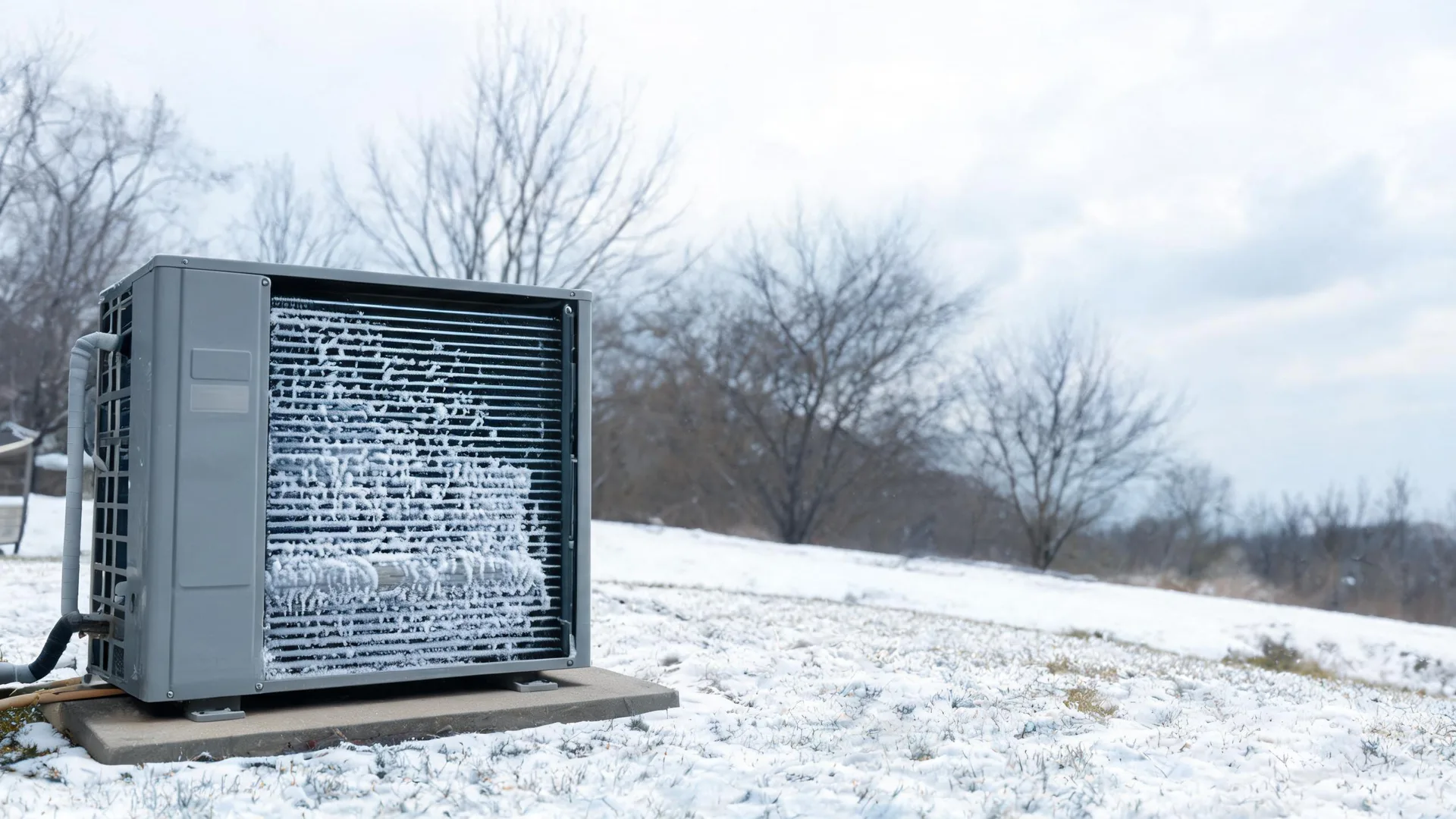
Finding the failed part

A capacitor or contactor is easy to test and easy to swap once it's found bad. Low refrigerant charge is a harder case, since it usually means a leak somewhere in the lines or coil that has to be found before the charge means anything. A compressor that has already taken damage from running low on charge or on a failing start component is the hardest case of all, and sometimes there is no fixing it, only replacing it.

An outdoor air conditioning condenser unit on a concrete pad next to the gray vinyl siding of a residential home.

A new air conditioner would save little on running costs in Elbert County, so the repair decision comes down to the unit's condition.

  • A new one at the federal minimum, 13.4 SEER2$180 a year
  • An older air conditioner$200 a year

Estimates for a typical Elbert County home, compared with an older unit built to the previous federal minimum, from EIA household energy data, Colorado fuel prices and NOAA climate normals. Your home will differ.

Repair makes sense when a part like a capacitor or contactor has failed.

Replacement makes sense when the compressor has failed or the system uses R-22 refrigerant, which is no longer made.

A diagnostic starts outside at the condenser, checking that the fan spins freely and the compressor is drawing power the way it should. Gauges go on next to check refrigerant pressure, since that number says whether the charge is right or whether there's a leak to chase down. Inside, the tech checks the air handler or furnace coil for ice and checks airflow at the vents, since weak airflow often points back to a dirty filter or a coil caked with dust rather than anything electrical. The capacitor and contactor get tested directly, since both can look fine and still be too weak to do their job under load. A thermostat signal gets checked too, to confirm the system is actually getting the call to cool. By the end, the failing part should be identified, not just suspected.