






An outdoor air conditioning condenser unit positioned beside a blue-sided house at sunset.

AC Repair in Denver, CO

Tell us about the job

Takes about a minute. No obligation.

RepairCentral ACDenver County, CO
Step 1 of 2

What ZIP code is the job in?

Summer in Denver is short. Cooling runs about three months, June through August, with afternoon highs averaging 87 degrees. That is a normal load for a home air conditioner, nothing that should wear a system out ahead of its time. Hail and wind show up here more than in a lot of places, and either one can bend the fins on an outdoor coil or knock loose a wire or panel. If your AC trouble followed a storm, that is worth mentioning when a contractor looks at it. Outside of storm damage, a system that is not cooling right is almost always dealing with something common, like a low refrigerant charge, a failing capacitor, or a dirty coil. Worth finding the actual cause before anyone assumes the worst.

3 months
June through August, your air conditioner is on duty
87°F
the average summer afternoon it cools against
142 hail events
in ten years, and hail bends the fins on outdoor coils
64 wind events
in ten years, and wind drives debris into outdoor units
Isometric cutaway illustration of a single-story house showing interior rooms with ductwork and an air handler, connected by refrigerant lines to an outdoor condenser unit on the left.
Your air conditioner works hardest from June through August.

NOAA nClimDiv, 1991–2020 normals

An outdoor coil bent by hail is a repair, not a reason to replace the whole system.

Compressor trouble on an older unit is where that conversation changes.

Denver sees its share of hail and wind, but that's not why most AC units need a repair

243 severe weather events from 2015 to 2024
13% of homes statewide lost power a day or more in 2024
64 damaging wind events from 2015 to 2024

Half the homes in Denver County were built in 1975 or earlier, half in 1975 or later. That split doesn't tell you much about the age of the AC, since a system usually gets swapped out well before the walls do. An older house isn't automatically running an older unit, and a newer house doesn't guarantee a new one either. What the unit has actually been through matters more than when the house went up. If your system came with the house, that's worth mentioning to the contractor. If it's been replaced since, the house's age isn't really part of the story.

Your AC most likely needs a repair, not a replacement

Nothing about Denver's climate runs an AC into the ground ahead of time, so when one acts up, the cause is usually something a contractor can find and fix. A low charge or a dirty coil makes the system work harder to do the same job, and at 14.92 cents per kilowatt-hour, that shows up on the electric bill while it runs that way. Worth getting it looked at and fixed rather than guessing.

Find a contractor
A man in a cap, dark shirt and tan work pants, seen from behind, climbs porch steps toward a red front door while carrying a canvas tool bag filled with screwdrivers.
A gray cylindrical air conditioning condenser unit mounted on a concrete pad next to a light-colored vinyl-sided house exterior.

Left alone, small problems ask the compressor to cover for them

A system that is not cooling right rarely gets better on its own. A low refrigerant charge makes the compressor run longer to reach the same temperature, and the extra heat that builds up in the compressor shortens its life. A dirty coil does the same thing from the other direction, making the whole system strain to move heat it cannot shed fast enough. Even a failing capacitor, which sounds minor, forces the compressor to pull harder on startup every time it cycles on, and each hard start wears it down a little more. None of this shows up as the unit shutting off. It shows up as the unit running longer and longer to do the same job, until the part that was struggling finally gives out. The fix that would have been simple a month earlier turns into a bigger one.

Most failures trace back to a few parts

A capacitor weakens and can no longer give the compressor or fan motor the push it needs to start. A contactor pits from years of arcing and stops closing the circuit reliably. A blower wheel cakes up with dust and moves less air than the system was built to move. None of these happen suddenly. They build for a while before anything stops working.

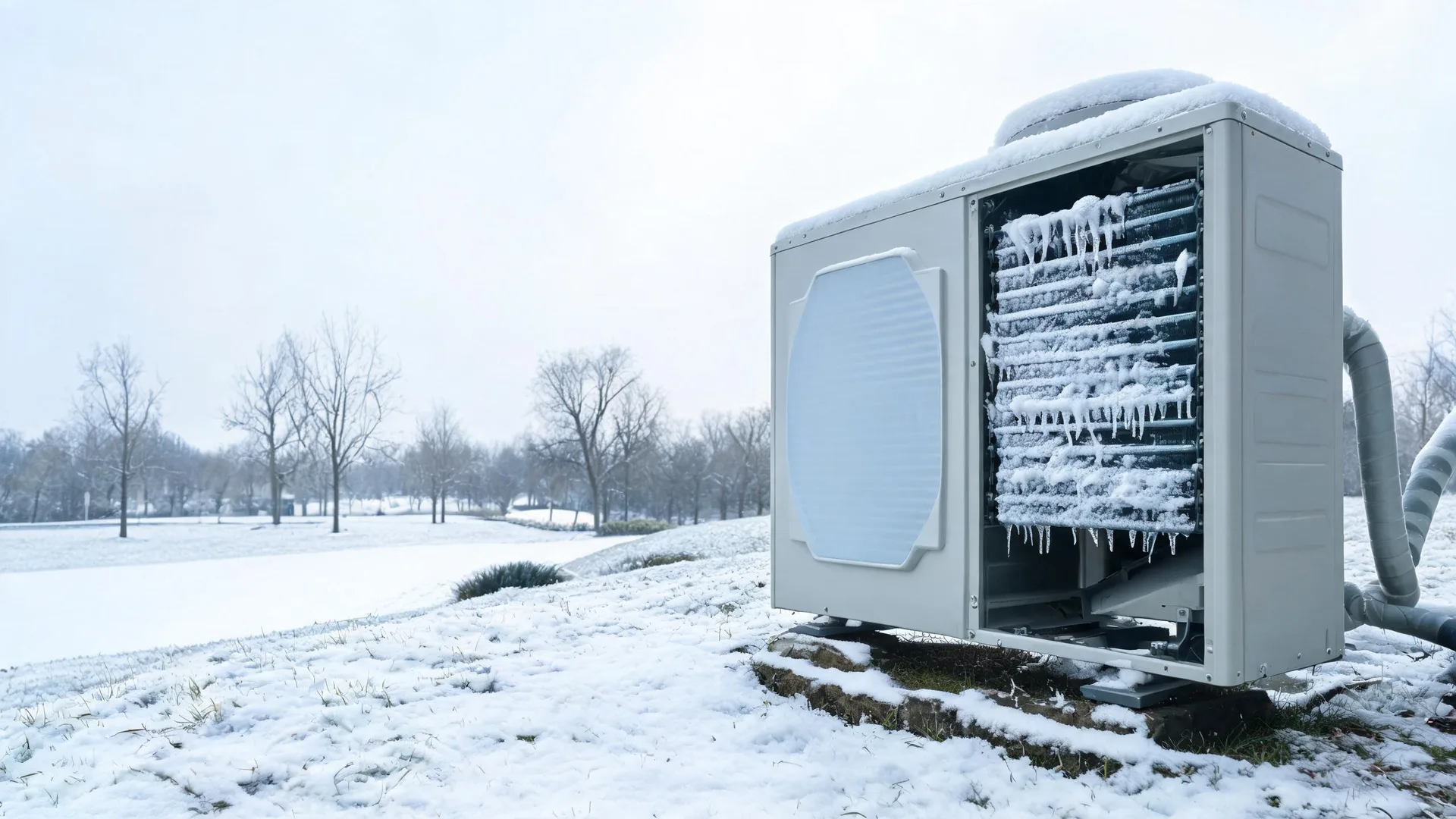
The signs show up before the system quits

Warm air from the vents, a system that cycles on and off more than it used to, a breaker that trips more than once, ice on the indoor coil. Each one points to a specific part acting up, not the whole system failing at once. Catching it at that point is a repair. Waiting until the unit stops cooling entirely usually means more has gone wrong by the time anyone looks at it.

An outdoor air conditioning condenser unit positioned on a concrete pad next to a blue-sided house, surrounded by green shrubs and flowering hydrangeas at sunset.

A new air conditioner would cut about $30 a year off cooling for a typical Denver County home.

  • A new one at the federal minimum, 13.4 SEER2$290 a year
  • An older air conditioner$320 a year

Estimates for a typical Denver County home, compared with an older unit built to the previous federal minimum, from EIA household energy data, Colorado fuel prices and NOAA climate normals. Your home will differ.

Repair makes sense when a part like a capacitor or contactor has failed.

Replacement makes sense when the compressor has failed or the system uses R-22 refrigerant, which is no longer made.

A diagnostic starts outside, at the condenser, checking that the fan spins freely and the coil isn't caked with dirt or bent shut from debris. Gauges go on next to check the refrigerant charge, since too little or too much both keep the system from pulling heat the way it should. Inside, the tech checks the blower wheel and the evaporator coil for ice, dust, or restricted airflow, and tests the capacitor and contactor under load rather than just looking at them, since both can test fine sitting still and still fail under the strain of starting the compressor. Electrical connections get checked for corrosion or loose terminals, especially near the outdoor unit where weather gets at them. By the time the gauges come off, the tech usually knows which part is causing the trouble and whether it's worn out or just working harder than it should.