



An outdoor central air conditioning unit mounted on a concrete pad beside a blue-sided house at sunset.

AC Repair in Delta, CO

Tell us about the job

Takes about a minute. No obligation.

RepairCentral ACDelta County, CO
Step 1 of 2

What ZIP code is the job in?

Your AC here only has to work hard in July and August, with afternoon highs around 82°F. That's a short, mild season compared to most of the country. A system that only runs two months a year doesn't rack up the hours that wear out a compressor or a capacitor. So when something goes wrong, it's usually not because the unit was pushed past its limits. More often it's age, a part that failed on its own, or something that got knocked loose in one of the wind events this area sees. Whatever's acting up, there's a good chance it's worth fixing rather than replacing.

2 months
July through August, your air conditioner is on duty
82°F
the average summer afternoon it cools against
42 wind events
in ten years, and wind drives debris into outdoor units
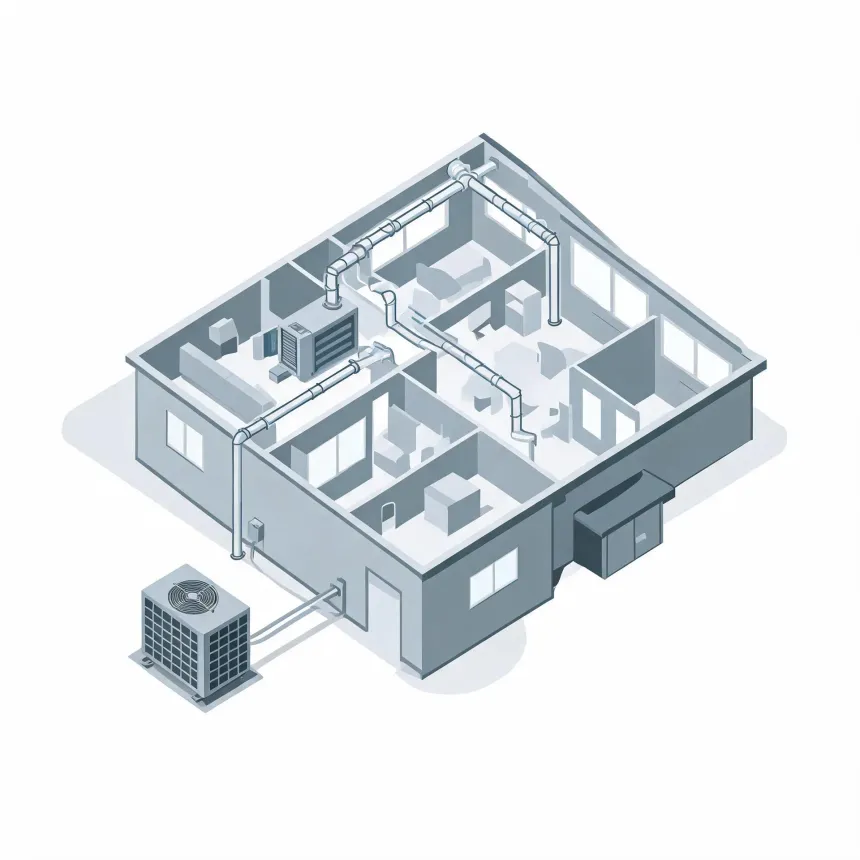
Isometric grayscale illustration of a cutaway house showing interior rooms, ceiling ductwork connected to an indoor air handler, and an outdoor condenser unit linked by lines along the exterior wall.
Your air conditioner works hardest from July through August.

NOAA nClimDiv, 1991–2020 normals

June is quiet here, but July runs hot right away.

A weak part usually holds through June and gives out the first week AC runs hard.

Nothing here runs this system into the groundDelta County logged 42 damaging wind events between 2015 and 2024, enough to knock a part loose now and then.

If your AC is struggling right now, get a contractor to look at the actual part before you think about replacing the unit. A capacitor or contactor failure is a straightforward fix, and on a system that's only run two summers' worth of hours for every year it's been installed, that's usually what you're dealing with. Replacement makes sense when a system is old or has been patched together more than once, not because this climate wore it down. Get it diagnosed first. If wind knocked something loose outside, that's worth checking too, since it won't always show up until the unit kicks on hard in July.

It's usually worth repairing

It has an easier job here than in most places, so your air conditioner is often in decent shape. Repair is usually worth it.

Find a contractor
A man in a dark jacket, cap and tan work pants, seen from behind, carries a worn canvas tool bag up wooden porch steps toward a red front door.
An outdoor air conditioning condenser unit mounted on a concrete pad surrounded by gravel, photographed against a partly cloudy blue sky.

What tells you it's time to call someone

Short cycling is one of the clearest signs. The unit kicks on, runs for a few minutes, shuts off, then starts again soon after. That pattern points to a failing capacitor or a thermostat sensor reading wrong, and it puts more strain on the compressor every time it happens. Warm air from the vents while the unit is running is another one. That can mean the compressor itself is on its way out, or the refrigerant charge dropped from a slow leak. Ice on the outdoor unit or the line running into the house usually means airflow is restricted, often from a dirty filter or a blower motor losing strength. A hard grinding or screeching noise when it starts up is almost always a motor bearing going bad, not something that fixes itself. None of these mean the whole system is done. Most of the time they trace back to one part, and that part can be replaced on its own.

Check the filter first

A clogged filter is the most common reason an AC seems to be struggling, and it's the easiest thing to rule out. If you can't see light through it, it's restricting airflow. A dirty filter can make the coil ice over, which then gets mistaken for a refrigerant problem.

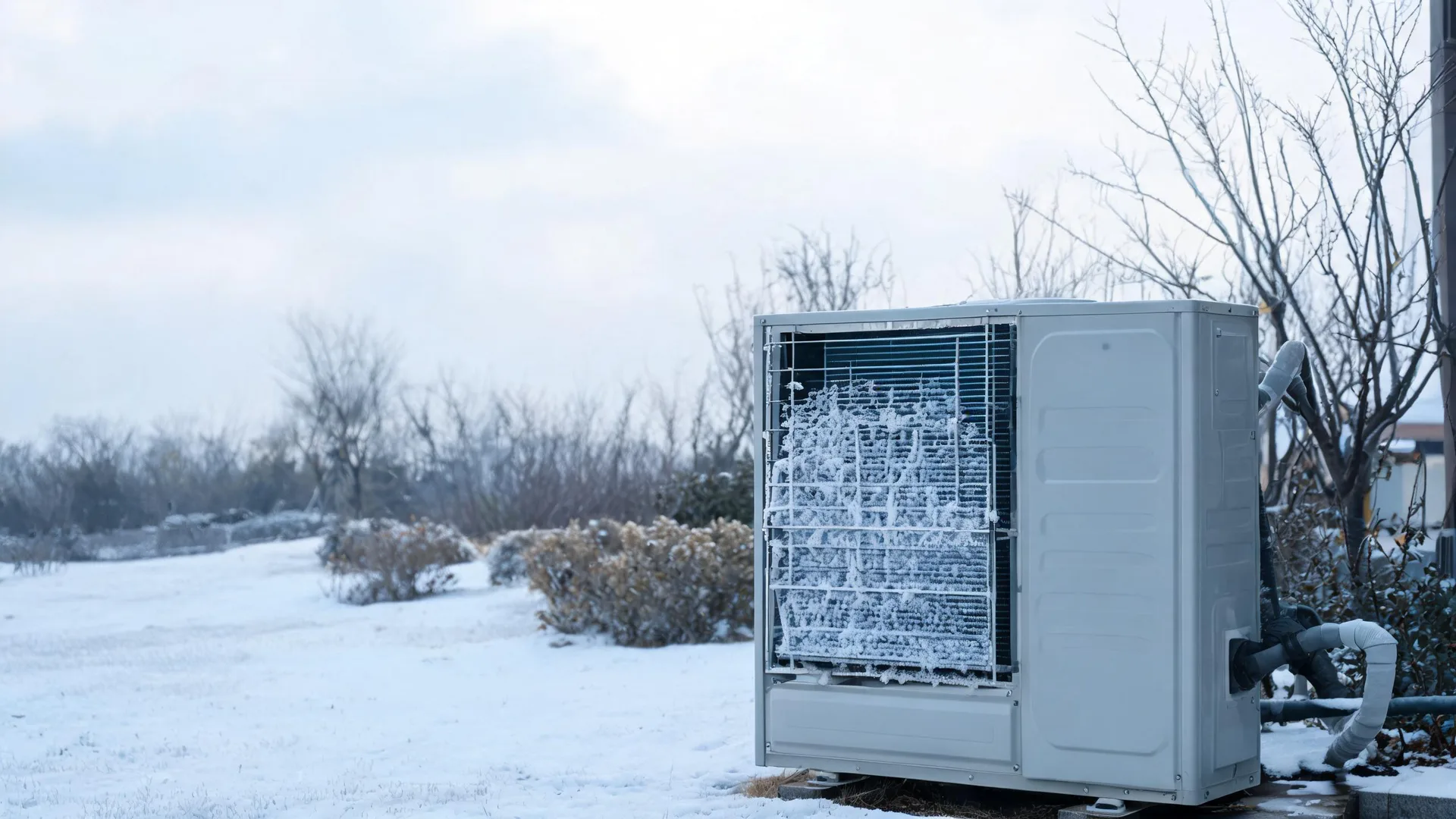
Look at the outdoor unit

Walk outside and check the condenser. Leaves, grass clippings, or a branch pressed against the fins will block airflow and make the system work harder than it should. Clear debris away from the unit by hand, but leave the panels and wiring alone. That part is for a contractor.

Overhead view of an outdoor AC condenser unit on a concrete pad next to a house with a dark shingle roof.

A new air conditioner would save little on running costs in Delta County, so the repair decision comes down to the unit's condition.

  • A new one at the federal minimum, 13.4 SEER2$150 a year
  • An older air conditioner$160 a year

Estimates for a typical Delta County home, compared with an older unit built to the previous federal minimum, from EIA household energy data, Colorado fuel prices and NOAA climate normals. Your home will differ.

Repair makes sense when a part like a capacitor or contactor has failed.

Replacement makes sense when the compressor has failed or the system uses R-22 refrigerant, which is no longer made.

A diagnostic starts outside at the condenser, checking that the fan spins freely and the compressor kicks on without hesitating. The contractor checks refrigerant pressure on both sides of the system, since a charge that's too low or too high points to different problems. Inside, they'll check the air handler or furnace coil for ice, pull the filter, and look at the blower wheel for dust buildup that cuts airflow. Electrical readings matter too. A capacitor gets tested under load, not just checked by eye, because a weak capacitor can still look fine sitting still. They'll also check that the thermostat is calling for cooling correctly and that air is actually moving through the ducts the way it should. The goal is one answer, which part failed, not a guess at several.