A paved road with a gravel shoulder runs past dark-clad houses with metal roofs among tall conifers, bordered in the foreground by a rustic split-log rail fence.

AC Repair in Colorado Springs, CO

Tell us about the job

Takes about a minute. No obligation.

RepairCentral ACEl Paso County, CO
Step 1 of 2

What ZIP code is the job in?

Check the thermostat and the breaker first

Make sure the thermostat is set to cool and set below room temperature, and check that the batteries aren't dead if it has them. Then look at the breaker panel. A tripped breaker or a blown fuse will shut the whole system down and both are safe for a homeowner to check and reset.


Look at the filter and the outdoor unit

A filter clogged with dust chokes off airflow and can make the system struggle or ice up, and it's simple to pull out and look at in the light. Outside, clear away leaves, grass clippings or anything stacked against the condenser, since it needs open airflow on all sides to work.

2 months
July through August, your air conditioner is on duty
83°F
the average summer afternoon it cools against
717 hail events
in ten years, and hail bends the fins on outdoor coils
324 wind events
in ten years, and wind drives debris into outdoor units
Isometric line illustration of a cutaway single-story house showing interior rooms, ducted air handler, ceiling ductwork, and an outdoor condenser unit connected by refrigerant lines.
Your air conditioner works hardest from July through August.

NOAA nClimDiv, 1991–2020 normals

Cooling in El Paso County runs about two months a year, July through August.

A weak capacitor or low charge usually holds through the mild months and fails once July puts a real load on it.

Half the homes here were built in 1989 or later, so your AC is probably not the oldest thing in the house

Half the homes here were built by 1989
Cooling runs July through August
Summer afternoons average 83°F
Most AC problems here are nothing unusualEl Paso County sees its share of hail and wind, but what breaks your AC is almost always a part, not the weather

If your AC came with the house, get the actual age before deciding anything. That's on the permit or on the data plate on the unit itself, usually inside the service panel. A system installed within the last decade or so is almost always worth repairing. A contractor can tell you from the data plate and a look at the unit whether what's wrong is a normal fix or a sign the whole system is near the end. Plenty of homes here haven't hit that point yet.

Get it looked at early

Problems tend to show up in the first weeks of the season, when the load hits a part that was already weak.

Find a contractor
A gray cylindrical air conditioning condenser unit mounted on a concrete pad next to a light-colored vinyl-sided house exterior.

The signs show up before the system quits

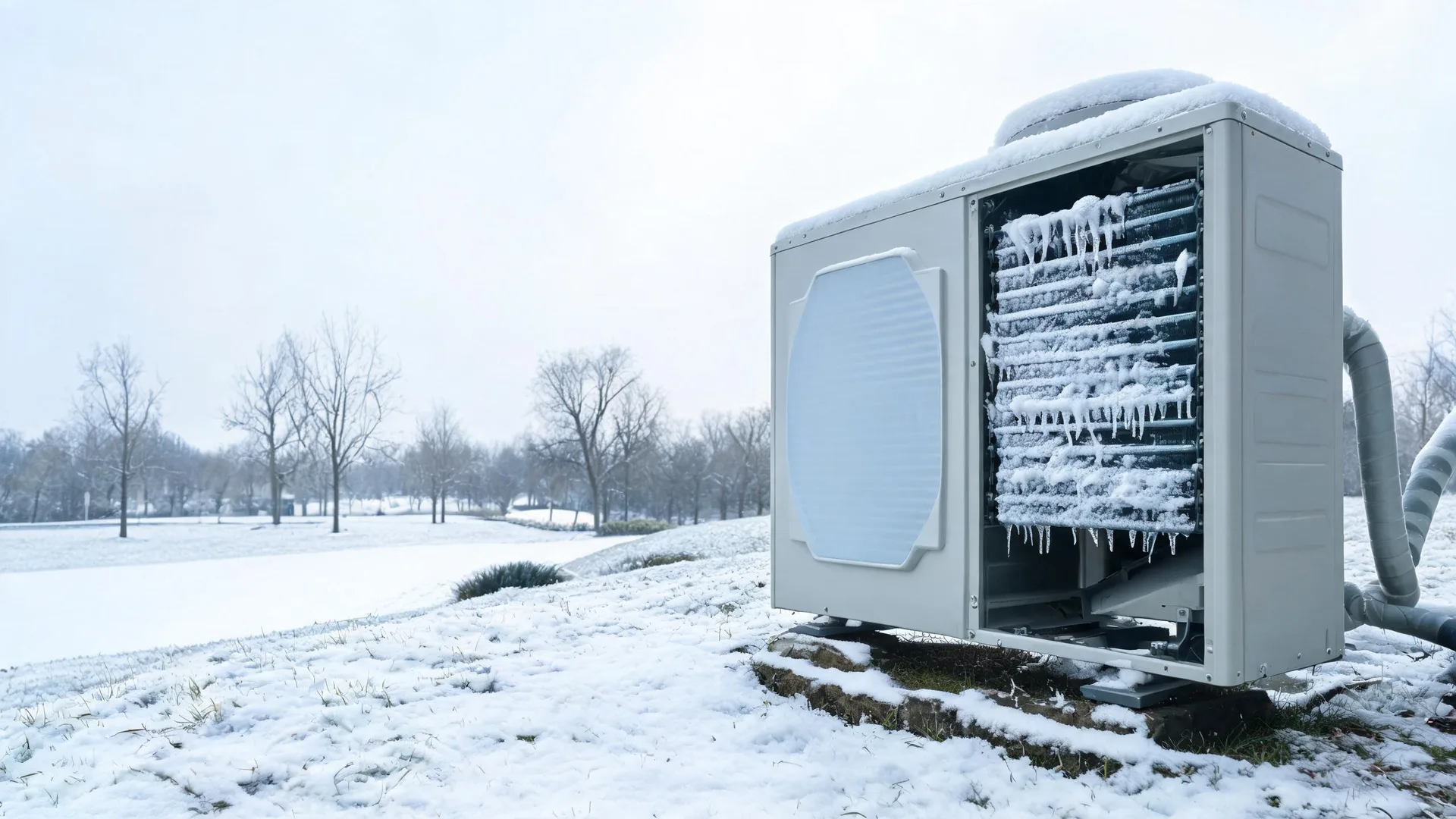
An air conditioner that's struggling shows it before it quits. Warm air coming out of the vents when the thermostat says it's cooling means the system isn't removing heat, which points to a refrigerant leak or a compressor on its way out. Short cycling, where it kicks on and off every few minutes instead of running a full cycle, wears on the compressor and usually traces back to a bad capacitor or a thermostat sensor that's lost its calibration. Ice on the outdoor unit or the refrigerant lines means airflow or refrigerant is low, and running it in that state only pushes more strain onto the compressor. A sound that wasn't there before, grinding, squealing, a hard clunk on startup, is a part failing, not the system settling in. None of these get better with time. A system left to run while it's already struggling is working harder to do less, and that's what turns a part replacement into a compressor replacement.

Most failures are electrical, not mechanical

A capacitor weakens and can no longer give the compressor or fan motor the jolt it needs to start, so the unit hums but doesn't turn over. Contactor points pit and burn from months of cycling until they stop making contact at all. These parts fail on their own schedule, not because of anything the homeowner did.

Low refrigerant always means a leak

A system doesn't use up refrigerant the way a car uses gas. If the charge is low, it's because it's leaking out somewhere, usually at a coil or a fitting. Adding refrigerant without finding and sealing the leak just means doing it again later, and running a system low on charge puts extra strain on the compressor itself.

An outdoor air conditioning condenser unit positioned beside a blue-sided house at sunset.

A new air conditioner would save little on running costs in El Paso County, so the repair decision comes down to the unit's condition.

  • A new one at the federal minimum, 13.4 SEER2$160 a year
  • An older air conditioner$170 a year

Estimates for a typical El Paso County home, compared with an older unit built to the previous federal minimum, from EIA household energy data, Colorado fuel prices and NOAA climate normals. Your home will differ.

Repair makes sense when a part like a capacitor or contactor has failed.

Replacement makes sense when the compressor has failed or the system uses R-22 refrigerant, which is no longer made.

A diagnostic starts with gauges and a multimeter, not guesswork. A contractor checks refrigerant pressure first, since that alone points toward a leak, a bad compressor or just a dirty coil. From there it's testing the capacitor's output, checking the contactor for pitting, and reading voltage at the compressor to see if it's getting what it needs to start. Airflow gets checked too, since a coil that's frozen over or a blower that's underperforming can look like a refrigerant problem when it isn't. A good diagnosis ends with the actual failed part named, not a guess, and that's what decides whether this is a quick fix or the start of a harder conversation about the system's age.