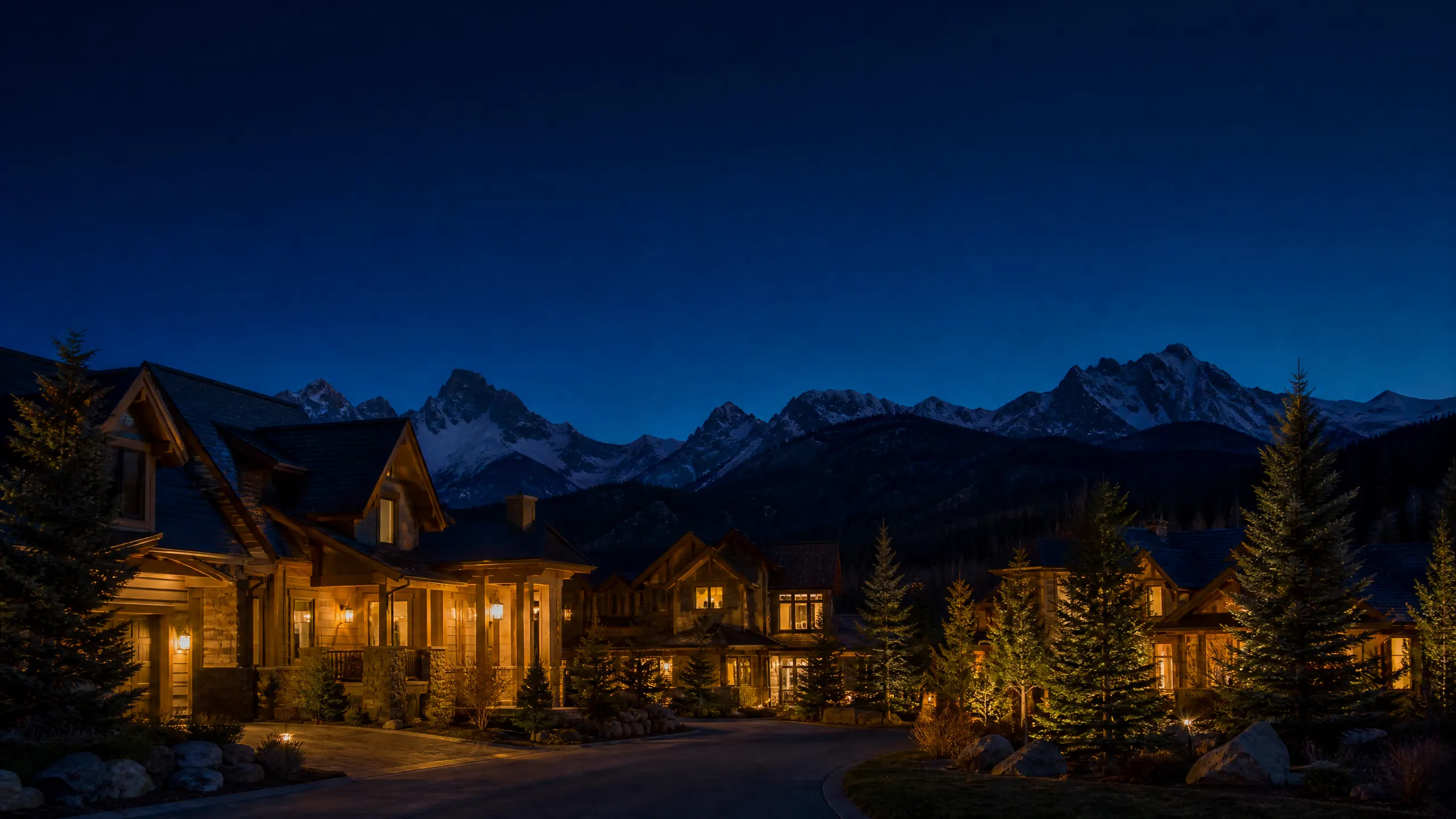






Illuminated timber-and-stone luxury homes photographed at twilight with snow-capped mountains visible in the background.

AC Repair in Broomfield, CO

Tell us about the job

Takes about a minute. No obligation.

RepairCentral ACBroomfield County, CO
Step 1 of 2

What ZIP code is the job in?

Half the houses in Broomfield County were built in 2002 or later. If yours is one of them, the air conditioner itself may still be the original unit, or at most on its second one, and either way it hasn't had decades to wear out. A system that age is usually a good candidate for repair rather than replacement, since the compressor and coil still have working life left in them. Fixing what's wrong with it now is the straightforward move. Very few homes in the county are mobile homes, so whatever is giving you trouble is almost certainly a standard residential system, which means parts are easy to source and any licensed contractor will have worked on one like it before.

3 months
June through August, your air conditioner is on duty
86°F
the average summer afternoon it cools against
17 hail events
in ten years, and hail bends the fins on outdoor coils
60 wind events
in ten years, and wind drives debris into outdoor units
Isometric cutaway illustration of a small house showing interior rooms, ductwork, an indoor air handler, and an outdoor condenser unit connected by lines, on a plain white background.
Your air conditioner works hardest from June through August.

NOAA nClimDiv, 1991–2020 normals

Warm air from the vents means the system is running but not cooling.

That points to the refrigerant charge or the compressor, not something a filter swap will fix.

Three months of work a year, not six

Cooling runs June through August
Summer afternoons average 86°F
60 damaging wind events from 2015 to 2024

Cooling here runs June through August, with May as the lead-up month. The first stretch of real heat is what usually finds a weak part, since that's when the system is asked to carry a full load for the first time. A capacitor or contactor that's been marginal all winter can hold on fine until that point and then quit. If your AC is acting up now, early in the season, that's a common time for this kind of call, not a sign something unusual is going on. A unit that gets through these first weeks without trouble tends to run fine the rest of the summer.

A three-month job is worth fixing

Your system only has to carry a full summer load from June through August. That's less wear than most places put on a compressor, and it's the reason a repair now is likely to hold for years, not just get you through August. Get it looked at and fixed rather than replaced.

Find a contractor
A man in a cap, dark jacket and tan work pants carries a worn canvas tool bag up porch steps toward a red front door of a house with gray siding and a potted shrub.
A gray residential air conditioner condenser unit mounted on a concrete pad in an open grass field.

A young system, one bad part

Ask whoever comes out to look at it how old the system actually is, not just the house. If it's the original unit, it hasn't had many summers to wear through a compressor or a coil. A newer system that's otherwise sound is a strange thing to replace over one bad part. If the contractor's diagnosis comes back as a bad capacitor, a failed contactor, or a refrigerant leak, ask what it would take to fix it before you ask about replacing it. A system with that little wear on it usually has an easy answer.

A weak compressor gets weaker

If warm air is coming through the vents, the compressor is already struggling to do its job. Running it in that state loads it up without any payoff in cooling, and a compressor that's straining can burn out a winding or lock up entirely. Shutting it off until someone looks at it costs you comfort for a day. Running it through the problem can cost you the compressor.

A small leak becomes a bigger job

Low refrigerant almost always means a leak somewhere in the lines or the coil, not refrigerant that just wore out. Running the system on a low charge makes the compressor work harder to move what little refrigerant is left, and that extra strain is exactly what shortens its life. The leak doesn't get worse because the system is running, but the damage from running low-charged does. Getting it looked at before the charge drops further is the cheaper path.

Aerial view of a square outdoor air conditioning condenser unit on a concrete pad beside a house wall with a sliding glass door.

A new air conditioner would save little on running costs in Broomfield County, so the repair decision comes down to the unit's condition.

  • A new one at the federal minimum, 13.4 SEER2$280 a year
  • An older air conditioner$300 a year

Estimates for a typical Broomfield County home, compared with an older unit built to the previous federal minimum, from EIA household energy data, Colorado fuel prices and NOAA climate normals. Your home will differ.

Repair makes sense when a part like a capacitor or contactor has failed.

Replacement makes sense when the compressor has failed or the system uses R-22 refrigerant, which is no longer made.

A diagnostic visit starts with the thermostat and the air coming out of the vents, since warm air, weak airflow, and a system that won't start at all point in different directions. The tech checks the capacitor and contactor first, because those parts fail often and are quick to test. From there it's gauges on the refrigerant lines, checking the charge against what the system is supposed to carry. If the charge is low, they'll look for where it's escaping, usually at a coil or a fitting in the lines, rather than just topping it off. Electrical readings on the compressor itself come next, since a compressor can run while still drawing more current than it should, which is an early sign of a winding going bad. By the end of the visit you should know which part failed and whether it's a straightforward swap or something tied to a bigger issue underneath it.