Overhead view of an air conditioning condenser unit on a concrete pad next to a house with asphalt shingle roofing and vinyl siding.

AC Repair in Boulder, CO

Tell us about the job

Takes about a minute. No obligation.

RepairCentral ACBoulder County, CO
Step 1 of 2

What ZIP code is the job in?

Check the thermostat and the breaker first

Make sure the thermostat is set to cool and the set point is actually below room temperature. Then check the breaker panel for the outdoor unit and the air handler. A tripped breaker or a thermostat bumped to the wrong setting looks exactly like a dead system, and either one takes a minute to rule out.

A dirty filter can stop the whole system

Pull the air filter and hold it up to a light. If you can't see through it, air can't get through it either, and the system will struggle to cool or may ice up and shut down. Swapping a filter is something you can do yourself. Anything past that, like a frozen coil or a unit that won't start, is a job for someone who can open the equipment safely.

78°F
the average summer afternoon it cools against
125 hail events
in ten years, and hail bends the fins on outdoor coils
120 wind events
in ten years, and wind drives debris into outdoor units
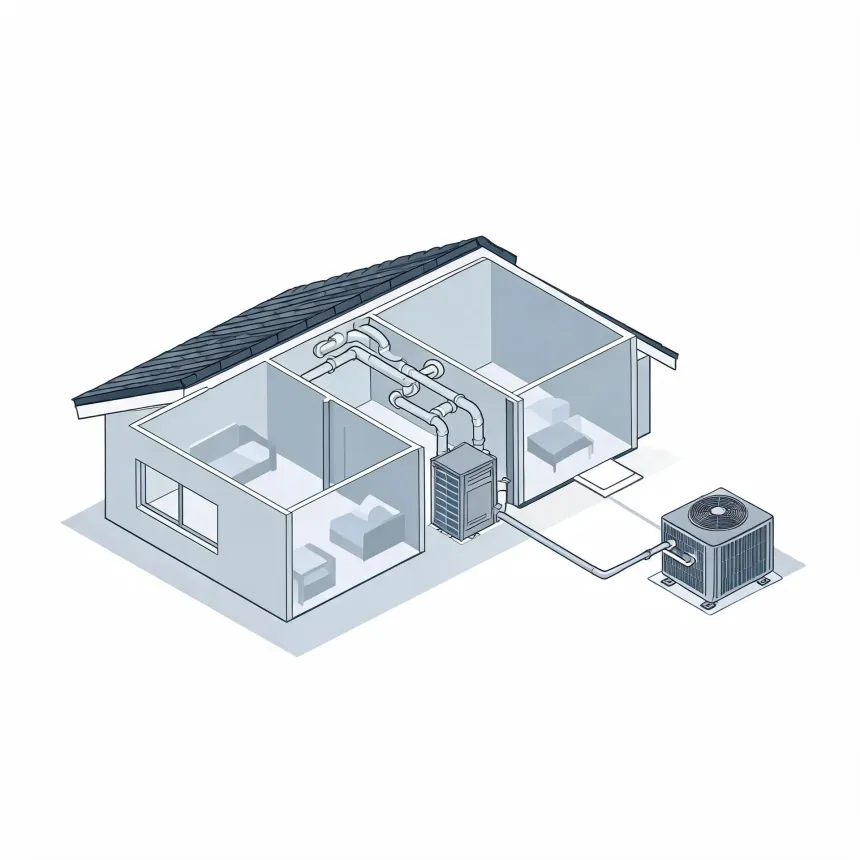
Isometric line illustration of a cutaway single-story house showing interior rooms, ductwork, an indoor air handler or furnace, and a refrigerant line running to an outdoor condenser unit on a pad.
Your air conditioner works hardest from July through August.

NOAA nClimDiv, 1991–2020 normals

Boulder County summers top out around 78°F on an average afternoon.

An AC here spends most of its life barely working, so a repair usually brings back a system with a lot of life left.

Boulder County homes run newerHalf the homes in Boulder County were built since 1986, so most AC systems still have years left in them.

An air conditioner is worth fixing when the problem is one part acting up inside a system that's otherwise sound. A bad capacitor, a worn contactor, a low charge from a small leak. These are common failures, and fixing them restores a unit that has plenty of good years left. It's a different question when the compressor itself is failing, or when the coil is corroded through, or when a contractor finds more than one of these at once. The compressor is the heart of the system, and replacing it often costs close to what a new outdoor unit costs, so most homeowners choose to replace rather than repair when that's the failure. Age matters too, not as a number but as a pattern. An old system that's needed a few service calls in the last couple years is telling you something about what's coming next. A tech who's opened the unit up can tell you which situation you're actually in.

It's usually worth repairing

It has an easier job here than in most places, so your air conditioner is often in decent shape. Repair is usually worth it.

Find a contractor
An outdoor residential air conditioning condenser unit mounted on a concrete pad, surrounded by gravel with a blue sky in the background.

Some of this damage only happens while it's running

A struggling system usually keeps running if you let it, and that's when small problems turn into big ones. A unit low on refrigerant makes the compressor work against a thin charge, and that compressor runs hotter every hour it's on. A dirty coil makes the system run longer to reach the same set point, and that extra runtime wears parts that started out fine. Ice on the coil is the clearest case. Once a coil starts icing, running the system doesn't just fail to cool. It grows the ice, blocks more airflow, and can push liquid refrigerant back into a compressor that isn't built to handle it. Shutting the system off and calling someone is the right move at that point. Keep it running and a bad capacitor or a low charge can turn into a failed compressor.

Warm air blowing isn't always the compressor

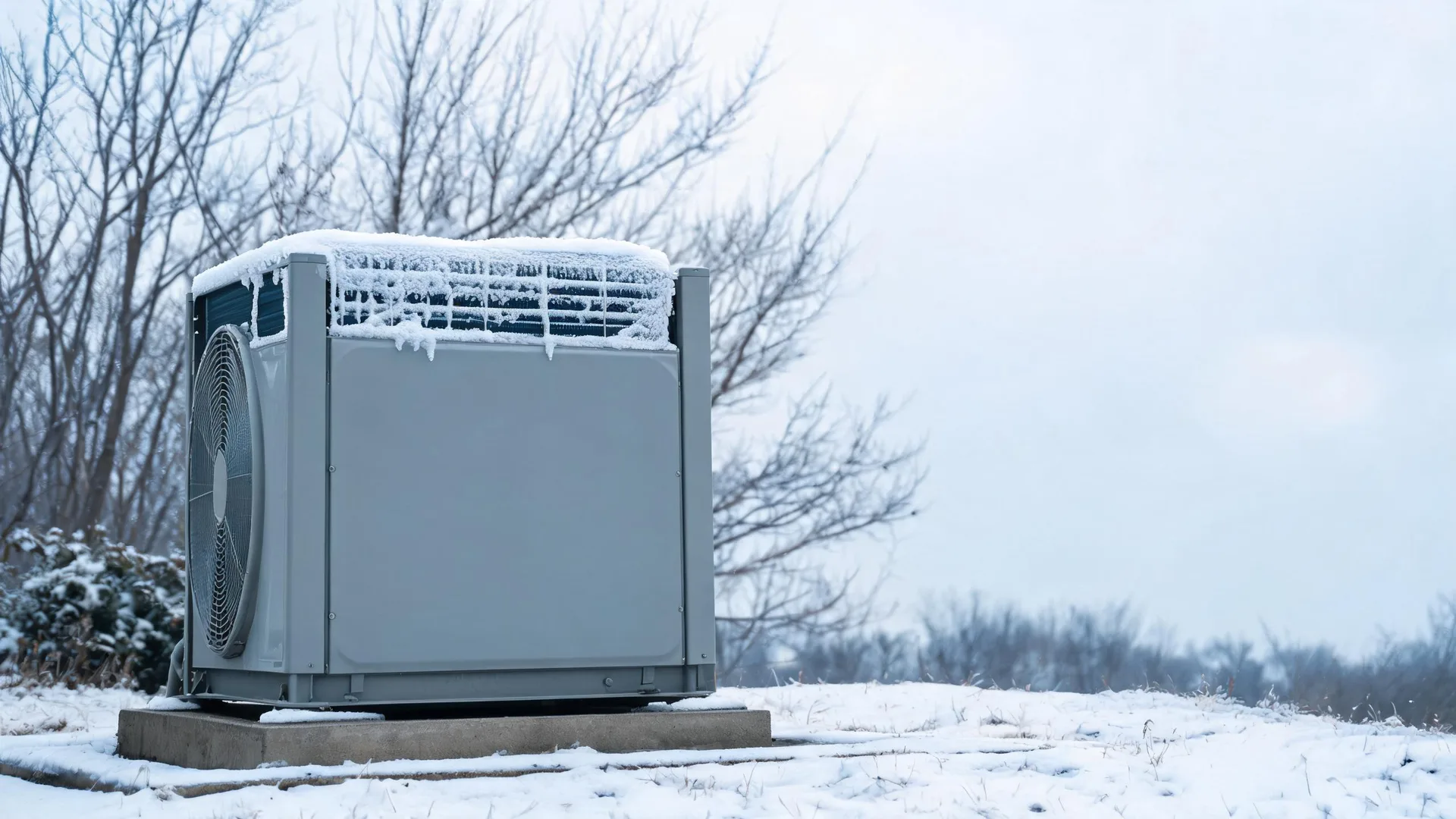
If the outdoor unit isn't running at all, check for a tripped breaker or a bad capacitor before assuming the worst. If the unit is running but the air coming out just isn't cold, that points somewhere else, usually a low charge or a coil caked in ice. A tech can tell which within minutes of looking.

Short cycling wears out the parts that start it

A system that kicks on, runs briefly, shuts off, then starts again isn't cooling properly even though it sounds like it's working. Every start is hard on the capacitor and the contactor, and a unit doing this over and over is stacking wear onto the parts most likely to fail next.

Overhead view of a gray outdoor AC condenser unit on a concrete pad beside a mulched garden bed and a house with vinyl siding.

A new air conditioner would save little on running costs in Boulder County, so the repair decision comes down to the unit's condition.

  • An older air conditioner$70 a year
  • A new one at the federal minimum, 13.4 SEER2$70 a year

Estimates for a typical Boulder County home, compared with an older unit built to the previous federal minimum, from EIA household energy data, Colorado fuel prices and NOAA climate normals. Your home will differ.

Repair makes sense when a part like a capacitor or contactor has failed.

Replacement makes sense when the compressor has failed or the system uses R-22 refrigerant, which is no longer made.

A diagnostic starts outside, with the condenser running or trying to run. A tech checks the capacitor first since it's the most common failure, then moves to the contactor and the wiring behind it. If the unit is running, gauges go on next to check the refrigerant charge and see how the system is actually performing against what it should be doing. Inside, the coil gets checked for ice or dirt, and the blower gets checked for proper airflow. If there's a leak, finding where it is takes longer than fixing most other problems, since the refrigerant has to be tracked to a joint or fitting rather than just topped off. By the end, a tech should be able to point to the one part that failed and tell you whether it's an isolated problem or a sign of more behind it.