Three months of real work
Aurora air conditioners run from June through August, with afternoon highs averaging 86°F. That's a short, hard stretch, not year round strain, and it's what a normal AC in this county is built to handle.
Takes about a minute. No obligation.
Aurora air conditioners run from June through August, with afternoon highs averaging 86°F. That's a short, hard stretch, not year round strain, and it's what a normal AC in this county is built to handle.
A system that struggles here is almost always dealing with a worn capacitor, a low charge, or a dirty coil, the same issues a tech finds anywhere. Diagnosing the actual part that failed matters more than guessing at the climate.

NOAA nClimDiv, 1991–2020 normals
May is the quiet month before Aurora AC runs June through August.
The first hot week of June finds whatever part was already on its way out.



Arapahoe County sees its share of rough weather. Hail, wind, the occasional tornado, winter storms most years. None of that is what wears out an air conditioner. Hail can dent a cabinet or bend fins on the outdoor unit, and a bad storm can knock out power long enough that a system needs a reset when it comes back. But the parts that actually fail, the capacitor, the contactor, the coil, wear out from running, not from weather. A unit here fails the same way a unit anywhere fails. If yours just stopped, check the breaker first. If it's been limping along, something inside it is worn, not the county it sits in.
A system in a home built in the last few decades still has working life in it. Get the actual part diagnosed before anyone talks about replacing the unit.
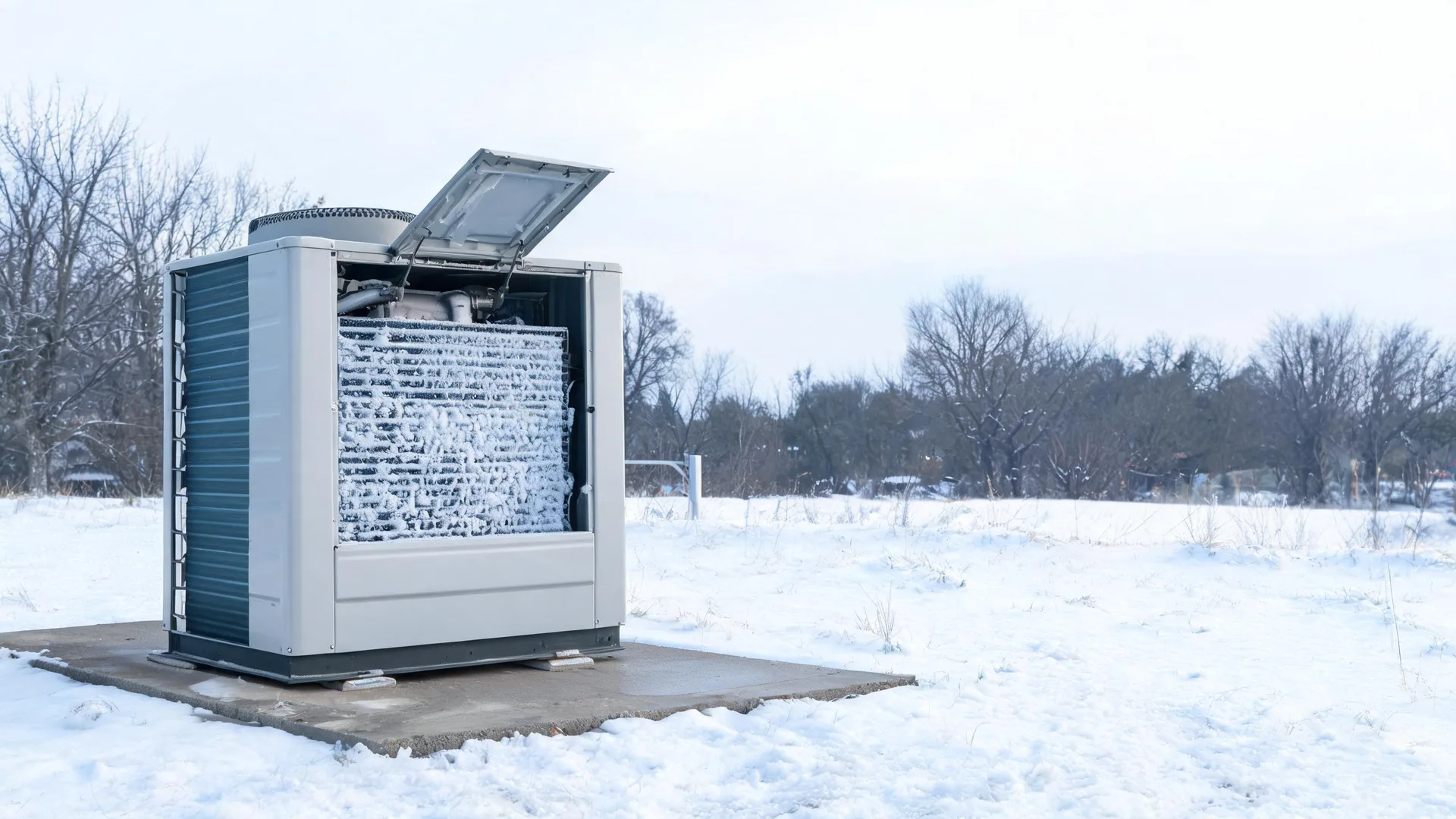
Find a contractorMost calls start with the air coming out warm, or not coming out at all. Warm air usually means the compressor isn't running even though the fan is, which points to a capacitor or a contactor rather than anything bigger. No air at all is often the fan motor or a tripped safety switch. Short cycling, where the unit kicks on and off every few minutes, wears on the compressor and is worth catching early. Ice on the lines or the indoor coil means something is restricting airflow or the refrigerant charge is off, and running it more won't melt that ice, it just keeps making more. A unit that runs constantly without hitting the temperature you set it to is losing the fight against something, usually a dirty coil or a charge that's low. Any of these is worth a call. None of them get better by waiting.
The capacitor holds a charge that kicks the compressor and fan motor into motion. That charge weakens with every start, thousands of them over the years, until it can't push the motor into action anymore. The fan might still spin or hum in place. The compressor doesn't start, so no cold air moves.
A system low on charge is low because it's leaking, from a coil, a fitting, a line. Running it low makes the indoor coil cold enough to ice over, and the ice blocks airflow, which makes the charge problem worse. Adding refrigerant without finding the leak buys a short delay before it's low again.
Estimates for a typical Arapahoe County home, compared with an older unit built to the previous federal minimum, from EIA household energy data, Colorado fuel prices and NOAA climate normals. Your home will differ.
Repair makes sense when a part like a capacitor or contactor has failed.
Replacement makes sense when the compressor has failed or the system uses R-22 refrigerant, which is no longer made.
A diagnostic starts outside, at the condenser. A tech checks that the fan spins freely and the coil isn't caked with dirt or cottonwood, then pulls the panel and tests the capacitor, since a weak one is the most common reason a unit won't start right. From there it's gauges on the line set to read the refrigerant charge and check for a leak, not just top it off. Inside, the tech checks the air coming off the coil, looks for ice, and listens to how the system cycles, whether it short cycles or runs without ever catching up. A thermostat signal gets checked too, since a unit that never gets the call to start looks the same as one that got the call and failed to respond. The goal is to find which part actually failed, not to replace parts until one works.