






Mini split leaking water in Castle Rock, CO

A white wall-mounted mini-split air conditioner indoor unit centered on a plain light gray background.
Get my match

Water leaking from your mini split usually means the condensate drain line is clogged or the drain pan has cracked or rusted through. Algae and dust build up inside that drain line over time and block it, so the water the indoor unit pulls out of the air backs up and drips out of the unit instead of draining outside. It can also mean the line has come loose, or the unit was installed slightly tilted so water doesn't run toward the drain the way it should. In Castle Rock, a mini split that works hard all summer pulling moisture out of dry heat runs condensate for months at a stretch, which gives algae and sediment plenty of time to build up in that line. A dirty air filter can cause the same problem by freezing the coil, which then melts and overflows the pan when the system cycles off. None of this is something to leave alone. Water running down a wall or pooling on the floor below the indoor unit will damage drywall and flooring the longer it sits, and it needs a qualified technician to find exactly where the blockage or crack is.

Why does a mini split leak show up when it does in Castle Rock?

  • Cooling runs July through July

    Your mini split only runs flat out for cooling in July, so a clogged drain line often goes unnoticed until that one month puts real load on it.

  • Heat runs September through May

    With heat running September through May, the indoor unit sits idle for cooling most of the year, giving algae and dust more time to build up in the line before it shows.

  • Power here costs 15.79 cents per kilowatt-hour

    Power here runs 15.79 cents per kilowatt-hour, typical for the area, so a leaking unit isn't driving your bill up the way a failing compressor would.

NOAA nClimDiv 1991-2020 · EIA-861 2025

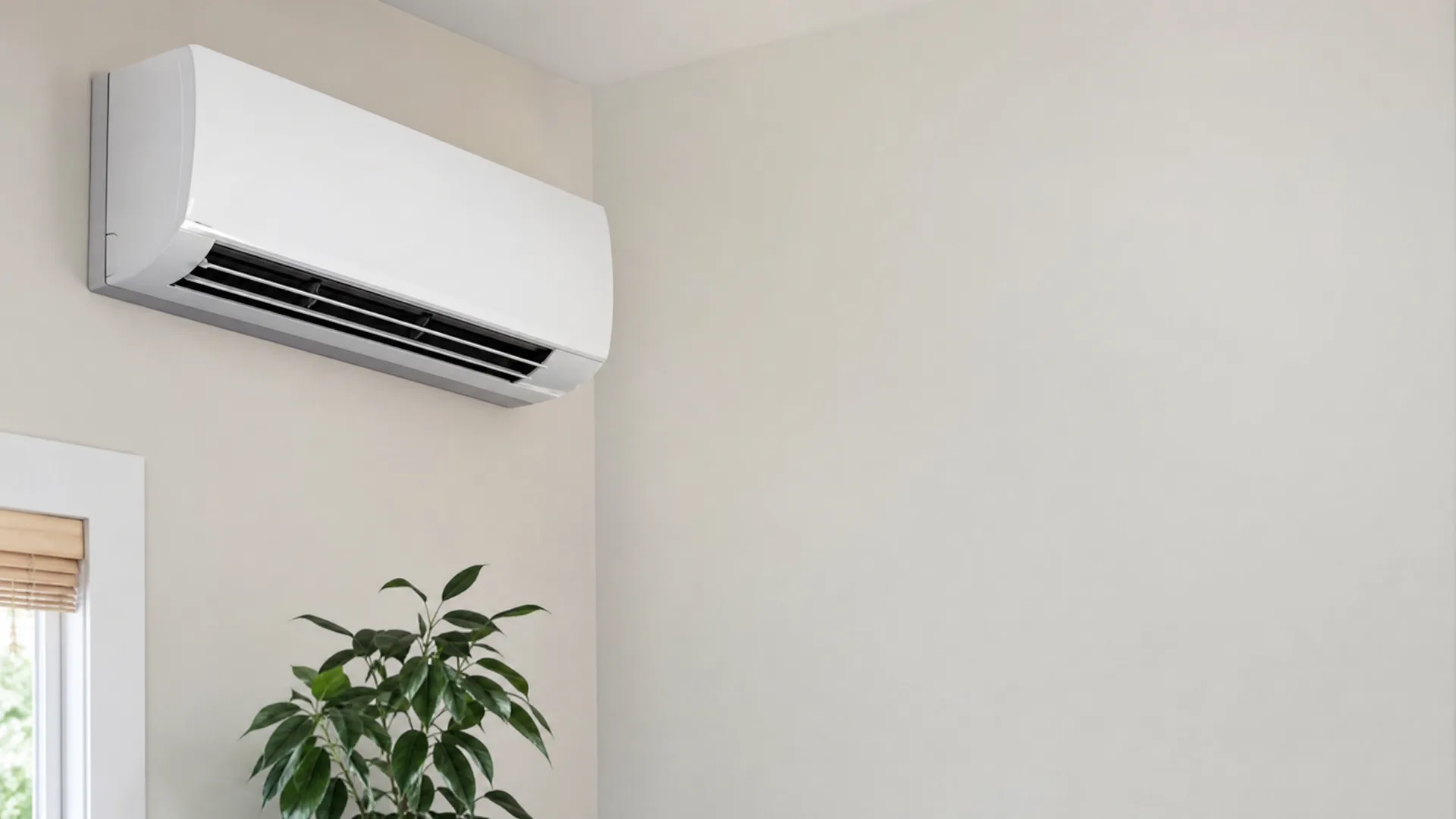
A white wall-mounted mini-split air conditioner near the ceiling of a beige interior corner, with a green houseplant and a curtained window at the lower left.

A clogged drain line

This is the more common cause. Dust and algae build up inside the drain line until water backs up and spills out of the indoor unit instead of draining outside. It usually shows up as water on the floor or a wet spot on the wall below the unit, and it often gets worse gradually as the blockage grows rather than appearing all at once. A contractor can flush the line and check that it's pitched correctly so it drains the way it should.

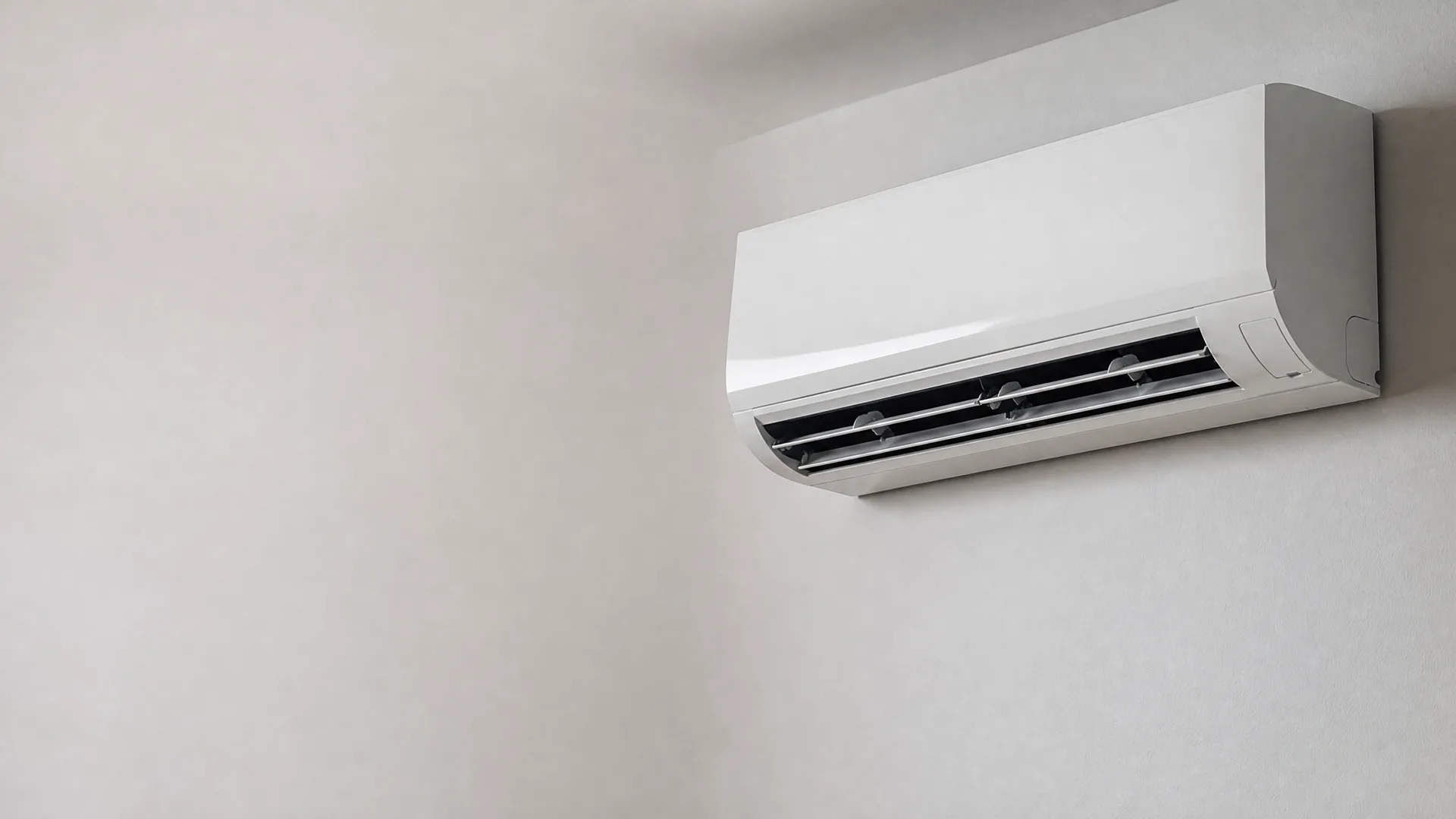
A white wall-mounted mini-split air conditioner indoor unit on a plain light gray wall, positioned to the right of frame.

A cracked or rusted pan

The drain pan sits under the indoor coil and collects the water before it runs out through the line. Once it cracks or rusts through, water drips straight down instead of draining out, no matter how clear the line is. This tends to come on a mini split that's been in service for years, and it won't go away on its own since the pan doesn't repair itself. A contractor can tell you whether it needs replacing or if the leak is coming from somewhere else.

A woman in a cream sweater and jeans pushes open a wooden front door of a white stucco house with a tile roof, with a second person visible inside and lantern wall sconces on either side of the arched entry.

What that water is doing to your house

A mini split mounts high on the wall, so the water it drips has somewhere to go before you notice it. Drywall under the unit will show a stain before you see a drop on the floor. If the line runs through a closet or over cabinets, you may smell it before you see it. Left alone, the stain spreads and the drywall underneath softens.

A clogged line is a straightforward fix for someone who works on these systems regularly in Castle Rock, since the fittings and drain routing are the same from one install to the next. A cracked or rusted pan is a different repair, and it helps to have the same contractor look at both so you're not guessing which one you have. Getting matched with one local contractor, rather than several competing for the job, means someone looks at your unit once and tells you what's actually wrong.

A living room with a cream sofa and knit throw beside a window, with a wooden coffee table in the foreground holding a round woven tray, a small bowl, and a speckled vase of green leafy branches.
A gray-haired bearded man in a dark green sweater sits on a light sofa indoors, looking to the side, with a houseplant, framed picture, table lamp and sunlit window behind him.
A middle-aged man in a dark denim shirt sits on a light beige sofa in a living room with wooden shelving and a potted plant, looking off to the side.
A gray-haired man in a dark navy sweater sits on a light sofa in a living room, looking toward a sunlit window with a houseplant and wooden cabinet behind him.
A man with greying hair in a dark green sweater sits on a light sofa in a sunlit living room, looking off to the side, with a large window, table lamp, framed art and white built-in shelves behind him.

Clear the Line or Call It In

Clean it yourself

  • A wet-dry shop vac at the outdoor end of the drain line can pull a clog free if the blockage sits near the exit point.
  • Pouring a cup of distilled vinegar into the indoor unit's drain access every few months helps keep algae from building up again.
  • You can check the drain pan yourself for standing water, but a hairline crack or rust spot low on the pan is easy to miss.
  • Without a gauge or a line set reading, you have no way to tell if the leak is drain-related or tied to a refrigerant charge issue instead.
  • Clearing the line yourself does nothing for a cracked pan, a bad slope in the line, or a failed condensate pump, so the leak can come right back.

Have it diagnosed

  • A technician who works on mini splits all year in Douglas County has seen which brands and models tend to crack a drain pan versus just clog the line.
  • Diagnosis includes checking the line's slope and the condensate pump if the unit has one, not just clearing whatever is blocking the drain right now.
  • If the leak turns out to be a refrigerant issue showing up as ice and meltwater instead of a drain problem, that needs a licensed hand regardless.
  • Matching you with one local contractor means a single visit gets a full look at the pan, the line, and the pump, rather than a guess fixed piecemeal.
  • A contractor who installs and services these units knows which fix actually holds for your specific unit, instead of one that buys a few months.
A dim room with a white wall-mounted mini-split air conditioner above a wall with a vertical line mark, a wooden built-in shelving unit with books and a potted plant at left, and a desk with monitor, keyboard and mesh office chair by a window at right.

You're at the desk working through a July afternoon when you notice the air feels off, more humid than it should given the unit is running. You get up and see it: a dark streak down the wall below the indoor unit, already dry at the edges but wet near the baseboard. A towel someone left down there weeks ago, folded under the vent, has gone damp again. You press a finger to the drywall and it gives slightly. Outside the window, Douglas County is in the middle of its driest stretch of the year, the kind of afternoon this unit was built to handle. You turn it off and start looking for a number to call.

Get matched with a mini split pro in Douglas County

A mini split leak in a Castle Rock home almost always traces back to that drain line or the pan underneath it, and neither one gets better on its own. Once algae or dust has narrowed the line enough to back water up, the blockage tends to come back even after a shop vac clears it, because whatever grew in there the first time is still coated along the walls of the tubing. A cracked or rusted pan is worse news since no amount of cleaning fixes it, and running the unit while it leaks puts more water into your drywall and framing with every hour. A local contractor who services mini splits through the hot, dry summers and the hard winters here has likely opened up this exact unit's drain routing before and knows whether your situation calls for a cleared line or a replaced pan. Getting someone out to look at it now, while the stain is still small, is worth more than waiting to see if it dries up on its own.

Why the drain line clogs at all

The indoor unit pulls moisture out of your air and sends it down a thin drain line, usually a half inch across. That line sits wet most of the summer, which is exactly what algae needs to grow. Dust drawn in from the room mixes with that film and narrows the line further. None of this takes a leak or a crack. A line that drained fine in June can be slow by August just from what's built up inside it. That's why the fix is clearing the line, not just mopping up the water.


Why the pan fails differently

The drain pan sits under the coil and catches whatever the drain line doesn't carry off right away. Plastic pans can crack with age, and in units that use metal, rust can eat through the bottom. Either way, once the pan is compromised, water finds the gap no matter how clear the line is. A cracked pan won't show up as a seasonal problem the way a clogged line does. It leaks any time the unit is running and pulling moisture, which is most of the time it's on.

A dusty, discolored wall-mounted mini-split air conditioner unit near the ceiling of a plain beige interior wall.
Before you get your mini split repair
A white wall-mounted mini-split air conditioner installed near the ceiling on a plain beige interior wall.
After you get your mini split repair

Clear the line yourself

A shop vac at the outdoor end or a cup of vinegar down the drain access can clear a fresh clog. It won't fix a cracked pan or a line blocked further in.

Find a licensed mini split pro

Have it looked at once

Someone who works on these units all summer can tell in minutes whether it's the line, the pan, or something else, and clear it so it stays clear.

Find a licensed mini split pro

Is this leak actually a problem or just a nuisance?

A damp patch below the indoor unit is easy to wipe up and forget. But if that water has been finding its way behind the drywall for weeks, you're looking at a soft spot that keeps growing, paint that bubbles, maybe a smell when you walk past it. If the unit sits above a closet or a run of flooring, check there too. Mold takes hold in wall cavities faster than most people expect once they're damp all summer. And a mini split that can't drain properly is also one that's working harder than it should, which shows up on your power bill before it shows up as a bigger repair.

A white wall-mounted mini-split air conditioner installed high on a beige interior wall near the ceiling molding, with a light curtain and curtain rod at the left edge.
A mini split that's draining right runs quiet, with no stain or drip below it, just steady cool air into the room.
A wall-mounted mini-split air conditioner indoor unit with a discolored cream plastic casing and dusty outlet vanes, installed high on a plain light-colored interior wall near the ceiling.
Yellowed casing and dust like this usually mean years of buildup, and a drain line that's been clogged longer than you think.

Cooling runs July through July

With just one month of real cooling load, the drain line only gets tested hard for those few weeks. A clog that's been building quietly all spring finally backs up when July puts the unit to work.

NOAA nClimDiv 1991-2020

A woman with shoulder-length brown hair in a gray knit cardigan sits in an upholstered armchair indoors, looking toward a window with sunlit trees outside, with a bookshelf behind her.
A woman sits on a couch under a chunky knit blanket with a sleeping young child resting against her, with a lit lamp and window in the dim background.

Where this leaves you

  • Water from a mini split almost always means a clogged drain line or a cracked, rusted drain pan.
  • July is when the clog shows itself, since that is the one month the unit runs flat out for cooling.
  • Vacuuming the outdoor end or flushing vinegar down the drain access can clear a shallow blockage yourself.
  • A cracked pan or a clog further inside the line needs someone who can open the unit and check both.
  • Left alone, the water tracks behind drywall and keeps damaging the wall long after the floor looks dry.
  • Someone local who services these units every summer knows which of your symptoms points to the pan and which points to the line.

A mini split leaking water in Castle Rock comes down to one of two things: the drain line is clogged, or the pan underneath has cracked or rusted. You can test the easy fix yourself. A shop vac at the outdoor end or vinegar down the drain access clears a shallow clog near the surface. If the water keeps coming back, or you never find a clog at all, the problem is sitting somewhere you can't reach with a vacuum, either deeper in the line or in the pan itself.

That's worth sorting out before another July comes around and puts the system under full load again. Left alone, the water doesn't stay on the floor where you can see it. It moves into the wall below the indoor unit and keeps working on the drywall long after the surface looks dry.

Getting it looked at means someone who services these units every summer, not just once. They've opened enough of them to know what a stain in that particular spot usually means, whether it's the line, the pan, or both, and they can tell you which one is behind your symptoms without guessing. You'll be matched with one contractor, licensed and working in Douglas County, not a handful of companies competing for the job. That's someone who already knows what tends to fail on these systems after a Castle Rock summer, and who can check the line and the pan in the same visit instead of sending you back and forth.

A white wall-mounted mini-split air conditioner on a dark gray interior wall, with a flat screen at lower left and a green leafy plant at lower right.

A local pro for your mini split repair

RepairMini-splitDouglas County, CO
Step 1 of 2

What ZIP code is the job in?